THE NIBBLE BLOG: Products, Recipes & Trends In Specialty Foods


Also visit our main website, TheNibble.com.

TIP OF THE DAY: Sea Asparagus & Other Sea Vegetables

Today’s tip is: Keep your eyes open for new foods. Then, share them with foodie friends.

Hannah Kaminsky of Bittersweet Blog discovered sea asparagus—a vegetable that grows in or adjacent to salt water—on a recent trip to Hawaii. Sea asparagus grows in warm salt marshes and on beaches, there for the foraging. It is harvested wild, and also cultivated.

What Is Sea Asparagus

Sea asparagus (Salicornia europaea), also known as glasswort, samphire or sea beans, is a tender, green, spindly stalk that resembles tiny land-grown asparagus (although they are not related). It is a member of the Amaranthaceae family, which includes everything from amaranth, a high-protein grain, to ornamental cockscomb and picturesque tumbleweed.

Sea asparagus can be purchased fresh in areas where it is harvested, and packaged in specialty food markets. You can purchase it fresh, frozen, pickled (this year’s stocking stuffer?) and in other forms (sea pesto, powdered seasoning) from Olakai Hawaii. The season in British Columbia is currently “in full swing,” according to West Coast Seaweed, another e-tailer.

Fresh sea asparagus can be eaten raw, pickled or steamed (and then tossed in butter or olive oil); in a salad, as a side dish or a garnish (see the sushi photo below). Dried sea vegetables can be added directly to soups or stews and to the cooking liquid of beans or rice.

   
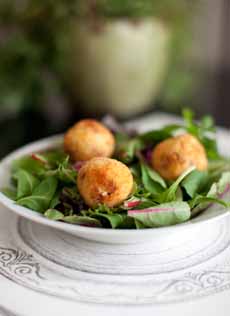
sea-asparagus-salad-kaminsky-230
Invite a new vegetable to lunch or dinner. Sea asparagus photo © Hannah Kaminsky | Bittersweet Blog.
 
No Extra Salt Required

“Absorbing the sea salt like a sponge, sea asparagus can be quite salty if not thoroughly rinsed, and should never be salted no matter what else you add to it,” says Hannah. “Slightly crunchy when raw or par-cooked, it’s an exotic delight, and a surprise given my experience with flat, gelatinous, and/or stringy sea vegetables. As long as I can find sea asparagus, you can be sure that this salad will find its way to my table.”

Hannah’s recipe was inspired by the serving suggestion printed on the label for Olakai sea asparagus, purchased in Hawaii. Hannah combined them with other local pleasures: tiny currant tomatoes, a local product even smaller than grape tomatoes, and sweet Maui onions.

You can add a protein to turn the recipe into a luncheon salad. Consider grilled or smoked salmon (which makes the Hawaiian recipe lomi lomi), tofu, canned tuna, grilled fish or seafood. We used raw scallops: delicious!

RECIPE: SEA ASPARAGUS SALAD

Ingredients For 2-3 Side Dish Servings

  • 4 ounces fresh sea asparagus
  • 1 ounce sweet onion, diced
  • 1 tablespoon avocado oil or olive oil
  • 1 tablespoon fresh lemon juice
  • 4 ounces currant tomatoes (substitute halved cherry or grape tomatoes)
  •  
    Preparation

    1. SNIP off any brown ends on the sea asparagus before rinsing them thoroughly under hot water. Toss them in a bowl along with the diced onion, oil and lemon juice.

    2. MASSAGE the vegetables with your fingers for a minute or two, just to tenderize the stalks slightly. Add the tomatoes and mix to distribute throughout the salad.

    3. SERVE immediately or chill. The salad will keep for up to two days. Don’t be tempted to add any salt, since sea asparagus is already infused with sodium from the sea.


    sea_asparagus_inari-tastyislandhawaii-230
    Sea vegetables as a garnish, here on inari
    sushi. Photo courtesy TastyIslandHawaii.com.

      WHAT ARE SEA VEGETABLES

    Vegetables don’t grow only on land. If you’re a fan of Japanese food, you’ve probably had one or more types of seaweed—a salad of hijiki or wakame, the nori wrapper of sushi rolls or a bowl of dashi (clear soup) made from kombu (kelp).

    Sea vegetables are loaded with of chlorophyll, dietary fiber and vitamins and minerals from the ocean, including calcium, iron, magnesium, phosphorus, potassium, sodium, vitamins A and C and trace minerals such as iodine and vanadium. Many health food advocates eat them for the nutrition (details).

    Sea asparagus, in particular, is an excellent source of calcium, iron and vitamins A, B2, B9 (folic acid), plus dietary fiber, amino acids and minerals.

    Look for sea vegetables in natural food stores in dried form. Just soak them in water for 10 minutes and they’re ready to use.

    If you like seaweed salad, you’ll like a mixed sea vegetable salad—say, arame/hijiki, dulse, sea palm and wakame. Try a mirin-tamari-ginger juice-soy sauce marinade, or a simple rice vinegar, olive oil and sesame oil vinaigrette.

     
    POPULAR SEA VEGETABLES

  • Agar Agar. Also called kanten or Japanese gelatin, agar agar is a clear, tasteless alternative to animal or chemical-based gelatin. It is sold in opaque flakes and dissolves in hot liquid. It thickens at room temperature and is used to firm up confections, jellies, pies and puddings.
  • Arame. These thin, wiry black shreds of seaweed have a sweet, mild flavor. In Western cuisine, they can be added to green salads, omelets, pasta salads, quiches and stir-fries.
  • Dulse. This reddish brown sea veggie is sold as dried whole stringy leaves or a powdered condiment. The leaves have a chewy texture and can be eaten like jerky; or, they can be pan-fried in sesame oil and added to salads or sandwiches. It is not reconstituted, but used as is.
  • Kombu. Thick, dark purple kombu is sold in strips or sheets. It’s the principal ingredient of the Japanese broth, dashi; and can be added to Western recipes in the liquid for beans, rice or soup.
  • Nori. Nori can be dark purple to blackish green in color. It is best known as the thin, flat sheets of toasted seaweed used to make sushi rolls (the sheets are not reconstituted, but used as is). It’s also available untoasted, and plain or flavored snack strips have become quite popular. We use julienned nori as a garnish for rice, soups, salads, casseroles or grains either crushed into flakes or cut into strips. Nori is also available in a flakes with a seasoning mix of sesame seeds, salt and sugar, called nori komi furikake. If you like nori, get some: You’ll enjoy it.
  • Sea Palm. This vegetable, brownish-green in color, looks just like a miniature palm tree. It’s also called American arame and is harvested from America’s Pacific Coast. Sweet and salty, it can be enjoyed it raw or sautéed, in soups or in salads.
  • Wakame. We always look forward to a bowl of silky, tender wakame-su, wakame seaweed marinated in rice vinegar. It is also a popular addition to Japanese soups.
  •  
    Ready, set: Enjoy discovering the world of sea vegetables.


    Comments off

    Cherry Tart Recipe & How To Select The Best Fresh Cherries

    Cherry season is fleeting—just a couple of weeks in some locations. It is also frustrating because we’re not having a good cherry season this year. Every cherry we’ve sampled has been bland. They look good but don’t deliver on the palate.

    The term “cherry-pick” is a hint. The expression comes from harvesting the fruit: The pickers are instructed to carefully select the ripe fruit only. Unlike other tree fruits, cherries don’t ripen or improve in flavor after they’re picked.

    Are we getting unripe fruit? Have growing conditions been substandard? Is the fruit mishandled after it’s harvested? We want answers (but more importantly, we want good cherries).

  • Picked too soon, cherries are pale and tasteless; too ripe, they’re soft and watery. According to Produce Pete, the best time to pick seems to be when the birds start eating them (birds have an instinct for ripe cherries).
  • Weather challenges are a fact of life: Produce is at the mercy of the growing season. Fruit needs sufficient heat to develop full flavor and can be harmed by excessive rain during crucial weeks when water penetrates the skin and dilute the flavor.
  • Bad storage can easily diminish flavor and texture. Fruit doesn’t respond well to changing temperatures. From a warm grove to a hot or cold transport or storage room and back again, varying temperatures can wreak havoc. If you’re in a key cherry-growing state (California, Idaho, Michigan, Oregon, Washington State), you’ve got a better chance to get the best fruit.
  •  
     
    > July 11th is National Rainer Cherry Day.

    > July 16th is National Cherry Day.

    > Check out all the cherry holidays and more cherry recipes.
     
     
    TRY IT BEFORE YOU BUY IT

    You can’t bite into a peach to see if it’s sweet enough before you buy it, but you can score a cherry. It’s the only way to make sure you’ll be happy with them.

    If the flavor doesn’t deliver, it’s not worth the calories if you’re looking to snack on raw fruit. Find another variety. Keep tasting cherries as you come across them, and hope for a successful score.

       
    picota-cherries-basket-foodsfromspainFB-230
    [1] Fresh Bing cherries are one of the happy signs of summer (photo © Foods From Spain).

    Bowl Of Queen Anne Cherries
    [2] Queen Anne cherries have red and yellow skin (photo © Neha Deshmukh | Wesual | Unsplash).

     
    This is not to say that you can’t use less flavorful cherries to make delicious cherry pies, tarts, jams, sauces, or ice creams. In recipes, added sugar compensates for what’s missing in the fruit.


    Bowl of Montmorency Cherries
    [3] Bright red Montmorency cherries are tart cherries that are used for pies and jams (photo © Mandira Banik | Unsplash).

      REAL CHERRY PICKING: WHAT TO LOOK FOR

    While these tips don’t ensure that the fruit will be sweet, they’re a good start:

  • Firmness. The most common varieties (Bing, Rainier, Queen Anne) should be firm. However, some heirloom varieties (Black Tartarian is an example) are naturally softer. Be sure to taste them: Some heirloom cherries have the best flavor.
  • Plumpness. Good cherries will be plump and dark for their variety and have fresh, green stems, indicating that they were recently harvested. Cherries without stems won’t keep as well as fruits with intact stems.
  • Size. Look for fruits that are large for their variety and avoid smaller fruits with a higher proportion of pit and skin to flesh.
  • What To Avoid. Shriveled skin, dried stems, and dull patina indicate cherries that are over the hill. Leaking flesh and brown discoloration are signs of decay.
  •  
    If the cherries aren’t sweet enough in their natural state, perhaps a homemade cherry tart will put you in the summer grove?

     
    The most demanding part of the recipe is pitting the cherries. You don’t need a cherry pitter.

  • Pit cherries with a paper clip.
  • Pit cherries with a pastry tip.
  •  


    CHECK OUT WHAT’S HAPPENING ON OUR HOME PAGE, THENIBBLE.COM.


    Comments off

    RECIPE: Chocolate Blackberry Macarons

    Here’s another delicious blackberry recipe: Chocolate Blackberry Macarons. Blackberry, a summer fruit, is a nice change from the chocolate or raspberry fillings often found in macarons.

    The recipe was developed by blogger Naomi Robinson of Bakers Royal, and contributed to Driscoll’s recipes. Visit Naomi’s blog for more delicious recipes.

    Prep time is 30 minutes, cook time is 15 to 17 minutes, plus cooling time.

    RECIPE: CHOCOLATE BLACKBERRY MACARONS

    Ingredients For 24-30 Macarons

    For The Chocolate Macarons

  • 1/2 cup egg whites (about 4 eggs)
  • 1/4 cup granulated sugar
  • 2 cups plus 1/3 cup powdered sugar
  • 2 cups plus ¼ cup almond meal
  • 1/4 cup plus 1 tablespoon cocoa powder
  •  
    For The Blackberry Filling

  • 2 packages (6 ounces each) blackberries, puréed
  • 1/4 cup granulated sugar
  • 2 tablespoons water
  • 1 envelope plain gelatin
  •    
    chocolate-blackberry-macarons-driscolls-230

    A summer flavor for macaron lovers. Photo courtesy Driscoll’s.


    http://www.dreamstime.com/royalty-free-stock-image-blackberries-basket-image26804436
    Sweet summer blackberries. Photo ©
    Pretoperola | Dreamstime.
     

    Preparation

    1. PREHEAT oven to 330°F. Line a baking sheet with parchment.

    2. TRACE out 1 inch circles on parchment and set this aside as a “master copy.” Reserve two extra sheets of parchment and set aside.

    3. PLACE egg whites and sugar in a stand mixer bowl and fit mixer with a whisk attachment. Beat on medium low speed until egg whites start to form loose, translucent bubbles.

    4. INCREASE mixer speed to medium and beat until meringue turns foamy and white and starts to resemble well-lathered shampoo, about 2 minutes. Increase mixer to high and beat until meringue holds glossy stiff peaks, about another 2-3 minutes. Turn off mixer.

    5. PROCESS almond meal, powdered sugar and cocoa powder in a food processor and then sift. Add these dry ingredients to the meringue. Using a sturdy spatula fold and smash dry mixture into meringue against the bowl for about 20-25 folds.

    Don’t worry about being gentle; the idea is to knock the air out. The batter should hold its shape when spooned on itself and start to slowly flatten out after about 15-20 seconds. Start checking the batter after 20 folds for readiness. Transfer batter to pastry bag and let rest for 20 minutes before piping.

     
    6. PLACE the master copy of the drawn circles on a baking sheet and then place a sheet of parchment on top. Fill a pastry bag with batter and pipe until the batter reaches edge of circle. Remove the master copy from underneath the piped layer. Place it on a second baking sheet and pipe the remaining batter. Remove the master copy and save for future use.

    7. GIVE each pan a quick hard tap against the counter, turn the pan 90 degrees and give it another quick hard tap. This will deflate any bubbles and prevent cracked shells.

    8. BAKE for 15-17 minutes. Remove from oven and transfer to a cooling rack. Leave meringue shells to cool completely on the pan. Shells will cleanly peel away from the parchment when ready.

    9. MAKE the blackberry filling. Place water and sugar in a small saucepan over medium heat; stir until sugar is melted. Transfer pan to wire rack to cool, 15-20 minutes. Once cooled, sprinkle gelatin on top and leave untouched for 1-2 minutes for the gelatin to bloom.

    10. RETURN the pan to the stove top and over low heat stir the mixture until the gelatin bloom melts and mixture resembles the consistency of maple syrup. Remove from heat and stir the gelatin mixture into the blackberry purée. Transfer to the refrigerator to chill for 10-15 minutes or until the filling becomes thick and slightly sets.

    11. ASSEMBLE the meringues. Pipe the filling onto one shell, place a second shell on top and repeat.


    Comments off

    FOOD FUN: Ocean Water

    We love this idea from Spoonful Of Comfort: a soft drink turned into “ocean water.”

    It’s not just for kids! Even adults like the Swedish Fish garnish; and they’ll especially appreciate it with a hit of vodka or other clear spirit.

    RECIPE: OCEAN WATER

    Ingredients

  • 7 Up or Sprite
  • Optional spirit: gin, tequila or vodka
  • Blue food coloring
  • Swedish fish
  • Straw (preferably red or red and white stripes)
  •  
    Preparation

    1. FILL a glass or mason jar with soda. Add spirit to taste.

    2. Using an eye dropper, add one drop of blue food color. Stir. Add more color as desired.

    3. Drop in a Swedish Fish. Serve with a straw.

      ocean-water-spoonfulofcomfort
    Turn a soft drink or cocktail into “Ocean Water.” Photo courtesy Spoonful Of Comfort |
    FB.
     
    We’d be remiss if we didn’t recommend Spoonful Of Comfort’s chicken soup. Send it to friends and family: new parents, new homeowners, under the weather, or lovers of chicken soup.
      

    Comments off

    Cucumber Cocktail, Garnish & The Different Types Of Cucumbers

    Cucumber Gin Lemonade
    [1] Cool as a cucumber lemonade with gin. The recipe is below (photo: The Nibble).

    Hendricks Gin & Tonic
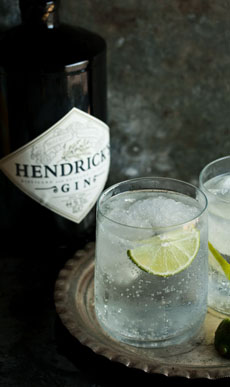
    [2] Hendricks ranks among the world’s most popular† gins. Note that they garnished this Gin & Tonic with cucumber instead of a lime wedge. (photo © William Grant & Sons).

    Bottle Of Empress 1908 Cucumber Gin
    [3] Different brands make cucumber-infused gin. Our favorite is Empress 1908 Cucumber Lemon Gin. Here’s more about it (photo © Empress Gin | Victoria Distillery).


    [4] Why not grow these heirloom lemon cucumbers at home? Head to Burpee for the seeds (photos #2 through #5 © Burpee).


    [5] These White Wonder cucumbers were a mutation. The seeds were then developed into this eye-catching variety, which happens to be extra-crisp.

    armenian-cucumber-burpee-230
    [6] Check farmers markets for specialty varieties like the Armenian cucumber, shown here.


    [7] Brown Russian cucumbers have a brown peel.


    Updated July 2026

    The different types of cucumbers are below, but we’re starting with a cocktail recipe to celebrate National Cucumber Day, June 13th. It’s a charmer we’ll serve throughout the warm weather months.

    Hendrick’s Gin sent us a cocktail recipe called Cucumber Lemonade. We enjoyed both the drink and the garnish and thought: Why don’t we use more cucumber garnishes?

  • Club soda
  • Citrus sodas: Fresca, 7-Up, Sprite
  • Savory cocktails: Bloody Mary, Martini
  • Fruit or vegetable juices and ades
  • Tonic Water
  •  
    Try adding a cucumber spear or wheel to these drinks, and you’ll have a crunchy snack to enjoy with it. Check out the photo below.

    Below:

    > Recipe: Hendrick’s Cucumber Lemonade Cocktail.

    > The different types of cucumbers.

    > The year’s 4 cucumber holidays.

    > Why cucumbers are a fruit, not a vegetable.

    > Food Fun: Hendricks Cucumber Currency Exchange.

    Elsewhere on The Nibble:

    > 9 ways to use cucumbers besides “the usual,” plus recipes.

    > The year’s 95+ vegetable holidays.

    > The history of cucumbers.

    > The history of gin.

    > The different types (expressions) of gin.

    > The year’s 14 gin holidays.

    > Beyond cocktails: using gin in glazes, marinades, and sauces.
     
    Drinks With Cucumber Garnishes
    [8] Surprise guests with a cucumber garnish instead of the standard lemon or lime. From left to right: Gin & Tonic, Vodka Tonic, lemonade, Martini, beet juice, carrot juice, club soda, water (photo: The Nibble).
     
     
    RECIPE: HENDRICK’S CUCUMBER LEMONADE COCKTAIL

    Hendrick’s is the perfect gin for this: They distill their gin using actual cucumbers among the botanicals, although it is not a cucumber-infused gin.

    You can find several cucumber-infused out there. Our favorite is Empress 1908 Cucumber-Lemon Gin.

    Ingredients For 1 Drink

  • 3 parts Hendrick’s Gin
  • 2 parts fresh squeezed lemon juice
  • 2 parts simple syrup
  • Ice
  • Sparkling water
  • Garnish: cucumber spear
  •  
    Preparation

    1. COMBINE the first three ingredients in a tall glass. Add ice.

    2. TOP with sparkling water, stir gently and garnish with a cucumber spear or wedge.
     
     
    THE DIFFERENT CUCUMBER TYPES

    You can garnish with any supermarket cucumber, but why not have fun and look for specialty varieties?

    Add them to your salads, and serve them as crudités.

    And check out the history of cucumbers.

    Growers define cucumbers in five categories: slicing, pickling, burpless, space savers, and specialty.

  • Slicing cucumbers include the typical supermarket variety: long and straight with thin, non-bitter skins and seeds. They are bred for slicing and eating. The skin of younger cucumbers is tender enough to be eaten. As the fruit* grows, the skins thicken and more seeds develop. If left on the vine too long, the flesh may become bitter. Example: Straight Eight cucumber, the long supermarket cucumber.
  • Pickling cucumbers are shorter and stouter. They are bred to have thinner skins and drier flesh—, which allows them to soak up more of the pickling brine—plus smaller seeds. The smaller in size, the easier they are to prep and pickle. Examples: Boston Pickling, Calypso, Sassy.
  • Burpless cucumbers are slicing cucumbers that have been bred to produce less of the bitter chemical that releases gas in the stomach. They were developed because enough Americans had this sensitivity. Examples: English cucumber, Persian cucumber.
  • Space saver cucumbers, also called container cucumbers, are bred to create compact vines that fit into small gardens and deck planters. Examples: Apple, Lemon, Lebanese, Picklebush, Spacemaster.
  • Specialty cucumbers/Heirloom cucumbers are old varieties that have less developed disease resistance than modern hybrids, but are appreciated for their different flavors, shapes and/or colors. Look for them in farmers’ markets. For example:
    > Armenian cucumbers (photo #4) are long, light green and heavily ribbed. They taste like a melon without the sweetness. Their ribbed shape makes interesting cross-sections when sliced.
    > Lemon cucumbers (photo #2) look like speckled lemons. White cucumbers (photo #3) are extra-crisp.
    > Crystal Apple cucumbers, heirlooms from New Zealand, have pale green, roundish fruits resembling Granny Smith apples.
    > Suyo Long is a traditional variety from China that delivers burpless, sweet ribbed fruits that can be used for slicing or pickling. Hybrids like Palace King have a ripples of yellow on emerald green skins.
  •  
    There are nearly 100 varieties of cucumbers grown in most countries in the world.

    Here’s your homework:

    Go to a farmers market and look for specialty cucumbers. If you have a garden, check out the options and plan to plant at least one variety next year.

    By the way: cucumbers (Cucumis sativus) are a fruit, not a vegetable. They are members of the Cucurbitaceae family, which also includes watermelons, pumpkin, and zucchini, among others.
     
     
    THE YEAR’S 4 CUCUMBER HOLIDAYS

  • June: National Cucumber Month
  • June 14: National / World Cucumber Day
  • June 29: International Fried Pickle Day
  • November 14: National Pickle Day
  •  
    Cucumbers For Pickling & Fresh Dill
    [9] No surprise: America’s favorite use for cucumbers is pickles (photo © Jonathan Piel Meyer | Unsplash).
     
     
    HENDRICK’S GIN CUCUMBER CURRENCY EXCHANGE

    Hendrick’s Gin Cucumber Currency Exchange gets our vote for the most creative marketing promotions out there. It’s based on the fact that Hendrick’s distills its gin using actual cucumber, and the distillers treat the fruit with what has been called “borderline religious reverence”—in this case, using it as legal tender!

  • You walk into a participating bar during a designated window called “Cucumber Hour,” typically spanning a few hours in the evening on or around World Cucumber Day, June 14th.
  • You hand the bartender an actual fresh cucumber. In exchange, the bartender pours you a complimentary Hendrick’s and Tonic, garnished with—you guessed it—a slice of cucumber.
  • The Fine Print: The bartender generally accepts any type of cucumber, regardless of shape or size. However, the exchange rate is strictly 1 cucumber = 1 drink per person; you get a second drink with a second cucumber or buy a whole round for the bar with a bag of cucumbers. The only loophole to this rule is the “group project” approach: If you bring a bunch of friends with you, and each person has their own cucumber and hands it over individually, then your group can successfully cash in on a drink for each.
  •  
    What started as a small, quirky promotion in the U.K. has evolved into a massive international campaign.

    The event heavily targets major global cocktail hubs across Asia (Bali, Jakarta, Kuala Lumpur, Manila, Singapore), Europe (London and elsewhere), and North America (Chicago, New York, Toronto).

    How Do You Find A Local Event?

    Because Hendrick’s treats this event with a high level of secrecy until right before it happens, there isn’t a master list of bars online. However, finding an exchange near you is quite easy if you know where to look.

  • Check the Official Hendrick’s Region Sites as World Cucumber Day, June 14th, approaches, some countries hold their currency exchange on the closest weekend or even stretch it over a full week in late June. Second, be sure to adjust your web region (e.g., changing the URL to /us/, /sg/ for Singapore, or /ph/ for the Philippines) because the event schedule fluctuates depending on the country.
  • Monitor Local “Time Out” or Event Outlets. City-specific lifestyle and nightlife publications (like Time Out, Eater, or Thrillist) almost always publish the complete, concrete list of local participating bars about a week before the event. Search something like “Hendrick’s Cucumber Currency Exchange [Your City Name]” during the first week of June.
  • Check Social Media Hashtags on June 14th. Head to Instagram or TikTok using the official event hashtags: #WorldCucumberDay, #CucumberCurrencyExchange, and #HendricksGin.
  •  
    _________________

    *Botanically, cucumbers, Cumis sativus, are fruits. They are members of the same binomial genus as cantaloupe, honeydew, Persian and other melons. The difference between fruits and vegetables:

    Fact: Fruits are not necessarily sweet. Tomatoes are fruits, avocados are fruits, hot chile peppers are fruits, cucumbers and squash are fruits. Because they aren’t sweet, people think of them (and classify them in recipes and in produce departments) as vegetables.

    But by botanical definition, fruits have their seeds on the inside; the only exception is the strawberry. With fruits, the seeds, or pits, are contained in the fruit’s ovary sac. True vegetables have no pit or seed sac.

    †According to the annual bar survey by VinePair, Hendrick’s ranks #4 among the world»s best-selling gin brands in top bars worldwide. Known for its distinctive rose and cucumber botanicals, it sells more almost 2 million cases annually.

    By overall retail sales volume worldwide, Hendrick’s is a major premium brand, currently in 8th place. The top place is held by a brand popular in Philippines and Southeast Asia, Ginebra San Miguel. Following in order of sales are Gordon’s (Diageo), Seagram’s (the leading gin brand in the United States, from Pernod Ricard, about 2 million cases), Tanqueray (the best-selling gin in U.S. bars Diageo, about 1.36 million cases), Beefeater (3 million cases, Pernod Ricard), Bombay Sapphire (Bacardi), .Hendrick’s (William Grant & Sons, about 1.8 million cases).


    CHECK OUT WHAT’S HAPPENING ON OUR HOME PAGE, THENIBBLE.COM.


    Comments off

    The Nibble Webzine Of Food Adventures


    © Copyright 2005-2026 Lifestyle Direct, Inc. All rights reserved. All images are copyrighted to their respective owners.