Create A Mini Oktoberfest At Home
|
|
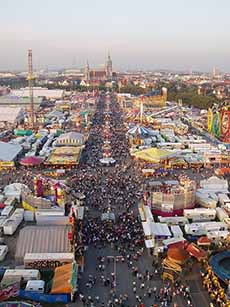
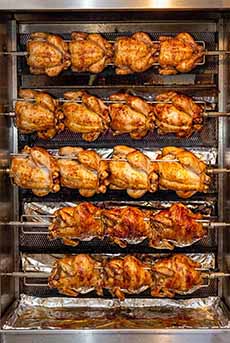
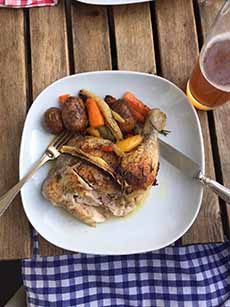
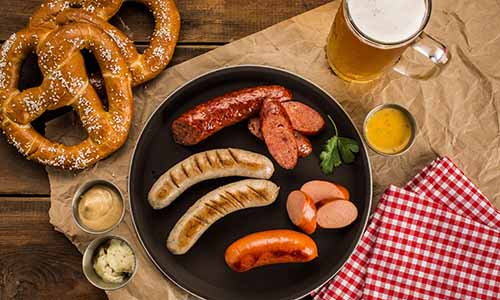
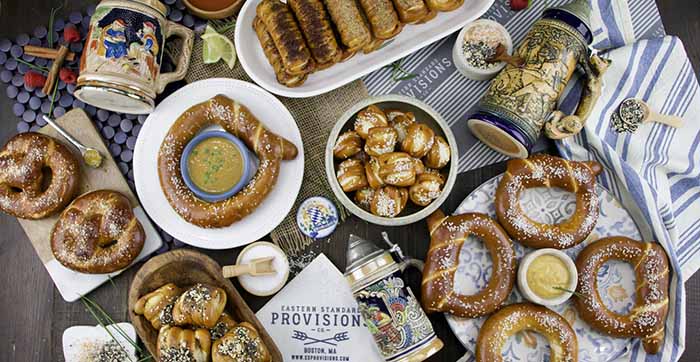
Updated September 2026 The end of September brings the annual Oktoberfest, a huge celebration in Munich, Germany that’s been held for more than 200 years. Coincidentally, September 28th is National Drink Beer Day in the U.S., so why not combine the two? Hundreds of thousands of beer lovers descend upon Munich for Oktoberfest. A mob scene from the beginning, it attracts fans from the world over. We’re not fond of mob scenes; we’d rather hold our own mini-Oktoberfest. Some years it’s a staff lunch at The Nibble, other years it’s a dinner party. An Oktoberfest lunch can be as simple as a traditional Oktoberfest spit-grilled chicken (we bought one from our supermarket), Oktoberfest Märzen or another seasonal beer, and soft pretzels with mustard. Plus, of course, Oktoberfest music. > You can buy the “Oktoberfest top hits” as an MP3 or other format. Below: > Why does Oktoberfest begin in September? > Soft pretzels from Eastern Standard Provisions. Elsewhere on The Nibble: > Here’s how to plan an Oktoberfest party: a beer tasting and/or the whole shebang. > The different types of beer: a photo glossary. > The difference between beer and ale. > The year’s 38+ beer holidays. > The year’s 20+ German and Austrian food holidays. The first thing to know about Oktoberfest is that it starts in September. Why? Given its popularity, the festival was lengthened to 16 days (the original was 5 days) and moved to start in September to take advantage of September’s warmer weather, while still providing some time in October. The last day of the festival is now fixed at the first Sunday in October. But in the United States, if it’s called “Oktoberfest,” we opine that you can celebrate any time throughout the month. There is a traditional Oktoberfest beer: It’s Märzen (MARE-zen, sometimes spelled Maerzen in English), which is German for the month of March. Before modern refrigeration* enabled year-round lagering, Märzen was historically brewed in March, then aged to be at its peak for the Oktoberfest. From 1810 until 1872, the typical Oktoberfestbier was Dunkel, the dark lager brewed by most Munich breweries. In 1872, the Spaten Brewery in Munich ran out of dunkel and had to sell some of its bock-strength amber Vienna lager instead. It was a hit, and for several decades, Oktoberfestbier was typically a bock beer. Märzen Becomes The Beer Of Choice Why do we drink a beer called “March” in October? Tastes change, and Märzen beers, with their higher alcohol and amber-to-copper color range, became the festival beer of preference [source]. The first so-named “Oktoberfest” Märzen-style beer was brewed for the Munich Oktoberfest in 1872. It seems to have taken a long while for marketing minds to realize that Oktoberfest was an opportunity to promote an “exclusive” beer for the 16 days of festivities. Many brands took the opportunity to sell “Oktoberfest” beer, although it’s typically just an Oktoberfest label on the breweries’ regular Märzens. The Märzen style of lager became so popular that with the advent of modern brewing technology, it became a staple, brewed year-round. Some backstory: In 1553, Bavarian Duke Albrecht V decreed it illegal to brew beer in Bavaria between April 23rd and September 24th. These months are typically too warm for brewing, and doing so risks bacterial growth that spoils beer. Thus, brewers ramped up production in March to have enough supply for the next five months. These March beers, called Märzens, were brewed stronger and lagered so they would keep throughout the summer. |
|
|
The term “Oktoberfest” did not have a connection to Märzen-style beer for another 300-plus years. That’s 62 years after the first Oktoberfest (in 1810). The first Oktoberfest celebration began with the Royal Wedding of Crown Prince Ludwig (later to become King Ludwig I) to Princess Therese of Saxony-Hildburghausen. It took place in Munich on October 12, 1810. The citizens of Munich were invited to attend festivities that were held on the fields in front of the city gates. The festivities that began on October 12th ended on October 17th with a horse race. Of course, everybody had a great time. So in the following years the celebrations were repeated—with interruptions for the Napoleonic Wars and other chaotic events. In the mid-1810s, a few beer stands arrived to sell refreshments to attendees. In 1881, the first spit-roasted chicken outlet opened. Tents and large-scale drinking halls sponsored by breweries debuted in 1896. With the advent of electrified cities, gaily-lit booths and carousels appeared. Performers came. Due to the ever-increasing demand for beer, breweries set up huge beer tents with musicians, replacing the traditional small beer stalls. In addition to beer festivities, Oktoberfest has become the world’s largest Volksfest: a beer festival and traveling amusement park. Each year, new and more exciting rides appeared. In 2005, a “quiet Oktoberfest” was introduced to make it more attractive to families.
Plus sausages, schnitzel, and much more beer-friendly cuisine (might we add, all of it is easy to make at home). Eastern Standard Provisions brought the taste of Oktoberfest right into our home with its special Oktoberfest Gift Box (photo #8). How about sending your favorite beer-lover a box of hand-twisted soft pretzels? These pillowy-soft pretzels, individually wrapped, arrive in a gift box along with some of the company’s signature flavored salts and artisanal dipping sauces. There’s a gift box for every occasion. Even if they’re not beer drinkers, every pretzel lover will enjoy a box of these delicious soft pretzels. There are large twisted soft pretzels, topknot soft pretzels, pretzel buns and sliders, soft pretzel bites, and soft pretzel sticks (see the photo above). Take a look: You’ll be in pretzel heaven. Also take a look at the salts and sugars, the flavored mustards, and the and dipping sauces that you can pair with the pretzels. They’re special. And the holidays are not far away. *In 1834, the first working vapor-compression refrigeration system was built. The first commercial ice-making machine was invented in the 1850s. Here’s more about early refrigeration. CHECK OUT WHAT’S HAPPENING ON OUR HOME PAGE, THENIBBLE.COM. |
||