THE NIBBLE BLOG: Products, Recipes & Trends In Specialty Foods


Also visit our main website, TheNibble.com.

TIP OF THE DAY: What To Do With Amaretto

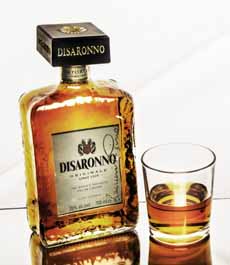
Amaretto Di Saronno
[1] The granddaddy of amaretto: Amaretto di Saronno (photo © Illva Saronno S.p.A).

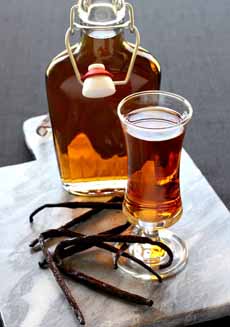
Homemade Amaretto
[2] Homemade amaretto. Here’s the recipe. If you don’t have liqueur glasses, use snifters (photo #__) or rocks glasses (photo © Mantitlement).

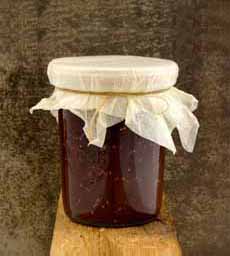
Amaretto Preserves
[3] Amaretto preserves (photo © Tell Tale Preserve Co. | Facebook).

Coffee With Amaretto
[4] Pour amaretto into your coffee, or serve it as a chaser (photo © Door Country Coffee).

Shrimp With Amaretto Marinade
[5] Shrimp in an amaretto marinade. Here’s the recipe (photo © Kansas City Steak Company).

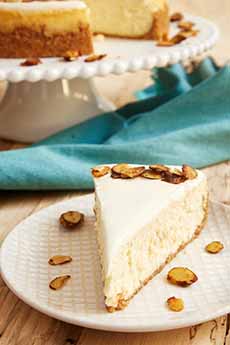
A slice of Amaretto Cheesecake, topped with almonds
[6] Amaretto cheesecake. Here’s the recipe. Certainly, serve it with a snifter of amaretto (photo © Bake Or Break).

Iced Coffee With Amaretto
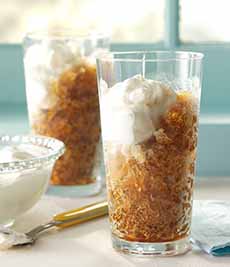
[7] “Tipsy” iced coffee with amaretto. Here’s the recipe (photos #7, #8, andd #10 © Taste Of Home).

Amaretto Layer Cake
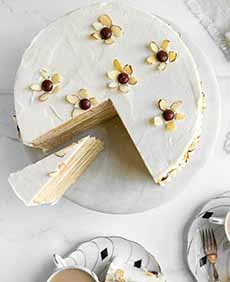
[8] Amaretto layer cake. Here’s the recipe.


April 19th is National Amaretto Day, in honor of an almond-flavored liqueur initially made with local bitter almonds in the area of Saronno, Italy since before 1525.

Amaretto is Italian for “a little bitter,” which it may have been back then. Today, it is sweet—and often made from apricot pits, which taste like almond and are a whole lot less expensive.

But what to do with that bottle of amaretto?

Gone are the days when a glass of liqueur would be a sweet ending to dinner. Has anyone had an after-dinner liqueur at home since, say, the 1970s?

Don’t let the bottle of amaretto gather dust on a closet shelf. Today’s tip is: Take that bottle down and put it to good use!

Below:

> Favorite ways to drink amaretto.

> 40 ways to use amaretto in foods and beverages.

> A recipe for amaretto brownies.

Elsewhere on The Nibble:

> The history of amaretto liqueur.

> The year’s 7 liqueur holidays.

> The year’s 8+ almond holidays.

> The year’s 50+ cocktail and spirits holidays.
 
 
POPULAR WAYS TO DRINK AMARETTO
 
1. Revive the custom of the after dinner drink.

Drink your dessert instead of eating something sweet.

You don’t need to buy delicate, stemmed liqueur glasses: Rocks glasses, even shot glasses, will do just fine.

We use miniature brandy snifters.
 
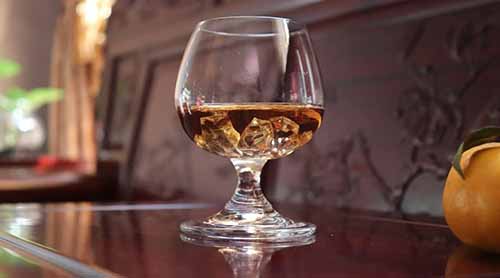
Brandy Snifter With Amaretto
[9] Enjoy amaretto in your brandy snifters (photo BothEarn Crystal | Amazon).
 
 
2. Bring out the bottle with after-dinner coffee…

…or brunch coffee…or coffee at any respectable time of day.

We have long followed our Nana’s custom of bringing a silver tray with four liqueur bottles (amaretto, anisette, Courvoisier or other Cognac, crème de cacao) and small cream pitchers to the table with coffee.

Why the little pitchers? Nana was far too elegant to pour liqueur from a bottle into a coffee cup. It was poured from the bottle into the pitcher, and then into the cup.

Why didn’t she serve the amaretto as a chaser in her crystal liqueur glasses? Alas, it’s too late to ask.

But anyone who enjoys a shot of flavored syrup in their cup of coffee will appreciate the even greater depth of favor from a sweet liqueur—mixed in or served separately.
 
 
3. Make cocktails.

You can even throw a cocktail party with a menu of amaretto cocktails: Almond Joy, Amaretto Alexander, Amaretto and Coke, Amaretto Sour, Italian Sunset and others.

Here are “the 10 best amaretto cocktail recipes.”

Everything old is new again.

And for dessert: a DiSaronno Milkshake, which is just as it sounds: amaretto and vanilla ice cream, tossed into the blender. By the way, the original milkshake was made with whiskey.
 
 
MORE WAYS TO USE AMARETTO

We have almost 40 different ways to use amaretto.

While the biggest opportunity comes in adding a tablespoon or two to sweet foods, there are also savory uses.
 
 
Amaretto In Desserts

  • Almond cookies
  • Anything that uses almond flour
  • Applesauce
  • Any chocolate recipe, including chocolate truffles
  • Baked or sautéed apples or pears, or sautéed stone fruits
  • Cake: sprinkle directly onto angel, pound and sponge cakes, or reduce into a sauce
  • Cannoli cream
  • Cheesecake
  • Compote or stewed fruit
  • Cookie dip (make a sweet dip, or just dip the cookies in straight amaretto)
  • Crêpes
  • Dessert sauce (butterscotch, caramel, chocolate, fruit)
  • Fresh fruit and fruit salad (pineapple or peaches and amaretto are inspired pairings)
  • Frostings and fillings
  • Ice cream: churned into homemade (really delicious!), or poured over a scoop of ready made
  • Jam and preserves
  • Maraschino cherries (replace half the sugar syrup with amaretto)
  • Marinate dried fruits (as a garnish for proteins or desserts)
  • Pudding (almost any flavor)
  • Sautéed bananas
  • Tiramisu
  • Whipped cream
  •  
     
    Amaretto In Beverages

  • Beertails (yes, add some to beer, especially a bland one)
  • Cherry, peach or pineapple Jell-O shots
  • Cocktails
  • Cherry, cola or lemon-lime soft drinks
  • Coffee, hot or iced
  • Floats and milkshakes
  • Hot chocolate
  • Neat or on the rocks
  • Tea, hot or iced
  • Sparkling wine
  • Spritzer (club soda and amaretto)
  •  
    Still More Amaretto Uses

  • Almondine sauce for chicken, duck, fish, pork and vegetables
  • French toast, pancake and waffle batter
  • Peanut butter or chocolate spread (e.g. Nutella)
  • Marinades for meat and seafood (delish with grilled shrimp [photo #5]—here’s a recipe)
  •  
    What if you simply have too much amaretto?

    Give it away. Our Dad, who didn’t drink alcohol, had four bottles in his closet—and didn’t understand the concept of re-gifting.

    Tie a bow around the neck; and if you feel you need to buy something, add some liqueur glasses.
     
     
    Not enough amaretto?

    Make your own with this recipe.
     
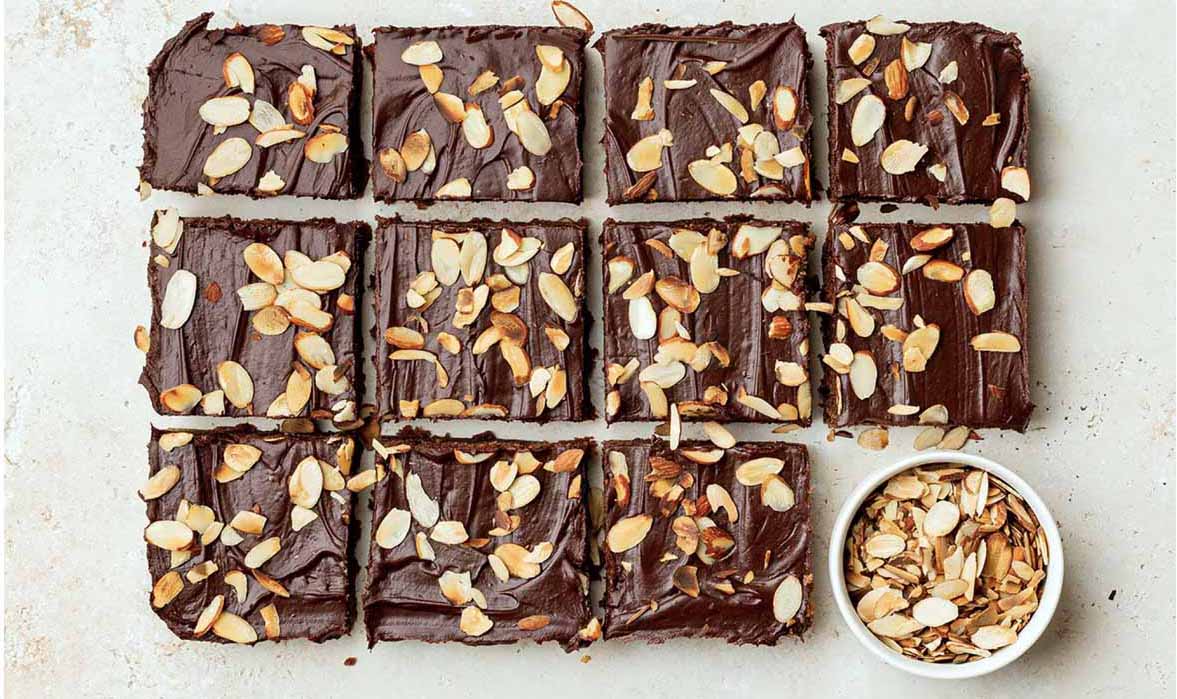
    A Tray Of Amaretto Brownies
    [10] Rosie’s Famous Amaretto Brownies from King Arthur Baking. Here’s the recipe (photo © King Arthur Baking).
     
     
    RECIPE: AMARETTO BROWNIES WITH AMARETTO FROSTING

    Thanks to Rosie Bucherati of King Arthur Flour for this yummy recipe.

    Ingredients For About 4 Dozen Small Squares

    For The Brownies

  • 1 cup (16 tablespoons) unsalted butter
  • 4 ounces bittersweet or unsweetened baking chocolate
  • 2 cups granulated sugar
  • 4 large eggs, lightly beaten
  • 2 tablespoons amaretto
  • 1-1/2 cups unbleached all-purpose flour
  • 1/2 teaspoon salt
  • Optional garnish: 1/3 cup tablespoons sliced or slivered almonds
  •  
    For The Amaretto Frosting

  • 1/2 cup (8 tablespoons) unsalted butter, melted
  • 2/3 cup natural or Dutch-process cocoa
  • 3 cups confectioner’s sugar, sifted
  • 1/3 cup milk
  • 1 to 2 tablespoons amaretto
  • Optional: 1/2 teaspoon espresso powder (for enhanced flavor)
  •  
    Preparation

    1. PREHEAT the oven to 400°F. Lightly grease a 9 x 13-inch baking pan.

     
    2. MELT the butter and chocolate in a heavy saucepan over low heat, stirring constantly until melted (or you can microwave). Add sugar, stirring until combined. Remove from the heat, and cool to lukewarm. Stir in the eggs and amaretto.

    3. ADD the flour, salt and espresso powder, beating gently until thoroughly combined. Spread the batter into the pan. Bake for 18 to 20 minutes, until a toothpick inserted into the center comes out clean.

    4. MAKE the frosting. Combine the butter and chocolate in bowl, stirring until smooth. Add the sifted confectioner’s sugar alternately with the milk, beating on medium speed. Stir in the amaretto and espresso powder.
    5. SPREAD the icing on the cooled brownies. Garnish with almonds. Cover and refrigerate the brownies for at least 1 hour before serving; this will help the icing set, and make cutting a lot less messy.

    6. CUT the brownies in small squares to serve. Cover any leftovers, and store at cool room temperature. If it’s warm in your house, you can wrap them airtight and store in the fridge for a day or so; or freeze for longer storage.
     
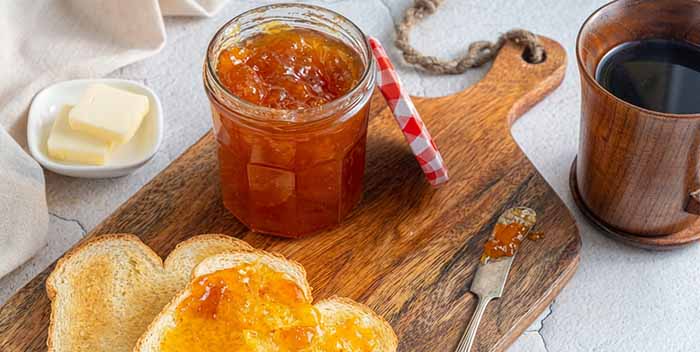
    A Jar Of Apricot Jam With Amaretto
    [11] Whisk a spoonful of amaretto into apricot jam.
     

    CHECK OUT WHAT’S HAPPENING ON OUR HOME PAGE, THENIBBLE.COM.


    Comments off

    PRODUCT: Good Zebra Gourmet Animal Crackers

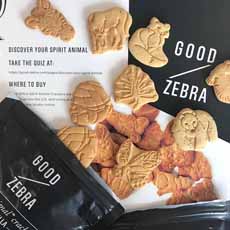
    Good Zebra Animal Crackers

    Good Zebra Animal Crackers
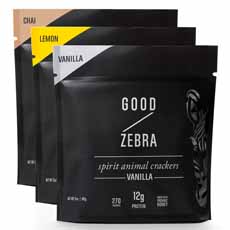
    Spirit animals await you, in chai, lemon and vanilla. Photos courtesy Good Zebra.


    Good Zebra calls their animal crackers “spirit animal crackers.” That’s because their four varieties represent different spirit animals.

    You can take the quiz to find your spirit animal—a totem representing you in the animal kingdom.

    A totem is a spirit being, sacred object, or symbol of a tribe, clan, family or individual.

    Native American tradition provides that each individual is connected with nine different animals that will accompany each person through life, acting as guides.

    Cultures around the world consider their spirit animal to be an otherworldly guide, who appears during difficult times to offer love, healing and/or support.

    It generally takes the form of an animal with which a person (or a clan) shares a certain set of characteristics, and thus a kinship.

    The animal acts as a guide and protector for humans. In death, the humans’ spirits are absorbed into the animal. (Here’s more from The Atlantic.)

    You don’t have to pursue your spirit animal in order to enjoy Good Zebra animal crackers, however.

    We call Good Zebra gourmet animal crackers, because the sophisticated flavors taste so good—in chai, lemon and vanilla.

    There are 11 different animal shapes*, inspired by original tattoo art, “each with a soul-touching message to enlighten, uplift and empower,” according to the producers.


    Each 2-ounce resealable bag contains approximately 20 animal crackers, delivering 12 grams of protein.

    The crackers are all natural, nothing processed or refined (they’re sweetened with honey and coconut sugar). Made with 70% organic ingredients, they’re certified kosher by OU.

    You can buy 12 packages for $28 or four packages for $17.

    Get yours at Good-Zebra.com.

    If you’d prefer to bake your own animal crackers, here’s a recipe.

    ________________

    *We identified a butterfly, deer, fox, grizzly bear, kestrel, owl, peacock, turtle, unicorn, wolf, and of course, zebra. There is a Native American zodiac with additional animal symbols.
      

    Comments off

    Homemade Animal Crackers Recipe & History Of Animal Crackers

    National Animal Crackers Day is celebrated on April 18th. You could buy a box…but how about homemade animal crackers?

    You’re never too adult to enjoy animal crackers..and since your palate is likely much evolved since childhood, to taste the superiority of homemade versions.

    Any adult will smile at a plate of cookie nostalgia with a cup of coffee or tea (and listen to six-year-old Shirley Temple sing “Animal Crackers In My Soup”).

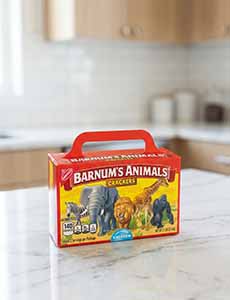
    The standard-bearer, Barnum’s Animal Crackers (photo #5), has far less sugar than other cookies. In fact, they’re barely sweet enough to be called a cookie.

    So why are they called crackers?

    Because they are made with a layered dough like crackers.

    Below:

    > The history of animal crackers.

    > The history of all crackers.

    > Recipe: homemade animal crackers.

    > Uses for crackers beyond the conventional.

    Elsewhere on The Nibble:

    > The history of cookies and crackers.

    > The 10 different styles of cookies.

    > The different varieties of cookies: a photo glossary.

    > The year’s 44 cookie holidays.

    > The year’s 90 snack holidays.

    > Bonus: Shirley Temple singing “Animal Crackers In My Soup.”
     
     
    THE HISTORY OF ANIMAL CRACKERS

    Animal crackers originated in Britain in 1889, capitalizing on the time when P.T. Barnum toured there with his circus. The first boxes were labeled Barnum’s Animals (presumably by license).

    In the U.K. they were called animal biscuits, biscuits being the British word for cookies.

    The crackers were exported to the U.S. When American manufacturers made their own versions, they changed the word biscuit to cracker instead of cookie (we opine, because consumers would expect cookies to be sweeter).

    There had been earlier animal crackers in the U.S. In 1883, when the earliest known recipe for “animals” was printed in Secretes of the Bakers and Confectioners’ Trade, written by J.D. Hounihan.

    Prior to Nabisco, at least two companies, Dozier-Weyl Cracker Company and the Holmes and Coutts Company, had been making them [source].

    But the National Biscuit Company won the day with their bright red and yellow “circus car” box, introduced during the holiday season of 1902 with a string attached to hang the box from the Christmas tree.

    Today, brands like Annie’s and Best Choice call their products animal cookies…and add more sugar to the recipe.

    > Here’s more of the history of animal crackers.

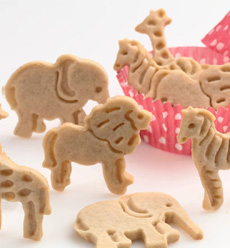
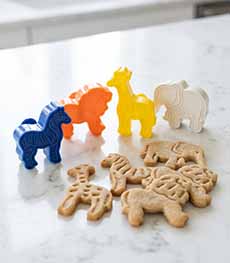
    The following recipe, from King Arthur Flour, uses small (2” to 2¼”) spring-loaded plunger cutters (photo #2). You can buy a set of four for $9.95: elephant, giraffe, lion and zebra. You plunge down, then pop the dough right out.

    If you don’t want to buy the cutters, use whatever animal cookie cutters you have—even large ones. There’s no law that animal crackers have to be small.

    Also check out these 3-D animal crackers.
     
     
    RECIPE: ANIMAL COOKIES

    This recipe, from King Arthur Flour, makes sweet, buttery cookies. It uses Princess Cake & Cookie Flavor, an extract that combines vanilla and lemon and emulates the flavor profile and aroma of Barnum’s Animal Crackers.

    If you don’t want to purchase a bottle, you can substitute: only vanilla extract, 3/4 teaspoon vanilla extract and 1/4 teaspoon lemon extract, almond extract, anise extract, or another flavor of choice.

    Another idea: Some brands add nutmeg or cinnamon.

    Prep time is 15 to 20 minutes; bake time is 8 to 10 minutes per sheet.

    Ingredients For About 5 Dozen Cookies

  • 3/4 cup (12 tablespoons) butter, soft
  • 1/4 cup sugar
  • 3 tablespoons honey
  • 1/2 teaspoon salt
  • 1/2 teaspoon baking soda
  • 1 teaspoon Princess Cake and Cookie Flavor (or substitute)
  • 1-1/2 cups unbleached all-purpose flour
  • 1 cup oat flour or finely ground rolled oats
  •  
    Preparation

    1. BEAT together the butter, sugar, honey, salt, baking soda, and flavor until well combined. Add the flour and oat flour, mixing to combine.

    2. DIVIDE the dough in half, flattening each half slightly to make a disk; then wrap in plastic. Refrigerate for at least 1 hour.

    3. PREHEAT the oven to 350°F. Lightly grease several baking sheets, or line them with parchment.

    4. TAKE one piece of dough from the refrigerator and turn it out onto a lightly floured surface. Roll the dough 1/4″ thick.

      Homemade Animal Cookies
    [1] Homemade animal cookies (photos #1 and #2 © King Arthur Flour).

    Homemade Animal Crackers
    [2] Make your own with these little plunger cookie cutters.

    Homemade Animal Crackers
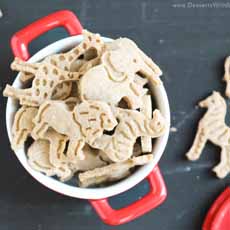
    [3] Here’s a vegan recipe (photo © Desserts With Benefits).

    A Bowl Of Strawberry Ice Cream With Animal Crackers
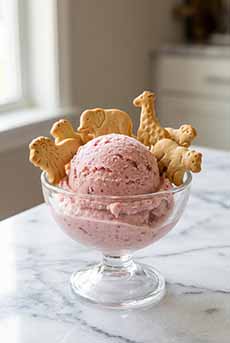
    [4] Celebrate with ice cream! You can also dip animal crackers into melted chocolate and dry them on wax paper (Abacus Photo).

    Box Of Nabisco Animal Crackers
    [5] The original animal crackers were zoo animals. Updated to reflect kids’ interest in wild animals, it also adds calcium to appeal to parents (Abacus Photo)


    [6] This recipe opted for home and farm animals—cat, dog, duck, owl, pig, rabbit—rather than wild ones (photo © Crafty Baking).

    5. DIP the animal cookie cutters in flour (each time you cut), then use them to cut the dough. Using the cutters may take a little practice, not to mention patience in making so many small cookies. Press the cutter down by the outside edges first, then use the plunger to emboss before picking up; and push the plunger again to release the cookie over the baking sheet.

    6. TRANSFER the cookies to the prepared baking sheets and freeze for 15 minutes. This helps the cookies retain their shape and imprint.

    7. BAKE the cookies for 8 to 10 minutes, until lightly browned around the edges (do not let the cookies brown). Remove the cookies from the oven, and let them cool on the baking sheet for several minutes, or until set. Then transfer the cookies on parchment to a rack to cool completely. Repeat with the remaining dough.
     
    Animal Cracker Ants On A Log
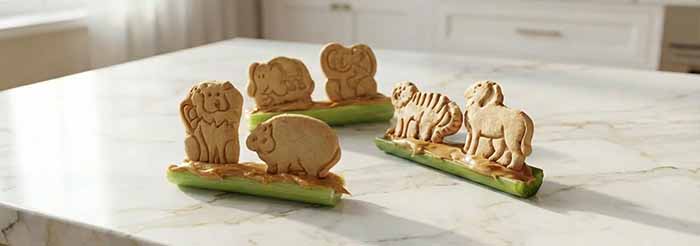
    [7] Animal crackers can replace raisins in “Ants On A Log.” National Ants On A Log Day is celebrated the second Tuesday of September. Check out more Ants On A Logvariations (Abacus Photo).
     
     
    THE HISTORY OF CRACKERS

    Flat, dry, crispy crackers were created as a solution to a very real problem: how to preserve food, for home and travel alike.

    The earliest crackers were created by ancient civilizations. The Romans made a hard, salty, dry biscuit ration called buccellatum, which soldiers carried because it lasted a long time without spoiling. Twice-baked to remove the moisture (which prevents mold), they are the ancestor of modern biscotti—although more functional than delicious.

    In fact, buccellatum were rock-hard, practically indestructible, and had to be soaked in water, wine, or soup to be edible. (The modern biscotti di Prato from Tuscany didn’t emerge until the 14th century, adding sugar, honey, and almonds to create a delicacy rather than a military ration.)

    Many civilizations made cracker-like foods (i.e., dry, shelf-stable) for portability, preservation, or convenience, rather than for pleasurable eating as we enjoy crackers today. Some other examples:

  • Ancient Egypt and the Near East: Thin baked cereal cakes and flatbreads were made from emmer wheat or barley.
  • Ancient Greece: Several kinds of twice-baked or dried breads/rusks, including barley-based travel foods were made.
  • Israel/Levant: Unleavened breads such as early forms of matzoh were thin, dry, and durable.
  • Medieval/Early Modern Europe: Rusks, zwieback, ship’s biscuit, and hardtack were carried by sailors, soldiers, pilgrims, and travelers who relied on them.
  •  
    In Asia, crackers developed as regular food—snacks and meal accompaniments—rather than as functional food.

  • South Asia: Papadams and similar cracker-type foods, dating to before 500 B.C.E., were developed. The thin, crisp, dried discs made from black gram bean flour (or chickpeas, lentils, chickpeas, millet, rice, or tapioca) became a staple in Indian cuisine.
  • East Asia: Various forms of rice crackers developed over time. In Japan, senbei, made from glutinous rice, are first mentioned in print in 737 C.E. They were brought to Japan by the Chinese.
  •  
    But in Europe, modern crackers, eaten for pleasure, had a ways to go.

    By the Middle Ages, cracker-like foods similar to those of Ancient Greece and Rome existed across Europe.

  • Sailors relied on hardtack—a very hard, dry cracker made from flour, water, and sometimes salt. It could last for months or even years, although it was notoriously hard on the teeth.
  •  

  • Better crackers, ancestors of those we eat today, really took off in the 18th and 19th centuries with the rise of long sea voyages.
  •  
     
    The Modern Cracker

    The modern cracker as we know it took shape in the early 1800s. In 1801, a baker in Massachusetts named Josiah Bent made a baked biscuit that “cracked” when it broke—hence the name “cracker.” These were still simple to make and easy to transport, but more palatable than hardtack.

    Later in the 19th century, companies began to refine the cracker into lighter, tastier versions.

  • Innovations like baking soda and yeast created airier textures.
  • This is when varieties like soda crackers and saltines appeared (1870s), followed by flavored and specialty crackers.
  •  
    By the late 1800s the cracker had become a popular and and mass-market food, an enjoyable everyday bread substitute.

    Today’s crackers range from basic water crackers to gourmet, seeded, or sweet varieties.

    No longer a survival food, they’re a staple for appetizers, cheese boards, and snacks, and as a traditional accompaniment to a bowl of soup.
     
    Platter Of Assorted Crackers
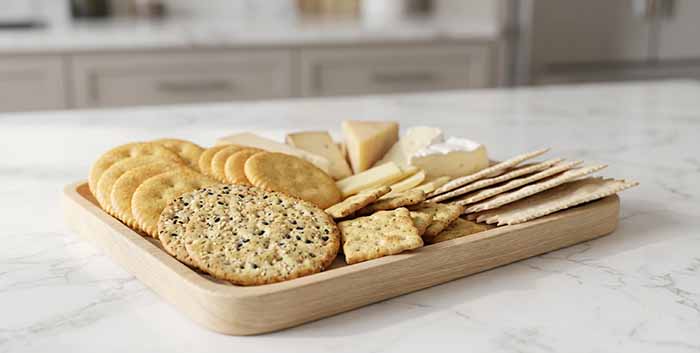
    [8] When you’re having guests—or to treat yourself—look for specialty crackers and serve an assortment. It will delight cracker lovers (Abacus Photo).
     
     
    MODERN USES FOR CRACKERS

  • Binders for meat and seafood, e.g. crab cakes, meatballs, and meatloaf. Crackers are often more seasoned and absorbent than plain breadcrumbs.
  • Casserole crusts, especially green been casserole and mac and cheese.
  • Crack candy, a.k.a. Christmas crack and saltine cracker candy: saltine crackers, toffee bits, brown sugar and chocolate morsels are melted together and poured over crackers. For Passover, this is done with matzoh.
  • Croutons, whether whole oyster crackers or broken pieces of of other crackers.
  • Flatbread sandwiches, e.g. smoked salmon, cucumber, and cream cheese, or avocado toast, served open-faced.
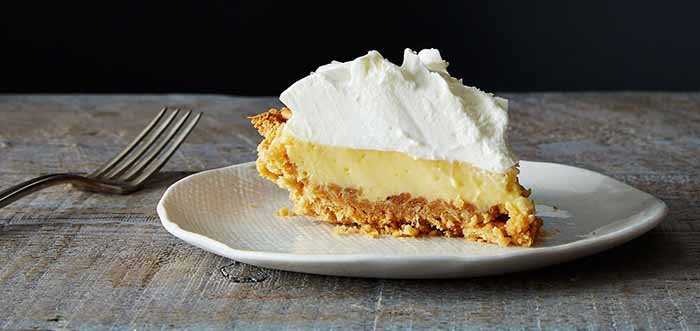
  • Pie crusts for savory and sweet pies; crushed saltines or buttery Ritz-style crackers mixed with melted butter for quiches, tomato pies, and other vegetable pies. Atlantic Beach Pie (a variation of lemon meringue), uses a crust of crushed saltines and butter (photo #9, below).
  • S’mores: Graham crackers are technically a cracker (invented by Sylvester Graham as a health food), but savory wheat crackers are now often used to make “savory s’mores” with dark chocolate.
  •  
    A Slice Of Atlantic Beach Pie
    [9] Atlantic Beach Pie, lemon meringue with a saltine crust. Here’s Chef Bill Smith’s recipe (photo © Food 52).


    CHECK OUT WHAT’S HAPPENING ON OUR HOME PAGE, THENIBBLE.COM.


    Comments off


    © Copyright 2005-2026 Lifestyle Direct, Inc. All rights reserved. All images are copyrighted to their respective owners.