The Classic Daiquirí, History Of The Daiquirí & More Daiquirí Recipes
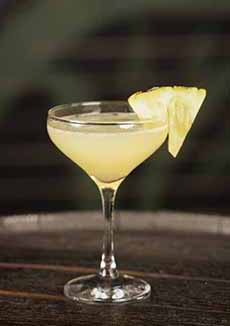
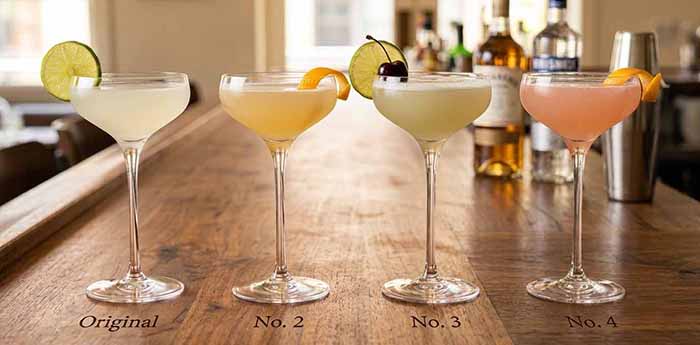
 [1] No. 2 Daiquirí of the four recipes below. It’s the first variation of the original, created in 1920s Havana (photo © Bacardi Rum).
|
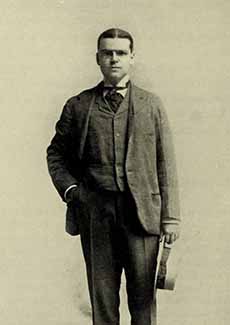
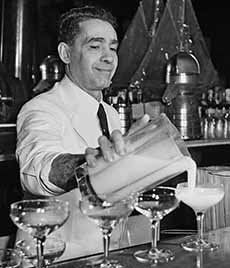
Updated July 2026 July 19th is National Daiquirí Day, well known as one of the favorite drinks of writer Ernest Hemingway, and less well known as a favorite of President John F. Kennedy (Jackie trained the White House staff to make them). A Daiquirí (pronounced DAK-uh-ree in English, but die-kee-REE in the native Taíno language) is a combination of rum, lime juice, and sugar or another sweetener (we use agave nectar). PARTY IDEA: Next year on July 19th, consider hosting a National Daiquirí Day party with pitchers of all four recipes! Below: > The history of the Daiquirí. > No. 2 Daiquirí recipe: Orange Daiquirí. > No. 3 Daiquirí recipe: The Hemingway. > No. 4 Daiquirí recipe: The sweeter Hemingway. > Blood Orange Daiquirí recipe. > The year’s 100+ cocktail and spirit holidays. > The year’s 15 rum holidays. The cocktail was invented in 1898 at the El Floridita bar in the tropical heat of the Cuban mining town of Daiquirí, near Santiago, Cuba, home of an iron mine. While one version has Jennings Cox (photo #5), an American mining engineer working at the mine, had a bartender shake Bacardi rum, sugar, and lime with ice, a different story has emerged: That Cox mixed the very first Daiquirí (which he originally thought of as a “Rum Sour”) in his own home or the mining company’s executive quarters to entertain guests. A tall glass (Collins glass) was filled with cracked ice; a teaspoon of sugar was sprinkled over the ice, and the juice of one or two limes was squeezed over the sugar. Two or three ounces of white rum were added, and the mixture was stirred with a long-handled spoon. (Later versions used a shaker and other proportions.) The group of mining engineers declared it a hit. The first actual bar to serve the drink was the Venus Bar in the nearby city of Santiago de Cuba. Cox and his fellow mining engineers used to gather there every morning, and they ultimately decided to name the cocktail after the town where they worked [source: Difford’s Guide]. The recipe eventually traveled across the island to Havana, where top bartenders began shaking it up. In the 1910s and 1920s, a legendary bartender named Constantino Ribalaigua Vert (photo #6) at El Floridita in Old Havana (a hangout of Ernest Hemingway’s) added the ingredients with shaved ice to a blender and created the frozen Daiquirí, making the drink world-famous. This earned the bar earned the nickname “La Cuna del Daiquirí” (The Cradle of the Daiquirí), which created the confusion that the drink was invented there [source: Bacardi]. It is also possible that William Astor Chanler, Sr., a U.S. congressman who purchased the Santiago Iron Mines in 1902, brought the recipe back from Cuba and introduced the Daiquirí to private clubs in New York at that time. In 1909, Rear Admiral Lucius W. Johnson, then a young U.S. Navy medical officer, visited Cuba and was introduced to the drink directly by its inventor, Jennings Cox. Johnson loved it so much that he brought a barrel of Cuban rum and the recipe back to Washington, D.C., introducing it to the bartenders at the Army and Navy Club on Farragut Square that same year [source]. The Daiquirí is one of the six classic cocktails highlighted in The Fine Art of Mixing Drinks, first published in 1948 and still in print (here’s the 2008 edition). The others included: The Daiquirí Evolves As with just about any recipe, many variations of the Daiquirí have proliferated. After the recipe traveled from the town of Daiquirí to Havana, Constantino Ribailagua, a bartender at El Floridita bar and restaurant in Old Havana, created three variations. Easy variations: We received these recipes from Bacardi. We’d expected Bacardi to be the #1 rum in the world, but that position is held by a brand we’d never heard of. Based on global sales volume, the Top 5 rum brands in the world are:
|
|
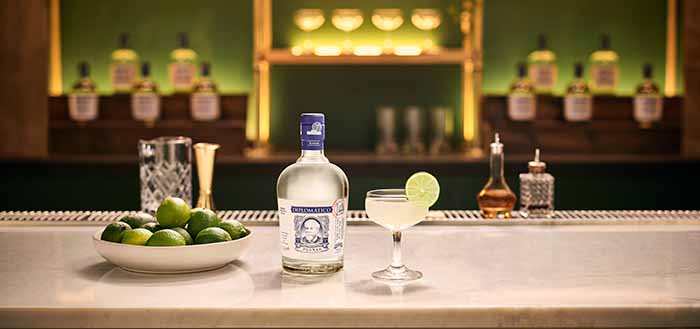 [7] Imagine yourself tossing one down with Ernest Hemingway (photo © Diplomatico Rum). THE ORIGINAL DAIQUIRÍ RECIPE See photo #1 and photo #8 below. Preparation requires a cocktail shaker and a strainer. Ingredients Per Drink 1. ADD the sugar and lime juice to a cocktail shaker and stir until the sugar has dissolved. 2. ADD the rum and fill the shaker with ice: half of ice cubes, topped with half of crushed ice. Shake vigorously until thoroughly chilled; strain into a chilled coupe cocktail glass (photo #8). Ingredients 1. COMBINE all ingredients except zest in a cocktail shaker filled with ice cubes and crushed ice. Give it all a good, hard shake until the cocktail shaker is cold. 2. STRAIN the mixture into a chilled glass. Garnish with orange zest. See photo #8 below. This variation on the classic Daiquirí is often referred to as the Hemingway Daiquirí (to us it seems pretty fancy for such a straightforward guy). Serve it in a rocks glass. See photo #8 above. Ingredients 1. COMBINE the first five ingredients and shake vigorously with ice cubes, until the cocktail shaker is cold. 2. STRAIN into a rocks glass filled with crushed ice. Garnish and serve. Ribailagua tweaked the No. 3 Daiquirí, the Hemingway, to achieve subtle variations: a more perfumed aroma and a slightly sweeter profile. See photo #8 above. Ingredients 1. COMBINE the ingredients in a cocktail shaker filled with ice cubes and crushed ice. Shake vigorously until the cocktail shaker is cold. 2. DOUBLE STRAIN the mix into a chilled glass by passing it through a hawthorne strainer (bar strainer) and then through a tea strainer. If you don’t have a hawthorne strainer you can just pass it once through a tea strainer. Garnish with a maraschino cherry. CHECK OUT WHAT’S HAPPENING ON OUR HOME PAGE, THENIBBLE.COM. |
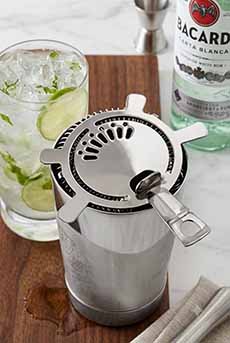
||