Giardiniera: Many Ways To Use It & A Recipe To Make Your Own
|
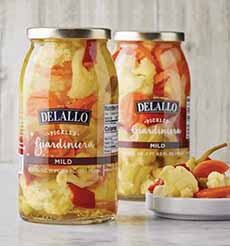
Updated June 2026 Giardiniera (jar-dih-NYAIR-uh) is an Italian word that means “from the garden.” In Italy, giardiniera has long been a way to preserve seasonal vegetables in vinegar for use during the winter. Giardiniera is also called “sotto aceti,” which means “under vinegar,” a common term for pickled foods. It is often made with carrots, cauliflower, celery, onions and zucchini in red or white wine vinegar. Veggies from the garden are pickled in vinegar, herbs and spices. In Southern Italy, olive oil can be added; Northern Italians seem to prefer a tangier, sharper vinegar brine. Giardiniera is enjoyed regularly and is typically part of an antipasto. Below: > A recipe to make your own gardiniera. Elsewhere on The Nibble: > The year’s 18 condiment holidays: dips, dressings, and sauces. > The year’s 9 cruciferous vegetable holidays. > The year’s 95+ vegetable holidays. Vinegar was being made in ancient Mesopotamia (Babylonia) around 5000 B.C.E., and in Egypt by about 3000 B.C.E.; later in China and India. Because vinegar forms naturally whenever alcoholic liquids are exposed to air, it appeared independently in different parts of the world. Ancient Greeks and Romans vastly expanded its use.
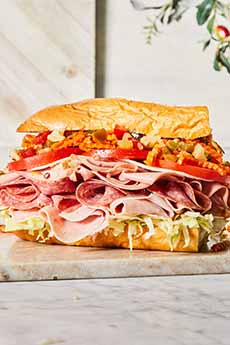
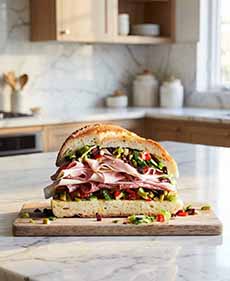
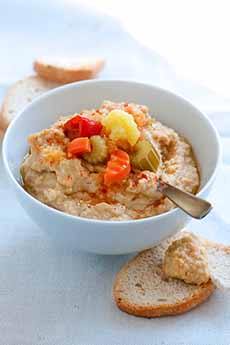
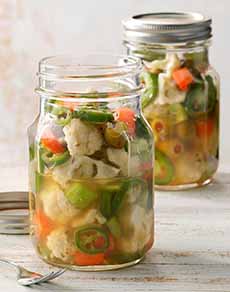
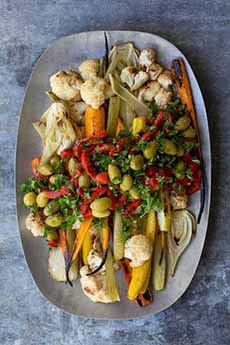
Thus, giardiniera was made for millennia before Italian immigrants brought giardiniera recipes to America in the late 19th and early 20th centuries. In Chicago, Italian-American communities transformed giardiniera into a spicy, oil-based relish rather than a purely vinegar-pickle vegetable. They minced the vegetables more finely and added chile peppers or flakes for heat. “Chicago-style giardiniera” became a staple topping for Italian beef sandwiches, subs, pizza, sausages, and hot dogs. The result is a pickled condiment used like other pickles on burgers, eggs and sandwiches, from the classic muffaletta of New Orleans to the Italian beef sandwich in Chicago to an everyday ham and cheese. (See more uses below.) Note: Chicago-style giardiniera is stored in oil (commercial brands often use a blend of olive and vegetable oils), which softens the heat and makes it more spoonable. It’s quite different from the crisp, vinegary Italian original. While more than a few people enjoy snacking from the jar, consider these options: Bell peppers, carrots, cauliflower, celery, hot chiles and pitted olives are common, but you can add whatever appeals to you, including non-traditional ingredients like mushrooms and okra. There are mild and hot versions, the latter employing hot chile peppers.Enjoy it at home and bring a jar full as a house gift. After you make the first batch, you’ll be able to adjust the ingredients to create your ideal “signature” blend. You can cut the vegetables as you like, from chunky to a more finely diced relish. Note that if you use olive oil in the recipe, it will cloud up in the fridge. But will become clear again at room temperature. Ingredients *Use good vinegar, and never distilled white vinegar. 1. COMBINE water and salt in a non-reactive bowl; mix to dissolve. Add the vegetables and garlic. Cover and refrigerate overnight. 2. DRAIN and rinse the vegetables. In a clean bowl, mix together the vinegar with the oregano and pepper. Add the vegetables and mix to combine. Allow to marinate overnight in the fridge, or up to two days. |
|
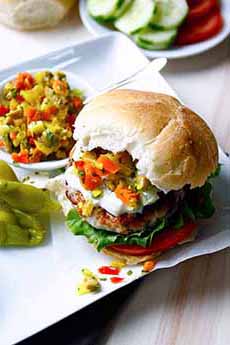
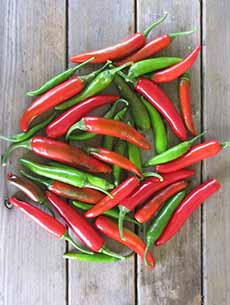
3. MOVE to an airtight container. Giardiniera improves over time, and will keep in the fridge for 2 to 3 weeks or longer. 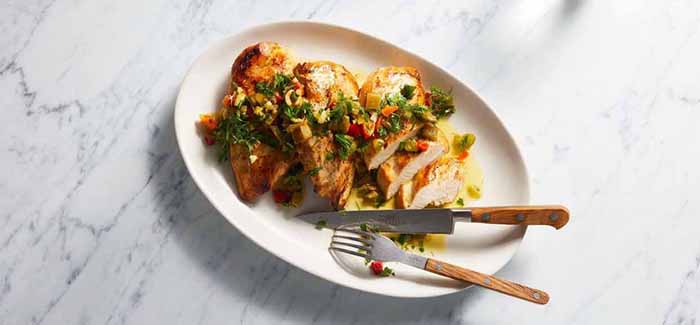 [9] Top chicken or grilled fish Here’s the recipe for this garlic chicken with giardiniera sauce (photo © Bobbi Lin | New York Times). ________________ †Alternative chiles: Serrano chiles (10,000–23,000 Scoville Heat Units) are about 5 times hotter than jalapeños (2,500–8,000). For a mild giardiniera, substitute banana peppers (0–500 SHU), pepperoncini (100–500 SHU), or a blend. You’ll get the chile pepper flavor without much heat. Another option is to use the widely-available jalapeños but remove the seeds and white ribs, which contain the capsaicin (the heat). Tip: Giardiniera gets hotter as it sits because the capsaicin disperses into the oil and brine. It’s easier to add heat later than to remove it. If you’re unsure, start with milder chiles. You can always stir in a few red pepper flakes or a bit of finely diced hot pepper to part of the batch if you decide later that you’d like more heat. CHECK OUT WHAT’S HAPPENING ON OUR HOME PAGE, THENIBBLE.COM. |