FOOD 101: How To Chiffonade & Foods To Garnish With Chiffonade
|
|
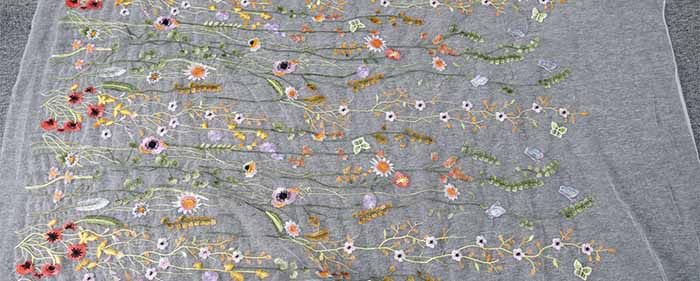
Updated June 2026 We so often recommend a chiffonade (shif-oh-NOD) garnish that we’re devoting this brief article to it. Chiffonade is a French slicing technique in which leafy herbs or greens (basil, sage and spinach, for example) are cut into thin, ribbon-like strips. The name translates to “made of rags”—although we think a more attractive reference might have been chosen. See the section below for how the luxurious, sheer fabric, chiffon, evolved from those rags. It’s the perfect technique for slicing delicate herbs that can be bruised by chopping. Equally as important, it helps to release the flavor and aroma of the herb. Use the chiffonade as an elegant garnish, or stir the ribbons into eggs, risottos, salads, soups, stews, etc. Below: > The best herbs and greens to chiffonade, and where to use them. > The history of the chiffonade technique. > Why the fancy sheer silk fabric chiffon is named after chiffonade. Start With Large Leaves Large, stackable leaves are needed—the technique doesn’t work with small leaves such as parsley, rosemary, or thyme. The chiffonade technique is used to slice leafy greens and herbs into long, thin, ribbon-like strips. It is best suited for flat, broad leaves that can be neatly stacked and rolled into a tight cylinder. The word comes from the French chiffon, “little rag,” and refers to the shreds that this technique produces. It is also used to slice other foods (such as crêpes or thin omelets) into strips. Vegetables and herbs perfectly suited for a chiffonade include:
The technique, shown in the photo, is easy: 1. STACK the leaves. 2. ROLL them tightly. 3. SLICE perpendicular to the roll. |
|
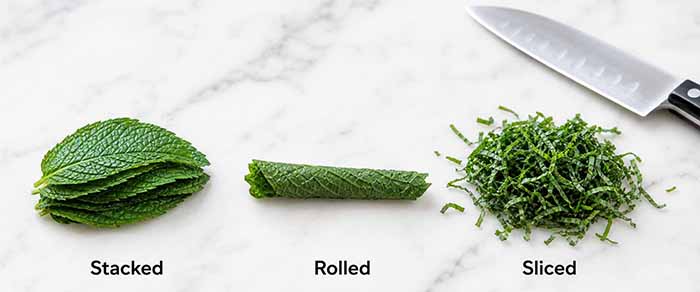 [3] The key is to stack and roll the fresh leaves tightly like a cigar, then use a sharp chef’s knife to slice them perpendicular to the roll into thin strips. THE BEST HERBS & LEAFY GREENS TO CHIFFONADE Basil Chiffonade belongs to the vocabulary of French brigade-style cooking that was codified in the 19th century, largely through the influence of figures like Escoffier and Carême. It was one of those techniques that simply was part of the accumulated practical knowledge of professional French kitchens. The technique appears in classical French culinary texts as a standard preparation, particularly for sorrel and lettuce, which were often used as a base or garnish in soups and sauces. Chiffonade was originally more about cooking than garnishing. In classical French cuisine, a chiffonade of sorrel was a common addition to cream soups and egg dishes: The fine ribbons would wilt quickly and melt into the dish. The modern use as a fresh herb garnish is a more contemporary application. But our imagination harkens back to a 17th century chef deciding to slice very thin ribbons, looking at those little green slices, and thinking “little rags.” How did the same word—chiffon—come to mean both rags and luxury fabric? The word, a rag or scrap of cloth—something worn, tattered, or worthless—comes from the word chiffe, meaning a flimsy or poor-quality piece of fabric. It’s humble, even dismissive reference. The upgrade in status happened gradually through the logic of the material itself. Chiffon the fabric, a sheer, lightweight, plainly woven silk (in the mid-20th century also made from nylon or polyester) was given the name somewhat ironically yet descriptively: It was so thin and wispy it was almost like a scrap, a mere wisp of cloth. But because it was made of silk and required considerable skill to weave, it was actually expensive and associated with haute couture and evening wear. The name stuck even as the connotations flipped entirely. A parallel word in English is gossamer, originally referring to something insubstantially thin, almost nothing. Yet it became associated with delicacy, elegance, and beauty rather than flimsiness. In the culinary context, chiffonade preserves the older, humbler sense perfectly: Those thin ribbons of basil or mint really do look like little green scraps or rags. The technique was named before “chiffonade” had fully shed its raggy origins in the culinary world. CHECK OUT WHAT’S HAPPENING ON OUR HOME PAGE, THENIBBLE.COM. |
||