Green Goddess Dressing Recipe & The History Of Green Goddess
|
|
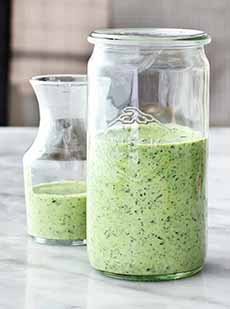
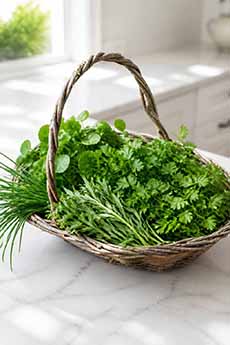
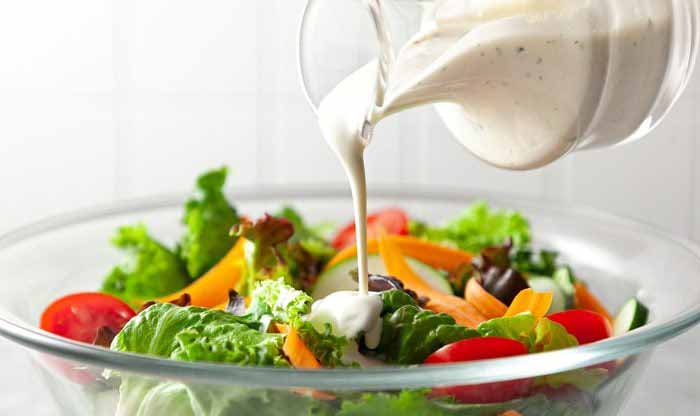
Updated August 2026 Springtime makes us think of Green Goddess salad dressing, colored pale green from the high proportion of fresh herbs. Who was the eponymous green goddess? She was a deity, worshipped in her temple in the fictional kingdom of Rukh in the Himalayas. A small plane carrying three Brits crashes there and sets off the story (more about it in the history below). August 25th is National Green Goddess Day. Below: > The history of Green Goddess dressing. > America’s top 10 salad dressings then. > America’s top 10 salad dressings now. Elsewhere on The Nibble: > The history of ranch dressing. > The year’s 18+ dressing and sauce holidays. > The year’s 40+ salad holidays. Green Goddess dressing was born in 1923 at the historic Palace Hotel in San Francisco, honoring a hit Broadway play that was performing in San Francisco. The origin story: The source was “The Green Goddess,” a play written by the prominent British theater critic and Ibsen scholar William Archer. He related that the entire concept—featuring an exotic Eastern setting, a plane crash, and a vengeance-seeking ruler—came to him fully formed in a dream in late 1919. Up until that point, Archer was famous for writing serious dramatic criticism and instructional books on how to write plays, but this marked his first and only major creative playwriting success. The play had its world premiere in 1921 on Broadway, and it was a massive hit. It starred George Arliss, a big star of stage and screen (“The First Gentleman of the Screen”). A major national tour brought Arliss and the company to San Francisco in 1923. Arliss loved the role of the sharp-witted, Cambridge-educated Rajah of Rukh so much that he starred in two film versions: a silent film adaptation released in 1923 and a talkie released in 1930, which earned him an Academy Award nomination for Best Actor (see a still from the film below). In 1923, he also took the stage production across the Atlantic to open in London at the St. James’s Theatre. While performing the play in San Francisco, Arliss stayed at the Palace Hotel. The hotel’s executive chef, Philip Roemer, created the dressing to honor the play and the actor. It, too, became a hit. Chef Roemer created the dressing to honor Arliss during that local theatrical engagement, celebrating the flesh-and-blood actor staying right there in his hotel rather than a projection on a silver screen. To honor the actor—and tip his hat to the title of the play—Chef Roemer whipped up a new herb-and-anchovy-laced dressing. The play eventually faded into obscurity, but the dressing became an enduring classic. The recipe is below, and the original Palace Hotel recipe is here. The original dressing was a base of mayonnaise blended with anchovies, chives, parsley, scallions, tarragon, and tarragon vinegar. It’s a variation of a dressing created by a chef in the kitchen of King Louis XIII of France, called sauce au vert (green sauce). Food historians note that the basic recipe is probably from the Near East and at least 2,000 years old. Roman legionaries brought it to Italy, from where it traveled to France and Germany (source). Since the ingredients are common across cultures, numerous cuisines developed their own recipes for green sauce, or salsa verde. As recipes evolved (or originated independently), cooks incorporated avocado, basil, capers, Dijon mustard, garlic, onion, and Worcestershire sauce. Some combined buttermilk with mayonnaise. Others used a vinaigrette base instead of mayonnaise. Some recipes, like the one used at Panera Bread, substitute yogurt for mayonnaise and add agave for a touch of sweetness. In the early 1970s, Seven Seas, a company that made salad dressing (since purchased by Kraft Foods), launched bottled Green Goddess dressing. It raised the awareness of Green Goddess nationwide, and spurred the many variations. This version is very similar to the original recipe. It replaces the original chervil and spinach with watercress, and omits the Worcestershire sauce. Contemporary recipes trim down the recipe to the base (mayonnaise, sour cream, yogurt), herbs, lemon juice, garlic, and seasonings. You’ll find links to those recipes under the photo captions. Some people add an avocado to the dressing and call it Green Goddess. Actually, it’s avocado dressing. Ingredients
1. PLACE the egg yolk in a bowl and whisk in 1/4 cup of the oil, a drop at a time, until the mixture thickens to mayonnaise. 2. PURÉE the parsley, watercress, tarragon, chives, and garlic (plus optional ingredients) in a food processor. Add the lemon juice and 1/2 cup of oil. 3. WHISK 2 teaspoons salt, herb purée, vinegar, and 1/2 teaspoon pepper into the mayonnaise. Once emulsified, whisk in the remaining 1/4 cup oil in a slow, steady stream. That’s it! |
|
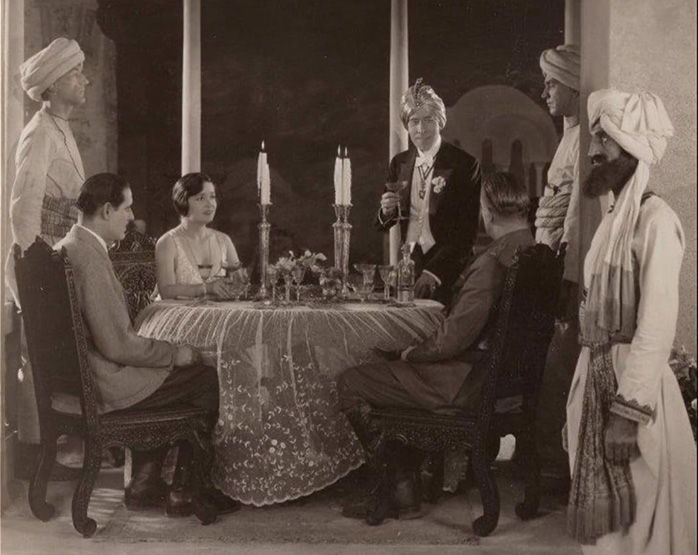 [7] A still from the 1930 Warner Brothers “Green Goddess” film. George Arliss, the Rajah of Rukh, is in the tuxedo and silver turban. 3. THE “GOLDEN AGE” OF SALADS Food historians have referred to that mid-century era as a “golden age” for salads—but not in our modern context of health, wellness, or nutritional enlightenment. Quite the opposite! What the 1920s through the 1950s actually gave us was the era of the theatrical, heavy, and deeply whimsical salad, the golden age of salads as a status symbol and a chemical canvas rather than a health food:
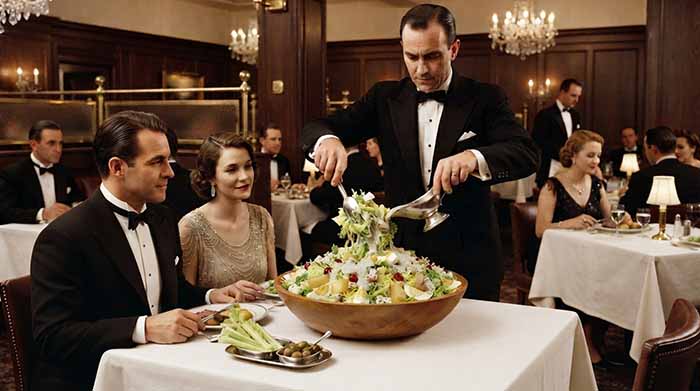
They brought alfalfa sprouts, avocado slices, and raw spinach to the American home table, elevating the iceberg lettuce side salad and jettisoning the decorative, mayonnaise-laden side dishes meant to show off the cook’s sophistication—not to mention the 1950s-era Jell-O salads, where vegetables were encased in sugary gelatin. We love to look at ranked lists of anything: favorite ice cream flavors, favorite fruits, you-name-it. Ranking America’s salad dressings requires looking at a massive shift in the national palate over the last century. While mid-century classics favored hotel dining room sophistication and sharp tangs, today’s store shelves are dominated by ultra-creamy, versatile dips and everyday staples. (Note the national trend to actually drinking ranch dressing as a snack! More about that below.) Here is a look at how a Top 10 list stacks up: then (roughly the 1920s–1950s golden era of American salad culture) versus now. The Classic Era: Mid-20th Century Characterized by white tablecloth hotel recipes, mayonnaise-heavy bases, and distinct regional or European-inspired profiles, America’s favorite included:
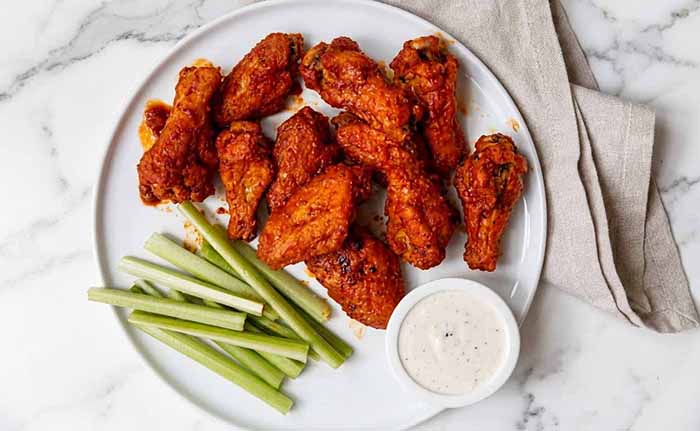
Characterized by the absolute dominance of ranch, today’s dressings multitask as dipping sauces.
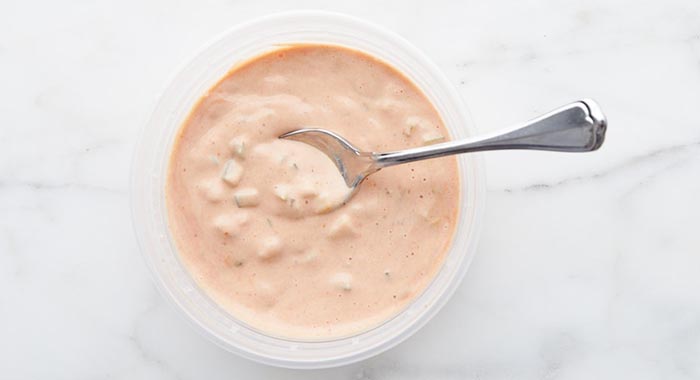
Ranch dressing, an update of grandma’s buttermilk dressing, began its takeover in the rankings in the late 1980s and early 1990s, a timeline overlaps strongly with Generation X’s adolescence and young adulthood. Yes, Gen X helped make ranch a cultural condiment. Ranch dressing was invented in the 1950s, but its modern takeover began in the late 1980s and accelerated through the 1990s. Cool Ranch Doritos introduced the flavor to a generation of young snackers, and in 1992 ranch surpassed Italian as America’s best-selling salad dressing. It became part of the celebrity-rider of Katy Perry, whose 2011 tour rider specified crudités with ranch dip; reports on a later dressing-room list included ranch dip among the food requests. (Perry, born in 1984, is considered a Millennial.) The 1913 version, a vinaigrette-style recipe called Russian Dressing, appears in cookbook. It’s closer to a sharp vinaigrette flavored with paprika and mustard, rather than the thick, creamy condiment we know today. The 1914 version, mayonnaise-based, is the first documented mayonnaise-based recipe. It aligned closely with the commercial production started by James E. Colburn in New Hampshire around that time. It often incorporated ingredients like caviar, pimientos, and spices. There isn’t documentation on how it got its name, but historians and food writers have floated a few different theories: Caviar. Incorporated into some of the early recipes, it was associated with Russian cuisine (although at the time, there was plenty of affordable American sturgeon caviar). Pickles. The inclusion of pickles, a staple of Russian culinary traditions. The pickle relish in Russian dressing became the “thousand islands” in Thousand Island dressing. French Haute Cuisine. Sauce Russe (Russian sauce) for seafood is a rich, cold sauce combining three parts mayonnaise with one part sieved caviar and lobster coral, flavored tightly with mustard. CHECK OUT WHAT’S HAPPENING ON OUR HOME PAGE, THENIBBLE.COM. |
||