Deviled Eggs History & Recipes For National Deviled Eggs Day
|
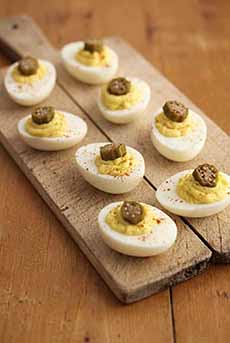
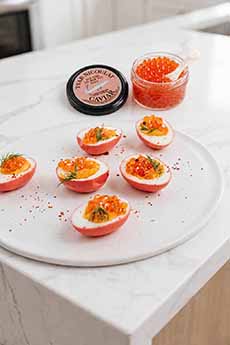
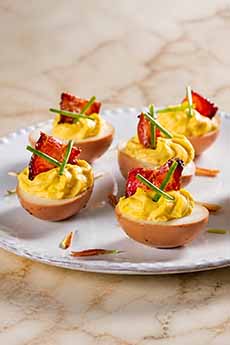
Updated August 2026 November 2nd is National Deviled Egg Day, one of America’s favorite foods for parties, picnics, and more. Below: > The history of deviled eggs. > Deviled eggs vs. stuffed eggs: the difference Elsewhere on The Nibble: > 35 garnishes for deviled eggs. > How to make perfect hard-boiled eggs. > The different types of eggs: a photo glossary. > The year’s 10 egg holidays. Deviled eggs took off as picnic and cocktail party fare after the Second World War. But their roots date back to ancient Rome. The cooks of wealthy Romans boiled eggs, seasoned them with spicy sauces, and served them as a first course (known as gustatio). Serving these deviled eggs to guests was so common that it featured in a Roman saying, “ab ova usque ad mala,” literally from eggs to apples (indicating from the beginning of a meal to the end), or what we might call “from A to Z.” 13th Century: The culinary record is relatively quiet until the 13th century when stuffed egg recipes begin to appear in Andalusia, in the south of Spain. The yolks of boiled eggs were mixed with cilantro, onion juice, pepper and coriander, fish sauce, oil and salt. After the mixture was stuffed into the egg whites, the two halves were fastened together with a small stick and seasoned with pepper. 15th Century: Stuffed eggs were found throughout Europe. One medieval recipe filled them with raisins, cheese, marjoram, parsley, and mint. They were then fried in oil and topped with a sauce of cinnamon, ginger, cloves, raisins, and verjuice, or dusted with sugar. Both variations were served hot. 18th Century: The first known printed mention of “devil” as a culinary term appeared in the Kingdom of Great Britain in 1786. It referred to dishes that contained hot and spicy ingredients (like paprika), or those that were highly seasoned and broiled or fried. 19th Century: By 1800, deviling had become a verb to describe the process of making food spicy. Deviled eggs were seasoned with chiles, horseradish, mustard, paprika, and spicy sauce. Stuffed eggs began making an appearance in American cookbooks by the mid-19th century. The Modern Deviled Egg Evolves A recipe from Fannie Farmer’s 1896 Boston Cooking-School Cookbook was one of the first to use mayonnaise as a binder for the filling of stuffed eggs. While mayonnaise began to be distributed commercially in the U.S. in 1907, the condiment was not commonly featured in deviled egg recipes until the 1940s. The classic version of deviled eggs mixed the yolks with mayonnaise, mustard, and paprika. In more recent times, cooks have reworked the classic with modern ingredients, from beets, chutney, and smoked okra to luxury ingredients like caviar, crab, and smoked salmon to international influences like kimchi, sriracha, and wasabi. It’s simple: Deviled eggs have a spicy component. So all deviled eggs are stuffed eggs, but only stuffed eggs with hot spice are deviled eggs. Non-spicy versions were called dressed eggs, mimosa eggs, salad eggs or stuffed eggs. |
 [1] A book of deviled 50 egg recipes, enough to make a new one each week for most of the year. Get yours at Amazon.
|
|
|
|
||