National Ranch Dressing Day & The History Of Ranch Dressing
|
|
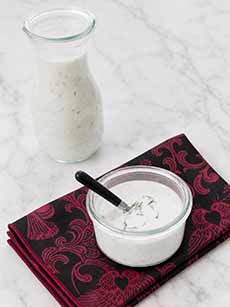
Updated August 2026 March 10th is National Ranch Dressing Day, celebrating America’s favorite bottled dressing. It surpassed the previous favorite, Italian dressing, way back in 1992. Ranch dressing is made of buttermilk, mayonnaise, seasonings (black pepper, garlic, ground mustard seed, lemon juice, paprika), and herbs (chives, parsley, and dill). Sour cream or yogurt are sometimes used for all or part of the buttermilk or mayonnaise. Here’s something few people realize: Ranch and buttermilk are essentially fraternal twins. They’re interchangeable in recipes. Buttermilk dressing, which has been made across the southern U.S. for generations; ranch evolved in the 1950s. The key difference is garlic and onion were used to make the modern dressing a tad garlicky and more herb-forward. Another difference is that ranch dressing often (but not always) includes sour cream in addition to mayonnaise and buttermilk; the sour cream makes it a bit more tangy. However, just to confuse things, some buttermilk recipes add herbs and some ranch recipes do not; some buttermilk and ranch dressings add sour cream, others do not. Americans can understandably be puzzled. Look closely at recipes and packaged dressings. Many have both “buttermilk” and “ranch” in the title or on the label. Below: > Nana’s buttermilk dressing recipe. > The history of ranch dressing. > About Hidden Valley, the first ranch dressing brand. Elsewhere on The Nibble: > 10 ranch dressing variations to add texture and excitement. > The year’s 18 dip, dressing, and sauce holidays. This is our grandmother’s recipe. She enhanced it with herbs long before ranch dressing did so. She would want you to know:
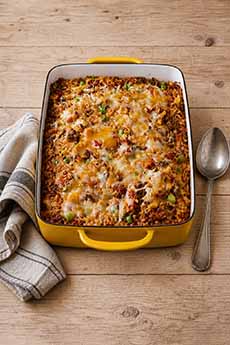
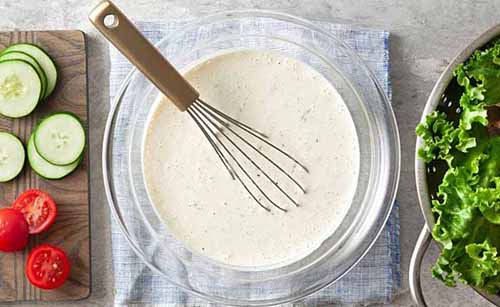
There are many variations on the original ranch recipe. Anyone can adjust the seasonings in the recipe above to bring out the flavors you like. You can also switch them out; for example: 1. WHISK together the buttermilk and mayonnaise in a medium bowl. When fully combined, blend in the other ingredients. That’s it! 2. COVER tightly and refrigerate. It will keep for a few weeks. |
|
|
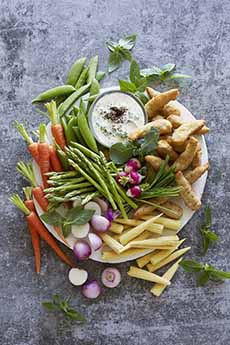
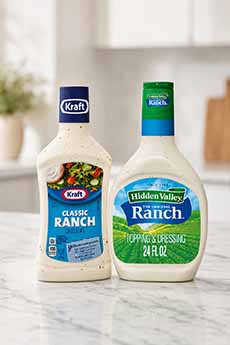
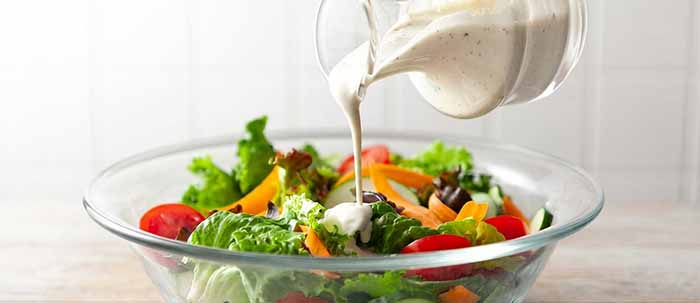
2. USES FOR RANCH DRESSING Ranch dressing is common in the U.S. as a salad dressing and a dip for crudités. It is also popular: What’s in bottled ranch dressing? Hidden Valley’s website says: Our Original Ranch® recipes are made with wholesome ingredients and the perfect blend of herbs and spices. Enjoy the farm fresh taste of Hidden Valley® in our ranch dressing mixes, dips and salad toppings. Many food writers, nutritionists, and clean-eating advocates would indeed consider the term “wholesome” in this context to be disingenuous marketing puffery. The actual ingredient list: INGREDIENTS: Soybean oil, water, egg yolk, sugar, salt, cultured nonfat buttermilk, natural flavors (soy), spices, less than 1% of dried garlic, dried onion, vinegar, phosphoric acid, xanthan gum, modified food starch, monosodium glutamate, artificial flavors, disodium phosphate, sorbic acid, and calcium disodium EDTA as preservatives, disodium inosinate, and disodium guanylate. Not exactly wholesome or farm fresh! In reality, mass-market bottled ranch is an industrial food product engineered for a long shelf life, emulsification stability, and hyper-palatability. If you want to know more, read the †footnote. So, time to really know how good ranch is, by making your own. Here’s a recipe. A Quick Timeline
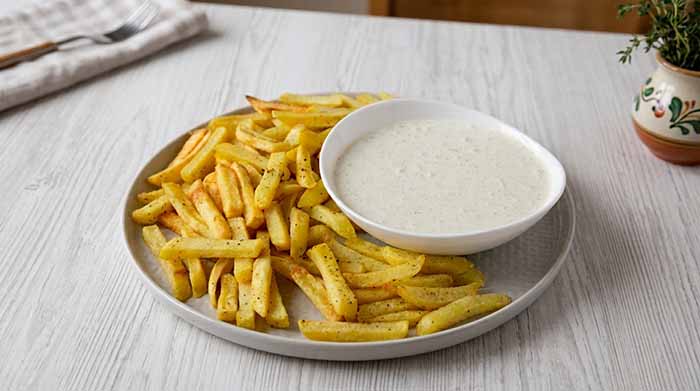
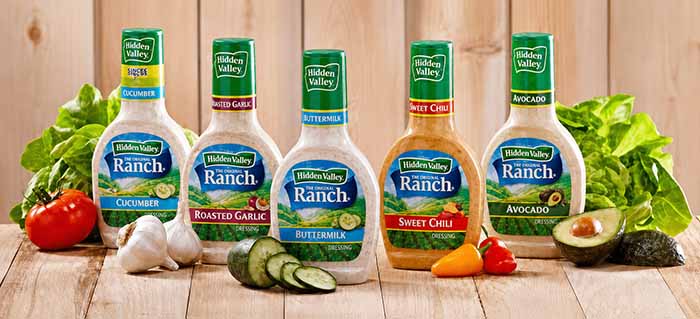
Ranch dressing evolved from the older buttermilk dressings of Texas and the West. By the late 1800s, the naturally-occurring sour milk, called buttermilk, was popular in baked goods and for marinating chicken, and later as a health food at spas and sanitariums. The first form of buttermilk dressing likely originated in Texas, created by chuck wagon cooks. In the cattle-rich High Plains*, buttermilk was inexpensive and plentiful, while the vegetable oils needed to make mayonnaise were comparatively costly or less readily available. Cooks used it to make tangy dressings for greens and as dips for fried foods. Those early Texas recipes were often cooked, egg-thickened dressings: a boiled dressing made with eggs, vinegar, buttermilk, herbs, and spices. The tangy dressing became popular among cowboys on greens and as dips for fried food, and chuck wagon cooks dished out creamy buttermilk-based dressings for a long time [source]. Modern Buttermilk Dressing The first-known printed “modern” buttermilk dressing recipe, in a 1937 issue of the San Antonio Light, was a cold blend of buttermilk, mayonnaise, onion juice, lemon juice, dry mustard, white pepper, and paprika. (Famed restaurant critic Craig Claiborne, a Southern boy, hated it.) Certainly it existed prior to 1937. Often recipes exist for years before they find their way into newspapers, magazines, package labels, and advertisements. With the advent of commercial mayonnaise in the 1930s, the dressing became easier to make, and no boiling was required. Although it had no herbs or garlic, it was recognizably close to ranch dressing. It can be argued that Hidden Valley Ranch was, essentially, a branded version of the older Western buttermilk-dressing tradition. As modern refrigeration (in the form of the icebox) became commonplace in homes, the milk no longer soured. Commercial dairies began to culture it, and sold the buttermilk we know today beginning in the 1920s. Here’s a longer discussion of the evolution of buttermilk. Ranch Dressing Arrives Ranch dressing grew from the older buttermilk dressings of Texas and the West. In cattle country, buttermilk was cheap and plentiful, and cooks used it to make tangy dressings for greens and as dips for fried foods. Published Texas recipes for ranch dressing date to at least 1937. In the early 1950s, Steve Henson, a Nebraskan working in the Alaska bush, created a dressing for his crew from buttermilk, sour cream, mayonnaise, and seasonings: garlic, herbs and spices, onions, and salt. In 1954, Steve and his wife Gayle opened Hidden Valley Ranch, a dude ranch in the Santa Ynez mountains, near Santa Barbara, California. They served the dressing to guests and called it ranch dressing. It was very popular, and guests asked to buy it to take home. The Hensons sold it both as a finished product and as packets of dry mix to be combined with mayonnaise and buttermilk. Demand for the dressing grew much more than demand for bookings at the ranch. The Hidden Valley Ranch Food Products was incorporated and a factory was established. The dressing was first distributed to supermarkets in California and the Southwest, and eventually, nationwide. The brand was purchased by The Clorox Company in 1972 and the ranch was sold. And now you know how old-fashioned buttermilk dressing turned into the more intriguing-sounding ranch dressing. Hidden Valley Hits The Big Leagues Hidden Valley was still a relatively small mail-order/dry-mix business when Clorox acquired it. Multiple sources say the deal was for $8 million. In the early days of the dry mix, consumers needed to add mayonnaise and buttermilk to create the “Original Ranch” flavor. As the brand grew in the 1970s, Clorox introduced variations to make it more convenient: Bottled Hidden Valley Ranch came later. Clorox spent years reformulating the product for convenience and shelf stability, and introduced its first bottled salad dressings in 1983. Hidden Valley’s most recent packet dressing recipe requires the consumer to add buttermilk, mayonnaise, sour cream; minced chives, dill, and garlic; and lemon juice. Hidden Valley Today In 2026, when this article was updated, there were 20 Hidden Valley Ranch flavors: Avocado Ranch, Bacon Ranch, Blue Cheese Ranch, Buffalo Ranch, Buttermilk Ranch, Chipotle Ranch, Cilantro Lime Ranch, Coleslaw Ranch, Cracked Pepper Ranch, Creamy Jalapeño Ranch, Garlic Ranch, Green Goddess Ranch, Hot Honey Ranch, Kickin’ Cajun Blackened Ranch, Parmesan Ranch, Pickle Flavored Ranch, Sizzlin’ Nashville Hot Ranch, Spicy Ranch, Sweet BBQ Ranch, and Yum Yum Ranch, the latter a new introduction currently available only at Walmart, which promises the sweet, smoky and tangy flavors of garlic, onion, paprika. At retail, bottled ranch reached $1.3 billion in 2024 U.S. sales. Ranch even edged out another favorite American condiment, bottled ketchup, around $1.26 billion. According to a 2022 IGA article quoting a Clorox executive, roughly three out of four U.S. households have ranch in the pantry or refrigerator.
________________ *The High Plains comprise southeastern Wyoming, southwestern South Dakota, western Nebraska, eastern Colorado, western Kansas, eastern New Mexico, western Oklahoma, and south of the Texas Panhandle. †Mass-market bottled ranch is an industrial food product, as mentioned above. It’s engineered for a long shelf life, emulsification stability, and hyper-palatability. While all of these additives are FDA-approved (GRAS—Generally Recognized As Safe) and common across commercial salad dressings, they clearly fall into the category of ultra-processed additives, which runs directly counter to what consumers associate with “wholesome” or “farm-fresh.” From a legal standpoint, brands use words like “wholesome” precisely because the FDA does not have a formal regulatory definition for “wholesome” (unlike “organic,” which has stringent requirements, or “healthy,” which carry specific nutrient thresholds for saturated fat, sodium, etc.). Preservatives and acidity regulators: Phosphoric acid, sorbic acid, disodium phosphate, and calcium disodium EDTA (used to prevent oxidation and keep fats from going rancid without refrigeration prior to opening). Industrial texture modifiers: Xanthan gum and modified food starch (used to provide a thick, clingy mouthfeel while keeping costs lower than using high percentages of dairy fats and egg yolks). Flavor enhancers: Monosodium glutamate (MSG), disodium inosinate, and disodium guanylate (the classic “I+G” synergy that dramatically boosts savory umami notes), alongside artificial flavorings. CHECK OUT WHAT’S HAPPENING ON OUR HOME PAGE, THENIBBLE.COM. |
||