Reuben Irish Nachos Recipe With Thousand Island Dressing
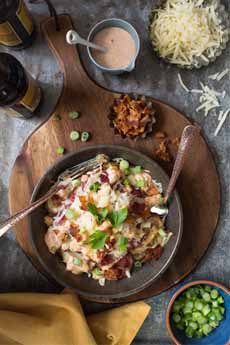 [1] “Irish Nachos” for St. Pat’s. The recipe is below. Find more recipes from the Idaho Potatoes.
|
Updated August 2026 You won’t want to wait until St. Pat’s to enjoy this scrumptious snack. Serve it with your favorite beer—or in the spirit of the holiday, one of these Irish beers. In fact, how about an Irish beer tasting along with the nachos? Here are some of the most popular brands:
> Reuben “Irish Nachos” recipe. > Thousand Island dressing recipe. > The history of Thousand Island dressing. > Thousand Island dressing vs. Russian dressing: the differences. Elsewhere on The Nibble: > The year’s 90 snack holidays. > The history of St. Patrick’s Day. This recipe, created by Idaho Potatoes, has no common ingredients with the popular Tex-Mex recipe—except perhaps for the scallion garnish. The Idaho Potato Commission calls them “Irish nachos,” a fun way of reinterpreting a favorite American snack. Crisp slices of roasted potatoes take the place of tortilla chips; then get topped with Irish-themed corned beef, bacon, sauerkraut; Swiss cheese; and New York State-origin Thousand Island dressing. It’s a crowd pleaser, especially with beer! Ingredients For The Nachos There are many variations of the Thousand Island dressing recipe. The original recipe included a hard-boiled egg that was sieved and added as a thickener. This one omits the egg in favor of a thinner, more pourable, dressing. Because we like lots of dressing, we ended up doubling it. The “extra” was gone in two days! |
|
|
Ingredients 1. MAKE the Thousand Island Dressing at least one hour in advance of using (and the day before, if desired). Combine all ingredients in a small bowl and mix well. Taste and add additional seasoning if desired. Refrigerate for at least an hour to allow the flavors to meld. 2. PREHEAT the oven to 450°F. Line two baking sheets with parchment paper or silicone baking mats. 3. PLACE the potato slices in a large bowl. Drizzle with the olive oil and season with salt and pepper. Toss to coat. Turn the oven down to 350°F. 4. TRANSFER the potato slices to the prepared baking sheets, spreading them out in an even layer (be sure not to overlap the slices). Bake for 12 minutes on each side, or until golden and slightly crispy. 5. LIGHTLY GREASE a cast iron pan or small baking dish. Layer the potatoes in the bottom of the pan. Top with the chopped corned beef, sauerkraut, and grated Swiss cheese (in that order). Sprinkle with crumbled bacon. Bake for 10-15 minutes, or until the cheese is melted. 6. DRIZZLE the dressing over the top and garnish with the scallions. Serve immediately. Thousand Island Dressing (photo #2) was named after the Thousand Islands, an archipelago of 1,864 small islands in the St. Lawrence River, straddling the border of the U.S. and Canada. In the late 19th and early 20th centuries, during the Gilded Age, the area was a summer destination for the nation’s elite (and is still very popular for boating, fishing and other outdoor activities). The dressing is a variation of Russian Dressing—a combination of ketchup and mayonnaise—with added sweet pickle relish and a hard-boiled egg. The bits of pickle relish are said to stand in for the Thousand Islands, but that’s likely an afterthought. As the story goes, in the early 20th century, a fishing guide’s wife, Sophia Lalonde of Clayton, New York (spelled Sofia in Thousand Islands Magazine) made the dressing to go with her husband’s shore dinners, which were served to his fishing tour clients. One of the clients, a vaudeville actress named May Irwin, liked it so much that she requested the recipe and named it Thousand Island Dressing. At around the same time, Mrs. Lalonde gave the recipe to the owners of the Herald Hotel, a popular hotel in town (today called the Thousand Islands Inn) where Ms. Irwin and her husband were staying. They prepared it for her meals. Ms. Irwin, in turn, gave it to another Thousand Islands summer visitor George C. Boldt, the owner of the Waldorf Astoria Hotel in New York City (among other properties). Boldt liked it so much that he gave it to his Waldorf maître d’, Oscar Tschirky (the famous “Oscar of the Waldorf”), with instructions to put it on the hotel’s menu [source]. From there, the recipe took on a life of its own, with requests for copies; plus the many variations of the recipe that followed. Some recipes, like the one above, for example, omit the hard-boiled egg. The hard-boiled egg was pressed through a sieve; it served to thicken the dressing. While that may sound unusual today, it wasn’t uncommon as a thickener at the time that Thousand Island dressing was created. Here’s a recipe with the egg. Russian dressing first appeared in print at the turn of the 20th century, with references emerging around 1900. It was credited to a grocer named James E. Colburn, of Nashua, New Hampshire. A variation, Thousand Island dressing, appeared not long after, around 1910, created by a local innkeeper, Sophia LaLonde. Structurally, the two dressings are culinary fraternal twins. Both are mayonnaise-based, pinkish-orange emulsified dressings built on a tangy, sweet foundation of chili sauce or ketchup and chopped pickles. The differences come down to a few subtle ingredient shifts and their historic origins:
CHECK OUT WHAT’S HAPPENING ON OUR HOME PAGE, THENIBBLE.COM. |
||