Yummy Date Nut Bread Recipe For National Date Nut Bread Day
|
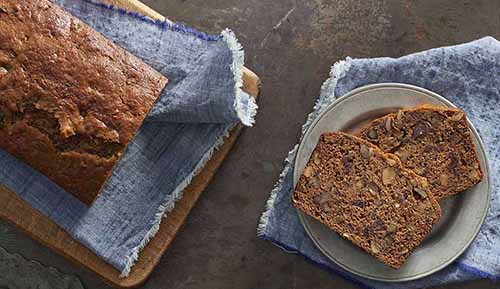
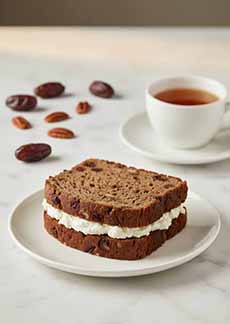
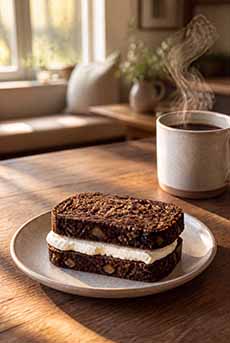
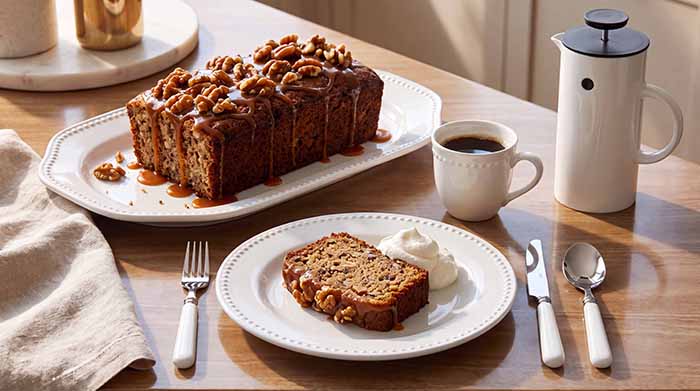
Updated September 2026 When was the last time you had date nut bread? It seems to have fallen out of favor in Grandma’s time, which is a shame. Date nut bread and cream cheese sandwiches are divine. Date-nut bread—also called date walnut loaf—is a traditional tea bread from Scotland (tea bread is a sub-category of quick bread—see the ‡‡footnote). While it hasn’t vanished entirely in the U.S., it certainly moved from an everyday pantry staple to a retro specialty—like applesauce cake, hermit cookies, and prune whips. It remains on offer in the bakeries, cafes, and tea rooms of Australia, Britain, New Zealand, and across the Commonwealth. The decline of date nut bread—and many classic mid-century quick breads—comes down to a mix of changing tastes (how many people eat dates regularly) and the evolution to newer, trendy baked goods. It may achieve peak popularity in the U.S. at Christmas, and it has its own holiday: September 8th is National Date Nut Bread Day. Some sources say it’s on December 22nd, but we’d never pass up an extra occasion to enjoy a date nut bread and cream cheese sandwich. And isn’t there enough to eat at Christmas without adding date nut bread? Below: > Ways to serve date nut bread. > The history of date nut bread. > The decline of date nut bread and other favorites. Elsewhere on the Nibble: > The different types of bread: a photo glossary. Date nut bread was created as a tea bread, but it’s very versatile. Because of its dense, moist crumb, rich caramel sweetness, light spice, and nutty crunch, it bridges the gap between a sweet breakfast bread and a sophisticated dessert ingredient. Serve as you would serve zucchini bread or raisin bread. Beyond the traditional tea tray, consider:
Desserts
In the U.K. and Commonwealth countries, date nut bread is typically made with treacle (golden syrup) as the sweetener. In the U.S., brown sugar or molasses are the norm. In this recipe, a tablespoon of brandy or vodka is added as a flavor enhancer, serving to disperse flavor molecules throughout the bread. There’s no taste of it in the final product. The recipe calls for a cup of hot coffee. You can also use a flavored coffee for a bit more complexity: Caramel or vanilla are both good choices. The bread doesn’t taste at all like coffee. (If you can’t have coffee’s acidity, there are low-acid coffees; otherwise, substitute boiling water*.) Prep time is 10 minutes and bake time is 45 to 55 minutes. Thanks to King Arthur Baking for the recipe.
1. PREHEAT the oven to 350°F. Lightly grease an 8-1/2″ x 4-1/2″ loaf pan. 2. PLACE the dates, butter, baking soda, salt, and brown sugar in a mixing bowl. Pour the hot coffee into the bowl, stirring to combine. Allow the mixture to cool for 15 minutes. 3. ADD the egg, vanilla, liquor, baking powder, and flour, beating gently until smooth. Stir in the walnuts. 4. POUR the batter into the pan, gently tapping the pan on the counter to settle the batter. 5. BAKE the bread for 45 to 55 minutes, tenting the loaf gently with foil after 30 minutes, to prevent over-browning. 6. TEST the cake (bread) for doneness. A cake tester or toothpick inserted into the center should come out clean; an instant-read thermometer should read about 200°F. 7. REMOVE the bread from the oven. After 10 minutes, gently turn the bread out of the pan onto a rack to cool. Cool completely before slicing. If not serving that day, don’t slice. Instead: 8. WRAP the loaf airtight, and store at room temperature for several days; freeze for longer storage.
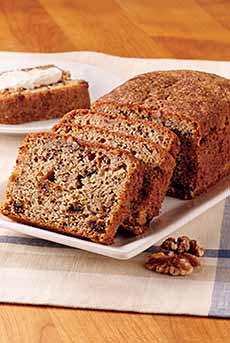
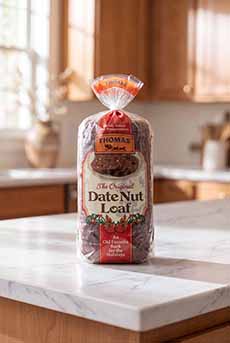
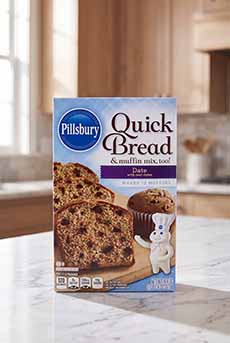
Date nut bread is a traditional Scottish tea bread that became popular in the U.S. in the 1920s. In the early 1900s, Samuel Bath Thomas, a British immigrant, opened a bakery in New York City. He first created the English Muffin, and then expanded his repertoire. According to one source, one of the bakery’s most popular offerings was Thomas’ Date Nut Bread (the most recent version is in photo #4). Its rich flavor and moistness set it apart from other breads of the time, and it caught on as a choice for breakfast or a snack. Small sandwich triangles of thinly-sliced date nut bread filled with cream cheese, became a crowd-pleasing tea sandwich. You could have them for breakfast or lunch at Chock Full o’Nuts lunch counters†. Yet, it’s surprising that this recipe, which seems like it should date back centuries to the Duchess of Bedford and her afternoon teas, was first recorded in 1939. (Note that recipes can exist for decades before first being published.) Food historians and culinary timelines point to 1939 as the year of the first officially recorded or published recipe for date nut bread, often cited as originating in Britain or via early standardized community and commercial print publications.
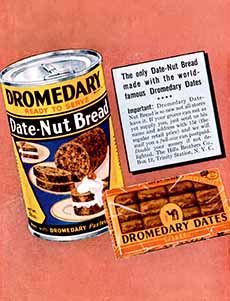
The relatively recent 1939 date turns out to be not so surprising. Digging a bit, we discovered that published recipes for other quick breads, like banana bread, carrot bread, and zucchini bread, also date from the mid-20th century. In the U.S., Thomas’ Date Nut Bread and Dromedary‡ Date Nut Bread (the latter baked in cans, photo #10) were staples for lovers of the bread: dark, moist loaves with the deep flavor of molasses. Alas for fans, decades later, there was a shift towards healthier, whole grain breads and gluten-free options. With just so much shelf space, there was less room on the supermarket shelf for specialty breads like date nut. There is still demand, however.
Fashions change, tastes change, and that’s what happened to date nut bread. The decline of date nut bread and other classic mid-century quick breads—Boston brown bread, nut bread (pecan or walnut), orange-nut bread, prune bread, and rhubarb bread went the way of aspic molds, fruitcake, and Jell-O salads: dumped in favor of newer, trendier foods and dietary trends.
|
|
|
The best cultured butter, in our opinion, is from Vermont Creamery. Salted or unsalted, we can eat slices of it as if it were goat cheese. *The bread may be slightly denser, due to the removal of coffee’s acidity, which reacts with baking soda to produce rise. Counteract this by substituting 1 tablespoon lemon juice for 1 tablespoon of the water. **A trick from the great chef Larry Forgione: Freeze the ice cream sandwiches hard; then butter and toast them in a panini press for five minutes until the outside of the bread gets toasted while the ice cream remains solid. †Chock Full o’Nuts lunch counters, which launched in the Great Depression, were sold off in the late 1980s and subsequently discontinued [source]. ‡The Dromedary Food Products Company was launched by Hills Bros. in the early 1900s, specializing in dates, figs, coconut, and other specialty products. While the dates are still available, the date nut bread is long gone. ‡‡Quick bread vs. tea bread: While the terms are often used interchangeably, there are a few nuances. All tea breads are quick breads, but not all quick breads are tea breads. Quick bread, the broad category, refers to any loaf or baked good that is leavened with chemical leaveners (baking powder, baking soda, or steam) rather than yeast or eggs. It includes everything from banana bread and zucchini bread to pumpkin loaf, cornbread, and soda bread. Tea bread refers specifically to a sweet quick bread traditionally sliced and served alongside afternoon tea. Tea breads are typically moist loaves, lightly spiced, with fruits or nuts, and not overly sweet so they complement a cup of tea. The loaves typically sliced thin, often spread with butter or cream cheese, but our mother and grandmother sliced them thick for hearty cream cheese sandwiches CHECK OUT WHAT’S HAPPENING ON OUR HOME PAGE, THENIBBLE.COM.
|
||