|

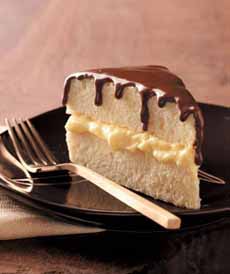
[1] The winner: Boston Cream Pie. Here’s a recipe. (photo © Taste Of Home).
[2] Bumbleberry, a mixed berry pie. Here’s a recipe (photo © King Arthur Baking).
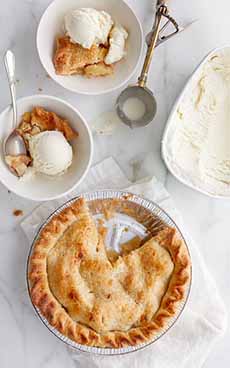
[3] Sweet, tart, and crisp Honeycrisp apples are great for pie—and everything else. Here’s the history of apple pie and numerous twists on the classic recipe. (photo © Good Eggs).
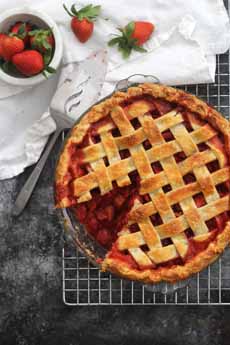
[4] This strawberry pie has a touch of balsamic for an exciting layer of taste. Here’s the recipe along with how to buy strawberries (photo © The Baker Chick).
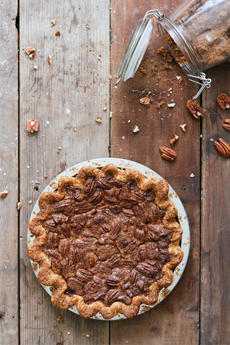
[5] The history of pecan pie and a delicious recipe (photo © Good Eggs).
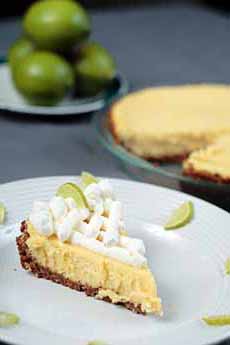
[6] Key lime pie: light, tangy, delish. Here’s a recipe and the history of Key lime pie (photo © David Hsu | Dreamstime).
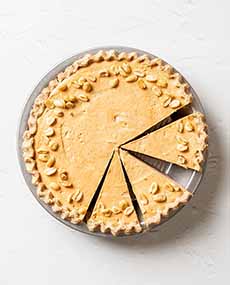
[7] Peanut butter pie: what could be better? Here’s a recipe (photo © King Arthur Baking).
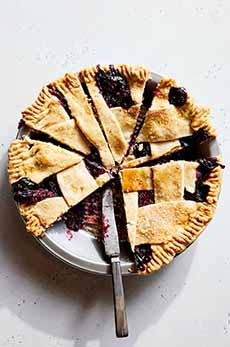
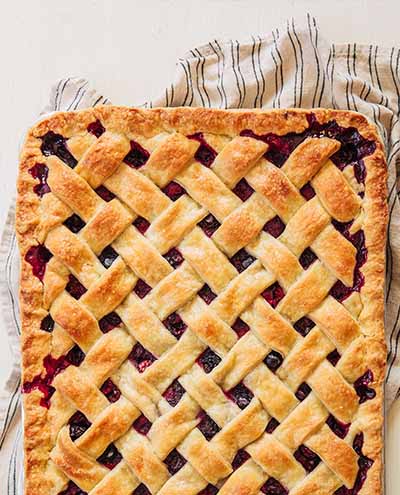
[8] A pan of Wildberry Slab Pie. Here’s more about slab pie (photo © King Arthur Baking).
|
|
National Pi Day is celebrated across the U.S. on March 14th. Founded in 1988 by physicist Larry Shaw, March 14th was selected because the numerical date (3/14) represents the first three digits of the mathematical constant π (pi), which is approximately equal to 3.14.
It also happens to be Albert Einstein’s birthday (photo #9)!
Pi Day is a day celebration among mathematicians, engineers, physicists, educators, and students. There are pi memorization competitions* along with discussions on the significance of pi in various fields of science and engineering.
But what about the rest of us? Some time, somewhere, someone got the idea of baking a pie with the π symbol on top. That caught on: Today’s a day for pie-baking?
But what about the rest of us? Well, we can find the nearest piece of pie and dig in Even though there’s an official National Pie Day on December 1st, individuals and communities find a delicious way to engage with the spirit of the day.
Schools, bakeries, and households across the country partake in pie-making and pie-eating contests, pie bake-offs, and even educational events that incorporate pie recipes to teach mathematical concepts.
Pies in America come in an astonishing variety, each telling a story of regional ingredients, historical traditions, and cultural influences.
Mixbook, a #1-rated photobook company, conducted a survey of 3,000 devoted pie aficionados to discover how far they would be prepared to travel for that perfect pie experience; that is, savoring a state’s signature pie right where it belongs. Each state boasts its signature pie, an edible emblem of its culture and local produce
Imagine savoring a slice of authentic Key Lime Pie in the sunny climes of South Beach, Miami…
Delighting in the creamy richness of a Boston Cream Pie in downtown Boston, or…
Enjoying the juicy tang of a Marionberry Pie in the lush Pacific Northwest?
Mixbook ran a survey of 3,000 devoted pie aficionados to discover how far they would travel for that perfect pie experience; that is, savoring a state’s signature pie in its proper state.
THE MOST-DESIRED PIES
Here are the pies, in order of how long survey responders would be willing to travel to the particular state for a piece of the signature pie.
Thanks to Mixbook for these interest look at pie desirability.
We’re not questioning the methodology are the results—which often are just a minute apart in placement.
For example: Why these 10 pies?
Who put Cactus Pie on the list, and why?
Regardless of the outcome, we think it’s a fun read on Pi Day.
1. Boston Cream Pie, Massachusetts: 2 Hours 32 Minutes.
Boston Cream Pie emerged in first place: Pie aficionados said they would be prepared to travel for over two and a half hours to eat one of these in the Bay State (photo #1). Despite its name, Boston Cream Pie is a cake that layers custard or cream between sponge cake, and is topped with a rich chocolate glaze. Originating in Boston in 1856, the combination of moist cake, creamy filling, and chocolatey topping makes this a must-try. Here’s more about it, and a recipe.
2. Bumbleberry Pie, North Dakota: 2 Hours 31 Minutes.
Placing second, and just 1 minute behind, comes North Dakota’s Bumbleberry Pie (photo #2). This mixed berry pie, a combination of strawberries, raspberries, blackberries, and blueberries, is a perfect balance of sweet and tart. The burst of flavors from various berries makes it a unique treat—not to mention all those antioxidents. Here’s a recipe.
3. Honeycrisp Apple Pie, Minnesota: 2 Hours 28 Minutes.
Utilizing the locally developed Honeycrisp apple, this pie is known for its juicy, flavorful filling that’s both sweet and crisp. Devotees are willing to journey just under two and a half hours for a slice that encapsulates Minnesota’s fresh take on American staple’s favorite pie. The distinctive taste of Honeycrisp apples is a fresh twist on the traditional apple pie. Here’s the history of apple pie and numerous twists on the classic recipe.
4. Strawberry Pie, Oklahoma: 2 Hours 27 Minutes.
With its bright, sweet filling made of fresh strawberries, often in a glaze, and topped with whipped cream, Oklahoma’s Strawberry Pie is a celebration of simplicity and flavor (photo #4). It’s a summertime favorite but you can find good strawberries year-round.
5. Pecan Pie, Texas: 2 Hours 23 Minutes.
This Texan staple, with its rich filling of pecans, eggs, butter, and sugar, set in a flaky crust, embodies the soul of Southern desserts (phptp #5). Often served with whipped cream, its indulgent, nutty flavor is a testament to Texas’ culinary heritage, making it a sought-after treat. The history of pecan pie and a delicious recipe.
6. Key Lime Pie, Florida: 2 Hours 22 Minutes.
The zesty and creamy Key Lime Pie (photo #6) is Florida’s claim to fame. With its perfect balance of tart and sweet, set in a graham cracker crust, this pie is as refreshing as a tropical breeze in the Florida Keys. It’s no wonder that pie aficionados are drawn to the Sunshine State. Here’s recipe and here’s the history of Key lime pie.
7. Peanut Butter Pie, Virginia: 2 Hours 21 Minutes.
With a rich filling of peanut butter, often accompanied by whipped cream and peanuts, Virginia’s Peanut Butter Pie is a smooth, nutty treat (photo #7). It’s a comforting slice of Americana that dates back to the Colonies. Here’s a recipe and here’s the history of peanut butter (photo © King Arthur Baking).
8. Wild Berry Pie, Alaska: 2 Hours 19 Minutes.
Alaska’s Wild Berry Pie is a berry good pie (photo #8). A mix of native berries, including blueberries, raspberries, and salmonberries†, offers a bold flavor adventure. It’s similar to, but different from, North Dakota’s bumbleberry pie (pie and photo #2). Here’s more about slab pie.
9. Cactus Pie, Arizona: 2 Hours 16 Minutes.
We were a bit confused about Cactus Pie, unique to Arizona. Is it nopalito cactus pie, or prickly pear cactus pie? The latter delivers a sweet and slightly tart cactus fruit filling. The taste of the fruit is almost like raspberries meet cotton candy, with a bright reddish-purplish-pink hue. Here’s a recipe.
10. Chocolate Cream Pie, Nevada: 2 hours 14 Minutes.
Nevada’s Chocolate Cream Pie is chocolate personified. Its luscious texture and velvety chocolate custard, topped with whipped cream and chocolate shavings, make it a lavish indulgence.
> If these don’t suit your fancy, Yahoo has a display of the iconic pies of all 50 states.
MORE TO KNOW
> The history of pie.
> The different types of pie: a photo glossary.
________________
*It seems incredible, but the most decimal places of pi memorized is 70,000!!! It was achieved by Rajveer Meena at the VIT University in Vellore, India, on 21 March 2015. Rajveer wore a blindfold throughout the entire recall, which took nearly 10 hours. He is now in the Guinness World Records book [source: Guinness World Records].
†Salmonberries, also known as thimbleberries or Alaskan berries, are similar in size and shape to raspberries. Acording to the taxonomy developed by Carl Linnaeus, their botanical name in the family Rosaceae—the rose family, is Rubus spectabilis. Salmonberries are actually a species of rose! The plant is native to the west coast of North America.
|