THE NIBBLE BLOG: Products, Recipes & Trends In Specialty Foods


Also visit our main website, TheNibble.com.

FOOD 101: Food Trends For 2018

Food innovation is at an all-time high, says the Trendspotter Panel of the Specialty Food Association. Here’s what they predict will be hot trends in 2018.

Sustainability and health/better-for-you choices are two major 2018 trend. Look for:

  • More algae and other plant-based proteins.
  • Products meant to reduce food waste, as well as growth in the use of functional ingredients like activated charcoal, which is a base for the so-called ‘“goth” (black-hued) foods.
  • Global cuisines: more Filipino and regional Middle Eastern foods.
  •  
    Here are the top 10 food trends.
     
    1. PLANT-BASED FOODS

    Plant-based options are proliferating in many categories beyond meat substitutes. Categories like cheese and frozen desserts are enjoying growth in plant-based subcategories (plant-based typically means dairy-free).

    As for meat alternatives, algae is winning fans. 2018 will bring more plant-based convenience foods, too.
     
     
    2. UPCYCLED PRODUCTS

    As consumers become more aware of how much food is wasted in the U.S., upcycled products—made from ingredients and scraps that would have otherwise be discarded—will have more appeal.

    We’re already seeing pressed juice made from imperfect fruit, chips made from fruit pulp, and snack bars made from spent grain from the beer-making process.

    Check out these “spent grain” foods: everything from baked goods to granola.

    Expect more products to hit the market in the coming year.
     
     
    3. FILIPINO CUISINE

    Overshadowed by other Asian cuisines, the foods of the Philippines have not yet captured a broad U.S. audience.

    That’s shifting, as American palates have become more sophisticated and attuned to the complex flavors and bitter or sour notes of Filipino dishes.

    Chefs and tastemakers are taking to this cuisine, which has been called “the original fusion cuisine.” The dishes draw from Spanish, Malaysian, Chinese, Japanese, Indian and American ingredients and recipes.
     
     
    4. GOTH FOOD

    Possibly a reaction to the 2017’s deluge of rainbow and unicorn foods, black is the new black.

    Activated charcoal—produced by heating coconut shells to extremely high temperatures until they are carbonized—is gaining superfood status for its reported detoxifying attributes.

    But it’s also fashion food: It’s being used to make black-hued food, in everything from pizza crust to lemonade to ice cream.

    We’ll see the trend spread in the coming year.
     
     
    5. ALT-SWEET

    With sugar topping the list of dietary watch-outs, consumers continue to look to alternative sweeteners for lower glycemic impact, fewer added-sugar calories, intriguing sweet flavors and sustainable footprints.

    Syrups made from dates, sorghum, and even yacon and sun root, will join monk fruit on the market as emerging options for sweet.

       
    Spent Grain Granola Upcycled
    [1] Spent grains that are left over from brewing beer are upcycled into granola and baked goods (photo courtesy Brooklyn Brew Shop).

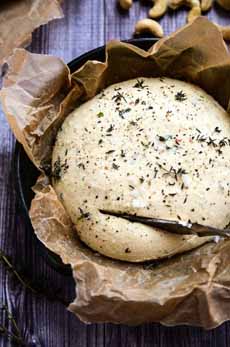
    Plant Based Cheese Vegan
    [2] Watch for more dairy-free, plant-based cheese, a.k.a. vegan cheese (photo courtesy Blissful Basil | Brit.co).

    Goth Food - Black Pot Pie
    [3] Goth food—so-called because it’s black—is made with activated charcoal. Look for everything from croissants and waffles to ice cream (photo courtesy Twigg Studios).


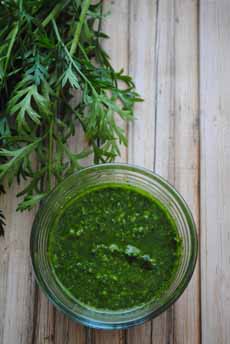
    Carrot Top Pesto
    [4] Don’t toss the scraps! This pesto is made from carrot tops. Here’s the recipe from Eat Well Spend Smart.

    Cannabis Cookbook
    [5] If your state has legalized recreational marijuana, expect lots of products and cookbooks (photo courtesy Wake And Bake Cookbook).

      6. PRODUCT LABELING 2.0

    More is more when it comes to product labeling. Consumers will seek greater on-label visibility into the farms, ingredient sources, and supply chain of each item in their shopping basket.

    GMO transparency is among the most prioritized details. Shoppers want new depths of information across the spectrum, including Fair Trade certification, responsible production, and no animal testing.
     
     
    7. ROOT TO STEM

    Between nose-to-tail butchery and reducing food waste, a few forces are combining to inspire root-to-stem cooking.

    That means utilizing the entire fruit or vegetable, including parts like the peel, stems or leaves, that are less commonly eaten in the U.S.
     
     
    8. CANNABIS CUISINE

    The legalization of marijuana—first for medicinal purposes, then for recreational purposes—has created an industry in marijuana-enhanced foods and beverages.

    As more states legalize recreational marijuana*, the varieties of pot-enhanced foods will increase.

    Look for continued interest, availability and acceptance in a host of snacks, treats, and beverages with “a little something extra.”
     
     
    9. MORE MIDDLE EASTERN FOODS

    Foods like hummus, pita, and falafel have become mainstream; but consumers are ready to explore the deep traditions, regional differences, and classic ingredients of Middle Eastern cuisines.

    Look for more Israeli, Lebanese, Moroccan, Persian and Syrian influences, in restaurants and on the shelf.
     
     
    10. TRADITIONAL BREADS

    Although recent attention has focused on gluten-free options, the traditional side of bakery has been elevated by the same sourcing and fine-tuned production processes we see with proteins and vegetables.

    Artisan bakers are using local grains, milling the day before baking, and incorporating long proofing times, re-inventing what good bread means.

     
    EVEN MORE THAT’S TRENDING…

    The Trendspotter Panel says we’ll see even more:

  • Cricket flour and non-grain sustainable proteins.
  • Fermented foods.
  • Bitters for home use.
  • Savory flavors where one would expect sweet.
  • Pasture-raised animals: for animal welfare, plus better health and taste for consumers.
  • Bananas transformed into milks, snacks, frozen desserts, and flours and baking mixes.
  • Eating for beauty, with products like collagen-infused foods; moringa as the new superfood; mushrooms (extracts, powdered, or whole) as a functional ingredient in everything from chocolate to lattes.
  •  
    It looks to be another exciting year in food!
     
     
    ________________

    *It’s important to note that Federal law prohibits the possession, sale or distribution of marijuana; but its sale and use is declared legal under some state laws.


    Comments off

    TIP OF THE DAY: Black-Eyed Peas For New Year’s Day

    In the American South, a New Year’s Day meal of black-eyed peas and greens, such as collards, is considered good luck. The peas symbolize coins and the greens symbolize paper money.

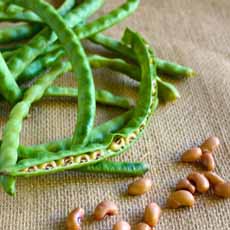
    A dish that combines both is the popular beans-and-rice combination, Hoppin’ John. Other favorites are black-eyed peas and ham, the peas often combined with collards (photo #3).

    The custom is actually a lot older than the U.S., and began in the Middle East. Here’s the history of black-eyed peas as a good-luck food.

    (Here are more foods that symbolize good luck.)

    Some black-eyed peas trivia from the Library of Congress:

  • They have been cultivated since prehistoric times in China and India.
  • The ancient Greeks and Romans preferred them to chickpeas.
  • They were brought to the West Indies from West Africa by slaves. The earliest records cite 1674.
  • In the New World, they became a staple of the slaves’ diet, and were also used as food for livestock.
  • During the Civil War, black-eyed peas and corn were thus ignored by Sherman’s troops, who burned the food crops to the ground so the locals would starve (and made off with all the livestock). Left behind in the fields, black-eyed peas and corn became critically important food for the Confederate South.
  •  
    WHY ARE THEY CALLED PEAS?

    Black-eyed peas are clearly beans, so why are they called peas?

    Both peas and beans are both legumes with edible seeds. Each a separate genus in the Fabaceae botanical family. Some key differences:

  • Pea plants (genus/species Pisum sativum) have hollow stems; beans (genus/species Cicer arietinum) have solid stems.
  • Peas have leaf tendrils which they use to twine. In general, beans lack tendrils.
  • The taller varieties of both peas and beans need trellises to support them as they grow. Most beans just twine themselves over their supports, while peas use their tendrils to climb. At each node along their stems, peas generate two or three one-inch-long tendrils, which grab and then wind themselves around something, such as a narrow trellis.
  •  
    If you’re still curious, here’s more on the differences.

    Back to why black-eyed peas are called beans:

    Bean is a term loosely applied to any legume whose seeds or pods are eaten. Black-eyed peas are in the bean genus, not the pea genus; but in the old days, most farmers didn’t know the difference.

    Other beans popularly called “peas” are the chickpea and the pigeon pea.
     
    BLACK-EYED PEAS RECIPES

    There are endless recipes online; typically sides (with or without greens), green salads and bean salads.

  • Black-Eyed Peas Dip & Spread
  • Curried Green Beans & Black-Eyed Peas
  • Hoppin’ John
  • Indian-Style Black-Eyed Peas with Spinach
  • Spicy Harissa & Black-Eyed Pea Hummus
  •  

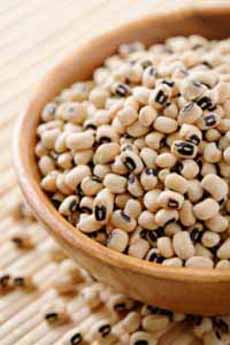
    Blackeyed Peas In Bowl
    [1] Black-eyed peas, which are beans. Depending on the variety, the beige color ranges from off-white to light tan (photo by Viktor Lugovskoy| IST ).

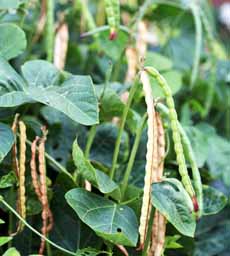
    Black-Eyed Peas Vine
    [2] Growing on the vine (photo courtesy Jesus Jazz Buddhism).

    Black-Eyed Peas

    [3] In and out of the pod (photo courtesy Cheryl D. Lee | Zester Daily).


    WHAT ABOUT THOSE MUSICIANS?

    If you search for “black-eyed peas” online, the first zillion pages are for the music group called Black Eyed Peas (no hyphen).

    We like the group, but they cause us to refine our search to black-eyed peas bean, food, etc.

    The search-hogging band originally incarnated as rap group, Atban Klann; then Black Eyed Pods; and then the Black Eyed Peas.


    Comments off

    TIP OF THE DAY: Panettone Ice Cream Cake

    Panettone ice Cream Cake
    [1] Turn a panettone into a fancy ice cream cake. Here’s the recipe from Proud Italian Cook.

    Panettone ice Cream Cake
    [2] Filling the well with ice cream (photo courtesy Proud Italian Cook).

    Panettone ice Cream Cake
    [3] A simpler take: no frosting needed. Here’s the recipe from Vincenzo’s Plate | Huffington Post.


    In past years, we’ve offered ways to turn panettone and pandoro—Italian holiday breads—into foods from fondue and tiramisu to PB&J and Nutella sandwiches.

  • 20 Ways To Use Panettone & Pandoro
  • Panettone Bread Pudding Recipe
  • Panettone French Toast Recipe
  • Panettone Nutella Sandwich Recipe
  • Panettone Stuffing
  • Panettone Yogurt Parfait
  •  
    This year’s tip: Turn your your panettone into a holiday ice cream cake (the difference between panettone, pandoro and panforte).

    It couldn’t be easier. Just cut the panettone in half, scoop out a well in the center and fill it with ice cream. The sweet, yeasty dough, filled candied fruits and nuts, is a delicious complement to ice cream.

    You can:

  • Use any size or shape panettone.
  • Use any flavor ice cream; although cherry, chocolate, pistachio, rum raisin and vanilla work particularly well.
  • Make layers of two different flavors.
  • Add a layer of brandied fruit, frozen cherries or any other frozen fruit.
  • Add liqueur.
  •  
    We adapted this recipe from Proud Italian Cook.
     
     
    RECIPE: PANETTONE ICE CREAM CAKE

    Make this recipe one or two days in advance, so the ice cream can harden.

    Ingredients

  • 1 large panettone
  • 2 pints of ice cream, flavors of choice, softened
  • Brandied cherries/mixed fruits or frozen tart cherries or other berries
  • Optional liqueur (amaretto, maraschino/cherry) or marsala or sweet sherry
  • Optional frosting and garnishes (e.g. chocolate chips or shavings), or…
  • Whipped cream garnish
  •  
    Preparation

    1. CUT the panettone in half horizontally with a serrated knife (if using two pints of ice cream, make the cut higher, at the 2/3 mark). Hollow out the lower portion, leaving a 1-inch base and sides.

    2. BRUSH the cut surfaces of the panettone with the optional liqueur.

    3. FILL the well with the first flavor of softened ice cream, packing it down firmly (photo #2). Add the optional layer bof brandied cherries. Top with the second layer of ice cream and firmly add the top layer.

    If using frosting you can frost the cut rim on the bottom layer as “glue” to help adhere the top (but you won’t be frosting the top until the next day).

    4. WRAP the entire panettone in plastic wrap and place it in the freezer until the ice cream hardens. To serve…

    5. REMOVE the cake from the freezer, place on a serving platter, and garnish the top as desired (photo #1). Slice and serve.
     
    Want a fast hack?

  • Toast pieces of panettone and serve them à la mode.
  • Make an ice cream sandwich on plain or toasted slices.
  •  
     
    PANETTONE & PANDORO HISTORY

    Who first created these sweet holiday breads, and when? Here’s the scoop.


    Comments off


    © Copyright 2005-2026 Lifestyle Direct, Inc. All rights reserved. All images are copyrighted to their respective owners.