THE NIBBLE BLOG: Products, Recipes & Trends In Specialty Foods


Also visit our main website, TheNibble.com.

Hot Toddy History & Chocolate Hot Buttered Rum Recipe

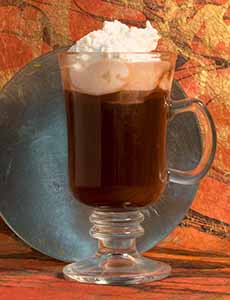
January 11th is National Hot Toddy Day; January 17th is National Hot Buttered Rum Day. But we think this Chocolate Hot Toddy recipe (photo #1) is so full of holiday cheer, it deserves to be enjoyed now.

Hot buttered rum, also called a rum toddy, is a type of hot toddy, a venerable warm cocktail made with rum or another spirit, boiling water, sugar or honey, spices, and in this case, butter.

They’re almost the same drink. The difference: A hot toddy can be made with any spirit, whereas hot buttered rum is made with rum.

The word toddy, which first appears in English around 1600-1610, comes from the Hindi word tari, meaning palm sap—the juice of the palmyra palm tree, which was fermented into an alcoholic drink.

For food trivia lovers: The word punch also derives from Hindi, panch, after the Sanskrit panchan, meaning five. It refers to the five different ingredients of punch. Here’s more about it.

The history of the hot toddy follows. Elsewhere on The Nibble, you’ll find:

> Hot Toddy relatives (Glögg, Mulled Wine, etc.)

> The year’s 49 cocktail and spirits holidays.

> More hot toddy recipes.

> Snacks to serve with hot toddies.
 
 
TODDY HISTORY

Warm alcoholic beverages such as glögg, mulled wine and toddies originated in Northern Europe, where beer, cider, wine and spirits were mulled with sugar and spices to add some cheer to cold winter days.

Northern Europeans took their cue from the Romans, who, by the 2nd century, were heating wine to warm themselves [source]. They occupied Britain from the first through fifth centuries C.E.

Over the centuries, the cold weather drink became a standard during the holiday season. It’s what you received when you were offered a “cup of cheer” or “holiday cheer” in Merrie Olde England.
 
 
Toddy Comes To The New World

Hot buttered rum was a favorite in Colonial America. Rum is a New World spirit* made from molasses, a by-product of sugar refining. Distilleries in the Colonies† were making rum from molasses by the 1650s, and “hot buttered rum” joined the toddies and nogs of English tradition.

Hot buttered rum is traditionally made with dark rum, which has been aged in oak barrels to develop a deeper, molasses flavor. You can use light rum or spiced rum for a milder or spicier flavor, respectively.

You may see recipes for, creamy toddies, which add cream or ice cream to the basic recipe. These are new interpretations, not traditional toddies, which were not cream beverages.

Toddies can be made of any spirit; bourbon, brandy, tequila, Scotch, and other whiskeys are popular, as is sherry.

Hot toddy’s relatives include glogg, mulled wine, nog, and other spirited drinks. Here are the differences.
 
 
RECIPE: CHOCOLATE HOT BUTTERED RUM (CHOCOLATE RUM TODDY)

This recipe was created by chocolatier John Anderson of Napa Valley’s Woodhouse Chocolate, using dark cocoa powder.

He notes: “You can adjust the cocoa in the recipe according to your desired chocolate intensity. Personally, I like a subtle chocolate flavor in this drink, but you can certainly go full chocolate if you so desire. This is just one more thing to be thankful for around the holidays!”

Base For 10-12 Servings

  • 1 cup salted butter
  • 2 cups packed brown sugar
  • 1/2-1 cup dark cocoa powder according to taste
  • 1 teaspoon vanilla extract
  • 1 teaspoon ground cinnamon
  • 1/2 teaspoon ground nutmeg
  • 1/4 teaspoon ground cloves
  • 1/4 teaspoon ground allspice
  • 1/4 teaspoon fine sea salt
  • 1/4 teaspoon finely ground black pepper
  •  
    Ingredients Per Drink

  • 2 tablespoons of the base
  • 2 ounces gold (amber) rum or dark rum
  • 3 ounces boiling water
  • Garnish: whipped cream
  •   Chocolate Hot Buttered Rum
    [1] The first chocolate toddy we’ve seen, created by Woodhouse Chocolate.

    Hot Buttered Rum
    [2] Hot buttered rum in a glamorous glass. In Colonial times, metal or stone steins were used (photo © Ron Abuelo).

    Chocolate Hot Buttered Rum
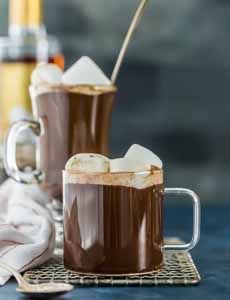
    [3] Do marshmallows work in a cocktail? Try this recipe from The Cookie Rookie.

    Hot Toddy
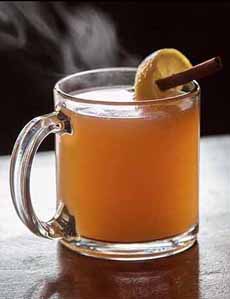
    [4] A conventional toddy. In Colonial times it was served in a stein (photo © Hella Cocktail Co).

     
    Preparation

    1. MAKE the base: Beat the ingredients together in a mixer until fluffy and smooth.

    2. PLACE the base into a mug (preferably a glass mug) and add the rum and the water. Stir vigorously until well-combined.

    3. TOPP with whipped cream if desired, and serve.
     
     
    MORE HOT TODDY RECIPES

  • Apple Ginger Hot Toddy
  • Apple Hot Toddy With Calvados & Sherry
  • Beer Hot Toddy
  • Black Tea Toddy & Green Tea Toddy
  • Caramel Hot Buttered Rum
  • Chocolate Hot Buttered Rum
  • Classic Hot Buttered Rum
  • Glögg
  • Hot Apple Cider Toddy
  • Hot Gin Cider
  • Mezcal Hot Toddy
  • Mulled Wine
  • Saké Hot Toddy
  • Scotch Toddy
  • Spiced Cider
  • Witch’s Brew For Halloween 

    ________________

    *Bourbon, cachaça, mezcal, pisco, Tennessee whiskey, tequila and others originated in the New World.

    †While rum was distilled in the Caribbean alongside the sugar plantations, Colonists imported cheap molasses to distilled their own [source].


    CHECK OUT WHAT’S HAPPENING ON OUR HOME PAGE, THENIBBLE.COM.


  • Comments off

    TIP OF THE DAY: New Uses For Specialty Dishes

    Crudites Plate

    Crudites Plate
    [1] and [2] How many uses can you find for deviled egg plates and similar platters? Photo of “Naked Vegetables” at Vicia Restaurant | St. Louis | Facebook, credited to @ctroesser for @sophisticatedlivingmag. The dips are broccoli hummus, chorizo purée, strained yogurt, homemade butter and nasturtium salt (green).

    Shrimp Cocktail Bites

    [3] Shrimp cocktail bites in Chinese soup spoons (here’s the recipe from Gooseberry Mooseberry). Some 20 years ago, a creative caterer noted that these spoons stand up on their own, and used them to serve cocktail bites.


    If you like to entertain, or to entertain your family with fun food concepts, we have an idea for you:

    Find ways to re-purpose special-use plates and serving dishes.

    We were inspired by these photos from Vicia restaurant in St. Louis, which led us to repurpose our deviled egg plate to serve crudités, petit fours, and other bites TBD.

    In our early years of cooking, we bought everything we could possibly need to be a proper hostess. We modeled our entertaining after the formal French presentations of the day.

    Fast forward over the decades: How times have changed! Even our fancy dinners aren’t that fancy anymore. Some things we haven’t used in 10 or 20 years!

    We knew we had a lot of tableware to repurpose or retire. So we undertook a hunt through our kitchen and storage pantry, and here’s what we found:

  • Artichoke plates
  • Asparagus plates
  • Cake stand
  • Chinese soup bowls and spoons
  • Covered servers (glass dome and silver dome tops)
  • Deviled egg platter
  • Egg cups (for boiled eggs)
  • Fondue sets (3 types of pots, plus sectioned fondue plates)
  • Lazy Susan with sectioned compartments
  • Molcajete for guacamole
  • Oyster plates
  • Platters (8, different shapes and sizes)
  • Pots de Creme
  • Ramekins (regularly repurposed for garnishes, olives, etc.)
  • Relish dishes
  • Sectioned serving dishes (2, 3 and 4 sections)
  • Sushi boards and round lacquered platters
  • Tortilla warmer
  • Two-tiered server (e.g. for raw seafood)
  • Tureens
  • Toast racks
  •  
    No wonder we can’t open a cupboard or closet without a small landslide (we call it the “suicide leap”—packed-in items will do anything to get out of that cabinet).

    Here’s our first resolution for the new year: Repurpose it or give it away.

    So far we’ve repurposed:

  • Artichoke plates: for baked apples and garnishes (crème fraîche, nuts, raisins); for a deconstructed ice cream sundae (scoop in the middle, garnishes in the compartments).
  • Chinese soup spoons: for daily amuses bouche (see below).
  • Deviled egg plate: for crudités, DIY garnishes, petit fours, strawberries (with chocolate dip in the center), and upcoming, for colored Easter eggs.
  • Egg cups: as kiwi cups (and check out these great ideas from House Beautiful).
  • Fondue plates: as burrito plates, with garnish compartments (sour cream, salsa, chopped scallions).
  • Molcajete: as a tortilla chip server.
  • Tortilla warmer: as a pancake and waffle warmer.
  •  

    Asparagus plates, oyster plates and toast racks: your time is up. And sorry, molcajete: you too. You’re a picturesque way to serve tortilla chips, but not as useful as our score of serving bowls.
     
     
    TIP #2: AMUSE BOUCHE

    Amuse-bouche (pronounced ah-MEEZ boosh) is French for “amusing the mouth.” It’s an hors d’oeuvre-size portion plated in a tiny dish, sent as a gift from the chef after the order has been placed but before the food arrives.

    It’s just one bite; here’s more about them.

    For years, caterers have been using Chinese soup spoons to serve cocktail bites. The spoons have a level bottom that stands up on a plate or platter: a creative way to serve.

    We have lots of Chinese soup spoons (don’t ask!). Our “repurposing” task led us to a fusion idea: Use the spoons to serve a nightly amuse bouche at dinner.

    The real creative idea here is turning whatever you find in the fridge into an amuse bouche—a rustic one, nothing fancy.

    We repurpose leftovers or whatever we have in the fridge: a cube of cheese with herbs and spices, a piece of hard-boiled egg with curried mayo, a spoonful of leftover mac and cheese, a bite of chicken with fresh-cracked pepper.

    It’s just a bite…and it’s easy to re-season leftovers with dabs of different condiments, herbs and spices. And may we add: We’re also using a shelf full of condiments that take up space (chile sauce, chutney, honey mustard, pesto….)

    Get out those Chinese soup spoons and try it!


    Comments off

    TIP OF THE DAY: Stokes Purple Sweet Potatoes

    Purple may not be a theme color for the holidays, but we can’t resist the Stokes purple sweet potatoes that are in markets now.

    Once a rarity outside of Asian markets, purple potatoes are now popping up in mainstream markets nationwide.

    There are different varieties, which vary in shape and levels of moisture, density, richness and sweetness.

    Some are brown-skinned with purple flesh. Others, like the Murasaki sweet potato, have a lovely violet skin, but the flesh inside is white.

    The Filipino ube, which would seem to be part of this group, isn’t. It’s a yam, not a sweet potatoe; it grows on a vine above the ground, as opposed to under the soil.
     
     
    WHY IS THE FLESH PURPLE?

    The deep purple color comes from several anthocyanins, antioxidant pigments found in blueberries, cherries, red cabbage, strawberries, and other fruits and vegetables their color.

    Note that not all blue-purple-red produce colors are from anthocyanins. Beets, for example, get their color from betalains, other pigments.
     
     
    THE ARRIVAL OF THE STOKES PURPLE SWEET POTATO

    Stokes potatoes are veiled in mystery. They were propagated by Mike Sizemore a grower in Stokes County, North Carolina, the nation’s largest sweet potato-producing state (who knew?).

    He relates that one day in 2003, when he won a prize for his sweet potatoes at a state fair, an unidentified woman approached gave him some deep purple sweet potatoes.

    At the time, there were already other purple-fleshed sweet potatoes on the market, including the Okinawan sweet potato, also known as the Hawaiian sweet potato and uala. Under its light beige-colored skin is violet-purple flesh.

    Sizemore did not know the origin of the dark-skin potatoes he was handed, but propagated them and found that the potatoes kept their deep color remarkably well when cooked.

    He obtained a patent on the potato and started marketing it commercially in 2006. In 2013 he licensed it to California’s largest sweet potato grower and distributor, and that company is now selling it exclusively through specialty produce distributor Frieda’s [source].

    We are big fans. The Stokes are moister, have more density, and better color when cooked, than Okinawan sweet potatoes. They has a rich, almost winy flavor.

    You can substitute them in any sweet potato, and many white potato, recipes. Mashed or french-fried, they’ll have more eye appeal than anything else on the plate.
     
     
    HOW TO COOK STOKES PURPLE POTATOES

    Truth to tell, when we first brought home a bag, we couldn’t wait to eat them. We popped them in the microwave for 4-5 minutes.

    The potatoes were long and relatively slender; they emerged moist and delicious. We didn’t even need to add butter!

    Here are tips from Frieda’s:


    Stokes Purple Sweet Potatoes
    [1] Stokes purple potatoes, baked (photo courtesy Frieda’s).

    Stokes Purple Sweet Potatoes
    [2] Raw Stokes Purples (photo courtesy Specialty Produce).

    Mashed Purple Sweet Potatoes
    [3] Your favorite potato dishes can now be charmingly purple (photo courtesy Frieda’s).
    Purple Sweet Potato Oven Baked Fries
    [4] Oven baked fries. Add red ketchup for a riot of color (photo courtesy Frieda’s).

  • Baked potatoes: Scrub the skin and wrap the potatoes in aluminum foil. Rub with olive oil prior to wrapping for extra-moist results. Place the wrapped potatoes on a baking tray and bake at 350°F degrees for 1 to 2 hours (bigger potatoes take longer). The dense flesh of this potato takes a bit longer to cook than most other sweet potatoes.
  • Other recipes: Purple potatoes can also be boiled, fried, mashed, roasted, steamed or shredded for potato pancakes.
  • Baked goods: Caution: Baking soda may turn the purple sweet potato green! Check your recipe.
  •  
    Note that the drier texture of this potato lends better to high-moisture cooking methods.

    The Stokes Purple sweet potato can be prepared like most sweet potatoes; however, their lower moisture content should be taken into account. Adding one or two tablespoons of liquid to the recipe will achieve a more desirable consistency.
     
     
    THE HISTORY OF POTATOES

    Millennia ago, thousands of varieties of potatoes grew wild in the foothills of the Andes Mountains of Peru.

    Scores of varieties were cultivated around 3,000 B.C.E. by the Incas, including those with the pigments that create blue- and purple-fleshed white potatoes and purple sweet potatoes.

    Today, purple potatoes are grown around the world. Here’s more about purple potatoes and a recipe for a colorful purple potato and beet salad.

    Here’s a brief history of potatoes.


    Comments off


    © Copyright 2005-2026 Lifestyle Direct, Inc. All rights reserved. All images are copyrighted to their respective owners.