THE NIBBLE BLOG: Products, Recipes & Trends In Specialty Foods


Also visit our main website, TheNibble.com.

STOCKING STUFFERS: Dandies Peppermint Marshmallows, Little Secrets Peppermint Pieces

Today’s stocking stuffers are for mint lovers.
 
1. DANDIES PEPPERMINT MARSHMALLOWS

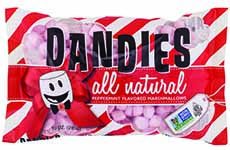
Dandies Peppermint Marshmallows are a limited-edition holiday treat.

Dandies are all-natural, gelatin-free, vegan marshmallows. There’s no high fructose corn syrup or anything artificial: Cane sugar and tapioca syrup are used.

Vegan marshmallows taste just like conventional marshmallows, but tapioca starch is used instead of animal-based gelatin.

They are non-GMO and certified kosher parve by CRC.

The fluffy pink bites add flair to:

  • Chocolate ganache cups (recipe)
  • Cookies
  • Hot chocolate (recipe)
  • Dessert garnish
  • Peppermint bark
  • S’mores (recipe)
  • Snacking from the bag
  •  
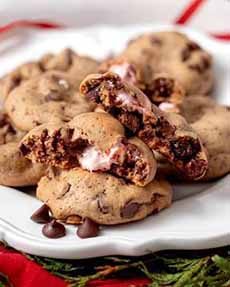
    We added them to our favorite chocolate chip cookie recipe, substituting the mini marshmallows for the nuts (photo #1).

    This engendered the question:

    Why hadn’t we thought to put marshmallows in chocolate chip cookies before this? A great idea!

    The Peppermint Marshmallows are available at conventional and natural grocers through January.

    Here’s a store locator, including e-tailers.

    Visit Dandies.com for more information.

    The History Of Marshmallows
     
     
    2. LITTLE SECRETS CHOCOLATE PEPPERMINT PIECES

    Little Secrets is a new candy brand that creates versions of favorite newsstand candy* in better-for-you form.

    The brand uses the highest quality ingredients, including Fair Trade Certified chocolate, sugar instead of corn syrup, and no artificial colors or flavors.

    The candies have just the right level of sweetness—not the cloying, sugary taste of most newsstand candies.

    For the holidays, these red and white bites have a chocolate peppermint center with a hard candy shell.

    Eating them from the bag, add them to cookies, use them to garnish cakes and cupcakes, or create a holiday snack mix. (Include the Dandies Peppermint Marshmallows in that mix.)

    The Little Secrets brand is available at Amazon, Peapod, Vitacost, Whole Foods and other stores nationwide.

    Visit ShareLittleSecrets.com for more information.

    ________________

    *Newsstand candy is the category of mass-marketed individual candy, so-called because it’s sold at newsstands…and near store check-out registers and elsewhere. Newsstands used to be ubiquitous, where people went to pick up a candy bar. The category may need a new name!


    [1] Chocolate chip cookies with Dandies peppermint marshmallows (photos #1 and #2 © Dandies.com).


    [2] The limited-edition peppermint flavor is available through January.


    [3] Forget the cloying holiday M&Ms: These all-natural Little Secrets taste like grown-up candy should (photos #3 and #4 © Little Secrets).


    [4] A holiday snack and garnish.


    CHECK OUT WHAT’S HAPPENING ON OUR HOME PAGE, THENIBBLE.COM.


    Comments off

    TIP OF THE DAY: Pasta Al Forno, Baked Pasta

    Gnocchi Mac & Cheese In A Skillet
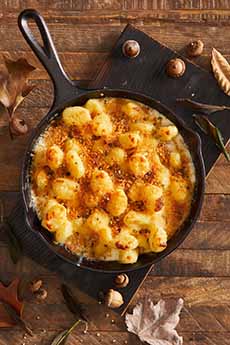
    [1] Gnocchi Mac & Cheese. Here’s the recipe from DeLallo (photo © DeLallo).


    [2] Eggplant Parmesan Baked Ziti. Here’s the recipe from DeLallo (photo © DeLallo).


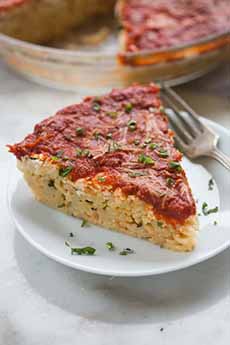
    [3] An easy Rigatoni Pie! Here’s the recipe from Just A Taste (photo © Just A Taste).


    [4] If you prefer, Spaghetti Pie! Here’s the recipe from Tastes Better From Scratch (photo © Tastes Better From Scratch).


    [5] One of the baked pasta dishes from P.F. Pasta Al Forno in New York City: thin crepes with spinach, ricotta and béchamel (photo © Tina B Photo 2019).


    Al forno is Italian for food that has been baked in an oven. That includes pasta.

    We think of most pasta as boiled; that’s the easiest way to make it. Remove it cooked from the pot, add sauce, bring it to the table.

    But baked pasta dishes are very popular. Think cannelloni, lasagna, manicotti and ziti, for starters. Most of us order them in restaurants, because it’s more effort to prepare them.

    Pasta al forno, pasta from the oven, offers delights that are worth the extra time to prepare them.

    The “meaty” texture, the crisp browned edges, the layering of flavors, the different textures and presentations…all opportunities to shine.

    Sometimes the pasta is double-cooked: boiled before it is baked. The pasta comes out soft, not with the firm al dente consistency that is standard in boiled pasta dishes.

    (And may we add, as someone who drops food on herself: Pasta al forno is not drippy.)

    Baked pasta is an opportunity to create dishes with many more ingredients than most boiled pasta recipes.

    Layer on meats, vegetables, different cheeses, herbs and spices: Every recipe can present a different story, over, say, Spaghetti Bolognese or Linguine With Clam Sauce.

     
    THE HISTORY OF PASTA AL FORNO

    Northern Italy has a tradition of baking pasta in wood-burning ovens.

    Pasta was introduced to Italy in the 8th century C.E. (the history of pasta and the history of oven cooking).

    In the Middle Ages (5th century to 15th century), baked pasta was an opportunity for chefs to show off their creativity.

    Eventually, baked pasta, pasta al forno, was adopted all over Italy.

    It traveled from the north to become a staple dish of Southern Italy, where it’s usually made on Sundays, holidays and special occasions.

    Sicilians call it piatto unico, “one plate”: One serving is a complete main course of pasta (carbs), protein, vegetables and dairy (cheese) (source).

    Wood was the main fuel for large parts of Europe for many centuries. Today, even though more efficient gas, electric, gas and convection ovens are available, some restaurants and home kitchens still use wood burning ovens because they prefer the flavor that a hint of wood provides (source).
     
     
    BAKED PASTA RECIPES

    You can bake any pasta, including mac and cheese and spaghetti.

    There are meat-based, seafood-based, vegetarian and vegan recipes. There are even sweet recipes, like this delectable noodle kugel, typically served as a side.

    Here are collections of recipes: so much variety that we wanted to eat them all.

  • Delish.com
  • Epicurious.com
  • Food52.com
  •  
    When you consider baking your own pasta, remember that a lot of what goes into the pan depends on what’s in the refrigerator or pantry, and what’s in season.

  • In Northern Italy, cooler weather means heartier ingredients: butter, pork fat, heavy starches and meaty ragùs.
  • In Southern Italy, baked pasta dishes are usually laden with vegetables—bell peppers, eggplant and whatever is in season—as well as local cured meats (sopressata and sausages, for example).
  •  
    You can add anything you like, from the classics to trendy veggies like cauliflower and kale.

    Here are tips for making based pasta from DeLallo Foods.
     
     
    A PASTA AL FORNO RESTAURANT

    Your city may have a restaurant dedicated to pasta al forno.

    New York City just received one, P. F. Pasta Al Forno, in the West Village neighborhood of Manhattan.

    This baked-pasta-only concept is the first of its kind in New York, honoring the original Pasta Al Forno in Florence, Italy, which operated from 1964 to 2000.

    It’s a counter-service restaurant: Place your order for a slice and wait for it to be called. Then, take it home or dine-one of several group tables.

    The rustic decor can transport you back to the Old World, with vintage accents, hand-painted menus, and beverages like Lurisia spring water and premium Italian soft drinks (try the arancia rosso, blood orange).

    The breadsticks alone worth the trip. They’re free on the tabletops, and so special that we purchased four bags for gifting.

    We couldn’t be happier with the food, either.

    Vegan and vegetarian options are available, as well as all-vegetable dishes like baked caponata.

    While there is lasagna (how could there not be), the other dishes were new to us, and total delights:

  • Crespelle Alla Fiorentina: crepes with ricotta, spinach, tomato sauce and béchamel (photo #5); there are variations with mushrooms or ragù (meat-based sauce).
  • Lasagne Alla Bolognese: with the classic ragù as well as al pesto (vegetarian) and di mare (seafood) versions.
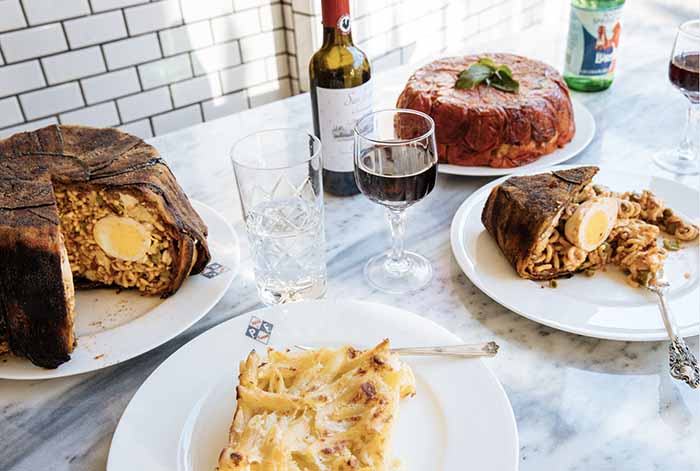
  • Timpano Del Cardinale: a wheel of baked ziti in tomato and basil sauce, mozzarella and Parmigiano, in a shell of dried San Marzano tomatoes (see photo #6, below).
  • Timballo Di Anellini: a wheel of small ring-shaped pasta in beef ragù with prosciutto peas, smoked mozzarella, and hard-boiled eggs, all wrapped in a shell of prosciutto and fried eggplant hard-boiled eggs (see photo #6, below).
  •  
    For those who don’t want pasta carbs, there are:

  • Broccoli Gratinati: a round of baked broccoli in a rich balsamella (béchamel) sauce.
  • Caponata Di Verdure: a layering of eggplant, onions, tomatoes and zucchini, and…
  • Tartufata Di Patate: Thinly-sliced potatoes layered with shaved and sliced black truffle.
  •  
    Head to PastaAlFornoNYC.com for more mouth-watering delights, including those below.
     

    [6] From P.F. Pasta Al Forno in New York City: Timballo Del Anellini, wrapped in fried eggplant and prosciutto; Baked Rigatoni; and Timpano Del Cardinale, ziti wrapped in dried San Marzano tomatoes. (photo copyright Tina B Foto © 2019.
      

    Comments off

    TOP PICK OF THE WEEK: Danish Creamery European Style Butter

    Here’s some news for people who love their butter and products made with it:

    Not all butter is created equal. In addition to the base milk (organic versus conventional, the breed of cow, grass fed [free range]), different butters are churned to have different butterfat contents.

    In the U.S., products sold as “butter” must contain at least 80% butterfat (milk fat), and has 15% butter. Most American butters contain slightly more than that, averaging around 81% butterfat.

    European butters generally have a higher ratio: a minimum of 82%, with many at 83% and one up to 86%: the small-batch cultured butter from Vermont Butter and Cheese Creamery (which is a spreading butter, not a cooking butter).

    For a long time, professional bakers were able to purchase 83% butters on a wholesale level.

    Why care? The higher butterfat content, the richer the flavor and the creamier the texture.

    Higher butterfat means less water. Lower the moisture content yields flakier pastries, cookies that crisp more evenly and cakes that rise higher.

    When the American brand* Plugrá, an 82% butter, was made available to consumers in 2001, it set off a buying frenzy among serious home bakers.

    The brand achieved such growth that, in Land O’Lakes and other producers subsequently introduced European-style butters, and foodies-in-the-know sought out brands from small artisan producers.
     
     
    DANISH CREAMERY BUTTER

    In 1895, Danish immigrant families in the fertile hills of Fresno, California, formed a dairy cooperative modeled after those they’d had in Denmark.

    They created Old World-quality butter made from humanely-raised cows that munch grass on the pasture of family farms. This is the beginning of great butter.

    For generations, Danish Creamery butter has been available across the Western U.S., used by millions for cooking and baking and spreading on bread.

    The company has now launched the crème de la crème (pun intended), European Style Butter: a velvety, 85% butter that will make your taste buds take notice.

    The cream comes from the same pasture-raised cows, but with 85% butter fat for a richer taste and texture.

    Go ahead, the company says: “Bake your fluffiest biscuits, your flakiest pie crusts, your butteriest cakes and pastries with this, our creamiest butter yet.”

    We have, and it’s great!

    For baking we use the Unsalted Butter, but there’s also Salted Butter for those who like a hint of salt at the table.

    And you can find it at Wal-Marts nationwide.

    Get some for your holiday baking.

    If you don’t bake, get some for cooking and toast.

    If your friends cook or bake, get them some.
     
     
    TASTE TEST!

    For enlightenment and for fun, gather up some different brands or butter—perhaps 82% Plugra and a standard supermarket brand—and do a blind taste test!

    This is an especially fun tasting when you first taste a pat blind, then follow up with biscuits, muffins and scones.
     
     
    Discover more at DanishCreamery.com.
     
     
    ______
    *Made by Dairy Farmers of America in Wisconsin, the name Plugra is derived from the French plus gras, which means more fat. Here’s how the best butter in France, Beurre d’Echire, is made.


    [1] Bake better cookies, like this Almond Shortbread (all photos © Danish Creamery).


    [2] Biscuits, popovers, scones, toast: They’re all waiting for Danish Creamery European Style Butter.


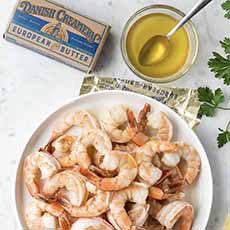
    [3] Get ready to dip crab, lobster and shrimp into velvety melted butter.


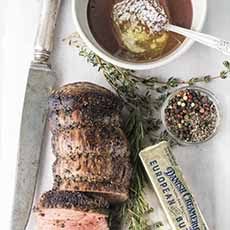
    [4] Make gravies and sauces richer.


    [5] Even the raw cookie dough tastes better!


    Comments off


    © Copyright 2005-2026 Lifestyle Direct, Inc. All rights reserved. All images are copyrighted to their respective owners.