THE NIBBLE BLOG: Products, Recipes & Trends In Specialty Foods


Also visit our main website, TheNibble.com.

TIP OF THE DAY: Torrone For Christmas

In Italy, torrone (tuh-ROE-nay) is a traditional Christmas dessert, and the most popular candy in Italy.

In France, it’s known as nougat: a confection made from egg whites, honey, sugar and toasted almonds.

There are many regional variations; some are softer, some chewier. If you’re headed to any Italian city—or have friends who are—ask them to bring some back.

Especially well regarded are torrone from the Italian regions of Abruzzo and Sicily, and from the cities of Alba (in Piedmont), Cremona (in Lombardy) and Siena (in Tuscany) are especially renowned.
 
 
THE HISTORY OF TORRONE

Modern torrone may be derived from an ancient recipe or Roman or Arabic origin, possibly North Africa or Egypt. One source says that the first documented mentions of torrone come from the early Renaissance in Spain.

The record isn’t clear on either, but there is history that dates torrone the Renaissance.

The dessert was created in Cremona for the marriage of Francesco Sforza and Bianca Maria Visconti on October 25, 1441. Its shape, a long rectangle, was modeled after the city cathedral’s bell tower, the Torrazzo, after which it is thought to be named.

Following its introduction at the wedding, torrone was considered an elegant treat and was gifted at Christmas among affluent people.

Not surprisingly, torrone also became (and still is) a popular wedding favor.

Each year, the residents of Cremona celebrate the candy at La Festa del Torrone, an eight-day celebration in November that includes a reenactment of the legendary marriage.

Today, torrone is eaten after lunch and dinner from Christmas Day until January 6th, or Epiphany (although it is enjoyed year-round). If you don’t want to make it, buy it at a store that specializes in products from Italy.

Torrone is often served with an after-dinner amaro (bitters), a sambuca (a sweet anise-tasting digestivo), or a liquor, such as Strega [source].
 
 
TYPES OF TORRONE

Today, torrone is made throughout Italy. Each region has its own signature recipe.

There are two main types of torrone: hard and soft. The difference in the cooking time and the amount of egg whites used.

Both are made in large formats, sliced to order; in bars; or in individually wrapped pieces the size of hard candies. There are:

  • Traditional torrone, called friabile, is hard and crunchy.
  • Soft torrone, called morbido or tenero, is soft and chewy. It was introduced in the late 19th century by the grandson of Sorelle Nurzia, established by Ulisse Nurzia in 1835. Up until that point, torrone was only the traditional hard variety.
  •  
    While both types of torrone are made of egg whites, nuts and sweeteners, recipes for both textures vary:

  • By nuts: hazelnuts, pistachios or walnuts are substituted for the almonds; some recipes use a blend of nuts.
  • By flavors: not just plain but amaretto, chocolate, chocolate covered, gianduia, lemon, orange, pistachio, praline, vanilla, even the latest flavors like salted caramel.
  • With inclusions: cacao nibs; chocolate chips; candied cherries, ginger, lemon peel, orange peel and mixed candied fruits; dried berries; lemon cream; limoncello.
  •  
    If your appetite is whetted and you don’t want to make your own, head to TorroneCandy.com.

    Torrone can be purchased in a variety of forms including bars, cubes, rounds, blocks, and bite-sized pieces and comes in two types of consistency:
     
     
    RECIPE: HOMEMADE TORRONE

    Although it’s very sticky and sometimes hard to handle, fresh, homemade torrone is delicious and enables you to create your signature recipe.

    You can Americanize it by adding Heath Bar toffee bits, M&Ms, a peanut butter swirl, you name it.

    This recipe from DeLallo uses a blend of almonds and hazelnuts, but you can use any blend or single nut you prefer. Just toast the nuts. Here’s how.

    The recipe requires wafer paper, an edible paper that is flavorless (some have a vanilla flavouring) and dissolves in the mouth. It doesn’t affect the flavor of the food, but keeps sticky confections from sticking.

    Here are more uses for wafer paper.

    Ingredients For 10-12 Servings

  • 1-1/2 cups honey
  • 1-1/4 cups sugar
  • 3 cup almonds, toasted
  • 1-1/2 cups hazelnuts, toasted
  • 3 egg whites*, room temperature
  • Pinch salt
  • Zest of 1 lemon
  • Zest of 1/2 orange
  • 2-4 pieces wafer paper
  •  
    Preparation

    1. COMBINE the honey and sugar in a large glass bowl over a pot of water, making sure that the bottom of the bowl doesn’t touch the water. This is your double boiler. Cook over medium heat for 30 minutes, stirring constantly with a wooden spoon. When there are about 5 minutes left…

    2. BEAT the egg whites and a small pinch of salt to stiff peaks using a stand mixer, hand mixer or whisk. Whisk the egg whites into the honey-sugar mixture, one whisk-full at a time, making sure to incorporate each whisk-full completely before adding more.

    3. USE a wooden spoon and continue mixing for another 40-50 minutes, or until thickened: a ribbon of the mixture will stay on the back of the spoon for 5-7 seconds. Add the lemon and orange zests and the toasted nuts. Stir to combine.

    4. LINE a baking pan with parchment paper, followed by a single layer of the wafer paper (trimmed as necessary). Add the torrone filling, smoothing the top out with a spatula. Then top with another piece or two of wafer paper.

    5. PLACE a weight on top of the entire torrone, and set aside for 1-2 hours. If you don’t have pie weights, add a piece of parchment or foil to the top of the pan and fill with dried beans or loose change. You can also use a slightly smaller baking pan that will fit on top. Regardless of the method, protect the edible paper top with parchment.

    6. REMOVE the weights and protective parchment or foil, turn the pan upside down on a board and cut the torrone into small rectangular pieces. Store it in an airtight container with wax paper between the layers.

    ________________

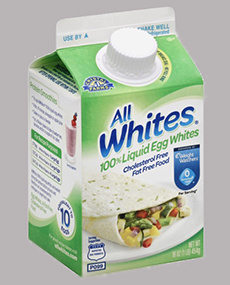
    *Tip: When a recipe needs only egg whites, consider buying a carton of already-separated whites.


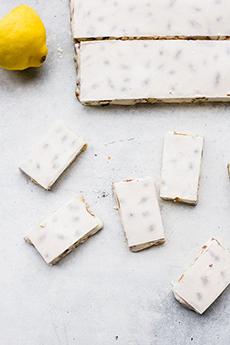
    [1] Homemade torrone. The recipe is below. Cut the pan into longitudinal strips, then cut individual pieces to your preference (photos #1 to #3 © DeLallo).


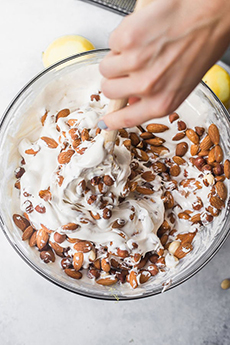
    [2] Mixing the ingredients.


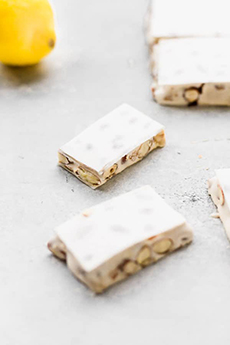
    [3] There’s a delicious almond in every bite.

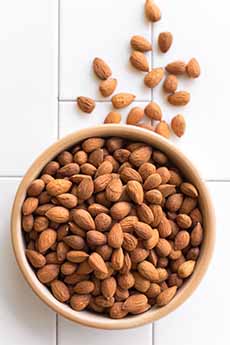
    Dish Of Almonds
    [4] Use the freshest almonds you can buy (photo © Good Eggs).


    [4] Use the freshest almonds you can buy (photo © Good Eggs).

    Jar Of Honey
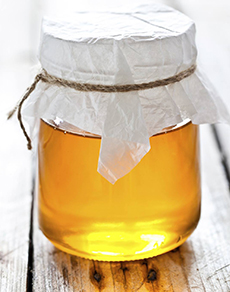
    [5] Any mild honey will do (photo © National Honey Board).

    Sugar Bowl
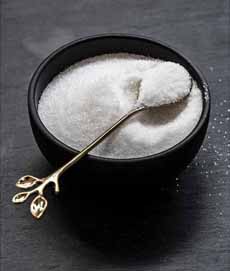
    [6] Get out the sugar bowl (photo © Hannah Kaminsky | Bittersweet Blog). h gt


    Comments off

    HOLIDAY RECIPE: Poached Pears With A Pistachio Cloak


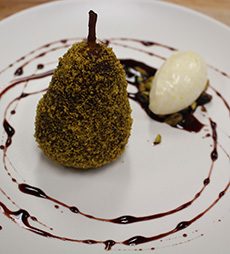
    [1] Pears poached in port and red wine, with a “cloak” of pistachios (photo © Santauri Restaurant | Los Angeles).


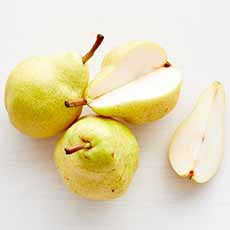
    [2] Make the recipe with Bartlett (above) or Bosc pears (photo © Good Eggs).


    [3] Bosc pears (photo © Good Eggs).

    Cup Of Pomegranate Arils
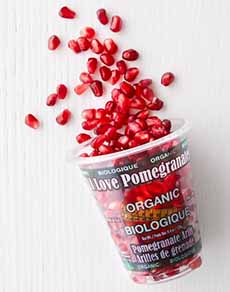
    [4] Add some pomegranate arils to the plate for holiday color (photo © Good Eggs).

    Fresh Mint
    [5] Add some green to the red arils (photo © Good Eggs).


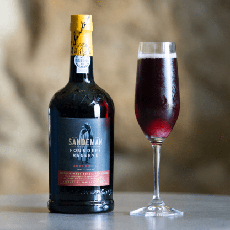
    [6] The pears are poached in ruby port, which is also a great pairing with the dessert (photo © Sandeman).


    When we saw this poached pear recipe, we knew we wanted to make it for the holidays, accented with some red raspberries and green mint.

    It’s a welcome alternative to heavier desserts at the end of a Christmas dinner or other seasonal celebration.

    The recipe is courtesy of Executive Chef Brendan Mica at Santauri restaurant in Los Angeles.

    A beautiful, light and airy venue, Santuari serves California cuisine with Mediterranean accents inside the historic Toluca Lake Tennis Club.

    Rich in history, the space, which is opposite Warner Bros Studio, was once frequented by stars such as Johnny Carson, Clint Eastwood and Farrah Fawcett. (If you’re in the area, take the studio tour and then have lunch.)

    The food: Beautiful!
     
     
    RECIPE: POACHED PEARS WITH A PISTACHIO CLOAK

    This recipe needs to be made a day in advance. Poaching pears is easy, you can split the labor by making the candied pistachios the day before the pears.

    There is also a surprise mascarpone filling.

    Add a red and green holiday garnish with pomegranate arils and mint leaves.

    If you don’t have a kitchen scale with metric measurements, the conversions are easy to find online.

    Ingredients For 8 Servings

    For The Candied Pistachio Cloak

  • 600g pistachio nuts
  • 453g powdered sugar
  • 400g water
  • 3g kosher salt
  •  
    Preparation

    1. BRING all the ingredients to a boil and reduce by half. Discard the liquid.

    2. DEEP FRY and allow to cool. Once cool, chop 2/3 of the candied pistachios in a food processor. They should have a sand-like consistency. Reserve the remaining whole pistachios to garnish the plates.
     
    For The Pears & Poaching Liquid

  • 8 Bartlett or Bosc pears
  • 750ml ruby port wine
  • 750 ml red wine
  • 112g wildflower honey (substitute clover honey)
  • 87g raw sugar
  • 6 whole allspice
  • 4 star anise
  • 3 cinnamon sticks
  • 6 whole cardamom
  • 3 whole cloves
  • 3 whole fennel seeds
  • Peel from 1 lemon peel (no pith)
  •  
    Preparation

    1. MAKE the poaching liquid. First toast all spices in a tall flat-bottom pot. Once fragrant, remove from the flame and add the port and red wine. Add the sugar and honey and bring to a simmer (do not boil). While the liquid is heating…

    2. CUT the bottom off the pears—just enough so they sit flat. Core the pears using a melon baller. Peel the skin and place the pears directly into the poaching liquid. The liquid should cover the pears.

    3. GENTLY ROTATE the pears during the cooking process. The pears should be firm but soft enough to cut with a spoon (insert a paring knife to test). Estimated cooking time is 20-35 minutes.

    4. STRAIN the spices, reserving the poaching liquid. Refrigerate the pears in the poaching liquid overnight. The poaching liquid will become the glaze when you assemble the plate.
     
     
    For The Honey-Lemon Mascarpone Filling

  • 500g mascarpone
  • Zest from 2 lemons
  • 37g honey
  • 4g kosher salt
  •  
    Preparation

    1. BLEND the mascarpone ingredients. Remove the pears from the poaching liquid and carefully pat dry the insides. Pipe the filling into the pear cavities. Roll the stuffed pears in the chopped candied pistachios.

    2. REDUCE the poaching liquid until it has a syrup-like consistency and coats the back of a spoon.

    3. PLACE each pear on a plate and drizzle with the reduced poaching liquid. Garnish as desired with pomegranate arils and mint leaves.


    Comments off

    RECIPE: Mezcal-Pomegranate Holiday Punch

    Pomegranate Mezcal Punch
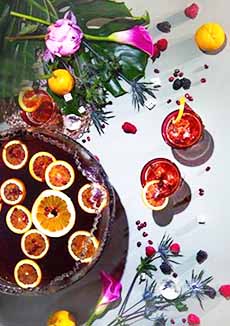
    [1] Persephone Punch, made with mulled pomegranate juice (photo © Gem & Bolt).

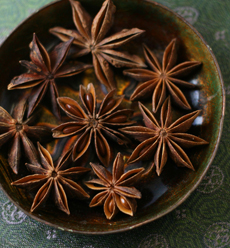
    Star Anise
    [2] Star anise pods, available from Silk Road Spices (photo © Silk Road Spices.


    [3] Pomegranate and its arils. The juice is squeezed from the arils (photo © Kelly Cline | iStock Photo).

    A small bowl of juniper berries
    [4] Juniper berries, available from Silk Road Spices (photo © Silk Road Spices.


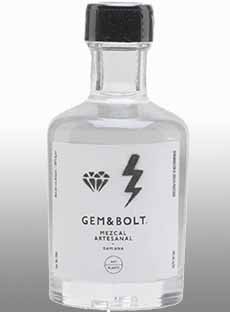
    [5] The 200ml bottle of Bolt Mezcal (photo © Gem & Bolt).


    One of the differences between tequila and mezcal is the smoky flavor of mezcal (here are the other differences).

    This punch uses mezcal instead of tequila to add something extra.

    The recipe, from Gem & Bolt Mezcal, was named for Persephone, the Greek goddess of vegetation and the unwilling wife of Hades, god of the Underworld.

    If you recall your Greek mythology, Persephone was abducted by Hades. Zeus demanded her return, but first Hades tricked her.

    He encouraged her to eat some pomegranate seeds and then claimed that, because she had tasted food in the Underworld, she was obliged to spend a third of each year there (one month for each seed eaten, as we recall).

    These became the winter months, when no crops grew on Earth because of Persephone’s absence from it.
     
     
    RECIPE: PERSEPHONE’S POMEGRANATE PUNCH

    For an alcohol-free version, serve the mulled pomegranate juice with ginger ale.

    Ingredients For 20 Servings

  • 1 bottle (750ml) Gem & Bolt Mezcal (or substitute), chilled
  • 1 bottle (750ml) dry sparkling wine (Cava, Prosecco, etc.), chilled
  • 1 quart mulled pomegranate juice (see below)
  • Garnish: blood orange wheels (substitute conventional oranges), pomegranate seeds, star anise pods
  •  
    For The Mulled Pomegranate Juice

  • 1 quart pomegranate juice (Pom Wonderful or other no-sugar-added brand)
  • 2 teaspoons juniper berries
  • 2 cinnamon sticks
  • 1 teaspoon black peppercorns
  • 2 star anise pods
  •  
    Preparation

    1. COMBINE the mulled pomegranate juice ingredients a container and refrigerate for 8 hours or overnight. Strain and discard the spices.

    2. ADD to the punch bowl (or a large pitcher) with the chilled wine and spirits. Stir only slightly to blend: You don’t want to burst the bubbles.
     
     
    ABOUT GEM & BOLT MEZCAL

    Gem & Bolt is produced by a fourth-generation master distiller in Oaxaca, Mexico, using espadín agave* (Agave angustifolia) and mountain spring water.

    Espadín agave, a plant pollinated at night by bats, takes up to 10 years to mature in the hot, dry climate.

    The hand-harvested agave is slowly wood-roasted in earth pit ovens, and mashed with a traditional tahona stone, a large wheel chiseled out of volcanic stone, and configured to rotate in a stone pit (here’s a photo).

    The roasted mash is then fermented naturally in wooden vats, and distilled in small copper stills.

    Adding to its distinction, Gem & Bolt mezcal is uniquely distilled with damiana (Turnera diffusa), an herb from a flowering woody bush native to Mexico.

    As far back as the Mayas and Aztecs, the damiana leaf and stem were used to make medicine. The medicine was used for its mood-elevating properties and as an aphrodisiac.

    Aphrodisiac or not, you’ll enjoy this premium mezcal.
     
     
    SMOKY VS. SMOKEY

    Some English words have more than one spelling: doughnut vs. donut, omelet vs. omelette, and so on.

    Many of these variations are historical or are from different languages. It often doesn’t make a difference which spelllng you choose.

    Except in the case of smoky vs. smokey. Here, there is a clear cut difference.

  • Smoky is an adjective defining something that has the aroma or flavor of smoke, or is smoke-filled, e.g. a smoky room.
  • Smokey refers to only one thing: the character Smokey Bear (erroneously called Smokey the Bear), who is the mascot for the U.S. Forest Service.
  •  
    Smokey Bear’s creators spelled his name this way intentionally, to differentiate it from the adjective “smoky” [source].

    Few people realize the difference. Thus, there are many foods called, e.g. Smokey Blue Cheese and Smokey Red Sensation Salsa.

    ________________

    *By law, Mezcal can be made from some 30 different agave species, varieties and subvarieties. Espadín is the most prominent variety in Oaxaca. By contrast, tequila can be made only with the blue agave plant, Agave tequilana Weber.


    Comments off


    © Copyright 2005-2026 Lifestyle Direct, Inc. All rights reserved. All images are copyrighted to their respective owners.