|
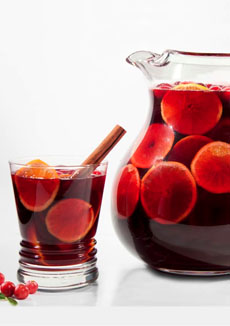
Seven Christmases past, we made a Christmas Sangria with Sandeman Port. It included cinnamon schnapps and clementine soda, and was a big hit.
Here’s the recipe for Sandeman Sangria #1. It has been the official warm-up drink of our Christmas festivities.
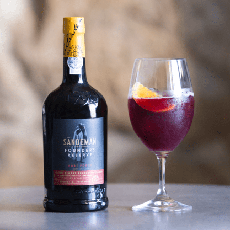
But wait: There’s a new Christmas Sangria from Sandeman, and it’s a much simpler recipe.
Sandeman makes several expressions of Port: the classic ruby, tawny and white Ports; aged tawny; reserve wines; and vintage wines (see the different types of port below.
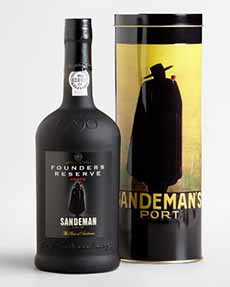
The well-known icon, called Don [Mr.] Sandeman, features a man dressed in a Portuguese student’s cape and a wide Spanish-style hat (photo #4).
International Port Wine Day is January 26th. Raise your glass!
> Below: The history of Port.
> Below: The different types of Port.
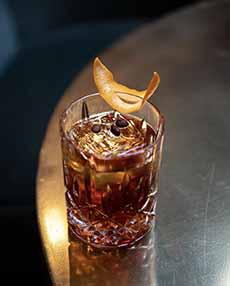
RECIPE: SANDEMAN SANGRIA #2
Ingredients Per Cocktail
1.5 oz Sandeman Porto Founder’s Reserve
1 oz of homemade sour mix (equal parts fresh lime juice and simple syrup)
.5 oz of orange juice
.5 oz of grenadine (homemade grenadine recipe)
Garnish: orange wedge
Preparation
1. FILL a tulip glass (or other wine glass) with ice. Add the ingredients and stir well with a bar spoon.
2. GARNISH and serve.
WHAT IS PORT?
Port is a Portuguese fortified wine, a red wine made from a variety of Portuguese grapes*then blended with distilled grape spirits.
It is made in the Douro Valley in the northern provinces of Portugal. Only wine here can legally be called Port.
(Wine Trivia: The Douro region is the third-oldest protected wine region in the world, after the Chianti region of Italy, established in 1716, and the Tokaj-Hegyalja region in Hungary established in 1730.
It’s Port in English, Porto in Portuguese, and is sometimes written as Oporto, after Porto, the largest city in the region and the second-largest city in Portugal (Oporto means “the Porto”).
Porto, located along the Douro River estuary in northern Portugal, was an outpost of the Roman Empire. Port wine has been produced since then.
It is typically a sweet, red wine, often served as a dessert wine, though it also comes in dry, semi-dry, and white varieties
Port is made in several expressions: Crusted, Colheita, Late Bottled Vintage (LBV), Ruby, Single Quinta, Tawny, Vintage, Vintage Character, and White. Here’s an explanation of each type of Port.
See more detail on these types of Ports below.
THE HISTORY OF PORT
Grapes have been grown in Portugal since antiquity; ancient writings show that the inhabitants of northern Portugal were already drinking wine 2,000 ago.
The Romans arrived in Portugal in the second century B.C.E. and remained for the next five hundred years. They grew grapes and made wine on the banks of the Douro River, where Port is produced today.
After the establishment of the Kingdom of Portugal in 1143, wine from the Douro Valley become an important export. But it was a different wine.
By the second half of the 15th century, a significant amount of Portuguese wine was being exported to England.
The first wines known as Port were exported in the latter 17th century, following the Anglo-Portuguese commercial treaty of 1654. English wine merchants settled in Portugal to oversee the trade.
The fortified wine we know today was first created to preserve the wine during the long journey from the Douro Valley to England. It began to be fortified with the addition of brandy prior to bottling the aged red wine.
Today, the process of fortifying Port is different: The wine is fortified during fermentation and not after aging.
|