THE NIBBLE BLOG: Products, Recipes & Trends In Specialty Foods


Also visit our main website, TheNibble.com.

Baking, Grilling & Cooking With Extra Virgin Olive Oil


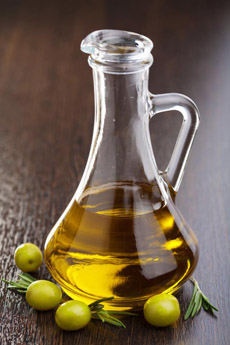
[1] Use extra virgin olive oil for much more than salad dressing (photos #1 © Flavor Your Life).


[2] Brush the grill, and your food, with EVOO (photo © California Olive Ranch).

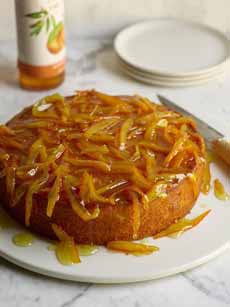
Olive Oil Cake
[3] Bake super-moist cakes with EVOO. Here’s the recipe (photo © Lucero Olive Oil [now closed]).

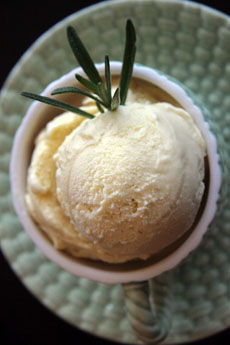
Rosemary Ice Cream
[4] EVOO adds extra creaminess to already-creamy ice cream. Here’s the recipe (photo © Local Food Rocks).

Olive Oil Bread Dipper
[6] Dip bread in olive oil. It’s delicious as well as good for you. Butter is delicious, but not good for you (photo © Murray’s Cheese).


[7] Poach fish in olive oil. Here’s the recipe for this poached salmon (photo © Pom Wonderful).

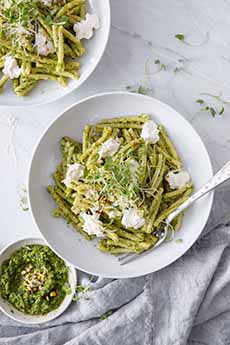
Casarecce With Broccoli Rabe
[8] Make a pesto for pasta, or just use the olive oil as your sauce. Here’s the recipe for this casarecce pasta with broccoli rabe and pesto (photo © Love & Olive Oil).

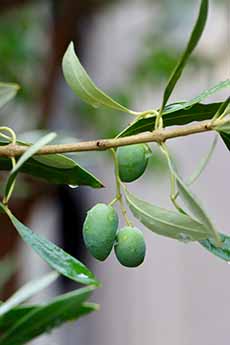
Olives On The Tree Branch
[9] Close up of olives on the branch. (photo © Emilio Sanches Hernandez | Pexels).

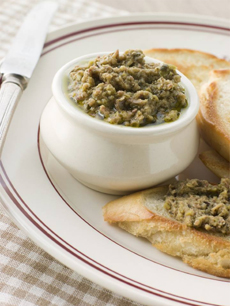
Green Olive Tapenade
[10] With either green or black olives, tapenade is a great bread spread. Here’s the recipe (photo © Pompeian).


Updated August 2026

Thanks to California Olive Ranch, producer of extra virgin olive oils, for our Tip Of The Day: baking, cooking and grilling with EVOO.

Extra virgin olive oil is one of the best oils to cook with. Use it for baking, frying, poaching, sautéing and finishing.

Extra virgin olive oil holds up well under high temperatures, and brings a uniquely nuanced flavor profile to your dish. Plus, its health benefits, including heart healthiness, are terrific.

Below:

> Grilling with EVOO.

> Cooking with olive oil.

> Baking with olive oil.

> Frying with olive oil.

> Recipes with olive oil instead of butter.

> The year’s 7 olive and olive oil holidays.
 
Elsewhere On The Nibble:

> The history of olive oil.

> The different types of olive oil: a photo glossary.

> An overview of Extra Virgin Olive Oil.

> Check your extra virgin olive oil.

> How to taste and evaluate olive oil.

> The Sensory Wheel: understanding the different flavors and aromas of olive oil.

> Why you should switch from butter to olive oil.

> More uses for EVOO.
 
 
1. GRILLING WITH EVOO

It’s a common misconception that olive oil’s smoke point is too low for grilling. That may be true of much grocery store olive oil, but high quality EVOO has a smoke point of more than 425°F.

A grill’s temperature is 400°-450°F for high heat, 350°-400°F for medium-high, 300°-350°F for medium, and 250°-300°F for low heat.

Extra virgin olive oil is some of the freshest and highest-quality oil available among cooking oil. All those antioxidants help it hold its form at higher temperatures.

Lower quality olive oils such as virgin olive oil or simply “olive oil”, on the other hand, have a high free fatty acid content and will smoke at a lower temperature (the different types of olive oil).

Brush the grill. A light brushing of EVOO on the grill will do wonders in keeping your foods from sticking. Just don’t get heavy handed: You don’t want oil dripping into the flames.

Mist your meats and seafood. Use an EVOO spray several times as they are grilling. This creates a glaze and adds yet another layer of flavor.

Instead of a spray, dip herbs in EVOO. Tie together a bunch of fresh rosemary or thyme, and use it as a brush to baste your foods with olive oil as they grill. It will infuse your food with flavor as it grill. Alternatively, you can tie fresh herbs onto your basting brush and infuse their flavor that way.
 
 
2. COOKING WITH EVOO

A staple in your kitchen, EVOO is versatile and useful for many purposes beyond grilling. Some key uses:

  • Butter substitute (much healthier!)
  • Bread dipper
  • Marinades and rubs
  • Pan-frying, sautéing and roasting
  • Salad dressings
  • Sauces (pasta, pesto, etc.)
  •  
     
    3. BAKING WITH EVOO

    Baking with extra virgin olive oil is a sure way to add complexity of flavor and more moisture to baked goods.

    > Here are the benefits of baking with olive oil instead of butter.

    For starters, it’s a great way to reduce the amount of saturated fat in of your favorite treats.

    Baking with extra virgin olive oil is easy with this conversion chart.

    You can even make olive oil ice cream! Here’s a recipe.
     
     
    4. FRYING WITH EVOO

    A long-standing myth is that olive oil’s smoke point can’t stand up to the high heat required for frying.

    High-quality extra virgin olive oil has a smoke point upwards of 425°F, well above the ideal frying temperature of around 350°F.

    A general rule of thumb: the higher the quality and the fresher an oil is, the higher the smoke point will be.

    Lower quality olive oils such as virgin or crude, on the other hand, have a high free fatty acid content and will smoke at a lower temperature

  • Here are more uses for EVOO.
  • How To Substitute Olive Oil For Butter
  • Check Out Your EVOO I.Q.
  • Check Out Smoked Olive Oil
  •  
     
    5. RECIPES WITH OLIVE OIL INSTEAD OF BUTTER

  • Banana Muffins With Chocolate Chunks
  • Chocolate Olive Oil Cake
  • Dark Chunk Loaf With Olive Oil
  • Dense Olive Oil Cake With Orange & Mint
  • Green Olive Tapenade
  • Ice Cream Sundae With Olive Oil
  • Kalamata Olive Bread
  • Maialino’s Olive Oil Cake
  • Olive Oil Citrus Cake
  • Olive Oil Cornmeal Cake With Lemon Olive Oil
  • Orange Olive Oil Cake With Greek Yogurt & Grand Marnier
  • Pistachio Olive Oil Cake With Rosemary Olive Oil
  • Olive Oil Gelato
  • Olive Oil Ice Cream
  • Olive Oil Ice Cream With Shaved Parmesan Cheese
  • Olive Oil Marmalade Cake With Orange Olive Oil
  • Olive Oil Martini
  • Olive Oil Polenta (Cornmeal) Cake With Grapes
  • Lemon Olive Oil Poppyseed Muffins
  • Olive Oil Poached Salmon
  • Recipes With Smoked Olive Oil
  • Savory recipes for quick breads and skillet cornbread.
  •  
     
    6. THE YEAR’S 7 OLIVE & OLIVE OIL HOLIDAYS

    Plan ahead to celebrate these olive oil and olive holidays:

  • January 15: National Keto Day
  • May: National Mediterranean Diet Month
  • June 1: National Olive Day
  • July 11: National Polyphenol Day
  • August: National Olive Oil Month
  • September 30: National Extra Virgin Olive Oil Day
  • November 26: World/International Olive Day/World Olive Tree Day*
  •  


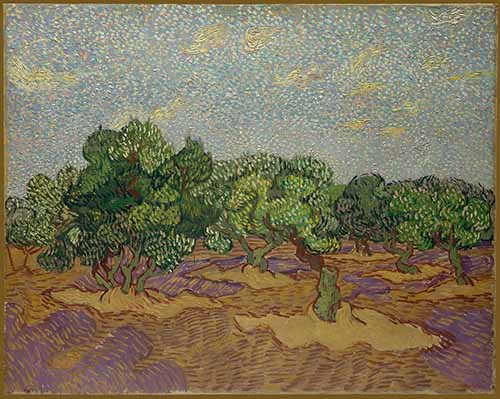
    Vincent Van Gogh Painting "The Olive Trees"
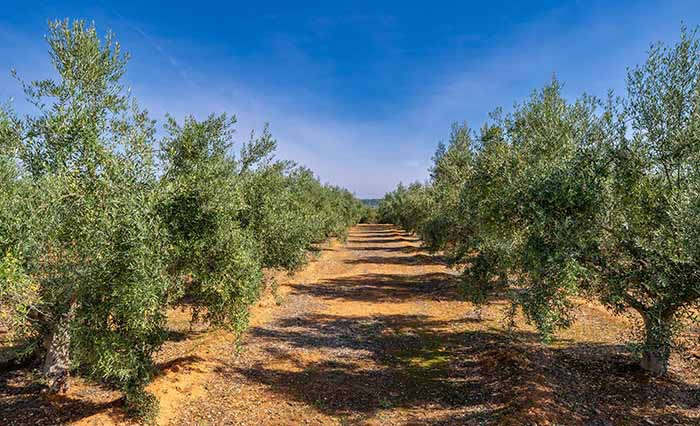
    [11] Compare Vincent Van Gogh’s painting, “The Olive Trees,” with the grove below (photo in the collection of the Metropolitan Museum Of Art).


    Olive Grove
    [12] Olive grove (photo © Emilio Sanches Hernandez | Pexels).
     
    ________________

    *The grades of olive oil based on levels of acidity: Extra Virgin Olive Oil, Virgin Olive Oil, Lampante Virgin Olive Oil, Refined Olive Oil, Refined Pomace Olive Oil, Olive Oil and Pomace Olive Oil. Each type has a different smoke oil. Unless labeled Extra Virgin, a grocery store olive oil brand is typically Refined Olive Oil or Olive Oil.

    Some grocery store brands labeled Olive Oil, Cooking Olive Oil or Pure Olive Oil. Pure olive oil is not at all pure: It’s a portion of Extra Virgin or Virgin Olive Oil blended with Refined Olive Oil. The blending method is often used when the extraction quality of the Refined Olive Oil is not as good as expected. In order to improve the quality, the refined oil has to be mixed with a better quality one for better flavor [source].

    *World Olive Tree Day, November 26th, was proclaimed by UNESCO in 2019. It celebrates the olive tree’s cultural, environmental, and peace-symbol significance—not just its fruit or oil. A common alternative used by the olive sector is World Olive Day. It is informally called International Olive Day, but that is not UNESCO’s formal title.
     

    CHECK OUT WHAT’S HAPPENING ON OUR HOME PAGE, THENIBBLE.COM.


    Comments off

    The Student Vegan Cookbook & More Excellent Vegan Cookbooks

    You don’t have to be a student to enjoy Hannah Kaminsky’s eighth vegan recipe book, The Student Vegan Cookbook (see all eight below).

    Anyone who has a tight budget, a crazy-busy schedule, and limited kitchen equipment can make amazing vegan meals, snacks and treats.

    The Student Vegan Cookbook shows you how, with tips, tricks, and hacks for dormitory-room and small-kitchen cooking.

    There are lots of creative, nutritious, and delectable recipes spanning the whole day, from rushing-off-to-class quick-fix breakfasts to midnight treats for chilling and unwinding.

    Award-winning vegan blogger Hannah Kaminsky has walked the walk, cooking delicious meals for herself and her roommates during her own college years.

    Fast-forward a few years: Hannah is now a professional food writer and photographer who has created a stunning book full of truly scrumptious, easy-to-make, 100% vegan recipes.
     
     
    WHAT’S IN THE STUDENT VEGAN COOKBOOK

    There are 85 yummy recipes, each with its own beautiful photograph. They include:

  • Drinks: Super-healthy smoothies, shakes and juices.
  • Loaded Toasts: Avocado toast is not the only way to turn toast into a meal!
  • Lunch Favorites: Wraps, tacos, burritos, and sandwiches, for lunches and casual dinners on the fly.
  • Noodles: Fast and easy noodle dishes, from pasta, soba and udon to new ways to fix ramen, the perennial student favorite.
  • One-Pan and One-Bowl: Colorful and filling meals that need only one burner.
  • Snacks and Party Treats: Incredible tasting and good for you.
  •  
    Whether you’re a vegan, a vegetarian or simply an omnivore who wants to eat healthier…

    Whether you live at home, in your own apartment or in a dorm…

    You’ll kick your cooking and eating game up to the next level with this inventive and incredibly useful book.

    Stock up for holiday gifts!

    Get your copy wherever fine books are sold; Amazon links to Hannah’s cookbooks are below.

    Order directly from Hannah’s website if you’d like a personalized signed copy.

    MORE NEW RECIPES: Sign up for Hannah’s blog to get her latest vegan recipes.
     

    VEGAN COOKBOOKS, WRITTEN & BEAUTIFULLY PHOTOGRAPHED BY HANNAH KAMINSKY

  • Easy As Vegan Pie: One-Of-A-Kind Sweet And Savory Slices
  • My Sweet Vegan: Passionate About Dessert
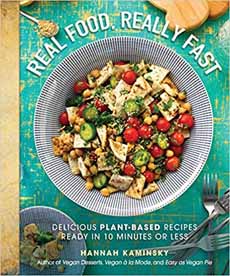
  • Real Food, Really Fast: Delicious Plant-Based Recipes Ready in 10 Minutes or Less
  • Super Vegan Scoops! Plant-Based Ice Cream for Everyone
  • Sweet Vegan Treats: 90 Recipes for Cookies, Brownies, Cakes, and Tarts
  • The Student Vegan Cookbook: 85 Incredible Plant-Based Recipes That Are Cheap, Fast, Easy, and Super-Healthy
  • Vegan A La Mode: More Than 100 Frozen Treats Made from Almond, Coconut, and Other Dairy-Free Milks
  • Vegan Desserts: Sumptuous Sweets for Every Season
  •  
     
    VEGAN, VEGETARIAN…WHAT’S THE DIFFERENCE?

    Check out the differences between:

  • Flexitarian
  • Pescatarian
  • Vegan
  • Vegetarian (including lacto-ovo vegetarian, lactovegetarian, ovo-lactovegetarian and pesco-vegetarian)
  •  


    [1] Hot off the presses: The Student Vegan Cookbook. For a personalized copy, head here (all photos © Hannah Kaminsky | Bittersweet Blog).


    [2] Another Kaminsky cookbook, featuring vegan meals ready in 10 minutes or less.


    [3] Ice cream fans will love this book of plant-based frozen desserts.


    [4] With the holidays not far away, this peppermint roulade from Super Vegan Scoops.


    Comments off

    Butterscotch Pudding Recipes For National Butterscotch Pudding Day

    butterscotch and vanilla pudding with whipped cream and butterscotch sauce
    [1] Double delight: butterscotch pudding topped with vanilla bean pudding, and a garnish of butterscotch sauce, whipped cream and chocolate chips (photo © Bruna Branco | Unsplash).

    A bowl of butterscotch pudding topped with chocolate flecks.
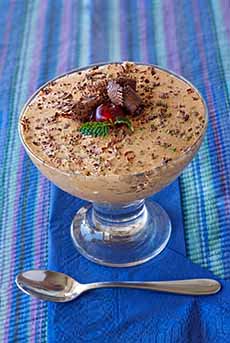
    [2] Butterscotch pudding with chocolate flecks (photo © Duard van der Westhuizen | iStock Photo).

    butterscotch pudding topped with shards of almond bark
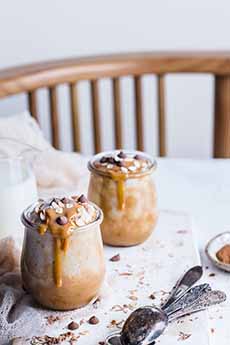
    [3] You can top your pudding with pieces of chocolate almond bark or toffee (photo © Hannah Kaminsky | Bittersweet Blog).

    A dish of butterscotch pudding with sliced almonds and meringue.
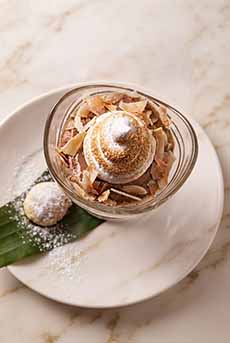
    [4] Butterscotch pudding topped with toasted coconut and torched meringue (photo © Frontera Grill | Chicago).

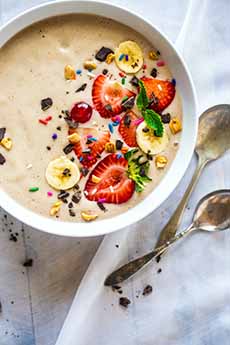
    Bowl of butterscotch pudding With strawberry garnish
    [5] Turn your butterscotch pudding into a work of art (photo © Taylor Kiser | Unsplash).


    Updated September 2026

    September 19th is National Butterscotch Pudding Day. Some delicious recipes are below, but there would be no such recipes if it were not for butterscotch candy.

    Butterscotch was invented in England, as a hard candy. It’s often credited to Samuel Parkinson, a confectioner in Doncaster, a town in Yorkshire, in Northern England. Parkinson began making the candy in 1817, and the brand still exists.
     
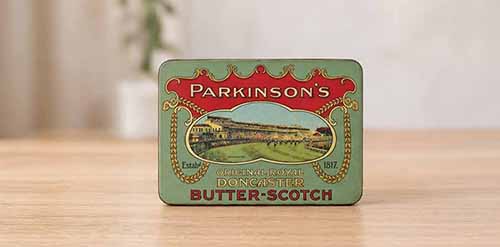
    An old Parkinson's Butterscotch tin.
    [6] A vintage tin of Parkinson’s butterscotch (A.I. photo).
     
    Other local confectioners followed suit, and the town became famous for its butterscotch candy, known as Doncaster butterscotch.

    An 1848 issue of the “Liverpool Mercury” gave the recipe for “Doncaster butterscotch” as “one pound of butter, one pound of sugar and a quarter of a pound of treacle*, boiled together” [source].

    We don’t know if the “Liverpool Mercury” meant brown sugar, but the signature flavor of butterscotch comes from brown sugar, not white sugar. (Look at the ingredients of today’s butterscotch and you’ll also find corn syrup†, vanilla or other flavors, and water.)

    To make butterscotch sauce, the butter and brown sugar are mixed with cream. How about some butterscotch sauce with your butterscotch pudding? Check out photo #1. The other photos on the left show different serving suggestions.

    Below:

    > The history of butterscotch pudding.

    > Seven butterscotch pudding recipes.
     
     
    Elsewhere on The Nibble:

    > The difference between butterscotch, caramel and toffee.

    > The difference between custard and pudding.

    > The different types of custard.

    > The year’s 17 pudding and custard holidays.

    > The history of pudding.
     
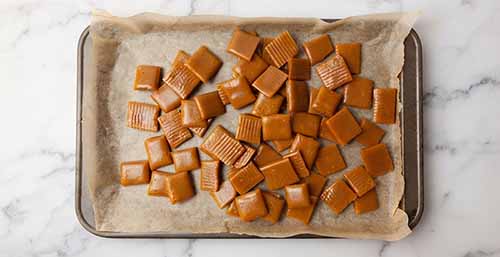
    A pan of homemade butterscotch cut into squares.
    [7] If you’d like to make your own butterscotch, here’s a recipe that deepens the flavor by substituting honey for some of the sugar (photo © Taste Of Home).
     
     
    1. THE HISTORY OF BUTTERSCOTCH PUDDING

    The original English puddings were savory, boiled puddings containing meat. By the latter half of the 18th century, traditional English puddings no longer included meat; they were still boiled or steamed, even baked. The finished product was cake-like (like plum pudding).

    Our creamy American puddings, though very different from what the British call pudding, descend from this tradition of steaming sweet ingredients.

    Here’s a general history of pudding.

    American colonists continued the English tradition of baking sweet puddings. The earliest print reference, for chocolate pudding, is 1730. Chocolate custard, a thick creamy cousin, dates to the 19th century. These sweets were enjoyed by wealthy people [source].

    In 1837 in Birmingham, England, chemist Alfred Bird invented custard powder for his wife, who couldn’t eat eggs. He began marketing it across the U.K. in 1844.

    Not long afterward, the product arrived in the U.S., and Americans began to use it as an alternative to egg thickeners. It wasn’t long before American cooks started to use custard powder and other cornstarch derivatives as thickeners for custard-type desserts.

    Creamy American puddings evolved from these. We don’t know when butterscotch pudding joined the American pudding lineup (most likely vanilla and chocolate were first). It will take someone with access to cookbooks of the 19th century to do some research.

    From whence came the word “butterscotch?” No one knows for certain, but here are three explanations:

    • “Scotch” means to cut or score. The candy had to be cut into pieces, or “scotched,” before hardening. We vote for this one.
    • “Scotch” may have been derived from “scorch.” [source]
    • The adjective “Scotch” refers to an association with Scotland. We can discard this theory since the product was invented in England.
     
     
    2. SEVEN BUTTERSCOTCH PUDDING RECIPES

    TIP: When you make butterscotch pudding, you can add a teaspoon of bourbon or Scotch for a sophisticated undertone.

    • Bourbon brings out the caramelized notes of the brown sugar.
    • Scotch can add some smokiness, especially with a peaty style like Laphroaig or Talisker.

    The Recipes

     
    Relatives Of Butterscotch Pudding.

     
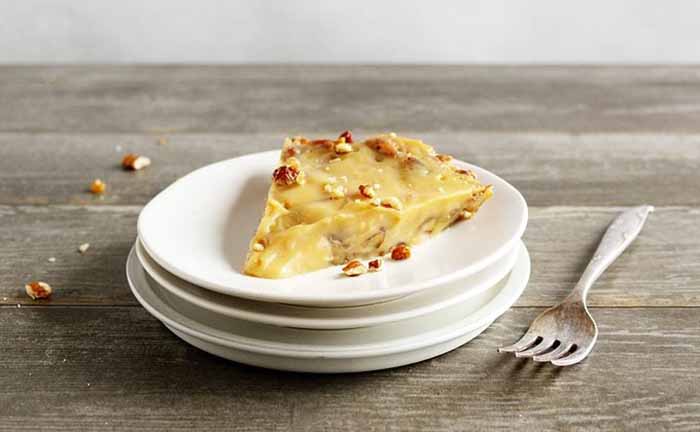
    A slice of butterscotch pie.
    [8] Here’s Dolly Parton’s butterscotch pie recipe with a filling of—you guessed it—butterscotch pudding and pecans (photo © Taste Of Home).


    *Treacle is a British term for uncrystallized syrup made during the refining of sugar. Light treacle is known as golden syrup, while dark treacle is known in the U.S. as molasses.

    †The difference between corn syrup and golden syrup: While both are similar in color, they are very different products. Corn syrup is made from cornstarch, whereas golden syrup is made from sugar. Corn syrup has a very mild flavor, whereas golden syrup has a more pronounced buttery caramel flavor.

    Corn syrup is an invert sugar, which means that it prevents sugar crystals from forming. The process to make corn syrup from cornstarch was invented in 1811 by a German-born Russian chemist, Gottlieb Kirchhoff.

    Invert sugar syrup, also called invert syrup and invert sugar, is a mixture of two simple sugars (glucose and fructose) that is made by heating sucrose with water.

    ‡Cornstarch is a fine, white, flavorless powder made from the starchy center (endosperm) of a corn kernel, and is naturally gluten free. In culinary use, it’s commonly used as a thickening agent (gravies, pie fillings, sauces, soups; to create a tender texture in cakes or cookies; and in batters to make a crispy coating for meats and vegetables.

    The difference from corn flour: In the U.S., cornstarch is pure starch, while corn flour is made by grinding the whole corn kernel. In the U.K., cornstarch is often called corn flour.


    CHECK OUT WHAT’S HAPPENING ON OUR HOME PAGE, THENIBBLE.COM.


    Comments off


    © Copyright 2005-2026 Lifestyle Direct, Inc. All rights reserved. All images are copyrighted to their respective owners.