THE NIBBLE BLOG: Products, Recipes & Trends In Specialty Foods


Also visit our main website, TheNibble.com.

Pickles: Pickled Fruits & Vegetables For A Pickle Holiday

Pickled Radishes
[1] It’s not just cucumbers: many fruits and veggies can be pickled, like these pickled radishes. Add them to salads, sandwiches, cheese plates, as garnishes and in a mixed pickle plate (photo © Simply Delicious Food).

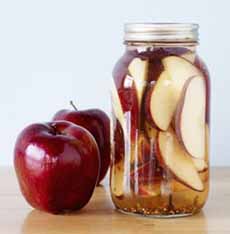
Pickled Apples
[2] Pickled apples, a delicious condiment. You can pickle them in an hour—see below (photo © Best Apples).

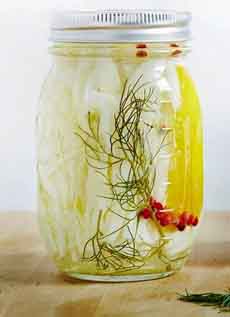
Pickled Fennel
[3] If you like a fruit or vegetable, quick-pickle it. Here, pickled fennel becomes a delicacy. We serve it with smoked salmon, chicken and pork (photo © Quinciple).


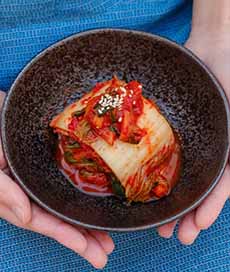
[4] The most frequently-found Korean kimchi in the U.S. is baechu kimchi, pickled napa cabbage (photo © Portuguese Gravity | Unsplash).


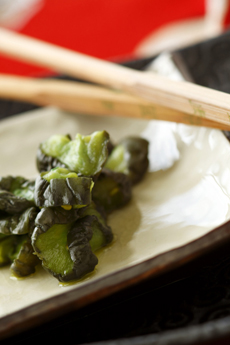
[5] Japanese pickled cucumber (photo by Katharine Pollak | © The Nibble).


Snack A Pickle Time, September 13th, is one of the more unusually-named food holidays. Pickle vegetables are an ancient food. Earthen pits were lined with leaves and filled with the items to be pickled. The earth maintained a low, steady temperature and may have contributed some microbes to speed the fermentation process. Naturally-present lactobacilli would begin fermentation within a matter of days; enough lactic acid would eventually be produced to preserve the food, sometimes for years.

At some point, vinegar made from fermented grapes was “discovered,” and vinegar in pots created pickling.

Here’s more on the history of pickles.

Your next step: Pick some pickles to celebrate the day. The celebration continues on November 14th, National Pickle Day. July is National Pickle Month.
 
 
PICKLED VEGETABLES WORLDWIDE

In the cuisines of the world, there are thousands of different pickle types. China makes an estimated makes 130 different kinds of pickles; there are some 200 types of Korean kimchi.

Pickled vegetables are used as condiments or eaten as side dishes.

What Americans call “pickles” are typically pickled cucumbers; but pickled apples, asparagus, beets, bell peppers (remember Peter Piper), cabbage, carrots, cauliflower, fennel, jalapeño, mushrooms, okra, onions, peaches, radishes, tomatoes, watermelon and many more foods are pickled—including sauerkraut, pickled cabbage—and hence, are also pickles.

Italian immigrants in the 19th century brought giardiniera, a delightful blend of pickled bell peppers, carrots, cauliflower, onions and zucchini.

Beginning in the latter half of the 20th century, immigrants from countries beyond Europe brought their own wonderful pickle traditions. A small sample:

  • Chinese pào cài, a mix of carrots, Chinese cabbage, cucumbers, daikon radish, ginger, hot chiles, long beans, mustard stems, turnips.
  • India’s mango pickles (yes, a fruit).
  • Indonesian acar, a mix of cabbage, carrots, cucumber, and/or long beans spiced with chiles and sliced shallots.
  • Israeli torshi, pickled turnips.
  • Japanese tsukemono: gari and beni shoga, pickled ginger; kyurizuke, cucumber pickles; takuan, pickled daikon radish; shibazuke, a mix of chopped cucumbers and eggplant; ume, pickled plum; among others.
  • Korean kimchi; baechu kimchi, the most commonly found in the U.S.
  • Moroccan preserved (pickled) lemons.
  •  
    It’s not just fruits and vegetables: cheese, eggs, fish, meats, even tea, are pickled.

    > Here’s a list of pickled foods worldwide.

    Our own Pickle Glossary features mostly European-style pickles, with some global varieties added (we’ll be adding more).

    It’s good reading (do you know the difference between a genuine dill pickle and a German dill pickle), and the pickles look delicious.

    By the way, olives, which have been pickled in the Middle East since pre-history, are pickled—not pickled vegetables, but pickled fruits—the fruits of the olive tree.

    Cucumbers are also botanical fruits, as are tomatoes (the difference between fruits and vegetables).
     
     
    PICKLED FRUITS

    What about pickled fruits? Long before the invention of canning, fruits were preserved by pickling.

    In the U.S. alone, anything that could be pickled was pickled: apples, apricots, apricots (blackberries, blueberries, cranberries), cherries, crab apples, currants, grapes, mango, melon, peaches, pears, plums, raisins, tomatoes (including cherry and green tomatoes)…just about any fruit can be pickled.
     
     
    QUICK PICKLING AT HOME

    You don’t need to preserve fruits and vegetables to enjoy them pickled. You can pickle them in an hour without any equipment (meant to be consumed in a week or two, not for long-term storage).

    Here’s how to do it.

    Why not start with pickled apples, which are delicious:

  • As a side with grilled, poached and roasted meats and seafood
  • As a condiment with sandwiches and burgers
  • With a cheese board
  • As a general snack
  •  
     
    PICKLING VS. FERMENTING

    Pickling and fermenting are different ways to the same end, i.e., preserving the vegetable. The difference:

  • Pickling involves putting the food into an acidic brine to produce a sour flavor
  • Fermenting provides the sour flavor without any added acid, employing natural microorganisms such as bacteria or yeast.
     
    Here’s more about it.

  •  


    CHECK OUT WHAT’S HAPPENING ON OUR HOME PAGE, THENIBBLE.COM.


    Comments off

    Chicken Vesuvio Recipe: Chicken & Potato Wedges For National Potato Month

    Who wouldn’t want to dig in to this plate of chicken and roasted potato wedges? You don’t need to know that September is National Potato Month; August 19th is National Potato Day. This is comfort food for every day of the year.

    The recipe comes to us from the Chicago restaurant La Scarola (Italian for escarole), specializing in southern Italian food with lots of white wine and fresh tomato sauce.

    The restaurant cites illustrious clientele such as Robert De Niro, Johnny Depp, Bill Murray and the Sinatra family. But true connoisseurs are just as illustrious.

    Thanks to proprietor Joe Mondelli and chef Armando Vasquez for this Chicken Vesuvio recipe.
     
     
    THE HISTORY OF CHICKEN VESUVIO

    Chicken Vesuvio, a specialty of Chicago, is an Italian-American dish made from chicken on the bone and wedges of potato, sautéed with garlic, oregano, white wine and olive oil. It’s then baked until the chicken’s skin becomes crisp.

    The casserole is often garnished with a few green peas for color; although baby arugula is a lovely touch (instead or with the peas).

    In Chicago, one also often finds the technique applied to other foods: Steak Vesuvio, Pork Chops Vesuvio, even Vesuvio potatoes.

    While the origins of the dish are not known, it might have been popularized by the Vesuvio Restaurant, which operated at 15 East Wacker Drive, Chicago, in the 1930s. Some food historians have suggested that variants of Chicken Vesuvio can be found among the chicken dishes of the traditional cuisines of southern Italy [source].
     
     
    RECIPE: CHICKEN VESUVIO

    This recipe is straight from La Scarola restaurant, and is restaurant-sized: three whole chickens! It’s easy to divide the ingredients by three to make dinner for four.
     
    Ingredients

  • 9 large Idaho® russet potatoes (about 10 ounces each), cut into lengthwise wedges
  • 3 whole chickens (4-5 pounds each), cut into pieces
  • 1 tablespoon kosher salt
  • 1 tablespoon ground black pepper
  • 1 tablespoon dried oregano
  • Vegetable and olive oil for frying
  • 3 tablespoons garlic, minced
  • 24 oz chicken stock, lightly salted
  • 1-1/2 cup white wine
  • 1-1/2 cup frozen peas
  • 6 tablespoons cold butter, cut in pieces
  • 3 tablespoons fresh parsley, chopped
  • Optional garnish: baby arugula
  •  
    Preparation

    1. PREHEAT the oven to 400°F. Arrange the potatoes in single layer on one or two sheet pans. Add water to barely cover bottom of the pan. Cover the pan with foil; bake 15 minutes until potatoes are partially cooked. Remove from the oven.

    2. SEASON the chicken with salt, pepper and oregano. Add equal amounts of vegetable oil and olive oil to coat a deep, wide skillet. Heat over medium-high heat. Add the chicken skin side down, leaving space in the pan to add potatoes. Use multiple pans if needed. Brown the chicken on one side, about 10 minutes.

    3. TURN the chicken over; add enough potatoes proportionately to the number of chicken servings in the pan. Cook until the second side of chicken is brown.

    4. ADD the garlic and place the pan(s) in the oven. Bake uncovered for 20 minutes or until the chicken is cooked through (165°F in the center).

    5. RETURN the pan to the stove. Add the stock, wine and peas proportionately to the number of servings in the pan. Bring to a simmer, stirring to scrape up any browned bits. Cook 5 minutes. Gradually add the butter and stir until the sauce is slightly reduced and creamy. Stir in the parsley.
     
     
    > THE HISTORY OF CHICKEN
     
     
    > THE HISTORY OF POTATOES
     
     
    > THE DIFFERENT CUTS OF CHICKEN
     
     
    > THE DIFFERENT TYPES OF POTATOES


    [1] Chicken Vesuvio, crispy chicken and potato wedges (photo © Idaho Potato Commission).

    Whole Raw Chicken
    [2] Buy the chicken whole or pre-cut (photo © Good Eggs).


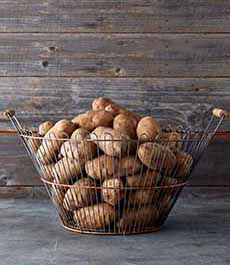
    [3] Russet potatoes (photo © Williams Sonoma).


    [4] Green peas were originally added for a touch of color. You can use fresh or frozen (photo © The Chef’s Garden).

    Baby Arugula
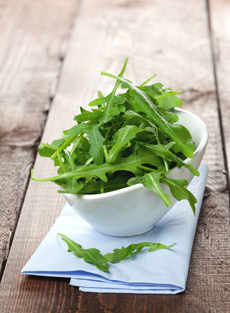
    [5] Baby arugula (photo © Baldor | Facebook).


    Comments off

    Burrata Salad Recipe: Simple, Beautiful, Delicious


    [1] A simple salad of mixed baby greens, topped with burrata, extra virgin olive oil and balsamic glaze (photo © Hill And Bay | NYC).


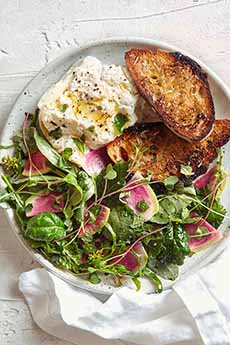
    [2] Top baby greens with burrata (here baby spinach and arugula sprouts) and a drizzle of olive oil. Watermelon radishes add color (photo © Good Eggs).


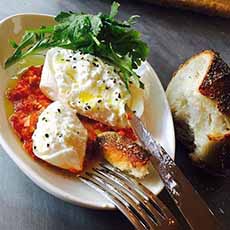
    [3] Burrata atop sundried tomatoes in EVOO, with arugula (photo © L’Amico | NYC).

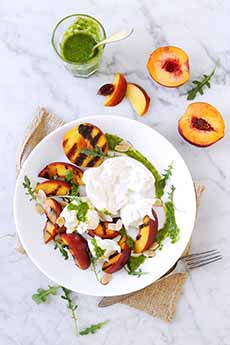
    Grilled Peaches With Burrata
    [4] It can be a fruit salad, too. You don’t have to grill the peaches: Just slice your favorite fruits, toss in berries, and you’ve got breakfast, lunch or dessert (photo © DeLallo).


    There’s nothing better than creating a beautiful dish that takes little or no effort. That’s how we feel about burrata salad: burrata cheese on top of interesting greens, with a garnish of olive oil and balsamic glaze. It’s great anytime: for a special occasion dinner, for an everyday lunch or the first course of an everyday dinner.

    Add some crunchy crostini, and it’s heaven.

    Just buy a burrata and baby greens or frisée, and use the EVOO and balsamic glaze you already have in the pantry.

    Voilà: a delicious salad with eye appeal (photo #1).
     
     
    WHAT IS BURRATA?

    Burrata is a “filled” mozzarella, a specialty of the Apulia region of Italy—the “heel of the boot.”

    The word means “buttery” in Italian.

    Burrata was formerly imported from Italy, traditionally wrapped in a green leaf and very perishable. If you lived in a major city with a specialty cheese shop, you might find it.

    But as more importers carried it and American foodies discovered it, it took off with American cheese-makers as well.

    The result was just as good; and you can now find burrata across America (we buy ours at Trader Joe’s).

    A hollow ball of buffalo mozzarella (mozzarella di bufala) is filled with panna (panna di latte, a.k.a. straciatella): cream that contains scraps of mozzarella left over from the mozzarella-making. The panna seems like very fine-grained ricotta.

    Cut into the burrata ball and the cream oozes out. While both buttery and creamy, it is not overly rich—just overly delicious.

    While burrata seems made to pair with salads, fresh vegetables and fruits, you can enjoy it simply with crostini, or get more creative and add it to pasta dishes.
     
     
    MORE BURRATA RECIPES

    You can’t go wrong with burrata at any time: as a breakfast cheese with toast; for lunch with a salad; as a snack; and at the end of dinner as a cheese course or dessert with berries and other fresh fruits.

    Take a bite:

  • Burrata & Fruit Dessert Or Breakfast
  • Burrata Dessert
  • Burrata, Plum & Pepita Salad
  • Burrata Serving Suggestions
  • Crostini With Burrata & Slow Roasted Tomatoes
  • Garlic Crostini With Spring Peas & Burrata
  • Grilled Peaches With Burrata
  • Grilled Grapes & Burrata For A Cheese Course
  • Plum Salad With Burrata, Pepitas & Honey
  • Prosciutto Salad With Frisée & Burrata
  • Spaghetti Caprese With Burrata
  • Spring Burrata Salad With Watermelon Radish
  • Spring Burrata Salad Recipe With Asparagus
  • Spring Peas & Burrata Salad
  • Straciatella Cheese: The Filling In Burrata
  • Watermelon, Tomato & Burrata Salad
  •  
     
    > THE HISTORY OF BURRATA CHEESE
     
     
    > THE HISTORY OF CHEESE
     
     
    > THE DIFFERENT TYPES OF CHEESE


    Comments off


    © Copyright 2005-2026 Lifestyle Direct, Inc. All rights reserved. All images are copyrighted to their respective owners.