|

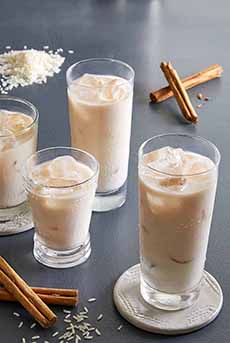
[1] Some liken horchata to “drinkable rice pudding” because of the notes of rice, cinnamon, and vanilla. This recipe uses rice plus sweetened condensed milk (photo © Pampered Chef).
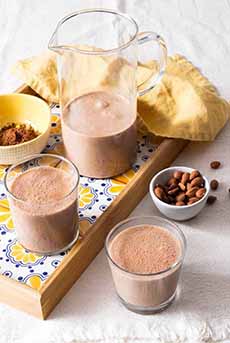
[2] Parents sometimes add a spoonful of cocoa powder to children’s horchata (photo © Sunbasket).
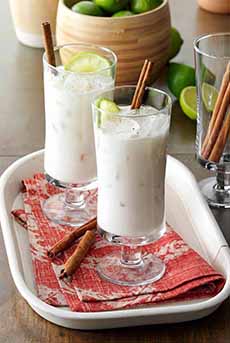
[3] This dairy-free recipe adds lime zest to the blend of rice, almonds, and cinnamon, plus a lime wheel for garnish. You can squeeze it into the drink as you like (photo © Taste of Home).
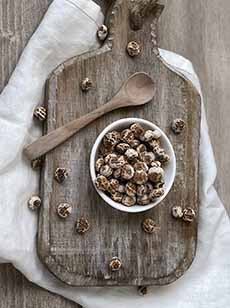
[4] The original horchata was made thousands of years ago from tiger nuts. You can buy them online for horchata, snacking, salads and desserts (photo © Anthony’s Goods).
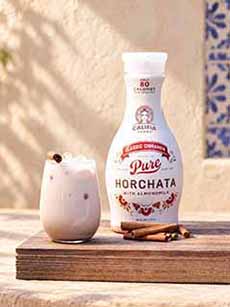
[5] You can buy horchata ready-to-drink, made with almond milk or rice milk (photo © Califia Farms).
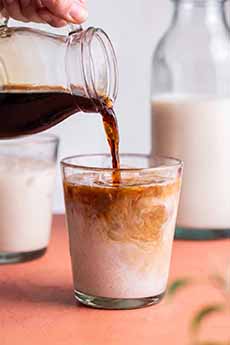
[6] How about a horchata latte? Here’s the recipe, which adds espresso or cold brew to a blend of white rice, sweetened condensed milk, and whole milk, plus cinnamon and nutmeg (photo © Gelson’s).
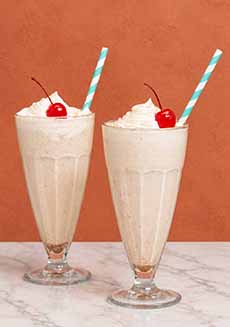
[7] You can also make a horchata milkshake: horchata ingredients blended with vanilla ice cream. Here’s the recipe, which uses whole milk, almonds, and cinnamon but no rice (photo © The Nibble)
|
|
Updated September 2026
September 24th is National Horchata Day, celebrating a refreshing drink popular in Mexico. It’s one of the more popular varieties of Mexican agua fresca.
Classic horchata is a creamy, traditionally nondairy drink that whips ground rice, ground almonds, cane sugar, cinnamon and vanilla into a milky treat.
Brands like Rice Dream sell ready-to-drink horchata. We’re particularly fond of Califia Farms’ limited-edition horchata (photo #5—they also make Horchata Almond Creamer).
Also keep an eye out for De Mi Pais, Jumex, Kern’s, and Mercader, the latter made with chufa—tiger nuts—which were used in the original Spanish recipe).
As cooks experimented with the recipe, versions evolved that included milk or sweetened condensed milk with the other ingredients. Our featured recipe is one of them, but the links under the different photos will introduce you to classic recipes.
Below:
> Horchata recipe.
> Beyond drinking: more ways to enjoy horchata.
> Adding alcohol to horchata.
> The history of horchata.
> The different styles of horchata.
Elsewhere on The Nibble:
> The different types of cinnamon.
> The year’s 25 non-alcoholic beverage holidays (including juice and soft drinks).
> The year’s 25+ Mexican food holidays.
1. RECIPE: HORCHATA
This recipe requires the overnight soaking of rice. There are easier recipes that begin with a container of rice milk; we’ve linked to different recipes under the photos.
This recipe also contains dairy, in the form of evaporated milk and optional cow’s milk. It reminds us of a thin milkshake or milk punch.
Ingredients
- 1 cup white rice
- 1/2 cup chopped almonds
- 1 cinnamon stick (preferably canela, Mexican/Ceylon cinnamon)
- Up to 1 cup sugar, depending on taste (we used 2/3 cup) or substitute a noncaloric sweetener
- 1 tablespoon real vanilla extract
- 1 can (12 ounces) evaporated milk
- 1.5 cups milk, almond milk or rice milk
- 4-1/4 cups water
- Ice
- Optional garnish: ground cinnamon, cinnamon stick
Preparation
1. COMBINE the rice, almonds and cinnamon in a bowl of water. Soak overnight (or at least 5 hours) to slightly soften the rice.
2. STRAIN and discard the water. Blend the rice mixture and evaporated milk in a food processor until the rice is completely ground.
3. STRAIN into a pitcher. Add the sugar, vanilla, and milk. Mix well, then mix in the water. Chill and serve with optional ice.
2. BEYOND DRINKING: MORE WAYS TO ENJOY HORCHATA
Horchata is an addictively delicious cold drink, but you can also warm it up to create a cup of hot milk with cinnamon-vanilla accents.
- Dessert. Serve it as a drink with dessert, instead of coffee or tea. We love it with loaf cakes (pound cake, carrot cake, chocolate loaf) and with pastries.
- Coffee. Make a blended drink with coffee.
- Cereal. Add it to hot or cold cereal.
- Cocktail. Turn it into a cocktail with rum or other spirit—see the next section.
3. ADDING ALCOHOL TO HORCHATA
Because horchata is creamy, lightly sweet, and pronounced with Mexican cinnamon (canela) and vanilla, it behaves much like an airy, plant- or rice-based equivalent of Irish cream or eggnog. The best pairings have roasted, barrel-aged, spiced, or nutty flavor profiles that complement the milky base and warm spice.
- Tall drinks: For a tall glass over ice, use 4 parts chilled horchata to 1.5 parts spirit (e.g., 4 ounces horchata to 1.5 ounces spirit). Stir gently and dust with fresh grated cinnamon or a freshly torched cinnamon stick.
- Layered Drinks: Start with a Spirited Horchata Latte. Shake 1.5 ounces Bourbon or dark rum with 1 ounce espresso or coffee liqueur. Strain over iced horchata, and let the coffee-and-spirit mixture swirl through the horchata (photo #6).
Caribbean & Mexican Spirits
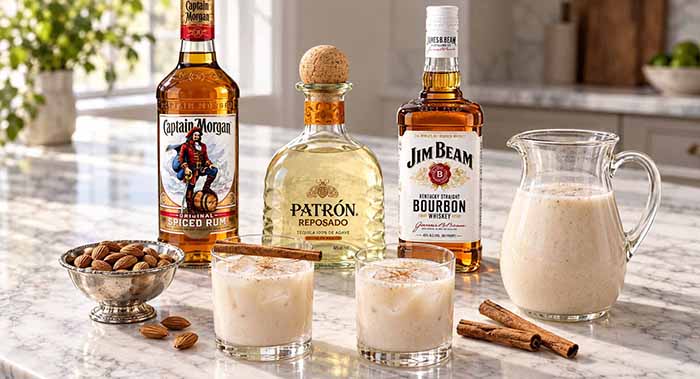
- Aged Dark Rum or Spiced Rum: This is the undisputed classic pairing. Dark rum brings molasses, caramel, and baking spices that seamlessly meld with cinnamon, while spiced rum doubles down on vanilla and clove notes.
- Añejo or Reposado Tequila: Oak aging gives reposado and añejo tequilas notes of vanilla, toasted wood, and cooked agave. This creates an authentic Mexican cocktail (often dubbed a Dirty Horchata) where the earthy agave cuts through the sweetness without curdling the drink.
- Mezcal: For something sophisticated and unexpected, mezcal (often made from espadín agave, Agave angustifolia, not blue agave like Tequila) adds a thread of campfire smoke, minerality, and roasted agave that contrasts brilliantly against the sweet, cooling rice milk.
Whiskies & Brown Spirits
- Bourbon: Bourbon’s high corn content and char-cask aging yield natural notes of vanilla, brown sugar, and toasted oak. It gives horchata a rich, Southern comfort-style profile reminiscent of a light bourbon milk punch.
- Cognac or Aged Brandy: Adds dried fruit, plum, and silky oak elegance, making for a luxurious after-dinner libation.
- Rye Whiskey: If your horchata is on the sweeter side, rye is ideal. Its bold black-pepper and baking-spice punch tempers the sweetness and highlights the canela.
Nut Liqueurs
- Amaretto (almond): Traditional Mexican horchata frequently includes pulverized almonds alongside the rice. Amaretto leans into that marzipan sweetness.
- Frangelico (hazelnut): Contributes toasted, buttery nut complexity that plays beautifully off ground cinnamon.
- Nocello (walnut): In baking and confectionery (from baklava to Mexican pan dulce), walnuts and cinnamon are classic partners.
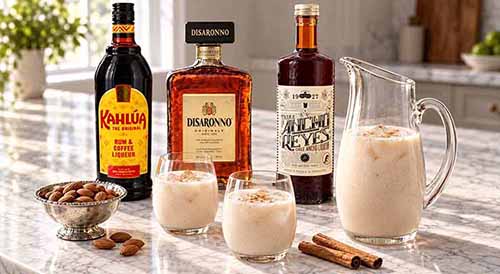
[8] Liqueur adds more sweetness than straight spirits. Above: coffee liqueur, amaretto, and chile liqueur (photo © The Nibble).
|
Other Complementary Liqueurs
- Ancho Reyes (Chile Liqueur): Made from macerated ancho chiles, this liqueur brings warm cinnamon-chocolate undertones, subtle vegetal earthiness, and a gentle spicy kick that creates a “Mexican hot chocolate” effect over ice.
- Chai, Ginger, or Spiced Herbal Liqueurs (e.g., Canton): Ginger and allspice amplify the festive, warming qualities of the canela stick garnish.
- Coffee Liqueur (Kahlúa, Mr Black): Combining coffee and horchata produces a horchata-latte flavor. The bitter roasted coffee beans balance the sugary milk, while cinnamon ties the two together.
- Orange Liqueur (Grand Marnier or Cointreau): Citrus oil and cinnamon are classic culinary partners (think sangria or spiced mulled punch). Grand Marnier is especially effective because its Cognac base harmonizes with the creamy rice milk.
[9] Let guests choose their own spirits; here, spiced rum, aged tequila, and Bourbon (photo © The Nibble).
4. THE HISTORY OF HORCHATA
We think of horchata as a creamy, refreshing drink from Mexico that tastes similar to rice pudding.
But the first horchata, horchata de chufa*, has a long history in Africa, including drinks known today in parts of West Africa as kunnu aya. Valencia’s horchata de chufa developed later.
The drink was originally made from dried, ground chufa—tiger nuts, the tuber of Cyperus esculentus—which were combined with water and sweetener, then filtered into a milky-looking drink. Sometimes melon or squash seeds were used.
The “horchata” portion of horchata de chufa derives from the Valencian dialect (a variant of Catalan). In Valencian, it’s orxata de xufa.
“Orxata” is a name given to various kinds of plant milk beverages.
It was brought to Spain by the Moors in the 8th century, during the Muslim conquest†. It began to spread throughout Hispania (the Roman name for the Iberian Peninsula and its provinces) in the 11th century, and became a popular drink.
The drink spread from Spain to Mexico in the course of colonization.
In Mexico, rice became the base for horchata de arroz in place of chufa, flavored with cinnamon and New World vanilla.
|
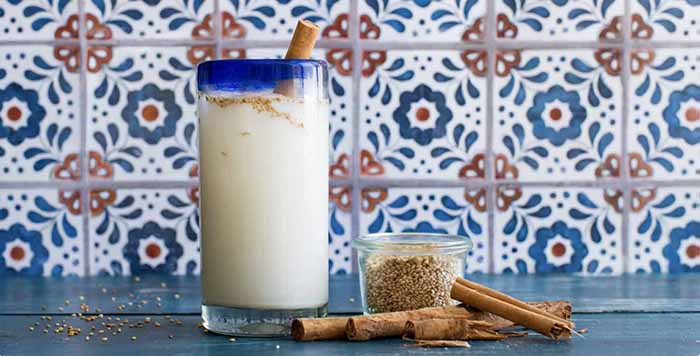
[10] Sunbasket adds toasted sesame seeds to its horchata, which has a base of rice and whole milk. Here’s the recipe (photo © Sunbasket).
5. DIFFERENT STYLES OF HORCHATA
We begin with the Spanish predecessor to many New World horchatas, horchata de chufa. Alboraya (Alboraia in Valencian), a coastal town and municipality in the province of Valencia, Spain, became an important center of production.
Alboraya is globally famous as the heartland of horchata and for its unique chufa (tiger nut—photo #4) cultivation. Chufas grown under the Chufa de Valencia designation of origin (D.O. Chufa de Valencia) certifies their authenticity and quality.
(Note that tiger nuts are not real nuts‡ but marble-sized tubers dating back to the era of the pharaohs.)
Spanish horchata is strictly non-dairy and made from soaked, ground, and pressed chufas. They were brought to the Iberian Peninsula by Arab colonizers in the 8th century (they also brought other foods—see the †† footnote).
Horchata de chufa is blended with water, sugar, and sometimes a hint of lemon peel and cinnamon, to create an earthy, naturally creamy, and slightly nutty beverage.
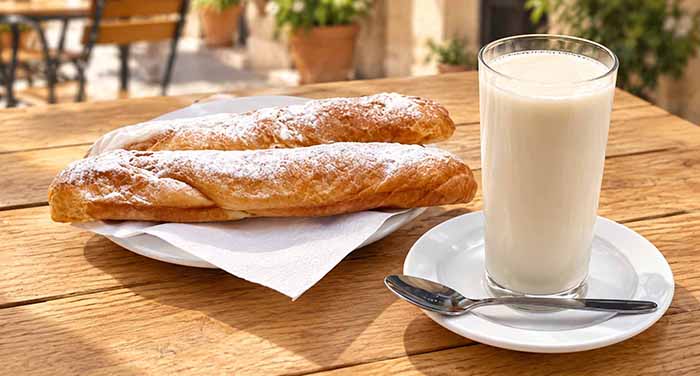
It’s traditionally served ice-cold alongside sweet, elongated, sugar-glazed yeast pastries called fartons, created specifically to be dipped in the cold tiger nut horchata of Valencia.
[11] Horchata de chufa from Valencia, Spain, and the elongated pastries (called fartons) created for dipping (photo © The Nibble).
New World Horchata And Related Drinks
Rice** came to Mexico with the Spanish conquest and early colonial settlement in the 16th century.
While in Spain horchata was made from chufa, in Mexican horchata de arroz rice replaced chufa as the main ingredient, along with ground almonds, cinnamon, sugar, and in modern recipes, a touch of vanilla.
Other areas put their own spin on horchata. For example:
- Colombia: The country has a related rice drink called chicha de arroz or masato de arroz. It’s a spiced rice-and-milk drink commonly scented with cinnamon and cloves. In the southern Andean regions (near the Ecuadorian border), you can also find cross-border culinary cousins to Ecuador’s herbal horchata lojana.
- Ecuador: Horchata lojana is a red herbal infusion made from steeped medicinal flowers and red herbs. Why a beverage with no grains, seeds, or nuts called “horchata?” The word horchata comes from the Latin hordeata, meaning barley water. Over centuries in Europe, it became an umbrella term for a broad class of soothing, restorative botanical waters. In the colonial period in the Loja Province of Ecuador, monks from Europe blended Andean medicinal plants into the tonic.
- El Salvador and Honduras make semilla de jicaro with jicaro (morro) seeds from a calabash that grows on a tree.
- Guatemala: Horchata de arroz con semillas builds upon a long-grain rice base, but is often enriched with toasted seeds, creating a deeper, toastier flavor profile than Mexican horchata. Pepitas (pumpkin seeds) and sesame seeds are lightly toasted on a comal (a traditional, flat metal griddle) alongside the raw rice and cinnamon sticks before being ground together with water. Some old family recipes also add crushed allspice berries (pimienta gorda) or vanilla bean, giving the drink an intensely aromatic, spiced complexity.
- Nicaragua: There are two related drinks. Nicaraguan rice horchata is similar to other Central American varieties. It uses soaked rice and milk, but frequently incorporates toasted sesame seeds (ajonjolí) and a touch of lime zest or peel steeped with the cinnamon. Semilla de jícaro, often grouped under the horchata umbrella, is made from the ground seeds of the jícaro tree (calabash), toasted and blended with rice, cinnamon, vanilla, and milk. It has a distinctive grayish-brown hue and a deeply earthy, cocoa-like undertone.
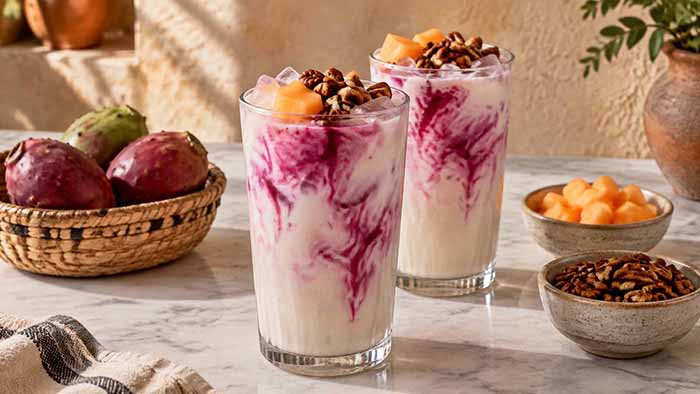
- Oaxaca, Mexico: Here horchata con tuna y nuez offers a famous, colorful twist. Glasses of traditional white rice horchata are topped with a vibrant magenta syrup or purée made from tuna—the sweet fruit of the prickly pear cactus. It creates a striking contrast as the pink fruit syrup cascades down through the white rice milk. The garnish is chopped cantaloupe and toasted pecans or walnuts (see photo #12 below).
- Puerto Rico: horchata de ajonjoli is based on ground sesame seeds; recipes may also include coconut milk and, in alcoholic versions, rum.
- Venezuela: While referred to as chicha rather than horchata, Venezuela’s chicha criolla shares a very similar lineage. It’s a thick, ultra-creamy, dessert-like beverage made by simmering white rice until very soft, blending it with whole milk, condensed milk, and evaporated milk, and serving it over plenty of crushed ice with an extra drizzle of sweetened condensed milk and a heavy dusting of ground cinnamon on top.
Whatever the country, today flavors of the beloved horchata beverage can also be found in baked goods (cake, churros, donuts), candies, chocolate, coffee ice cream, puddings, and more.
[12] Oaxaca-style horchata with added prickly pear purée (photo © The Nibble).
*Chufa refers to the tuber of the chufa plant, which can be roasted, made into flour, or used to make a drink. Chufa was known in ancient Egypt and North Africa; Muslim-era agricultural networks helped establish it in Iberia, especially Valencia, where it became the base for horchata.
**Rice was present in New Spain in the 1500s, introduced during the Spanish conquest and early colonial period. Cultivation of rice led not only to horchata, but over time to preparations such as arroz con leche, sweet rice cooked with milk; buñuelos de arroz, rice-based fritters; and savory rice dishes such as arroz rojo (rice with tomato) and rice as a side with meat or seafood.
†Muslim forces invaded Andalusia (southern Spain) in the early eighth century, and it took about seven years to conquer most of the Iberian Peninsula after they first landed in Spain in 711. The Muslim civilization in Iberia reached its peak in the 10th century. Muslim rule declined after that and ended in 1492 when Granada, the last major Muslim-ruled kingdom in Iberia, was conquered by the forces of the [Catholic] king of Castile. This ended nearly eight centuries of Muslim rule.
††Muslim-ruled Iberia became a major channel for crops, farming methods, technologies, and culinary practices from North Africa, the Middle East, and wider Asian trade networks. Among the most important were improved irrigation and water management, including expanded systems for farming in dry regions; and new or improved food-processing and preservation practices, including syrups, dried fruits, flavored waters, and sophisticated milling.
Rice may have been present in Iberia earlier, but cultivation was greatly expanded under Muslim rule. Crops and ingredients associated with these wider exchanges included almonds and other nuts; bananas; citrus, especially bitter and sweet oranges; dates; sugarcane (which later became central to Iberian and Atlantic food history); spices including anise, cinnamon, coriander, mint, saffron, and others; and vegetables such as artichokes, eggplant, spinach and a wider range of vegetables and legumes.
Medieval Arabic sources describe itriyya, a form of dried wheat pasta. Pasta has multiple histories across Asia and the Mediterranean, so Italian pasta cannot be directly attributed to a single Chinese invention carried along the Silk Road.
‡Chufas are called tubers commonly referred to as “nuts” because they have a wrinkled, striped exterior and a crunchy, nutty flavor that tastes a bit like almonds or pecans. In addition to making horchata, they are dried and eaten as a snack and ground into flour.
CHECK OUT WHAT’S HAPPENING ON OUR HOME PAGE, THENIBBLE.COM.
|
|