THE NIBBLE BLOG: Products, Recipes & Trends In Specialty Foods


Also visit our main website, TheNibble.com.

RECIPE: Panzanella & Fruit Salad

mixed-fruit-panzanella-salad-kaminsky-230
Fruit salad with bread (panzanella salad).
Photo © Hannah Kaminsky | Bittersweet
Blog.
  Our colleague Hannah Kaminsky spent the summer in California, enjoying the wealth of produce that sunny state provides.

“As a little ode to my Californian summer, it was only fitting to gather up a small sampling of what I had on hand, along with the famed sourdough bread that beckons irresistibly from the windows of every bakery. Fresh mint plucked straight from my tiny windowsill garden completed this little love note to my temporary, adoptive home state.

“Light, fresh, fast, it’s the kind of recipe that depends entirely on the quality of your ingredients. Consider it as a serving suggestion; more of an idea than a specific schematic, to be tailored to whatever fruits are fresh and in season in your neck of the woods.”

She calls this recipe California Dreamin’ Panzanella: a creative interpretation of the classic bread salad with ripe California fruit.

RECIPE: PANZANELLA FRUIT SALAD

Ingredients For 6-8 Servings

  • 5 cups cubed sourdough bread
  • 2 cups pitted and halved cherries
  • 2 cups seedless grapes
  • 1 cup blackberries
  • 1/4 cup regular or light brown sugar, firmly packed
  • 3 tablespoons olive oil
  • 2 tablespoons lemon juice
  • 1/2 teaspoon ground black pepper
  • 1/2 cup roughly chopped walnuts
  • Fresh mint leaves, thinly sliced
  • Garnish: crème fraîche, mascarpone, whipped cream
  • Preparation

    1. PREHEAT oven to 350°F. Spread bread cubes on a baking sheet in one even layer and bake for about 15 minutes, until golden and lightly toasted all over. Let cool completely before proceeding.

    2. WHISK together the sugar, olive oil, lemon juice and pepper in a large bowl. Add all of the fruits and remaining ingredients (walnuts, mint).

    3. ADD in the toasted bread right before serving, to ensure that it stays crisp. Toss thoroughly so that everything is well distributed and entirely coated with the sugar dressing.

    3. SERVE immediately with a dollop of whipped cream.


    ABOUT PANZANELLA

    Panzanella is a savory Tuscan-style bread salad, made with a loaf of day-old (or older) Italian bread, cubed into large croutons and soaked in vinaigrette to soften it. Chopped salad vegetables are added.

    The translation we have found for “panzanella” is “bread in a swamp,” the swamp being the water or vinaigrette in which it is soaked.

    Here’s a classic panzanella salad recipe, with summer tomatoes, cucumbers, onions and fresh basil.


    Comments off

    TIP OF THE DAY: How To Decipher Food Product Labels

    How confusing is the verbiage on the front of a box, bag, jar or can of food? Actually, it can be pretty misleading. It’s called marketing: Companies want you to choose their product over the competition, so they do what they can to hype on their packaging (most purchase decisions are made at the “point of sale,” or when looking at options on the shelf).

    Hence, each word on the package can help make the sale—whether or not it’s providing accurate information to consumers.

    You’d think that with all of the federal regulations and those helpful nutrition labels, it would be easy to know what you are buy. But while the the nutrition label on the back of the package is all facts, we typically respond to what’s on the front. And it can be misleading.

    After we reported that products made by Newman’s Own Organics aren’t necessarily organic, we’re taking on these other confusions.
     
    WHOLE GRAINS: MULTIGRAIN VS. WHOLE GRAIN

    “Multigrain” may sound like it’s better for you, but it simply means that more than one type of grain is used. Bread flour can be a combination of wheat flour, cracked wheat and oat bran, for example; but none of these is a whole grain. It’s the same with “seven grain bread.” The blend may be flavorful, but that doesn’t mean any of the seven grains is whole grain.

       
    arnolds-multigrain-bread-loaf-230

    This loaf has some whole grain components—wheat bran, brown rice and oats (plus cane sugar, brown sugar and sucralose). But the main ingredient is still unbleached enriched wheat flour. Look for the seal of the Whole grains Association.

     
    If you’re looking for whole grain fiber and nutrition with your bread, breakfast cereal, crackers or pasta, be sure the product is all whole grain, or at least that a whole grain leads the list of grains.

  • “Wheat bread” is not whole grain; it must say “whole wheat.” All of what we call white bread is wheat bread (except gluten-free bread).
  • Wheat bran, which appears on some ingredients lists, is part of the whole wheat kernel, along with the endosperm and the germ. Each of these components has different nutrition benefits. Refined wheat flour with added wheat bran added isn’t enough; go for the whole wheat.
  • It’s the same with seeds—normally good additions to bread and crackers, but in such small amounts that they’re no substitute for a whole grain product. We saw one label touting “flax and grains”: What the heck does “grains” mean? It could mean seeds, or it could be marketing.
  • A dark brown color means nothing: It can be created with molasses. Pumpernickel is made from rye, a whole grain, but most commercial pumpernickel is made from refined flour. Look for 100% rye on the label.
  • “Enriched,” which appears on bags of white bread, is also misleading. Why is it enriched? Because refining the whole wheat flour into white flour removes most of the vitamins and minerals. Because bread is a key component of our diet, the government ordered some nutrients added back in!
  • Words like “healthy” or “nutritious” are just marketing: They mean whatever the manufacturer wants them to mean and have no official standing.
  • You can find gluten free breads made with brown rice flour or a blend of ingredients. Again, look for the words “100% whole grain” on the label.
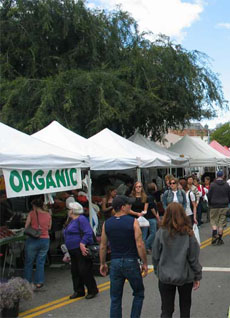
  • “Organic” is better for you and the environment, but it doesn’t impact nutrition. It’s better to have non-organic whole grain bread than organic white bread.
  •  
    Here’s more on what is a whole grain.


    reduced-fat-feta-athena-230
    Cheese is delicious, but high in fat. So
    reduced fat cheese still has a lot of it. Photo
    courtesy Athena.
     

    FIBER

    On a related note, whole grains are an excellent source of fiber. Look to switch out refined white flour products—breads, crackers, breakfast cereals, pasta—to more nutritious versions.

  • The USDA designation “excellent source of fiber” means that there is at least 5 grams of fiber per serving.
  • A product labeled “good source of fiber” needs at least 2.5 grams of fiber per serving.
  • “Added fiber” needs to have only 10% more than a comparable product; but it that product doesn’t have much fiber to getin with, then “added” doesn’t mean much.
  •  
    FAT: REDUCED FAT VS. LOW FAT

    The USDA has a strict definition of low fat (also spelled lowfat): The product must have 3 grams or fewer per serving.

    To be called “reduced fat” a product must have at least 25% less fat than a regular version of the product (from the same manufacturer or a competitor). But that original product—cheese, for example—could be loaded with fat, so 25% less is still a lot of fat.

    Thus, go for low fat over reduced fat, but remember that reduced fat is still not “good for you” food.

     
    NITRATES: CURED VS. UNCURED

    Nitrites and nitrates are used to preserve processed meats, and to make them look better (pink bacon, ham and franks) and taste better. But they produce a carcinogenic substance, amines, when digested (here’s more on nitrates and nitrites).

    Even organic, uncured products still contain nitrates and nitrates—just less of them. Nitrates and nitrates exist naturally in plants and animals and even a naturally cured product, cured with celery powder or celery juice, will contain them. So for long-term health, the best course is to eat fewer cured meats.
     
    SODIUM: REDUCED SODIUM VS. LOW SODIUM

    The USDA requires that a product labeled “low sodium” contains 140 mg salt or less per serving. A reduced sodium product needs to be just 25% less than the regular version, which could be loaded.

    For example, a can of chicken noodle soup can have 1,622 mg of sodium. Twenty-five percent less than that is still a heck of a lot of salt.

    Fresh-packed, canned or frozen, processed foods are loaded with salt. Check the nutrition label and select products that have fewer than 500 grams per serving. Your daily recommended amount of sodium is less than 2400 mg. Here’s more on sodium from the FDA.
     
    SUGAR: SUGAR FREE VS. NO SUGAR ADDED

    These are typically products that use only the natural sweetener in the product—sugar free grape jam relying only on the grape sugar, for example—or use noncaloric sweeteners.

    “Sugar” refers to any sweetener, including agave, corn syrup, honey, molasses and all other nutritive sweeteners. (Nutritive sweeteners have nutritional value—they produce energy when metabolized by the body. They may or may not be refined.) Check out the different types of sweeteners, both nutritive and non-nutritive (i.e., produced in the lab).

  • Sugar Free means that the product has less than a half gram of sugar/serving. These are typically the products that use artificial sweeteners.
  • No Sugar Added could have no sugar added, but could have lots of natural sugar from sweeteners such as fruit concentrate, fruit juice or unsweetened applesauce.
     
    Neither of these options is better or worse than the other.
     
    FINAL TASK

    You’ve still got to look at the back of the package. Here’s how to read nutrition labels.


  • Comments off

    PRODUCT: Chad’s, The Best Raspberry Jam?

    Utah’s Bear Lake is a beauty: a natural freshwater lake on the Utah-Idaho called the “Caribbean of the Rockies” for its turquoise-blue color.

    Although the lake lies relatively near the Oregon Trail, which was traveled by many pioneers between 1836 and the 1850s, it seems that none of traveled south enough to find the lake. It wasn’t until 1863 that Mormons settled in the Bear Lake Valley, home to some Shoshone tribes.

    Fast forward 150 years or so: The area has become famous for its delicious red raspberries. A Raspberry Days festival is held in Garden City to celebrate the harvest of raspberries, generally during the first week of August. The raspberries are sweet and plentiful.

    So we almost kicked ourselves when we found a box of Chad’s Raspberry Kitchen products tucked away, forgotten in a storage area. Boy, are they delicious!

    First up was the Raspberry Jam, the company’s best seller. It’s one of the best raspberry jams we can remember: solid fruit that falls apart into jam during cooking. Chad’s cooks the whole berries with natural fruit pectin and sugar, “the way your grandmother would make it” (or at this point, Chad, our great-grandmother).

      chads-raspberry-jam-230
    Great rapsberry jam at a great price. Photo courtesy Chad’s Raspberry Kitchen.
     

    Sustainably farmed located in Laketown, Utah (population 248 at the 2010 census), all natural and preservative free, Chad’s other products include:

  • Raspberry Jalapeño Jam, the classic raspberry spiced up with jalapeño chiles.
  • Seedless Raspberry Jelly.
  • Raspberry Honey, made by bees from the nectar of the raspberry blossoms.
  • Raspberry Syrup, for pancakes, ice cream and other desserts and to make raspberry iced tea or lemonade.
  • Raspberry Salsa, raspberries mixed with a tomato based salsa to create a sweet salsa for dipping or garnishing grilled meats and seafood.
  • Gift box assortments.
  •  

    Everything is very well priced at $4.99 (the honey is $5.99), and they’re more delicious than products selling at twice the price. Chad’s is a great idea for holiday gifting.

    Get yours at ChadsRaspberryKitchen.com.
      

    Comments off

    RECIPE: Lemon Ice Box Mini Tarts

    Aida-Mollenkamp-Meyer-Lemon-Icebox-Bites-Recipes-230r
    Meyer Lemon Icebox Mini Tarts. Photo
    courtesy Aida Mollenkamp.
      When you want just a bit of dessert, this recipe from Chef Aida Mollenkamp is fun finger food. Prep time is 20 minutes, plus 3 hours of baking and setting time.

    If you can’t find Meyer lemons, the juice of which is less acidic, you can use regular lemons (Eureka or Lisbon lemons—see the different types of lemons). Or, Chef Mollenkamp suggests, substitute equal parts of orange and lemon juice.

    These are not true “ice box tarts,” because the shells require baking in the oven. But the filling sets in the fridge, hence the reference from Chef Mollenkamp.

    RECIPE: MEYER LEMON ICE BOX MINI TARTS

    Ingredients For 48 Bite-Size Tarts

    For The Crust

  • 8 ounces vanilla wafers or graham crackers
  • 3 tablespoons unsalted butter, melted
  •  
    For The Custard

  • 1 cup Meyer lemon juice
  • 1/2 cup lemon juice
  • 1/4 cup cane sugar*
  • 1-1/2 teaspoons vanilla extract
  • 1 (14 ounce) container sweetened condensed milk
  • 1 (8 ounce) mascarpone cheese or cream cheese, softened
  • Pinch salt
  •  
    *Chef Mollenkamp uses organic (unrefined) cane sugar.
     
    For The Garnish

  • Whipped cream, for garnish
  • Candied citrus or ginger
  • Thinly sliced mango or kiwi, or garnish of choice (pomegranate arils add a red highlight)
  •  
    Preparation

    1. HEAT oven to 350°F and arrange a rack in the middle.

    2. MAKE the crust. Place wafers or graham crackers in a food processor and process until broken up (you want 2 cups total). Add butter and pulse until moist. Divide mixture among two mini muffin pans (24-wells) and press mixture evenly in the bottom and up the sides of the muffin wells. Bake until crust is golden brown, about 5 minutes; then remove from oven.

    3. MAKE the custard: Whisk or blend remaining ingredients together until smooth then divide among prepared crusts. Place in the oven and bake until edges are set but center is still a bit loose, about 5 to 10 minutes. Remove from oven and let cool completely, at least 1 hour.

    4. COVER and freeze until chilled and set, at least 2 hours or overnight. When frozen, run a small butter knife dipped in hot water around the perimeter of each tart and remove. Cover and return to freezer until ready to serve. (This can be done up to 2 weeks in advance.)

    5. SERVE frozen or chilled, topped with a dollop of whipped cream and, as desired, a piece of candied ginger or citrus or a slice of fresh kiwi, and serve.
     
    Note: These tarts are best eaten when still frozen or chilled. The tarts should be eaten within 30 minutes of removing from freezer for best texture.
      

    Comments off

    FOOD FUN: Guacamole Verrine, A Layered Appetizer

    We discovered this photo on the Frontier Foods blog, where it was called a torta, a word that refers to different foods in different Spanish-language countries. But we’d call it a verrine (vair-REEN).

    Verre is the French word for glass; verrine, which means “protective glass,” is an assortment of ingredients layered “artfully” in a small glass.

    Verrines can be sweet or savory: The idea is to layer foods that provide delicious tastes in small bites: a variety of flavors, textures and colors. The result is both sophisticated and fun.

    While specialty verrine glasses exist, you most likely have vessels at home that will do the job just fine: juice glasses, rocks glasses, shot glasses, even small wine goblets.

    To make this avocado verrine, layer:

  • Guacamole
  • Chopped chiles of desired heat (instead of the green chiles shown, use red chiles for more color)
  • Crumbled queso blanco, queso fresco or other Mexican fresh cheese (you can substitute fresh goat cheese)
  • Slab bacon or pork belly strips
  • Pepitas (pumpkin seeds)
  • Optional garnish: fresh herbs
  •   torta_guacamole_fronterafoods-230s
    Layered appetizer: an avocado (or guacamole) verrine. Photo courtesy Frontera Foods.
     
    Here’s more on savory verrines, as well as dessert verrines—another treat.

    Have fun with it!


    Comments off

    The Nibble Webzine Of Food Adventures
    RSS
    Follow by Email


    © Copyright 2005-2026 Lifestyle Direct, Inc. All rights reserved. All images are copyrighted to their respective owners.