THE NIBBLE BLOG: Products, Recipes & Trends In Specialty Foods


Also visit our main website, TheNibble.com.

TIP OF THE DAY: Make It A Trio

Once upon a time there was a magical restaurant in Wheeling, Illinois, Le Français, the creation of chef-owner Jean Banchet. There, among other glories, we were first introduced to the “trio” approach he brought from his classic French training:

Whatever protein you hungered for—beef, duck, seafood, veal—would be served in three different preparations on one plate. For example, the lobster trio might include truffled lobster, Lobster Thermidor and lobster sausage.

By varying cuts, preparations and sauces, Banchet created a symphony of flavors and visual appeal. It became our favorite way of eating.

The trio approach never took great hold in the U.S. In New York City, we find them mostly in seafood preparations:

  • The trio of fish tacos at Haru Japanese restaurants.
  • A trio of mussels, variously prepared as a seasonal special from Anita Lo of Annisa (see photo).
  • Wild salmon sushi with three different garnishes (fresh ginger and scallion, concasse of tomato and a lemon and vodka marinade topped with lemon zest) at Sushi Seki.
  •   mussels-trio-annisa-230
    Photo courtesy Annisa Restaurant | NYC.
     
    Following our enlightenment from Banchet way back in the 1980s, we took to making trios at home for dinner parties. You don’t need a large kitchen staff to turn out three completely different preparations. Here are some tricks:
     

  • Include a sausage as one of the trio. It requires only a quick grilling and an interesting flavored mustard, chutney or other condiment.
  • Consider poaching one of the other two, and grilling, pan frying or roasting the other two. Poultry, filet of beef and seafood are delicious when poached, and the texture is very tender.
  • Use a marinade. A very well-seasoned marinade (lots of herbs, spices, balsamic, etc.) on one of two remaining proteins will differentiate the flavor.
  • Use a dairy based sauce (butter, cheese or cream) and a non-creamy one. The choices are vast: caper, horseradish, mushroom, olive, tomato and wine reduction aren’t even the tip of the iceberg. Browse the sauces section in your cookbooks and check out the mother sauces of France.
  • Think garnishes. The options are endless, but go for good color contrasts.
  •  
    Today’s homework: Start to sketch out some trios: protein, preparation, sauce, garnish. Keep on the refrigerator door and update it as inspiration strikes.
     
    *Jean Banchet, a French chef, founded Le Français in 1973, and soon earned a rare five-star distinction from Mobil. In 1980, it was named the best restaurant in America by Bon Appetit magazine. Banchet retired from Le Français in 2001 and passed away last year.
      

    Comments off

    RECIPE: Bread Salad #2 (Panzanella)

    bread-salad-2-pillsbury-230r
    Bread salad: Try it, you’ll love it. Photo
    courtesy Pillsbury.
     

    Several weeks ago we published a recipe for panzanella, Tuscan bread salad. While perusing other recipes, we discovered this one on Pillsbury.com, submitted by Carrian Cheney of the blog, Oh Sweet Basil.

    It’s what to do when you have leftover French or Italian bread, to convert into crusty croutons that absorb the dressing.

    While markets are still filled with bountiful produce, make hay and make panzanella.

    Prep time is 20 minutes. You can substitute any vegetables in the recipe for others, from fennel to eggplant and beyond.

    Ingredients For 8 Servings

  • 5 tablespoons olive oil
  • 2 loaves day-old crusty baguette, refrigerated and chopped
  • 3 large any color bell peppers, assorted colors, chopped
  • 1 medium zucchini, chopped
  • 1/2 large onion, sliced
  • 2 tomatoes, chopped
  • 2/3 cup your favorite creamy dill dressing or vinaigrette
  • Salt and pepper to taste
  •  
    Preparation

    1. HEAT 4 tablespoons olive oil in 10- to 12-inch skillet, over medium heat. Arrange bread pieces in single layer in skillet (you will have to do a few batches). Cook until golden; turn and cook again. Repeat with remaining bread. Remove from skillet; cool.

    2. HEAT the remaining olive oil in the same skillet, over medium heat. Add bell peppers, zucchini and onion; cook 3 to 6 minutes or until tender. Cool.

    3. PLACE bread, cooked vegetables, tomatoes and dressing in a very large bowl; add salt and pepper to taste. Toss; serve immediately.
     
    Find many more delicious recipes at OhSweetBasil.com.
     
     
    MORE PANZANELLA RECIPES

  • Autumn Panzanella Salad With Squash & Lentils
  • Grilled Chicken Panzanella
  • Mix & Match Panzanella Ingredients
  • Summer Panzanella With Heirloom Tomatoes
  • Summer Panzanella With Peaches
  • Winter Panzanella With Citrus & Cheese
  •   

    Comments off

    TIP OF THE DAY: Check Your Cooking Spray Ingredients

    Some 50 years ago, the debut of the first spray cooking oil, PAM, was a game changer for many cooks. But over the years, the joy of convenience and calorie savings gave way to wariness of the chemical propellants—petroleum, propane and isobutene—said to be 11% of the contents in the aerosol spray can. Today’s tip is to look at the ingredients in the can.

    If you’ve never used it, here’s the 411: Cooking spray is applied to frying pans and other cookware to prevent food from sticking. The virtually calorie-free spray spare the calories and saturated fats of butter, oil or other fat because the sprayed layer is so thin.

    PAM and the cooking spray brands that followed made other tasks a breeze, too—in the kitchen and beyond. We’ve listed some of the popular uses for cooking spray, below.

    In recent years, consumers have become more aware and fussy about the quality of the ingredients they consume. Two companies have decided to lose the controversial chemicals: major brand Bertolli and artisan producer La Tourangelle.

    Opting for compressed air to propel 100% oil (instead of 89% oil and 11% chemicals), these products deliver even better taste without the hint of chemicals.

    The original sprays were a greasing agent; these new, all natural sprays are also salad spritzers, finishing oils* (especially the top-quality La Tourangelle line) and more—for example, a cholesterol-free, mess-free condiment for corn on the cob. In every case you use far less oil than in another type of application.
     
    BERTOLLI 100% OLIVE OIL SPRAY

    The new sprays launch in three varieties:


    bertolli-cooking_spry_extravirgin_230

    Spray away, without chemical propellants. Photo courtesy Bertolli.

  • Bertolli 100% Classico Olive Oil Spray, to spray directly on the pan before sautéing proteins and vegetables
  • Bertolli 100% Extra Virgin Olive Oil Spray, to spray onto salads and pastas
  • Bertolli 100% Extra Light Tasting Olive Oil Spray, for baking tins and preparations that require high heat
  •  
    You can purchase a six-pack on Amazon.com for $37.52 ($6.25 per five-ounce can), or a three-pack, one of each flavor, for $21.99 ($7.33 per can).
     
    LA TOURANGELLE ARTISAN OIL SPRAYS

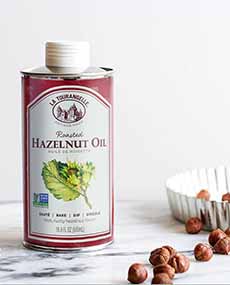
    La Tourangelle, the California-based artisanal oil company and a NIBBLE Top Pick Of The Week, has launched the first-to-market line of gourmet spray oils that are also all-natural and propellant-free. The company’s top-selling bottled oils are now sprayable:

  • 100% Organic Extra Virgin Olive Spray
  • Grapeseed Oil Spray
  • Roasted Pistachio Spray
  • Organic Canola Spray
  • Roasted Walnut Oil Spray
  • Thai Wok Spray
  •  
    The products are now available online at LaTourangelle.com and will be hitting store shelves soon. The prices range from $6.99 to $9.99 SRP. Consider them as stocking stuffers for friends with good palates.

     
    *A finishing oil is one that is added to cooked food as a condiment, to add flavor and mouthfeel. It is an oil with especially fine natural flavor and aroma that should be enjoyed as a surface accent, and not used for cooking or baking where the nuances will dissipate under heat. It can be used on carpaccio, legumes, porcini mushrooms, pasta, rice and other grains, roasted meats and fish, vegetables and other foods. Fine olive oil can be drizzled atop vanilla ice cream and garnished with a sprinkle of sea salt.


    la-tourangelle-sprays-230
    Four of the six new artisan-quality spray oils
    from La Tourangelle. Photo courtesy La
    Tourangelle.
      USES FOR COOKING SPRAY

    Cooking spray is godsend for anything that calls for greasing, from skillets to bundt pans. Popular kitchen uses include:

  • Baking & Roasting: baking sheets, baking dishes/casseroles, cake and muffin pans, roasting pans and broiler pans
  • Cookware, with or without non-stick coating: barbecue grills, frying pans/skillets, gelatin molds, griddles, pots
  • Food preparation: preventing food from sticking to spatulas, wooden spoons, skewers, measuring cups (especially when measuring sticky things like honey, syrup and agave), food processor blades and blender blades
  •  
    Adventurous people found uses beyond the kitchen: everything from unsticking doors to preventing fresh nail polish from smudging.

    How about using cooking spray for removing dead bugs from your car, and other unconventional uses?

     
    COOKING SPRAY HISTORY

    PAM, America’s first aerosol cooking spray, was launched in 1961 by entrepreneur Leon Rubin who, with Arthur Meyerhoff, started Gibraltar Industries to market the spray. The name is an acronym for Product of Arthur Meyerhoff. The brand is currently owned and distributed by ConAgra Foods.

    With canola oil as its main ingredient, the appeal of PAM was immediate.

  • For calorie counters, it provided a zero-calorie*, fat-free option for greasing the pan, instead of other fats at 100 calories per tablespoon.
  • For bakers, it was the way to prevent cakes and muffins from sticking.
  • For recipes like vegetables, mozzarella sticks and the like, it helped the seasonings to stick thoroughly.
  • For utensils, coating the inside of a measuring cup with the spray allows sticky substances such as honey to pour out more easily.
  •  
    Not only did it spawn imitators (Baker’s Joy, Crisco, Emeril, Mazola and Smart Balance, for example), but PAM itself developed eight varieties: Original plus Baking, Butter, Canola Oil, Organic Canola Oil, Grilling, Olive Oil, Organic Olive Oil Professional.

    And now, welcome to Cooking Spray 3.0: chemical free.


    Comments off

    TIP OF THE DAY: Easy Peanut Dipping Sauce

    summer-rolls-peanut-butter-sauce-lizziemabbot-ILPB-230r
    A three-ingredient peanut sauce (photo © Lizzie Mabbot | Lizzy Eats London).
      If you’re a fan of peanut sauce for dipping, making sesame noodles or drizzling over steamed vegetables, and diluted with salad oil for a salad dressing.

    While the preparation is simple—just combine the ingredients in a bowl and blend—depending on the recipe, you can spend more time or less time measuring ingredients.

    We discovered this super easy recipe version on ILovePeanutButter.com, contributed by blogger Lizzie Mabbot of Lizzy Eats London. She serves it with homemade summer rolls.
     
     RECIPE #1: EASY PEANUT SAUCE

    Ingredients

  • 3 tablespoons hoisin sauce
  • ¼ cup crunchy peanut butter
  • 2 tablespoons rice vinegar
  •  
    Preparation

    1. COMBINE the ingredients with a whisk. If sauce is too thick, add a little water.


    RECIPE #2: STANDARD PEANUT SAUCE

    This recipe, from McCormick, has more layers of flavor and takes a few more minutes to prepare—plus fish sauce and sesame oil, which you may not have on hand. McCormick uses it in their sesame noodles recipe.

    Ingredients

  • 1/3 cup crunchy peanut butter
  • 1/3 cup chicken stock
  • 3 tablespoons dry sherry
  • 2 tablespoons chives, chopped
  • 2 tablespoons fish sauce
  • 2 tablespoons sugar
  • 1 tablespoon sesame oil
  •   sesame-noodles-mccormick-230sq
    Seasame noodles with peanut sauce (photo © McCormick).
     
    Preparation

    1. PLACE all ingredients in a food processor. Cover and process until smooth.
      

    Comments off

    TIP OF THE DAY: Get Better Crackers

    raincoast-crisps-boxes-230
    The Nibble’s reigning favorite cracker. Photo
    by Elvira Kalviste | THE NIBBLE.

      We’ve eaten more than our share of supermarket crackers—Carr’s Water Biscuits, Keebler Club Crackers, Nabisco Saltines, Ritz Crackers and the like. They’re good, but sometimes we want amazing.

    Special occasions deserve special crackers—to accompany cheese, dips, salads, soups, spreads, whatever. They may be pricier than the supermarket varieties, but if your palate craves excitement and your eyes want visual allure, it’s money well spent.

    Otherwise stated, Cracker Barrel makes perfectly tasty Cheddar cheese. But if we want a great Cheddar experience, we’ll spring for Fiscalini Farmstead, a great artisan wheel from California.

    It can be a challenge to find great crackers, even when you know what you’re looking for. Recently we raced through three specialty food stores in search of Raincoast Crisps, our current favorite cracker. We finally found them at Dean & Deluca retail and etail, and also online at iGourmet.com.

    They’re $6.79 for a six-ounce box at iGourmet, and a whopping $10 at DDL. The amazing flavors and textures and small batch production make it worth the special-occasion splurge. They’re exquisite absolutely plain or however you wish to serve them.

     
    Three more-affordable brands of special crackers we favor, all natural and artisan (small batch, better ingredients):

    Dr. Kracker

    Rolled by hand, these artisan flatbreads are long on flavor and unique in their appearance. Each cracker is topped a generous number of attractive—and healthy—seeds, sesame, sunflower, and/or pumpkin.

  • Company Website
  • Our Review
  •  

    Mary’s Gone Crackers

    Mary’s Gone Crackers are gluten-free and vegan, yet packed with so much flavor you start to wonder what is in them that makes them taste so vibrant and delicious (the answer: whole grain brown rice, whole quinoa, flax seeds and sesame seeds). They’re also organic, whole grain and OU kosher.

  • Company Website
  • Our Review
  •  
    La Panzanella Croccantini

    Unlike the previous recommendations, which are whole grain and laden with seeds, nuts or fruits, La Panzanella Croccantini provide classic Italian flare. Made from white flour, even the plain version is wonderful, but cracked pepper, garlic and rosemary versions add extra flavor. The line is certified kosher by KOF-K.

  • Company Website
  • Our Review
  •  
    You can also browse the shelves at specialty food stores and try whatever looks good.


    raincoast-crisps-blue-cheese-230
    Raincoast Crisps with cheese. Photo by Elvira Kalviste | THE NIBBLE.

     
    As with government, people get the crackers they deserve. If no one wants to pay more for better products, the shelves get stacked with more varieties of Ritz and saltines.
     
    HOW TO RE-CRISP SOGGY CRACKERS

    As crisp as they begin, crackers will attract moisture over time and get soggy. But you can easily re-crisp them:

    1. Put the crackers in the microwave on a paper towel. Don’t overlap.

    2. Microwave them for 40 seconds on medium/high.

    3. Allow the crackers to cool for 3-5 minutes. They will crisp up as they cool down.

    Crunch away!
      

    Comments off

    The Nibble Webzine Of Food Adventures


    © Copyright 2005-2026 Lifestyle Direct, Inc. All rights reserved. All images are copyrighted to their respective owners.