|
Yesterday, we explored the history and glories of icebox cake. Today we present the icebox pie
Unlike yesterday’s recipe, this one does require a bit of baking—just 10 to 15 minutes in the oven. You make the filling while the crust bakes. Then, into the fridge it goes, to chill and set the filling.
This recipe has a white chocolate and cream cheese filling swirled with fresh raspberries with a buttery crust made from vanilla wafers. vanilla wafer crust. It’s cool and creamy and sweet and refreshing. Just the thing to satisfy your summertime sweet tooth!
This Raspberry White Chocolate Icebox Pie was developed by Jennifer McHenry of Bake Or Break, and sent to us by GoBoldWithButter.com.
Prep time is 25 minutes, cook time (for the crust) is 15 minutes.
RECIPE: WHITE CHOCOLATE ICE BOX PIE
Ingredients For A 9-Inch Pie
7 ounces vanilla wafers, finely crushed
5 tablespoons unsalted butter, melted
6 ounces white chocolate (we use Lindt bars or
Guittard chips, the best chips on the market)
8 ounces cream cheese, softened
1/3 cup granulated sugar
1/2 teaspoon vanilla extract
1 cup heavy cream
3 ounces raspberries, rinsed and dried
Preparation
1. PREHEAT oven to 350°F. Lightly butter 9-inch tart or pie pan.
2. COMBINE the crushed vanilla wafers and butter until thoroughly mixed. Press mixture firmly and evenly into the bottom and up the sides of the prepared pan. Bake 12 to 15 minutes, or until crust is lightly browned and dry. Set the crust aside to cool.
3. PLACE the white chocolate in a microwave-safe bowl. Heat at half-power in the microwave in 30-second increments, until the chocolate melts when stirred. Set aside to cool.
4. BEAT the cooled chocolate, cream cheese, sugar, and vanilla with an electric mixer on medium speed, until smooth and creamy.
5. PLACE the heavy cream in a large, chilled mixing bowl. Using an electric mixer with a whisk attachment, beat at medium-high speed until soft peaks form. Gently fold the whipped cream into the white chocolate mixture. Transfer the mixture to the cooled pie crust and spread evenly.
6. PLACE the raspberries in a blender or food processor and process until puréed. Use a small spoon to drop the raspberries over the top of the pie filling. Use a thin knife to swirl the raspberries into the filling.
7. REFRIGERATE the pie for at least 2 hours before serving.
> The history of ice box cake/pie.
> The history of white chocolate.
> The history of raspberries.
|
|
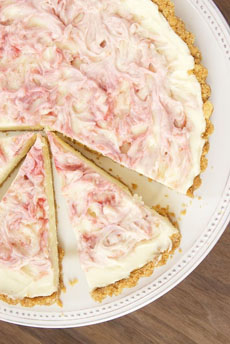
[1] White chocolate with raspberries icebox pie (photo © Bake Or Break | Go Bold With Butter).

[2] Fresh raspberries (photo © Good Eggs).
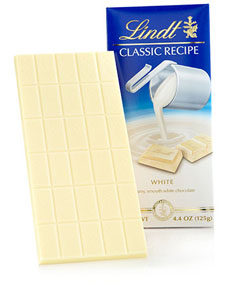
[3] Our favorite affordable white chocolate is Lindt, widely available in the U.S., MSRP $3.99 for a 4.4-ounce bar. For pricier gourmet brands, here’s our article on the best white chocolate bars.
|