THE NIBBLE BLOG: Products, Recipes & Trends In Specialty Foods


Also visit our main website, TheNibble.com.

TIP OF THE DAY: Celebrate National Cucumber Day With Cucumber Drinks

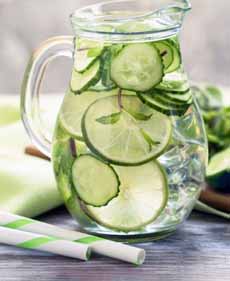
Cucumber Water
[1] Add cucumber slices to a pitcher of water. Lemon, lime and/or mint sprigs make it even more delicious (photo courtesy HealthiGuide).

DRY Cucumber Soda
[2] DRY Sparkling, a cucumber soda low in sugar, is one of our favorites straight or as a mixer (photo courtesy DRY Sparkling).

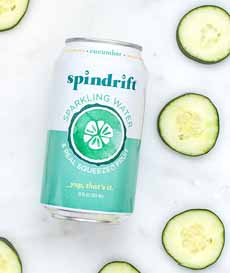
Spindrift Cucumber Water
[3] Spindrift’s Sparkling Water is flavored with real squeezed cucumber, no sweetness added (photo courtesy Spindrift).

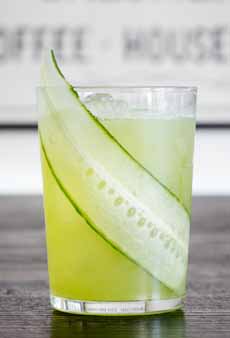
Cucumber Cocktail Garnish
[4] This garnish is at home in a cocktail or a glass of club soda (photo courtesy Dante | NYC).

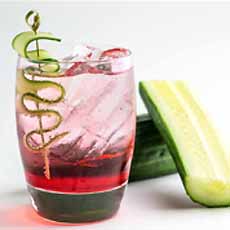
Cucumber Cocktail Garnish
[5] Make a curly cucumber cocktail garnish on a cocktail pick (photo courtesy AnQi | Costa Mesa) .

  June 13th is National Cucumber Day. Cucumbers are so refreshing, they’re a natural for drinks.

 
DRINKS FOR EVERYONE!

Cucumber Cocktails

We like to sip cucumber vodka straight or on the rocks. Brands like Effen, Ketel One, Prairie, Svedka, Rain and others sell it. Some are straight cucumber, some add lime.

You can make these cocktails with plain or cucumber vodka. Or, infuse your own cucumber vodka at home.

  • Cucumber Mary Cocktail
  • Cucumber Tequila Cocktail
  • Gin Lemonade With Cucumber
  •  
    Non-Alcoholic Cucumber Drinks

  • Homemade cucumber water: infuse sliced cucumbers in a pitcher of water, with optional lemon/lime and mint (photo #1)
  • Cucumber DRY Sparkling
  • Cucumber Hint Water
  • Cucumber Spindrift Sparkling Water
  •  
    Cucumber Appetizers

    If you’d like a cucumber snack with your cucumber drink, try:

  • Stuffed Cucumber Bites
  • Cucumber-Prosciutto Roulades
  •  
     
    CUCUMBER TYPES

    Growers define cucumbers in five categories: slicing, pickling, burpless, space savers and specialty.

  • Slicing cucumbers include the typical supermarket variety: long and straight with thin, non-bitter skins and seeds. They are bred for slicing and eating. The skin of younger, unwaxed cucumbers is tender enough to be eaten. As the fruit* grows, the skins thicken and more seeds develop. If left on the vine too long, the flesh may become bitter.
  • Pickling cucumbers are shorter and stouter. They are bred to have drier flesh, which allows them to soak up more of the pickling brine.
  • Burpless cucumbers are slicing cucumbers that have been bred to produce less of the bitter chemical that releases gas in the stomach. They were developed because enough Americans had this sensitivity.
  • Space saver cucumbers, also called container cucumbers, are bred to create compact vines that fit into small gardens and deck planters.
  • Specialty cucumbers are heirloom cucumbers that have less developed disease resistance than modern hybrids (that’s why fewer growers plant them), but are appreciated for their different flavors, shapes and/or colors. There’s more in the next section.
  •  
     
    SPECIALTY CUCUMBERS

    You can eat, drink or garnish with any supermarket cucumber, but why not have fun and look for specialty varieties?

    You know what conventional cucumbers look like. Check farmers markets for specialty varieties like these:

  • Armenian cucumbers are heavily ribbed—decorative and ornamental—and taste like a melon without the sweetness. They are particularly interesting for salads and garnishes.
  • Crystal Apple cucumbers, heirlooms from New Zealand, have pale green, roundish fruits resembling Granny Smith apples.
  • Lemon cucumbers are yellow and shaped like lemons.
  • Suyo Long is a traditional variety from China that delivers burpless, sweet ribbed fruits that can be used for slicing or pickling.
  • Palace King is a hybrid that has ripples of yellow on emerald green skins.
  • White cucumbers are ivory in color. They are a mutation that occurred in the early 1890s in western New York State, and the seeds were sent to Burpee.
  •  
    Your homework: Go to the farmers market and look for specialty cucumbers. If you have a garden, check out the options and plan to plant at least one variety next year.
     
     
    * CUCUMBER TRIVIA

    Cucumbers are fruits. They are members of the same botanical genus as cantaloupe, honeydew, Persian melon and other melons.

    A giveaway: Fruits carry their seeds on the inside.

    The exception is the strawberry: Technically, the strawberry is an aggregate accessory fruit, meaning that the fleshy part is derived not from the plant’s ovaries but from the receptacle that holds the ovaries.

    The tiny “seeds” (called achenes) on the outside of the berry are actually teeny ovaries of the flower, with a teenier seed inside it.


    Comments off

    FOOD FUN: Iced Tea Trivia

    June 10th is National Iced Tea Day. Here are some fun facts from Pure Leaf Tea.

    Tea is the number-one-consumed beverage in the world, after water. While most of the world consumes iced tea, in the U.S., almost 80% of the tea consumed is iced.

    1. Tea leaves and wine grapes share similarities.

    Both tea leaves and grapes require certain environments and climatic conditions to thrive. Terroir (tur-WAH), the characteristics of a place (soil, water, altitude, latitude and climate) affect the taste of a final agricultural product and play a huge role in the growing of both tea leaves and grapes.

    2. Tea regions create different flavor profiles.

    Different environmental characteristics affect the flavors and aromas of tea. For example, in India, the low-altitude Assam region produces a black tea with a bold, malty flavor. In Indonesia, consistent temperatures and humidity make Java a perfect location to grow tea plants used for green tea.

    3. Black tea, green tea and white tea come from the same plant.

    A single plant, Camellia sinensis, provides all of the tea grown. For black and green tea, the difference lies in the oxidation of the leaf: green tea production stops the oxidation process to keep the leaves green. Quality teas like Pure Leaf process with the long leaf method, where the tea leaves are gently picked, rolled, dried, and blended to achieve a specific flavor.

    4. Fruit and herbal teas are not real teas.

    They do not come from the Camellia sinensis. They are properly called tisanes (tee-ZON) or infusions.

    Fruit and herb teas (chamomile, peppermint, rooibos, etc.) have been used for medicinal purposes for thousands of years. Today, many people who drink them appreciate that they are 100% caffeine-free.

    5. Iced Tea is quintessentially American.

    No one can say at which point tea was first chilled with ice, but iced tea had its debut on the world stage at the 1904 St. Louis Exposition (today called the World’s Fair). On a very hot day, no one was trying the hot tea samples at one pavilion. Here’s the clever solution used to chill the tea.
     
     
    MAKING ICED TEA

    1. Use real tea leaves.

    Boil the water and steep the tea. Iced tea made from powder is to brewed tea, what instant coffee is to brewed coffee.

    We’ve tried every iced tea concentrate—brewed liquid tea to mix with iced water—and have never found one we’d buy again. (Note: Anyone who adds lots of sugar may not notice the difference.)

    2. Check the water temperature.

    When brewing your iced tea, it’s important to monitor the temperature of the water. With black tea, the water should come to a full boil; but when brewing the more delicate green tea leaves, the water should be just under boiling.

    3. Tailor your tea.

    You can brew it a little longer or shorter to adjust the flavor. Note that if you add ice cubes to your iced tea (even drunk straight from the fridge), the tea should be brewed stronger to allow for dilution by the ice.

    Here’s how to add fruit flavors to home-brewed iced tea.
     
     
    MORE ICED TEA TIPS

  • How To Brew Iced Tea
  • How To Avoid Cloudy Iced Tea
  • Have An Iced Tea Party
  •   Raspberry Mango Iced Tea
    [1] For an extra treat, add fresh fruit to iced tea. It’s best to do it in advance to let the flavors infuse into the tea (photo courtesy Dinner At The Zoo).

    Pure Leaf Bottled Tea
    [2] Fan favorite: Pure Leaf bottled teas: there are 15 varieties (photo courtesy Pure Leaf).< Pure Leaf Tea Bags
    [3] Brew your own: 7 varieties of bagged teas (photo courtesy Pure Leaf).

     
    PURE LEAF ICED TEA

    Pure Leaf’s delicate tea leaves are kept long, then simply picked, rolled and expertly crafted with real fruit pieces, petals and herbs, allowing the natural tea essence to shine through. To ensure an exceptional and authentic taste experience, Pure Leaf offers single-source tea leaves from Rainforest Alliance Certified tea estates in India, Kenya, Indonesia and Sri Lanka. Pure Leaf’s uniquely transparent packaging reveals the masterful tea blends and lets the quality of the ingredients speak for themselves.

    There are currently 15 varieties:

  • Sweetened: Sweet Tea, Extra Sweet Tea, Honey Green Tea, Lemon Tea, Mint Tea, Not To Sweet Peach Tea, Peach Tea, Pomegranate Tea, Raspberry Tea, Tea & Lemonade,
  • Unsweetened: Black Tea, Black Tea With Lemon, Green Tea
  • Diet: Diet Lemon Flavor, Diet Peach Flavor
  •  
    Bagged teas are available in 15-count jars, in seven varieties:

  • Black Tea with Vanilla
  • Chai Tea
  • Green Tea With Mint
  • Iced Classic Black Tea
  • Iced Black Tea with Peach
  • Iced Black Tea with Raspberry
  • Iced Green Tea with Citrus
  •  
    Pure Leaf loose teas are offered in three varieties—English Breakfast Black Tea and Iced Classic Black Tea, both available in 4.7-oz. jars, and Gunpowder Green Tea, available in 5.8-oz. jars.

    We’re big fans of the Tea House Collection, elegant flavors in glass bottles.

    For more information, visit PureLeaf.com.


    Comments off

    RECIPES: Stewed Rhubarb & Strawberries For National Strawberry-Rhubarb Pie Day

    Strawberry Rhubarb Compote With Ice Cream
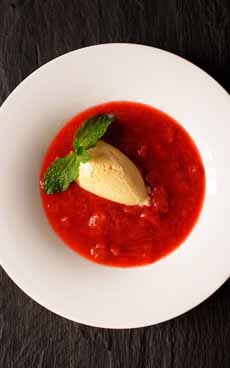
    [1] Stewed rhubarb. Call it strawberry-rhubarb sauce or make it a chilled soup with vanilla frozen yogurt or sorbet. The recipe is at right (photo courtesy Eat Well 101).

    Strawberry Rhubarb Scones
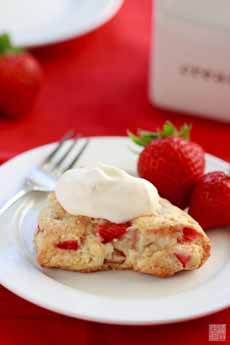
    [2] Turn strawberry-rhubarb scones into a shortcake with whipped cream and strawberries. Here’s the recipe from Dessert First Girl.

    Strawberries &  Rhubarb
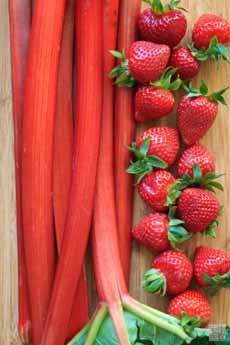
    [3] The main ingredients: rhubarb and strawberries (photo courtesy Dessert First Girl).

      June 9th is National Strawberry Rhubarb Pie Day. We’ve previously published recipes for the strawberry-rhubarb pie and strawberry-rhubarb bars.

    Today, how about a relative of pie: a shortcake (scones) with strawberry-rhubarb sauce (recipe, photo #2)?

    Or, a very easy recipe, below (photo #1): stewed strawberries and rhubarb, which can be served as a sauce with scones, pound cake, etc.; a chilled soup; as a compote, layered with whipped cream; or with plain or flavored yogurt.

    FOOD TRIVIA: Technically, rhubarb is a vegetable, a member of the sorrel family. Before it was sweetened by British cooks, it was added to soups (try it in lentil soup), sauces and stews—Moroccan tagines and Middle Eastern stews, for example.

    Be sure to cook only the stems; the leaves are mildly toxic (they contain oxalic acid).
     
     
    RECIPE: STEWED STRAWBERRIES & RHUBARB

    This recipe came to us from from Nina Palmer of Eat Well 101.

    If you want to make ice cream to go with it, consider lavender, peach, rhubarb or saffron ice cream.

    Ingredients For 6 Servings

  • 1 pound (500g) rhubarb
  • 1 pound(500g) strawberries
  • 1 cup (150g) sugar
  • 1 vanilla pod
  • Juice from one orange
  •  
    For Serving

  • 2 pints vanilla ice cream, frozen yogurt or sorbet (lemon, peach, strawberry)
  • Optional garnish: mint leaves, rosemary sprig, lemon or lime curl
  •  
    Preparation

    1. WASH and peel the rhubarb, and cut the stalks into 1/3 inch sections. Place them in a saucepan with the sugar and let sit for 20 minutes.

    2. SPLIT the vanilla bean in half, and scraping the seeds out so they can more easily infuse the fruit. Add both the pod and the seeds to the pot.

    3. WASH and hull the strawberries, and cut them into quarters. Cook the rhubarb over low heat for 10 minutes, stirring regularly. Add the strawberries and cook for another 10 minutes. Remove from the heat and stir in the orange juice.

    4. REMOVE the pod and allow to cool before transferring to a covered bowl and storing in the fridge until ready to use (the scraped seeds remain as flecks in the compote). The sauce should be served cold with a scoop of vanilla ice cream.
     
     
    RHUBARB HISTORY

    Rhubarb is an ancient plant, cultivated in China since 2700 B.C.E. for medicinal purposes (it was a highly-valued laxative). Much later (at the end of the 12th century), Marco Polo wrote about it at length in the accounts of his travels in China, suggesting that the plant had not yet made it to southern Europe.

    Different strains of rhubarb grew wild elsewhere, as well, including in Russia. Its genus name, Rheum, is said to be derived from Rha, the ancient name of the Volga River, on whose banks the plants grew.

    It was added to soups (try it in lentil soup!) and sauces in the Himalayas and later arrived in the Middle East, where it was used in Moroccan tagines and Middle Eastern stews.

    Records show that rhubarb was cultivated in Italy in 1608 and 20 to 30 years later in Europe. A 1778 record shows that rhubarb had become a food plant in Europe as a vegetable.

     
    At some point, rhubarb was sweetened by British cooks as a filling for tarts and pies.

    The earliest written record of rhubarb in the U.S. concerns a gardener in Maine who obtained seed or root stock from Europe, sometime between 1790-1800. He introduced it to growers in Massachusetts where its popularity spread. [source]

    Here’s more about rhubarb, including why rhubarb is a vegetable and not a fruit.

    HERE’S THE HISTORY OF STRAWBERRIES
      

    Comments off


    © Copyright 2005-2026 Lifestyle Direct, Inc. All rights reserved. All images are copyrighted to their respective owners.