THE NIBBLE BLOG: Products, Recipes & Trends In Specialty Foods


Also visit our main website, TheNibble.com.

RESTAURANT: P.J. Bernstein, The Best Deli In New York?

In New York City, “the best deli,” referring to Jewish-style delicatessen, used to be a topic of debate.

Over the years, though, acclaimed delicatessens have fallen by the wayside. The Carnegie Deli and its rival The Stage Deli, both in the neighborhood of Carnegie Hall, are gone. So is Artie’s Deli on the Upper West Side.

Barney Greengrass is still there, thank goodness, but it specializes in fish.

Katz’s Deli, home to the famous scene in “When Harry Met Sally,” is O.K., but not worth the trip all the way downtown. Ditto for the Second Avenue Deli.

Our nearest deli, Fine & Schapiro, falls into that “O.K.” category, too.

We were feeling sad that our excursions to glorious deli meals were a thing of the past.

So when we received an invitation to try P.J. Bernstein’s on the Upper East Side, we headed cross-town with high hopes.

We were not disappointed.
 
A FEAST OF JEWISH CLASSICS…

All of the standards of the classic Jewish deli are there in abundance; and more important than abundance, the quality is outstanding.

Is P.J. Bernstein’s the best deli in New York? We haven’t eaten at all of them, but to us, it’s now the number-one deli of choice.

The deli all-stars are on the menu: brisket, corned beef, pastrami, tongue and the other deli meats; matzoh ball soup plain, with egg noodles, or with (be still, our beating heart) kreplach!

And the smoked fish: smoked salmon, sturgeon, whitefish, whitefish salad!

While delicatessens typically buy their meats and fish from provisioners, ready to slice and serve, the kitchen dishes we had are standouts: chopped liver, gefilte fish, stuffed cabbage.

As we write this, the little voice in our head is saying: “Only three hours to lunch…at P.J. Bernstein.”
 
…AND MODERN FAVORITES

If one of your party doesn’t want deli, there are plenty of choices, from burgers and salads to smoothies and a juice bar. P.J. Bernstein is steeped in transition, but has menu updates for modern palates.

The restaurant is open 7 days:
1215 Third Avenue between 70th and 71st Streets, New York, NY 10021
212.879.0914

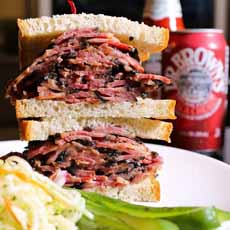
  Pastrami Sandwich - PJ Bernstein
[1] The classic four: pastrami, cole slaw, pickles and Dr. Brown’s cherry soda (all photos courtesy P. J. Bernstein).

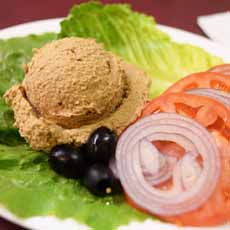
Chopped Chicken Liver
[2] Chopped chicken livers: Jewish ambrosia.

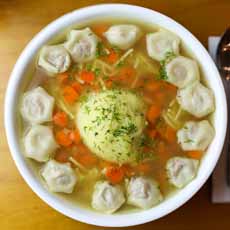
Matzoh Ball Soup - P J Bernstein
[3] Matzoh ball soup with a bonus: kreplach!


Comments off

TOP PICK OF THE WEEK: True Story Organic Beef & Chicken Hot Dogs

If you’re a hot dog eater who has fled the fields of big brands for smaller artisan and organic products…great!

It’s much easier to introduce you to a new brand than to convince fans of big brands of the benefits of better hot dogs.

Starting with superior meat flavors, the other reasons: only grass-fed beef from small farms, a lower meat-to-fat ratio, and all natural ingredients (natural casings, no nitrates and nitrites!).

We recently received samples of the True Story Foods’ line of beef hot dogs, chicken hot dogs and chicken sausages. We liked them so much that we’re serving them on July 4th.

The flavor is meaty, not fatty; and the spicing is elegant, not overdone to cover up lesser quality meat and a higher percentage of fat.

We’re adding fun by doing a blind taste test (no brand identification) of True Story hot dogs versus Oscar Meyer.
 
TRUE STORY HOT DOGS & SAUSAGES

This brand can do no wrong: no burps, no heartburn, no reflux. Everything is delicious:

  • Organic Uncured Beef Hot Dogs
  • Organic Uncured Chicken Hot Dogs
  • Pasture Raised Uncured Beef Hot Dog, both regular and old-fashioned (longer style)
  • Organic Sausages: Sweet Italian Chicken Sausage, Apple & Wildflower Honey Chicken Sausage (slender like hot dogs)
  •  
    The company also sells deli meats and organic pork: bacon, chops, ground and loin.

    The meats come from family farms, ensuring that the animals are raised humanely and without antibiotics. They are fairly traded, which means a sustainable livelihood for the farmers to come.

    All animals are fed an all-vegetarian diet, never given antibiotics or growth enhancers, and live without undue stress or agitation. Happy animals make happy meat.

    The line is Non-GMO Certified.
     
    MORE ABOUT THE HOT DOGS

    True Story’s hot dogs are packed with flavor, in a natural sheep casing. Like most hot dogs, they are fully cooked before packaging, and can be simply reheated or grilled.

    The ingredients include pasture-raised beef, water, fresh onion, garlic, mustard, paprika, celery powder, vinegar, salt, sugar, extractives of paprika, natural flavors and spice extractives.

    The organic hot dogs are made with 100% organic beef. The chicken hot dogs are made with sustainably farmed organic chicken.

    All of the products are uncured.

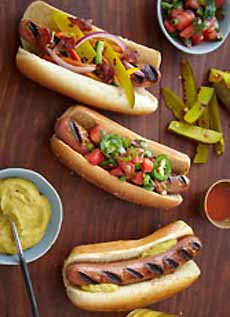
      Hot Dog Toppings
    [1] Even with all the toppings, you can taste the difference.

    True Story Uncured Hot Dogs
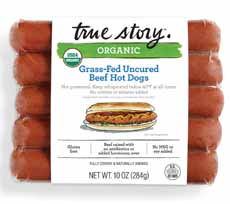
    [2] Look for this package, for a variety of hot dogs and sausages (photo courtesy True Story).

    Hot Dog Appetizer Bites
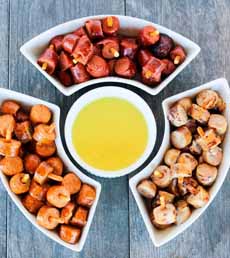
    [3] Food fun: hot dog bites. Make a slight opening with the point of a sharp knife and insert pretzel sticks instead of toothpicks (photo courtesy True Story | Facebook).

     
    WHAT ARE UNCURED HOT DOGS?

    Uncured hot dogs are all natural, made without artificial nitrates or nitrites.

    Instead of these chemicals, the meat is preserved with celery juice or celery powder, which are a naturally-occurring source of nitrates.

    Uncured hot dogs are prepared in the same way as cured hot dogs.
     
     
    READY FOR YOUR OWN TRUE STORY?

    Here’s a store locator.
     
     
    >>> CHECK OUT THE HISTORY OF HOT DOGS <<<


    Comments off

    TIP OF THE DAY: Our New Hostess Gift Is A Salad


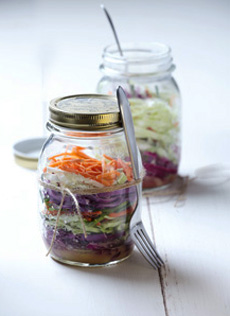
    [1] Layered cole slaw in a jar (photo courtesy Nestlé.

    Head Of Red Cabbage
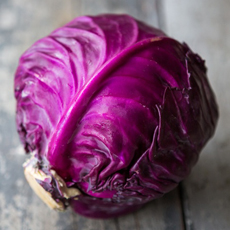
    [2] Purple/red cabbage is good-looking and full of antioxidants (photo courtesy Good Eggs).

    Scallions
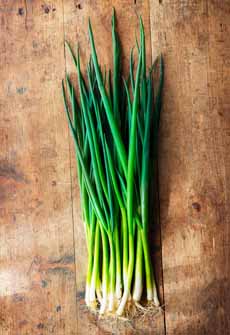
    [3] Scallions, also called green onions, have more onion flavor than their cousin, chives (photo courtesy Recipeland).

      We don’t know who came up with the idea of layered food in a jar. It happened sometime after some other unlauded person decided to serve drinks in Mason jars—a trend that grew so hot that manufacturers began to manufacture Mason jars with handles, and lids with openings for straws!

    Plating in an unexpected vessel—Martini glasses are also popular—turns food as ordinary as salad into exciting food. Want to get the family to eat more salad? Serve it in a jar!

    While layered salads are not news, we have been bringing 32-ounce jars of cole slaw when we visit friends or family. Everyone loves the low-calorie crunch, and we usually get a thanks for not bringing cookies or brownies.

    And unlike green salad, cole slaw stays crunchy. (Yes, cole slaw is a salad: cabbage salad.)

    The history of cole slaw, and why it’s called “cole.”

    And while we’re at it, the history of Mason jars.
     
    COOL & CRUNCHY

    This recipe, adapted from Nestlé is a welcome hostess/host gift at any time. It will be embraced by healthy eaters (one can’t have too many cruciferous vegetables), vegetarians/vegans, and the rest of us who simply love cole slaw.

    Here, purple and green cabbage meld with bright herbs, and the mayonnaise is replaced by a complex layering of flavor from Dijon mustard, apple juice, apple cider vinegar and honey (photo #1).

    You’ll need 8 pint-size or 4 quart-size Mason jars. Of course, you can make the recipe in a mixing bowl for home use, no jars required.

    You don’t have to be particular about brand: Mason jars vs. Ball jars, for example. You can use any jars you can lay your hands on.

    In fact, we have a friend who re-uses jars from the grocery store, and we give her points for recycling. She wraps colored elastic bands around the top of the jar with wine glass charms for glamour. Both of those are reusable, too.
     
    RECIPE: APPLE-INFUSED COLE SLAW RECIPE

    Ingredients For 8 Pints or 4 Quarts

    Ingredients For The Vinaigrette

  • ¼ cup apple cider vinegar
  • ¼ cup apple juice
  • ½ teaspoon fine sea salt
  • ¼ teaspoon freshly ground black pepper
  • 2 tablespoons Dijon mustard
  • 2 tablespoons honey
  • ¼ cup canola oil
  •  
    Ingredients For The Cole Slaw

  • 5 cups each thinly shredded purple and green cabbage, divided
  • 2 cups shredded carrot and/or thinly sliced red bell pepper, divided
  • 8 tablespoons sliced scallion or chives, divided
  • 2 tablespoons shredded fresh basil
  • Optional but recommended: 2 tablespoons each celery seed and fresh dill
  • Preparation

    1. WHISK together the vinegar, apple juice, salt, pepper, mustard and honey. Gradually add the oil in a slow, steady stream, whisking constantly until blended. Divide the vinaigrette between the Mason jars.

    2. MIX the celery seed, fresh dill and basil, divided into the cabbage.

    3. LAYER about 1/3 cup purple cabbage, 1/3 cup green cabbage, 2 tablespoons carrot and 1 tablespoon sliced green onions in each Mason jar. Add another layer (the same quantities excluding the scallions) of purple cabbage, green cabbage and carrots. For quart jars, continue to layer. You should have about an inch gap between the cole slaw and the lid so that it is easy to shake later.

    4. SEAL the jars and refrigerate. When ready to serve, simply shake to coat the slaw with the dressing.
      

    Comments off


    © Copyright 2005-2026 Lifestyle Direct, Inc. All rights reserved. All images are copyrighted to their respective owners.