THE NIBBLE BLOG: Products, Recipes & Trends In Specialty Foods
Also visit our main website, TheNibble.com.
|
June 2, 2013 at 3:35 pm
· Filed under Beer & Hard Cider, Giftable, Kids
|
|
As any beer connoisseur knows, quality glassware enhances the enjoyment of quality craft beer. And you don’t have to be a connoisseur to know that there are different shapes of glasses for pilsners, wheat bees and other beer styles.
That‘s because nuances of engineering reflect the different attributes of a particular style of beer (or wine). For example:
Like a champagne flute, a tall, narrow glass enables the beer to release its flavor more slowly. But for someone who likes a pronounced head, a glass with a deep bowl allows it to form.
The classic stein and pint glasses are generic glassware that don’t nudge the beer in any specific direction. Before modern engineering, practicality and fashion ruled:
The 10-sided handled pint mug, introduced in the 1920s, kept the beer cooler longer by keeping warm hands off the glass.
|
|

IPA, Globe Pilsner, Wheat Beer and Tall Pilsner glasses. Photo courtesy Spielgau. |
The dimpled glass, introduced in the 1940s, enhanced the visual appeal of the fashionable darker beers by allowing light hit the dimples in the glass.
Manufacturers of fine glassware learned that they could, among other adjustments, engineer glasses to bring out the particular qualities of a variety of beer:
A larger body keeps the beer cooler for longer.
Etching the bottom of the glass helps to maintain the head and the release of carbonation (so the beer doesn’t get flat as quickly).
A slightly narrow neck traps the aroma.
A double thick bottom better insulates from any warmth from the table top.
A stem or a narrower bottom where it’s comfortable to hold the glass keeps away heat from hands that could warm the brew.
An outward-turned lip can enhance the sweet notes of the beer.
|

Fron left to right: IPA glass, globe pilsner,
wheat beer glass and tall pilsner. Photo
courtesy Spielgau. |
|
NEW IPA GLASSES
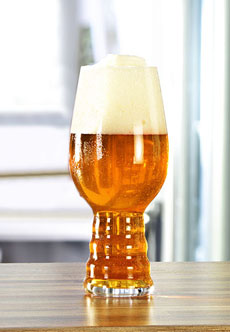
If you’re a fan of IPAs (India Pale Ales—which happen to be our favorite tyle of beer), check out Spiegelau’s new IPA glass. The manufacturer collaborated with Dogfish Head and Sierra Nevada breweries to create a glass that best displays the nuances of IPA-style beers.
Twelve different prototypes were developed by Spielgau and tested by the bewers, designed to showcase varying aromatic profiles for “hop forward” IPA beers, preserve a frothy head and volatiles and maintain a comfortably wide opening for the drinker to “nose” the beer.
Why is the engineering so important? In the case of the IPA glasses:
Thin walls maintain proper beer temperature longer.
The slender, bowed shape amplifies the hops aroma.
|
|
Wave-like ridges aerate the beer to balance flavors.
A wide mouth allows the drinker to “nose” the beer comfortably for heightened aroma.
Raw quartz silica combined with state of the art production methods help sustain the head and the carbonation. It also delivers the beer evenly across the palate for a pleasant creaminess and harmony of sweetness and acidity.
The 19-ounce/540 ml glasses are $24.90 for a set of two. You can buy them on Amazon.
|
|
|
Permalink
|
|
June 2, 2013 at 9:17 am
· Filed under Fish-Seafood-Caviar, Recipes
|
|
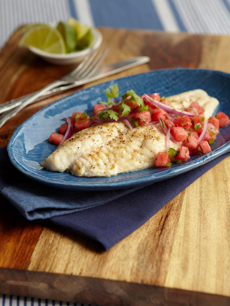
The recipe was originally made with catfish, but you can use flounder, tilapia or any favorite white fish. Prep time 10 minutes, cook time 15 minutes.
BAKED FISH WITH WATERMELON SALSA
Ingredients For 4 Portions
1 lime
1 teaspoon olive oil
1/2 teaspoon ground cumin
1/4 teaspoon salt
1/8 teaspoon ground black pepper
4 (6 ounce) catfish filets
1 tablespoon honey
2-1/2 pounds seedless watermelon, chopped
1/4 red onion, thinly sliced
1 jalapeño, chopped
|
|
Baked tilapia with watermelon salsa. Photo courtesy Dole.com. |
Preparation
1. PREHEAT the oven to 350°F.
2. ZEST the lime into a large bowl. Cut the lime in half and squeeze the juice from one half into the bowl. Set aside.
3. COMBINE the juice from half the lime, olive oil, cumin, salt and pepper in an 8″x8″ baking dish and mix well. Arrange the catfish filets in the baking dish, turning to coat with the lime mixture.
4. BAKE 15 minutes until the fish is not longer opaque and flakes easily with a fork. Meanwhile, make the salsa:
5. WHISK the honey into the remaining lime juice. Add the watermelon, onion, cilantro and jalapeño. Toss to blend. Serve atop the fish filets, or pass separately in a bowl.
FIND MORE OF OUR FAVORITE FISH RECIPES.
|
|
|
Permalink
|
|
June 2, 2013 at 8:49 am
· Filed under Salts-Seasonings-Herbs-Spices
|
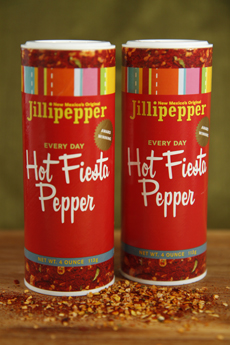
Shake it, shake it baby! Photo by Elvira
Kalviste | THE NIBBLE. |
|
Jilli Pepper is an Albuquerque-based company known locally for its Red Chile Pineapple Salsa, Green Chile Salsa, Red Chile Salsa Mix and Hot Fiesta Pepper.
The company sent us some of its Scovie Award-winning* Hot Fiesta Pepper, which we find to be a delightful alternative to cracked red pepper or other heat.
The recipe is a mix of red chili powder, crushed pequin chiles, dried onions, cilantro, garlic and salt—a complex layering of flavors. An all-purpose dry spice, you can use it instead of salt on any number of foods.
Shake it onto pizza, pasta or rice. Season your eggs. Sprinkle it onto fish, meat or poultry in it prior to cooking. Mix it into dips. Make an olive oil bread dipper or spicy butter or cream cheese spread. Use it to make salsa hotter.
We enjoyed it on everything from cucumber slices to cottage cheese and yogurt.
|
Hot Fiesta Pepper is available online by the case of 12 four-ounce shakers. We like them for small gifting, party favors and stocking stuffers. Get yours at JilliPepper.com.
This $4.00 gift packs a lot of heat!
*Hot Fiesta Pepper is a 2010 Scovie Winner in the hot and spice condiments category. The Scovie Awards are given annually to hot and spicy in a wide variety of categories, from barbecue sauce an salsa to beverages and snacke. the name is derived from the Scoville Scale, long used to measure the heat levels of chiles.
|
|
|
Permalink
|
© Copyright 2005-2026 Lifestyle Direct, Inc. All rights reserved. All images are copyrighted to their respective owners.