THE NIBBLE BLOG: Products, Recipes & Trends In Specialty Foods


Also visit our main website, TheNibble.com.

How To Stop Food Waste For Earth Day & Every Day

With so many people going hungry in the U.S. (much less, worldwide), it’s shocking how much food we waste.

It’s not just us, the consumers. It’s the whole food chain, from “ugly” produce left to rot in the field, to problems with transportation and storage, to foods thrown out by grocers, foodservice, etc.

In fact, mre than a third of all food grown for human consumption in the U.S. is wasted, according to ReFED, a nonprofit that focuses on food waste.

That’s about $408 billion worth of food, grown on 18% of U.S. farmland, with 4 trillion tons of water.

The carbon footprint of U.S. food waste is greater than that of the airline industry!

Globally, wasted food accounts for about 8% of all greenhouse gas emissions [source].

Take a moment to think of the environmental consequences of producing food that no one eats.

April 22nd is Earth Day. We can each play a small part in saving our planet, starting with our kitchens.
 
 
CONSUMERS & FOOD WASTE

Some 37% of food waste happens in the home.

Why do we waste so much food? We are personally guilty of all of the following.

  • We buy too much, because we thinking we’ll eat more of it, because it’s on sale (we reach rather than think).
  • We buy aspirationally, thinking we’ll make a new recipe (but we don’t).
  • Perishables and leftovers get lost in the back of the fridge, to be found when it’s too late (we do too much of this).
  • Instead of responsibly using a perishable, we “don’t feel like eating it,” and allow it to deteriorate.
  • We decide to eat out instead of cooking the perishables that are waiting for us at home.
  •  
    Each Earth Day, we vow to do better.

    It’s like New Year’s resolutions. The intention is good, but the execution is not.
     
     
    8 SMALL STEPS TO STOP FOOD WASTE

    You not only stop food waste; you stop wasting money on the food you’d throw away.

    1. PLAN your purchases.
    In the old days, our Mom had a kitchen calendar/meal planner, with the dinners noted for each day of the week (roast chicken, salmon croquettes, spaghetti, whatever). She did her weekly shopping with a written list that matched the meals.

    Even if you don’t cook for a family like Mom did, you can plan your meals.
     
     
    2. RESIST over-buying. Train yourself to buy too little rather than too much. You’ll likely find that you can “make do” with what you’ve bought.

    One way we’ve been working on this is to shop twice a week instead of once a week, so we don’t feel pressure to buy everything at once.

    And when we look at that better-priced bag of 10 avocados or tangerines, we pause to think if we can commit to using them all before they go bad.
     
     
    3. DON’T toss wilted food.
    Fruits and vegetables that are softened or wrinkled can still be tossed into soups, smoothies, or baked dishes. We love making baked apples when they go soft. Stale bread becomes French toast, croutons or breadcrumbs.

    If you don’t know what to do with a soft eggplant, for example, just search online.
     
     
    4. DON’T rely on the “best before” dates. Produce, eggs, dairy and other foods can remain good well beyond those dates.

    A simple test: The sniff test. Then, the taste test: Dip a finger in and taste a tiny amount. You’re likely to find a perfectly edible food.
     
     
    5. STORE your products like the grocery stores do. The newest food is at the back of the refrigerator case or the shelf. The older products, that need to be used first, are at the front.

    This is a really easy way to store perishables, canned goods and other foods, including those you might not think of. For example, olive oil spoils, and even vinegar will go bad over time.
     
     
    6. KEEP a list of spoiled foods you’ve thrown out. We keep ours on the fridge. This can help identify certain foods that you should cut back on.
     
     
    7. FREEZE foods before they spoil. We toss a lot of fresh herbs, and leftovers, into the freezer. Bread, seafood, meats and poultry, even cooked pasta can go into the fridge.
     
     
    8. STORE food correctly. Here are great pointers on the best way to store fruits and vegetables. Always transfer leftovers from open cans into suitable containers. Do not store them in the open cans.

    Also note that some fruits give off ethylene, which makes adjacent foods spoil more quickly. Storing apples, bananas and tomatoes apart from other perishables will help keep all perishables fresher.
     
     
    MORE FOOD STORAGE TIPS

  • How To Store Coffee
  • How To Store Fresh Herbs
  • How To Store Leftover Turkey
  • How To Store Lemons, Limes & Other Citrus
  • How To Store Peanut Butter
  •  


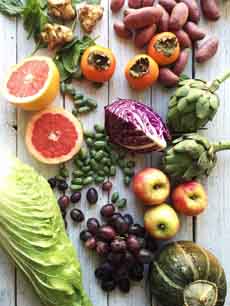
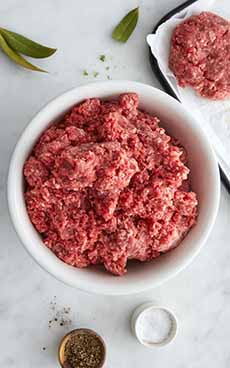
    [1] Don’t buy them unless you’ll eat them that week (photos #1 and #2 © Good Eggs).

    Raw Ground Beef In A Bowl
    [2] Remember that ground meat spoils more quickly than whole cuts.

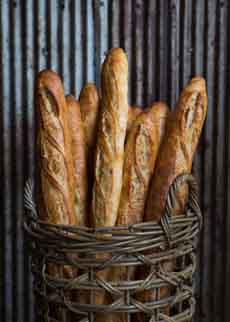
    Baguettes
    [3] Artisan breads often are stale by the next morning. Stick what you won’t be using in the freezer, the day you buy it (photo © Hewn Bread | Chicago).


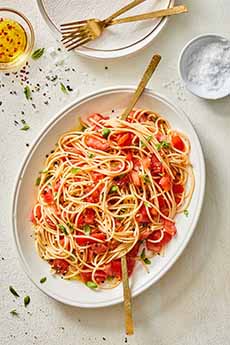
    [4] Don’t push leftover pasta to the back of the fridge. Keep it in sight and plan when to use it. Maybe fry it! (photo © DeLallo).

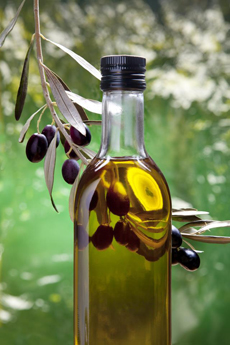
    Olive Oil & Olives
    [5] Even olive oil goes bad. Store it properly (away from light and heat), and only open two bottles at a time: one for cooking, one for dressing or garnish (photo © Flavor Your Life).


    Comments off

    Tea Subscription Or Gift Subscription From In Pursuit Of Tea

    Black Tea In China Cups
    [1] Tea drinkers should enjoy the flavor of fine tea, even if they typically drink supermarket brands (photo © Canstock Photo).

    Cup Of Green Tea
    [2] The subscription contains two black teas, one oolong, one green and one herbal tea (photo © Kanaya Tea).


    [3] The tea bag subscription (photo © In Pursuit Of Tea).


    Celebrate National Tea Day, April 21st, with a tea subscription for yourself, or as a gift subscription, from In Pursuit Of Tea.

    This purveyor of fine teas now offers tea bags, in addition to the loose teas that are preferred by tea connoisseurs.

    While there have long been subscriptions of premium loose teas, here’s the first subscription for tea bags.

    Each month for five months, the recipient will receive a 12-count box of the finest teabags—a different variety each month.

    Each selection highlights the flavors and fragrances that make that type of tea unique.

    The teas include:

  • Assam English Breakfast (black tea)
  • Darjeeling First Flush (black tea)
  • Jade Spring (green tea)
  • Lemon Verbena (herbal tea)
  • Nantou Oolong (ooling* tea)
  •  
    Order your tea subscription here.

    It’s a great gift for Mother’s Day.
     
     
    ABOUT IN PURSUIT OF TEA

    Sebastian Beckwith and friends started In Pursuit of Tea in 1999, to explore small farms in Asia and source the finest teas available.

    The loose leaf teas they continue to source are mostly still picked and processed by hand, drawing on centuries of tradition, and crafted with great care.

    By sourcing directly, rather than using middlemen, In Pursuit Of Teas is able to share exquisite teas to appreciative tea drinkers, with only a minimal markup.
     
     
    MORE ABOUT TEA

  • A Year Of Tea Party Ideas
  • Brewing The Perfect Cup Of Tea
  • Darjeeling Tea
  • The History Of Tea
  • How To Avoid Cloudy Iced Tea
  • How To Brew Iced Tea
  • How To Plan An Iced Tea Party
  • Pairing Tea With Food
  • Tea Facts
  • Tea Glossary: Tea Types & Terminology
  • The First National Tea Day
  •  
     
    ________________

    *While many people think of oolong as a black tea, it is produced through a special process that includes withering the plant under strong sun and oxidation before curling and twisting the leaves. Most oolong teas, especially those of fine quality, are made from unique tea plant cultivars that are exclusively used for oolong.


    Comments off

    Mid-Day Squares, Chocolate Bars That Are Functional Foods

    Mid-Day Squares are functional chocolate bars, and they’re part of a growing movement towards functional foods.

    Functional foods and beverages are everyday foods enhanced (fortified) with supplemental nutrition. The goal is to provide a health benefit beyond normal satiation and nutrition.

    Here’s more about functional foods.

    The Mid-Day Squares line was conceived by Lezlie Karls, a chocolate lover who also loved living a clean lifestyle.

    She searched for “a little something something to get me through the day,” and couldn’t find it in the chocolate category.

    Along with her husband and brother, she set to work creating it herself. The goal:

  • To satisfy afternoon cravings for chocolate.
  • To deliver an extra energy boost to ward off that afternoon crash.
  •  
    “It’s everything a chocolate bar isn’t, and everything a protein bar wishes it were,” says Lezlie.
     
     
    SO: WHAT EXACTLY ARE MID-DAY SQUARES?

    Mid-Day Squares are squares of real chocolate, and are nutritionally enhanced to add superfood nutrition while taking care of your sweet tooth.

    The ingredients provide sustained energy to get you beyond the afternoon slump; to stop mid-day hunger and cravings.

    Each square is vegan and packed with clean plant protein, real chocolate and superfoods.

    A lot of research went in to sourcing cutting edge sweeteners and proteins, to deliver every promise.

    Antioxidant flavanols in the ingredients help the body release endorphins—they are the compounds that make you feel so good after a long run.

    The squares are delicious, naturally sweetened with coconut sugar, maple syrup and yacon syrup. And there is no sugar crash!

    The added nutrition in these functional foods includes:

  • Protein: brown rice powder, maca powder (an energy booster with added health benefits), pumpkin seeds and sacha inchi (a complete plant-based protein).
  • More protein: Depending on the flavor, there are almonds,hazelnuts, peanuts and sesame seeds.
  • Fiber: Dates and nuts.
  •  
    While this sounds like “health food”—and it is—the squares are so much more satisfying than a chocolate bar.

    Each bite tastes “good for you!” in the best of ways. A chocolate lover with a demanding palate will appreciate them.

    And if you haven’t heard of some of the ingredients, check them out to see what they deliver.
     
     
    3 FLAVORS OF MID-DAY SQUARES

  • Almond Fudge: A base of chopped almonds in chocolate has a solid chocolate layer on top.
  • Busta Peanut: The base of ground peanuts under a chocolate top is a better peanut butter cup experience.
  • Fudge Yah: This vegan fudge is 90% chocolate—an intense chocolate experience.
  •  
     
    GET YOUR MID-DAY SQUARES?

    Head to the company website, MidDaySquares.com.


    [1] Open a packet and remove a square (all photos © Mid-Day Squares).


    [2] A tray of Busta Peanut, coming off the line.


    [3] Fudge Yah delivers intense chocolate flavor, with 90% cacao content.


    [4] Buy them in single- or mixed-flavor boxes at MidDaySquares.com.


    Comments off


    © Copyright 2005-2026 Lifestyle Direct, Inc. All rights reserved. All images are copyrighted to their respective owners.