|

[1] Strawberry Shortcake, in the stack cake style. The recipe is below (photo © Go Bold With Butter).
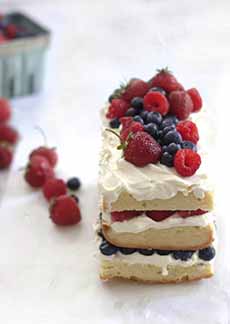
[2] Multiberry shortcake made with pound cake. Here’s the recipe; or, simply buy a pound cake loaf and berries. You’ll need to whip your own cream, but you can substitute mascarpone (photo © The Baker Chick).
[3] Japanese-style Strawberry Shortcakes use a light sponge cake base (photo © RecipeTin Japan).
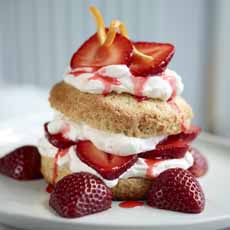
[4] A classic Strawberry Shortcake on a biscuit (a.k.a. shortcake). Here’s the recipe (photo © King Arthur Baking).
[5] Another biscuit Strawberry Shortcake. This one uses orange zest-accented whipped cream. Here’s the recipe (photo © Driscoll’s).
[6] A mixed berry Stack Cake. Here’s the recipe (photo © Driscoll’s).
[7] A yellow layer cake style of Strawberry Shortcake, with elderflower whipped cream filling, frosting, and lots of berry decoration. Here’s the recipe from Fiona Cairns, the baker who created Prince William and Catherine Middleton’s wedding cake (photo © Laura Edwards).
[8] The French version of Strawberry Shortcake is a fraisier, made with layers of génoise sponge, mousseline or diplomat cream, fresh strawberries, and strawberry syrup. The name derives from the French word fraises, strawberries. Here’s the recipe (photo © G Bakes).
[9] A Strawberry Shortcake cupcake: yellow cake, whipped cream, and a fresh strawberry (photo © Yummy Cupcakes).
|
|
Updated August 2026
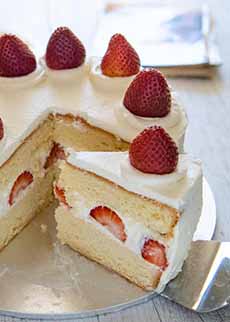
June 14th is National Strawberry Shortcake Day, which can mean anything from a layer cake with strawberries in the filling (photo #3) to a sweetened biscuit topped with whipped cream and berries (photo #4)—the latter of which is the classic American original.
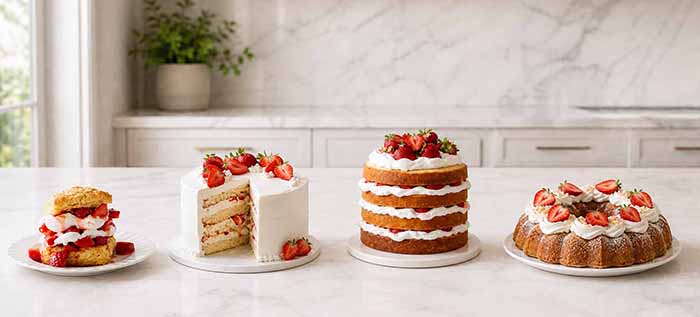
[10] Four classic styles of shortcake: the biscuit, the layer cake, the naked cake, and the Bundt (photo © The Nibble).
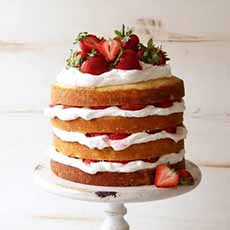
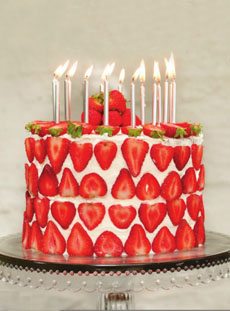
Today, Strawberry Shortcake is reimagined as a stunning stack cake (a.k.a. naked cake), perfect for summer entertaining (photo #1).
Don’t be intimidated by its presentation: this cake is delightfully easy to assemble. You don’t have to be a professional pastry chef to master this recipe—because no complicated frosting skills are required!
You can also substitute or add other berries, stone fruits (apricots, nectarines, peaches), or a seasonal combination.
Below:
Elsewhere on The Nibble:
1. STACK CAKE vs. NAKED CAKE vs. LAYER CAKE
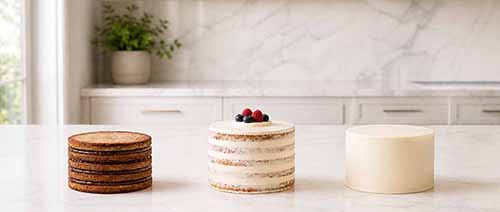
- A stack cake is built with multiple thin layers and flavorful filling between each layer. Traditionally, Appalachian stack cakes were baked in cast-iron skillets (when frontier homes lacked formal ovens and multiple cake pans), but today they are baked in round pans or skillets alike.
- A naked cake is a modern styling trend that leaves the outer cake layers exposed or finished with only a sheer “crumb coat” of frosting, emphasizing the visible stacked layers and lush fillings.
- A layer cake consists of two or more baked cake layers with filling between them, fully frosted over the top and exterior sides.
[11] A stack cake has no outer frosting, a naked cake has a semi-exposed finish, and a classic layer cake is fully frosted (photo © The Nibble).
2. RECIPE: STRAWBERRY SHORTCAKE STACK CAKE
Thanks to Go Bold With Butter for this delicious recipe.
Prep time is is 30 minutes and cook time is 30 minutes.
Pairing suggestion: Serve this dessert with sparkling rosé. The bright red-fruit notes in sparkling rosé beautifully echo the fresh, macerated strawberries.
Ingredients For 12 Servings
For The Cake
- 1 cup (2 sticks) unsalted butter, at room temperature
- 2 cups granulated sugar
- 3 cups cake flour, sifted
- 1 tablespoon baking powder
- 1/2 teaspoon salt
- 1-1/4 cups milk
- 4 large eggs
- 2 teaspoons vanilla extract
For The Strawberries
- 1 quart fresh strawberries, sliced
- 2 tablespoons granulated sugar
- 1 teaspoon vanilla extract
For The Whipped Cream
- 2 cups heavy whipping cream
- 1/4 cup granulated sugar
- 1 teaspoon vanilla extract
Preparation
1. PREHEAT the oven to 350°F. Line two 8- or 9-inch round cake pans with parchment paper. Butter and flour the parchment paper to keep the cakes from sticking.
2. BEAT the butter and sugar on high speed in the bowl of an electric mixer until pale and creamy, about 3–4 minutes, scraping down the sides of the bowl as necessary.
3. COMBINE the cake flour, baking powder, and salt in a medium bowl. In a separate bowl, whisk together the milk, eggs, and vanilla extract. Add the dry ingredients to the creamed butter in 3 additions, alternating with the milk mixture and ending with the flour. Scrape down the bowl between additions.
4. DIVIDE the batter evenly between the two prepared pans and bake until the tops are light golden and spring back when touched, about 30–35 minutes. Let cool in the pans for 10 minutes, then transfer to a wire rack to cool completely. Wrap the layers in plastic wrap and chill in the refrigerator for at least 1 hour (and up to 2 days).
When ready to assemble and serve:
5. PREPARE the strawberries by tossing the sliced fruit, sugar, and vanilla together in a bowl. Let macerate at room temperature for 20 minutes.
6. PREPARE the whipped cream by beating the heavy cream, sugar, and vanilla to medium-firm peaks using an electric mixer.
7. SPLIT the chilled cake layers horizontally in half with a serrated knife to yield 4 even layers.
8. ASSEMBLE: Place the bottom cake layer on a cake stand or serving plate. Spread with 1 cup of whipped cream and one-quarter of the macerated strawberries. Repeat with the remaining layers, cream, and fruit. Serve immediately.
3. STRAWBERRY SHORTCAKE HISTORY
While shortcakes can be made with various seasonal fruits, strawberry remains the quintessential American standard. Sliced strawberries are tossed with sugar and vanilla to macerate, releasing their natural juices.
In traditional American preparation, a rich, sweetened biscuit—the original shortcake—is split in half. The bottom half is piled with macerated strawberries and heavy cream, the top biscuit is placed on top, and additional fruit and syrup are spooned over the summit.
In British baking terminology, a “short cake” or shortbread refers to a crisp, crumbly baked good enriched with fat. The term “short” originated in the 15th century as a culinary description for a crumbly, tender texture produced by shortening gluten strands. (The word “shortening” itself appeared in print by 1733).
The earliest known printed recipe for “short cake” appeared in the Elizabethan cookbook The Good Huswifes Handmaid for Cookerie in her Kitchen (London, 1588) [source].
By the mid-19th century, strawberry shortcake was an established fruit-and-biscuit dessert served with rich liquid cream. Whipped cream gained widespread popularity later, with some culinary historians noting French pastry chefs formally pairing stabilized whipped cream with shortcake around 1910 [source].
The American Evolution
In the 19th century, early American shortcake recipes began appearing across regional publications:
- In Holidays Abroad by Caroline Kirkland (New York, 1849), she writes of a “gâteau aux fraises—which proved to be just what is called at the West a strawberry shortcake.”
- The October 1857 issue of The American Cotton Planter and the Soil of the South described it as a seasonal delight: “Strawberry shortcake is a luxury. Make a large, thick shortcake, split it twice through, and spread with butter and a layer of fresh strawberries and sugar, put the parts together again, and serve hot.” [source]
|
Cookbook author Eliza Leslie (1787–1858) published an early unleavened precursor in The Lady’s Receipt-Book (Philadelphia, 1847). With the widespread adoption of chemical leaveners (pearlash/potash, followed by baking soda and baking powder), American shortcakes evolved into the light, tender biscuits and sponge bases we enjoy today.
Cream Arrives, But It’s Not Yet Whipped
In the June 1862 issue of The Genesee Farmer (Rochester, New York), a soda-biscuit shortcake was described: “The cake should be made like soda biscuit, rather richer, but very light…split it in three parts, and spread them with butter very thinly…Spread a thick layer of [strawberries and sugar] upon one of the slices of the cake, and pour over them the richest cream that you can procure; then add another layer of the shortcake and another of strawberries, as before.” [source]
Jane Cunningham Croly’s Jennie June’s American Cookery Book (New York, 1866) published a similar layered recipe, noting: “This is the method of making at the finest city restaurants.” [Ibid.]
Following the completion of the First Transcontinental Railroad in 1869, iced rail cars allowed California produce to travel nationwide, extending fresh strawberry seasons and driving nationwide shortcake craze.
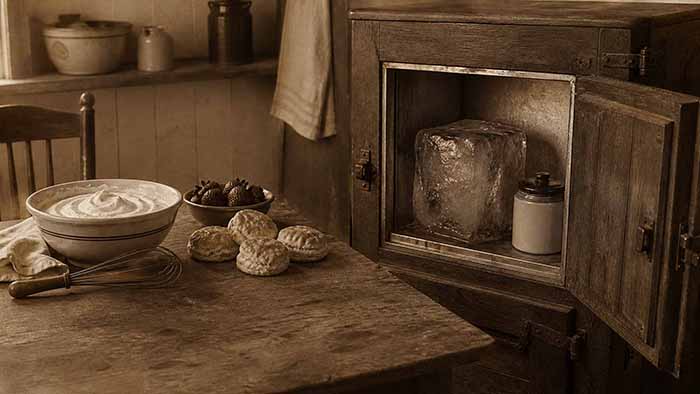
[12] Iceboxes made cold storage accessible to everyday households, allowing heavy cream to be chilled and whipped on demand (photo © The Nibble).
Finally: Whipped Cream!
By the late 1800s, wooden, zinc-lined iceboxes became standard fixtures in American homes. Keeping fresh dairy well chilled allowed home bakers to whip heavy cream with ease, cementing whipped cream as an indispensable shortcake topping.
Strawberries Become A Year-Round Treat
Following agricultural advancements after World War II, dedicated commercial breeding produced strawberry cultivars suited to varying microclimates and soils. California and Florida now lead domestic production, ensuring fresh strawberries are available in grocery stores 365 days a year.
Today, the French counterpart remains the elegant fraisier (photo #8), while American variations span from classic drop biscuits to cupcakes (photo #9), trifles, and ice cream cakes.
[13] A recap of the strawberry shortcake variations shown at the top—classic split biscuit, frosted layer cake, naked stack cake, and glazed Bundt. Which would you like to eat first (photo © The Nibble)?
4. MORE STRAWBERRY SHORTCAKE RECIPES
CHECK OUT WHAT’S HAPPENING ON OUR HOME PAGE, THENIBBLE.COM.
|