THE NIBBLE BLOG: Products, Recipes & Trends In Specialty Foods


Also visit our main website, TheNibble.com.

TOP PICK OF THE WEEK: Wild Ophelia Chocolate

Wild Ophelia Cold Brew Chocolate
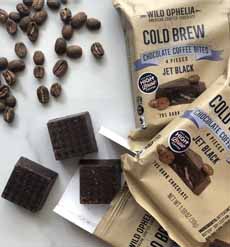
[1] Like your coffee black? Wild Ophelia’s Jet Black Coffee Bites have a center of black coffee and liquid chocolate (photo courtesy Cold Brew Chick).

Wild Ophelia Cold Brew Chocolate
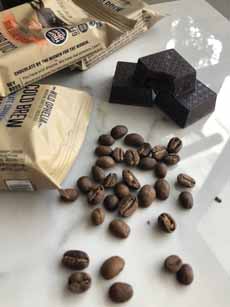
Wild Ophelia’s Sea Salt Caramel Latte Cold Brew Bites. Have some with a caramel latte (photo courtesy Cold Brew Chick).


[3] Great for gifting (photo courtesy Cold Brew Chick).

Wild Ophelia Cold Brew Chocolate
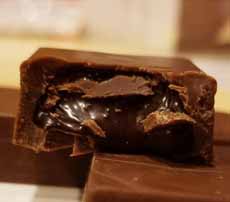
[4] Take a bite, and the liquid center oozes out (photo courtesy Edel Alon).

  If a combination of chocolate and coffee rings your bell, we have a winner for you: Wild Ophelia Cold Brew Bites, a delightful combination of chocolate and cold brew coffee.

Wild Ophelia is a Fair Trade, non-GMO chocolate line that is a sister brand to Vosges Haut-Chocolat, the innovative and adventurous chocolatier that was first to combines global flavors with fine chocolate.

The Wild Ophelia brand was created by Vosges founder Katrina Markoff, as part of her mission to assist American high school and college girls to pursue their entrepreneurial dreams in food.

You can read about the program here, but our focus today is the chocolate, a portion of sales of which are contributed to the Wild Ophelia Accelerator Program.

There are three types of chocolate: coffee bites, bars, and peanut butter cups. For today we tasted the Cold Brew [coffee] Bites, and they have us salivating for the rest.

The Cold Brew Bites use High Brew Coffee’s Fair Trade coffee, pairing brews with chocolate flavors.

The four flavors of Cold Brew Bites include:

  • Jet Black, a center of bold cold brew coffee and soft chocolate inside a 70% dark chocolate shell (photo #1).
  • Mexican Vanilla, a center of coffee laced with Mexican vanilla, combined with soft chocolate inside a 70% dark chocolate shell.
  • Sea Salt Caramel Latte, cold brew coffee and creamy salted caramel inside a 41% milk chocolate shell, topped with Mediterranean sea salt (photo #2).
  • White Mocha, a chocolatey cold brew inside surround by a white chocolate shell.
  •  
    The bites are one-inch squares (photo #1), four to a package. Put one in your mouth and let the hard chocolate dissolve; or bite down and release the liquid center of coffee and chocolate (photo #4).

    All are excellent, and just one square turns a coffee break or after-dinner coffee into a real treat. Ditto for iced coffee.

    Get yours at WildOphelia.com.
     
    The socially-conscious line is made with 100% renewable energy and packaged on 100% recycled board.
     
     
    MORE WILD OPHELIA CHOCOLATE

    We haven’t yet tasted them, but you may also want to include some of these in your order:
     
    Wild Ophelia Chocolate Bars

  • Almond Sea Salt
  • Barbeque Potato Chip
  • Caramelized Crispy Rice
  • Beef Jerky
  • Peanut Butter & Banana
  •  
    Wild Ophelia Peanut Butter Cups

  • Caramelized Banana
  • Maine Sea Salt
  • Smoked Salt
  • Toasted Coconut
  •  
    Father’s Day is coming. We like this line for gifting to dads who are fans of chocolate and coffee (the Cold Brew Bites), chocolate and peanut butter (the PB cups), or chocolate and adventure (the chocolate bars).

    We’ve also added them to our Party Favors and Stocking Stuffers lists.


    Comments off

    TIP OF THE DAY: Chef’s Tips For Cooking Chicken

    You may be putting chicken on the grill this weekend.

    For advice, we spoke with Claudia Sidoti, Head Chef and Head Recipe Developer at HelloFresh, a popular meal ingredients delivery service that makes it easier to cook delicious, nutritious meals (a gift for Father’s Day?).

    Claudia reminds us that dark meat chicken is “so much better on the grill than white meat. It stays moist and the skin gets nice and crispy.”

    To save money but still keep guests happy, she recommends BBQ chicken wings and drumsticks.

    “They key to perfecting dark meat,” she says, “is a good marinade and setting up the grill for direct and indirect heat, so you can get the meat cooked through without burning the skin.”

    For cooking indoors, here are Claudia’s chicken-cooking tips.
     
     
    HOW TO COOK A WHOLE CHICKEN

  • Pat dry. Dry = crispy. Start with a 4-5 pound broiling or frying chicken. Dry the chicken well with paper towels, inside and out. For best results, open the package in the morning or even the night before, and leave it, uncovered, on a rack in a roasting pan in the fridge.
  • Flavor the cavity. To add some extra moisture and flavor, cut a lemon, onion, or even an apple in chunks and place them in the cavity, along with a sprig or two of fresh herbs or bay leaves. As the chicken roasts, these aromatics will release moisture and flavor. Just remember to remove them before carving.
  • Truss and tuck. Truss (tie) the legs and tuck in the wings. Not only does this make for a prettier presentation, but it also helps keep the breasts from drying out while cooking.
  • Should you baste? There are some people who love to dot their chicken with butter or brush it with oil before cooking, then baste while it’s roasting. However, if you like crispy skin crispy, both of these reduce the crispiness factor. Also, every time you open the oven, the temperature drops, so it’s best to keep the chicken at an even temperature and let the oven do the work.
  • Slow and steady. Roast the chicken at 350°F all the way. On average, you’ll want to cook the chicken about 15 -20 minutes per pound. This keeps the white meat moist and ensures that the dark meat is cooked through.
  •  
     
    HOW TO COOK A CHICKEN BREASTS

  • Smaller is better. Breasts of 6-7 ounces apiece is best for even cooking. If you have extra large breasts (between 8-12 ounces), cut them in half horizontally for more even cooking; pound them out for cutlets; or slice and dice them into small chunks for stir-fries.
  • Pat dry. By now, you know that the best-results tip starts with patting the chicken dry, inside and out. Then, season well with salt and pepper.
  • Shake off the marinade. If you’ve marinated the chicken, shake it off so that the chicken is as dry as possible. Most marinades have salt, so you can skip salting if you’re starting with marinated chicken breast.
  • Don’t overcrowd the pan. Use a wide frying/sauté pan that helps keep the splattering* to a minimum (a nonstick pan is not essential). If you crowd the pan, the breasts won’t brown as nicely and leave enough room for turning. Also consider if you’re going to be adding other ingredients like veggies or pasta.
  •  


    BBQ Chicken Wings
    [1] Dark meat chicken is better for grilling. You’ll have much moister chicken (photo courtesy Sun Basket).

    Whole Raw Chicken
    [2] Ready, set, roast. All photos courtesy Good Eggs.

    Raw Chicken Breasts
    [3] While your eye may be drawn to the largest cuts, smaller breasts cook more evenly.

    Chicken Thighs
    [4] Patting the chicken dry with paper towels limits the spatter.

    HOW TO COOK BONE-IN CHICKEN PART & BONELESS CHICKEN THIGHS

  • Pat dry. Just like the whole chicken and breasts, you want to pat the dark meat pieces dry with a paper towel. This helps to avoid splatter and increases crispness.
  • Render the fat. Melting and clarifying animal fat (rendering) helps to tenderize the connective tissues. Roasting at high heat or slow braising are the best techniques for this. It’s best to sear the pieces in a hot pan first, to render excess fat and add flavor. Next, transfer to an oven to finish cooking.
  • If you prefer to continue to cook in the pan, add the sauce/wine/vegetables and simmer.
  • Here’s how to render raw chicken fat.)
  • ________________

    *Fun With English: “Splatter” refers to action that happens to a liquid, so that drops fly out and strike another surface. “Spatter” refers to the drops that have landed on the surface.
      

    Comments off

    TIP OF THE DAY: Flaky Salt (Or Flake Salt)

    Cypress Flake Salt
    [1] Cypress flake salt from the Mediterranean (photo courtesy SaltWorks).

    Angsley Sea Salt
    Angsley salt from the sea around Wales (photo by River Soma | THE NIBBLE).

    Maldon Salt
    [3] Maldon River salt from England. It forms unique pyramid-shape crystals (photo courtesy Stephen Upson).

    Kosher Salt
    [4] Kosher salt, from underground mines (photo courtesy WiseGeek).

      Do you have a container of flaky salt at home? If you cook, you should.

    In the world of culinary salts, flake/flaky salts are coarse-grained salts with large, visible grains (the flakes).

    It’s a favorite for what chefs, who use it as a finishing salt (after the food is cooked or otherwise prepared), for what they call a pop of flavor and crunch.
     
     
    SEA SALT VS. MINED SALT

    Salt is harvested from either sea water or rock-salt deposits in salt mines, which aeons ago were underground seas.

    Sea Salt

    Sea salts are produced over the world, and flake salts—flat flakes—are a subset. While fewer areas produce them, they are evaporated from Angsley (Wales—photo #2) and Maldon (England—photo #3) to Cyprus (photo #1), France, Australia and New Zealand.

  • To produce salt from sea water, the water is evaporated by the sun and wind from surface pools: barriers or containers that are constructed to contain the water. The evaporated salt crystals are then scraped from the top.
  • The shape of sea salt crystals is determined by the sun and the wind.
  • Not all coarse salts are flake salts. Some can evaporate into lumps or other shapes.
  • In the case of Maldon salt from England (photo #3), the crystals form unique pyramids instead of flat flakes.
  • In Australia’s Murray-Darling River Basin, the flake salt is an alluring pink color, thanks to carotene, a red pigment that here is secreted by algae in the water.
  • Coarse salts are processed into fine salts.
  •  
    Mined Salt/Land Salt

  • With salt mines, salt can be mined directly, or water can be pumped into the underground rock deposits and then evaporated. The salt crystals can then be processed in many different ways, including into flat flakes.
  • Mined salt can optionally be treated with anti-caking additives and/or iodine.
  • Kosher salt is a mined salt. It is coarse grained like flake salt, although it isn’t a flat flake. However, some chefs use it as such, as a finishing salt.
  •  
    Whether a sea salt or a land salt, the crunchy flakes dissolves quickly atop foods, resulting in a “pop” of flavor.
     
     
    HOW TO USE FLAKY SALT

  • Meat: Chefs particularly like to sprinkle it atop grilled or seared meats.
  • Tomatoes: Most people salt tomatoes. Flake salt makes them taste even better.
  • Chocolate bars and caranels: Salted chocolate bars typically use flake salts like sel gris or Fleur de Sel (a sel gris—gray salt—from a particular are of the French sea coast).
  • Chocolate baking: Use flaky salt to garnish any chocolate dessert: brownies, cookies, fudge, icing, truffles especially. The sweet-salty dynamic continues to grow in popularity.
  •  
    KOSHER SALT

    Kosher salt (photo #4) is a coarse-grained salt made from the same mined salt as table salt. It’s evaporated in a way to make the grains larger. As with sea salt, the evaporation process determines the salt’s final shape. But with mind salt, the company, not Mother Nature, controls the evaporation process.

    The large grain size makes kosher salt popular for sprinkling on top of meat, to deliver that pop and crunch.

    Another benefit: Kosher salt dissolves quickly, making it a popular all-purpose cooking salt—and it’s far less expensive than sea salt.

    Most brands are flat grains, but some brands evaporate their kosher salt into the elegant pyramidal in structure, emulating the famed Maldon salt.
     
    Substituting Kosher Salt

    You can’t simply substitute one type of salt for another: Measurements will be different between kosher salt, table salt and sea salt.

    That’s because the different size of the grains make different salts more or less “salty.”

    Here is a conversion chart from Morton.
     
    Kosher Salt Trivia

    Any salt can be kosher if it’s produced under kosher supervision. But that’s not how kosher salt got its name.

    Coarse salt’s original purpose was to kosher meat, which means to remove the blood from the butchered meat, a requirement of kosher law.

    Wordsmiths may wonder why its name is not koshering salt. Very astute!

    Way back, some American company labeled the boxes “kosher salt” instead of koshering salt. The shorter name stuck.
     
     
    CHECK OUT THE DIFFERENT TYPES OF SALT

    Our Salt Glossary has a complete education in the many types of salt.


    Comments off


    © Copyright 2005-2026 Lifestyle Direct, Inc. All rights reserved. All images are copyrighted to their respective owners.