THE NIBBLE BLOG: Products, Recipes & Trends In Specialty Foods


Also visit our main website, TheNibble.com.

Recipes: Blue Cocktails For A Chanukah Party

We’ve never heard of a Chanukah cocktail party, so we decided to throw one this year. The menu:

  • Wine: red, white, sparkling
  • Beer: Chanukah beer from Schmaltz Brewing
  • Cocktails: blue cocktails and cocktails (recipes below)
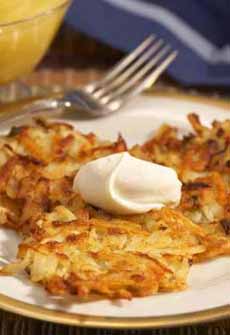
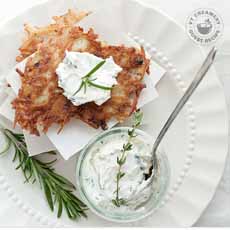
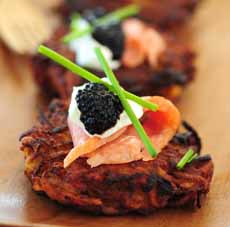
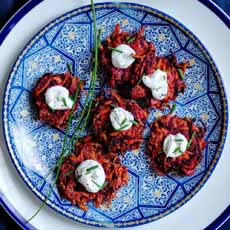
  • Nibbles: brisket sliders, chopped liver with bagel chips, mini bagels with cream cheese and smoked salmon, mini potato latkes with crème fraîche (substitute sour cream or applesauce)
  • Sweets: donut holes (fried foods like latkes and the pillowy jelly donuts called sufganiyot, are traditional Chanukah fare, commemorating the miracle of the oil, where one day’s oil lasted for eight days), noodle kugel with dried fruits
  •  
     
    CHANUKAH COCKTAILS

    All of these are simple: no complex or time-consuming mixology.

    You can make cocktails blue with:

  • Blue Curaçao (an orange liqueur)
  • Blue food color
  • Blueberry juice
  • Blue-colored simple syrup (recipe)
  • Blue flower extract
     
     
    RECIPE #1: BLUE MARTINI OR BLUEBERRY MARTINI

    For a standard Martini, add the food color to the bottle of vodka or gin.

    For a fruit “Martini,” mix with blueberry juice. You can also use citrus-infused vodka; but note that these sweet drinks are not Martinis. A Martini is a savory drink made with vodka or gin plus vermouth (Martini history).

    For a darker blue, add a drop of blue food color. You can add more curaçao, but that adds more sweet orange flavor.
     
     
    RECIPE #2: BLUE SPARKLER

    Orange-flavored vodka plus curaçao make this a nicely orange sparkler.

    Ingredients For 2 Drinks

  • 2 ounces orange infused vodka
  • 2 ounces blue Curaçao
  • Sparkling wine
  • Rim: blue or white sparkling sugar
  •  
    Preparation

    1. RIM the champagne flutes with sparkling sugar. Add 1 ounce each orange vodka and blue Curaçao into each.

    2. TOP off with sparkling wine. Stirring isn’t necessary but if you want to blend, use one brief stir so the bubbles don’t pop.
     
     
    RECIPE #3: CHANUKAH CANDLE

    This is a variation of the Blue Sparkler, above, with a different garnish. Orange or gold sparkling sugar puts the “flame” on the “candle.”

    Ingredients Per Cocktail

  • 1 part blue Curaçao
  • 1 part orange-flavored vodka (or plain vodka)
  • 3 parts sparkling wine
  • Rim: orange or gold sparkling sugar
  •  
    Preparation

    1. RIM a champagne flute with honey and orange sugar.

    2. ADD the curaçao and vodka to a champagne flute, and top with sparkling wine.

    NOTE: Sparkling sugar is available online, at baking supply stores, and at craft stores like Michaels or Hobby Lobby.
     
     
    RECIPE #4: BLUE STAR

    Ingredients For 2 Drinks

  • Ice cubes
  • 1/4 cup blue Curaçao
  • 1/2 cup freshly-squeezed grapefruit juice
  • Sparkling wine (to top off)
  • Garnish: 2 slices star fruit*
  •  
    Preparation

    1. PLACE the ice cubes in a cocktail shaker. Add the curaçao and grapefruit juice and shake well.

    2. STRAIN into a cocktail glass and top with sparkling wine. Garnish with the star fruit.


    Blue Martini
    [1] Blue Martini (photo © SKYY Vodka).

    Blue Chanukah Cocktail
    [2] Blue Sparkler (photo courtesy Announcing It, which specializes in online invitations).

    Chanukah Champagne Cocktail
    [3] The Chanukah Candle, a sparkler with a bit of honey and gold or orange sparkling sugar (photo © Living On Cloud Nine).

    Blue Chanukah Cocktail Recipes
    [4] Blue Star, with a slice of starfruit (photo © Recipe Plus [now closed]).


    [5b] Blue Curaçao, an orange liqueur tinted blue for dramatic cocktails. There’s more about it below.

     
    ________________

    *The Star Of David is a six-point star, but we only have what nature provides: the five-point star of the carambola (star fruit).


    Blue Margarita
    [5] Mazel Tov Margarita (photo and recipe © Host The Toast).

    Blue Chanukah Cocktail
    [6] Turn a White Russian into a Blue Russian by substituting blue Curaçao for the coffee liqueur (recipe and photo courtesy Mix That Drink).

    Blue Soft Drink
    [7] Put a sparkling sugar or coconut rim on a blue soft drink (photo © Garlic My Soul).


    RECIPE #5: MAZEL TOV MARGARITA

    Notes from Host The Toast, creator of the recipe:

    The classic Margarita is made with orange liqueur, originally Cointreau but often the less expensive generic orange liqueur, triple sec.

    Curaçao is another orange liqueur, from the Caribbean. It is a clear liqueur; but years ago, blue color was added to create blue Curaçao for more festive cocktails.

    Per Host The Toast: “We find the flavor of the blue a little more bitter, so we’ve balanced the drink by using half blue Curaçao and half triple sec.” Try it both ways, to see which you prefer.

    Here’s how the different types of orange liqueur differ; from curaçao and triple sec, which are generic terms, to brands like Cointreau, Grand Marnier and Gran Gala.
     
    Ingredients Per Drink

  • Coarse salt (e.g., sea salt or kosher salt)
  • 2 ounces tequila
  • 1 ounce blue Curaçao
  • 1 ounce triple sec
  • 1 ounce lime juice
  • 1 ounce simple syrup (recipe)
  •  
    Preparation

    1. CREATE a salt rim on a margarita glass, mason jar or other glass: Rub the rim with a cut lime and dip and twist the glass in a shallow dish of coarse salt until the rim is coated. Place the glass in the freezer for a few minutes to chill.

    2. COMBINE the drink ingredients in a cocktail shaker filled with ice and shake well. Pour into the chilled glass and garnish with a wedge of lime.
     
     
    RECIPE #6: BLUE RUSSIAN

    Ingredients Per Drink

  • 2 ounces vodka
  • 2 ounces blue Curaçao
  • 1 ounce light or heavy cream
  •  
    Preparation

    1. ADD two or three crushed ice cubes of ice to a martini glass or rocks glass.

    2. ADD the curaçao, followed by the vodka. Top off with the cream.


    MORE FESTIVE GARNISHES: GLASS RIMMERS

  • For sweet drinks: sparkling sugar, shredded coconut, silver or gold dragees, blue and/or white sprinkles
  • For savory drinks: coarse sea salt or kosher salt, Margarita salt
  •  
    And how about:

  • Blue ice cubes, colored with food color
  •  
     
    BLUE MOCKTAILS

    Mix a clear soft drink with food color or blueberry juice:

  • 7 Up, Sprite, etc.
  • Plain or flavored club soda
  • White cranberry juice
  •  
     
    WHAT IS BLUE CURAÇAO

    Curaçao is an orange liqueur made from the dried peels of the laraha (LA-ra-ha) citrus fruit, grown on the island of Curaçao in the Netherlands Antilles (southeast of the Virgin Islands in the Caribbean).

    The laraha is a de-evolved descendant of the Valencia orange, which was brought over from Spain in 1527. It did not thrive in the Southern Caribbean climate. The oranges that the trees produced were small, fibrous, bitter and inedible. The trees were abandoned, and the citrus fruit they produced evolved from a bright orange color into the green laraha.

    When life gives you bitter fruit, distill it! It turned out that while the flesh of the laraha was inedible, the dried peel remained as aromatic and pleasing as its cultivated forebear. Experimentation led to the distillation of Curaçao liqueur from the peel.

    The distilled liqueur is clear. Some brands are colored blue or bright orange to create color in cocktails. The color adds no flavor.


    CHECK OUT WHAT’S HAPPENING ON OUR HOME PAGE, THENIBBLE.COM.


    Comments off

    TIP OF THE DAY: Challah Bread Pudding & Different Types Of Challah

    Challah bread pudding, like Challah French Toast, should not be limited to Chanukah. In terms of egginess, it’s the closest thing to brioche—and much less expensive.

    With Chanukah starting in two weeks (this year, it coincides with Christmas Eve), you try a batch this weekend; then adjust it as you like over the eight days of Chanukah. Serve it for breakfast or dessert.

    What other holiday gives you eight days of French toast and bread pudding?
     
     
    DIFFERENT CHALLAH BREAD PUDDING RECIPES

  • Pumpkin Bread Pudding With Bourbon Sauce
  • Savory Bread Pudding
  •  
     
    RECIPE: CHALLAH BREAD PUDDING

    This recipe is ready in 40 minutes.
     
    Ingredients For 6 To 8 Servings

  • 1 loaf challah, cut into 3/4 inch cubes
  • 2/3 cups raisins (substitute dried cherries or cranberries, or a blend)
  • 1/3 cup bourbon
  • 2 tablespoons brown sugar
  • 3/4 cup plus 1 tablespoon granulated sugar
  • 9 large egg yolks
  • 4 teaspoons vanilla
  • 1/4 teaspoon salt
  • 2-1/2 cups heavy cream
  • 2-1/2 cups whole milk
  • 2 tablespoons butter, melted
  •  
    Favorite Variations

  • Chocolate chunks and sliced bananas
  • Crème fraîche garnish
  • Fresh blueberries in season
  • Sliced or cubed apples with cinnamon, or with shredded Gruyère or Cheddar
  • White chocolate
  •  
    Preparation

    1. PREHEAT the oven to 325°F. Spread the challah cubes on a baking sheet and bake for 15 minutes, tossing occasionally until the cubes are dry but not brown. Remove from the oven and cool for 15 minutes.

    2. ADD the raisins and bourbon to a small bowl. Microwave for 30 seconds; set aside.

    3. COMBINE the brown sugar and 1 tablespoon of the granulated sugar in another small bowl. Set aside.

    4. BEAT the egg yolks, 3/4 cup sugar, vanilla and salt with electric beaters or a whisk. Beat/whisk in the cream and milk until combined. Add the raisins and bourbon.

    5. RESERVER 2 cups of the prettier challah cubes for the top layer. Stir the remaining cubes into the egg yolk mixture and pour into a 13″ x 9″ baking dish. Set aside for 30 minutes so the bread is fully saturated by the custard.

    6. DIP the remaining challah cubes into the melted butter and place evenly, butter side up, on the top of the pan. Sprinkle the brown sugar mixture on top.

    7. BAKE for 50-55 minutes until custard is set (pressing the center of the dish does not release any liquid). Cool for 45 minutes and serve warm.
     

    CHALLAH HISTORY

    There are two words for bread in Hebrew: lechem, the everyday bread, and challah, the sabbath bread. Jewish custom requires that Sabbath and holiday meals begin with challah.

    Challah is a braided, honey-sweetened egg bread made from wheat flour and topped with an egg white wash.

    The word refers to a tithe of bread that was given to the priests, who had no income. A portion of the dough was sanctified and tithed, the remainder was given over for ordinary consumption.

    In biblical times, the Sabbath challah was probably more like present-day pita. Through the ages and as Jews moved to different lands, recipes evolved and the loaves varied. For Rosh Hashanah, the Jewish new year, the loaf was formed in a circle, to signify the desire for a long life [source: Food Timeline].
     
     
    TYPES OF CHALLAH: MODERN CHALLAH

    Traditional challah is made from wheat flour, although some modern bakers make it from spelt, whole wheat, gluten-free flour, even sprouted wheat.

    They can be plain or mixed with raisins and other dried fruit. On the savory side, onions and herbs can be added to the dough; sesame or poppy seeds garnish the top of the loaf.

    The shape can be oblong or round, depending on local traditions. Another variation is the number of braids: traditionally three or four braids; more recently two-braid loaves have appeared.

      Challah Bread Pudding
    [1] The bread pudding from today’s recipe (photo #1, #3 and #5 © Good Eggs).

    Braided Challah
    [2] Braided challah (photo © Hewn Bakery | Chicago).

    Braided Challah With Poppy Seeds
    [3] Braided challah with poppy seeds.

    Turban Challah Sephardic
    [4] A Sephardic turban challah with honey (here’s the recipe; photo © National Honey Board).

    Raisin Challah
    [5] A round with raisins (photo © Good Eggs).

    Chocolate Challah
    [6] Irresistible: chocolate-orange challah from Yin and Yolk.


    In more recent times, pull-apart loaves and challah rolls have become popular. During the holiday season, some bakers and home cooks make Chanukah loaves are shaped like menorahs.

    Today, people of all faiths enjoy challah, at any time of the day.

    One of our team brought in a challah made with pumpkin seeds and chia for our afternoon tea. And for breakfast and snacking, check out this gorgeous chocolate-orange challah.

    Go seasonal with this recipe for challah made with butternut squash and sage.

    Check out this rainbow challah, made from six braids, each a different color. It’s a dazzler.

    And here’s how to turn a challah into a special centerpiece for the breakfast table or a buffet.

    So much challah, so little time. We’re off to buy ingredients for Yin and Yolk’s stunning chocolate orange challah. Note to NIBBLE team: Don’t expect there to be any left over on Monday.


    Comments off

    FOOD FUN: Green Bean Wreath

    Deck the halls with…green beans!

    You can serve this green bean wreath in several ways:

  • Crudités, with raw or blanched fresh green beans and a bowl of dip in the center.
  • Salad, raw or blanched, tossed in vinaigrette.
  • Steamed, and tossed with salted butter and fresh herbs (basil, dill, parsley).
  •  
    RECIPE: GREEN BEAN SALAD

    Choose the smaller beans: They’ll be sweeter and more tender. Long, thicker beans have been left on the vine too long, and can be tough and tasteless.

    Fresh green beans should be tender enough to eat raw, and should have a crisp snap when you break them apart. If they’re rubbery and bend, pass them by.

    Depending on the other sides, plan for 4-8 servings per pound of beans.

    Ingredients

  • Green beans, trimmed and blanched or lightly steamed
  • Red onion, small dice
  • Dijon vinaigrette
  • Grape or cherry tomatoes, halved (red or mixed colors)
  • Fresh basil leaves, shredded (chiffonade) or other herb, chopped
  • Optional: anchovies, halved in a mustard vinaigrette, garnished with quartered hard-boiled eggs.
  • Garnish: large red bell peppers for the “bow”
  •  
    For The Vinaigrette

  • Olive oil and wine vinegar in a 3:1 proportion
  • 1 teaspoon Dijon mustard
  • Salt and pepper to taste
  •   Green Bean Wreath

    Green Bean Salad
    [1] Green bean and bell peppers crudités wreath from Between The Bread | NYC. [2] Re-arrange this green bean salad into a salad wreath (photo courtesy Keys To The Cucina).

     
    Preparation

    1. MAKE the vinaigrette. Toss the green beans and onion with the vinaigrette and refrigerate in a covered bowl to let the flavors meld.

    2. CUT the bell peppers into even strips. Wrap and refrigerate until ready to serve. Then…

    3. DRAIN and mound the beans onto a serving plate in the shape of a wreath. Decorate the wreath with the tomatoes and anchovies and sprinkle with the herbs. Arrange the “bow” at the top or bottom.
      

    Comments off

    TIP OF THE DAY: 12 Ways To Serve Christmas Hot Chocolate

    Cocoa With Gingerbread Man
    Cocoa Mini Marshmallows

    Snowman Marshmallows

    [1] Topped with whipped cream that anchors a gingerbread man; photo courtesy The Hopeless Housewife. [2] A pile of mini marshmallow “snowballs” with a caramel drizzle; photo courtesy Damn Delicious. [3] Snowman marshmallows; photo courtesy Williams-Sonoma.


    There are special ways to serve hot chocolate during the holiday season. Some of the ones we’ve enjoyed:

  • In a special Christmas mug: green and red pattern, Santa or reindeer motif, etc.
  • With a candy cane, candy cane stirring stick or candy cane whipped cream.
  • Garnished with whipped cream and red and green sprinkles or holiday spices: cardamom, cinnamon, nutmeg, star anise.
  • Regular hot chocolate with a peppermint marshmallow.
  • Peppermint hot chocolate with a regular marshmallow.
  • Regular hot chocolate with peppermint schnapps (or cherry, chocolate, coffee, orange or raspberry liqueur).
  • With Christmas cookies, gingerbread or peppermint bark.
  • With a cup rim of crushed candy canes.
  •  
    SOME EVEN MORE SPECIAL CHRISTMAS COCOA

  • With candy cane ice cream instead of whipped cream.
  • Mint white hot chocolate: Make white hot chocolate and tint it green.
  • Holiday-themed to hand-melt in hot milk.
  • A tiny gingerbread house cookie garnish (created by Megan Reardon; get the recipe at NotMartha.org), or a little gingerbread man whose arm hangs over the cup rim.
  •  
    Plus: Holiday Marshmallows

    Take a look and you’ll find holiday marshmallows shaped as evergreen trees, snowflakes, gingerbread men and so forth; or decorated in red and green. At Williams-Sonoma alone, we found:

  • Rudolph the Reindeer Marshmallows
  • Snowflake Marshmallows
  • Snowman Marshmallows
  •  
     
    THE DIFFERENCE BETWEEN COCOA & HOT CHOCOLATE

    THE DIFFERENCE BETWEEN SCHNAPPS, EAU DE VIE, LIQUEUR & CORDIAL

    NATURAL OR DUTCHED COCOA: DOES IT MAKE A DIFFERENCE?

    CHOCOLATE TRIVIA

    The words cacao and chocolate come from our ancient neighbors in Central America, who first sampled its joys. Cacao trees, which originated in the Amazon region, grew wild in the rainforests of ancient Mexico. They were cultivated by the native Olmecs and the Mayas who followed them.

    While the sweet white fruit of the cacao pod was initially eaten, Amazonian natives ultimately found that grinding and mixing the seeds with water produced an even greater treat: the original cocoa beverage.

    Chocolate has been a beverage for most of its history as a food. We know that more than 2500 years the Maya were making the cacao beverage; and perhaps as early as 1200 B.C.E. the Olmec were doing so.

     
    Hardly the sweet treat we know today, xocoatl (pronounced cho-co-LAH-tay) was served as a cold, unsweetened drink. The beans were crushed into a paste and whipped until foamy with pepper, vanilla, chili pepper, cinnamon, musk and cornmeal.

    Still, it was fatty and bitter; the foam was considered to be the best part. Christopher Columbus and his officers, offered the elixir as a great honor, found the bitter concoction unpalatable and couldn’t even choke it down. He had no idea the locals were offering him their most valuable goods for trade. Thinking the product abominable, he brought only a few beans back to Spain.

    Seventeen years later, Hernan Cortés understood its value, and promoted plantations run by Europeans. Today’s descendants of the Maya and Aztec still prepare cacao and corn-based drinks that are similar to those enjoyed by their ancestors.

    Here’s more on the history of chocolate.


    Comments off

    GIFT OF THE DAY: Sturia Caviar, Farmed In France

    Sturia Caviar

    Sturia Caviar

    Sturia Caviar Types

    Sturia Caviar de Noel
    [1] While chefs use the caviar to add glamour to a wide variety of dishes, for us the most glamorous is to eat the caviar from the tin, with a glass of Champagne. [2] Caviar must be refrigerated, but we love the idea of a gift bag full of tins. [3] Three expressions of Sturia caviar. [4] The special holiday edition (photos courtesy Sturia).


    France is known for its haute cuisine and haute couture.

    But in some circles, it’s also known for its caviar. Sturia combines the two: fine caviar in stylish packaging.

    Sturia is the flagship brand of Sturgeon SCEA*, the leading French caviar producer. Established near Bordeaux 20 years ago, the company pioneered sturgeon farming in France. It sells its caviar all over the world.

    Farmed caviar, you say?

    THE RECENT HISTORY OF THE GREAT WILD STURGEON
    For those who haven’t followed the tipping point of beluga caviar, here it is:

    Overfishing, poaching, pollution, and damming of the rivers where the famed Baltic Sea and Caspian Sea sturgeon have bred for millions of years, drastically decreased the amount of caviar available, as world demand increased. Ninety percent of beluga sturgeons live in the Caspian Sea. In just 40 years, the beluga was at the brink of extinction.

    The other two Caspian sturgeons, the osetra and the sevruga, were also on the Endangered Species List. The species dates back to the Triassic period, some 245 to 208 million years ago.

    In January 2006, the countries that bordered these seas banded together to exclude exports (more).

    CAVIAR TODAY

    As a result, more than 20 years ago, caviar farms were set up to raise sturgeon in river environments all over the world, from Europe to South America to Asia.

    The result: osestra and white sturgeon caviar, sustainably produced. At 3,300 pounds, the beluga is too huge to farm. The white sturgeon, which can reach 1,799 pounds, and the 440-pound osetra sturgeon, are best for farming (see the different types of caviar).

    Sturgeon farming is a long, painstaking process.

  • After obtaining fry (newly hatched sturgeon), farmers have to wait 3 years before they can determine their sex. The young females are then farmed in ponds diverted from rivers, for approximately 8 years until they reach maturity.
  • At that point, an 8-year-old female sturgeon weighs about ten kilos and yields approximately 10% of her weight in caviar.
  • The eggs are harvested and lightly salted using the Russian Malossol method, which adds a small amount of salt as a preservative.
  •  
    The result: One of the most luxurious foods in the world.

    BUYING STURIA CAVIAR

    Depending on the level of sophistication of the recipient, Sturia guides you to which of their caviars you should consider.

    What particularly tickles us about Sturia is the packaging, in tins screened with art that we would happily display after the caviar is gone. (Or, repurpose them to as packaging for jewelry and other small gifts.)
     
     
    CAVIAR TRIVIA

  • Caviar is a seasonal product. The sturgeon are fished (the eggs are harvested) between September and March.
  • Like any agricultural product, caviar from the same sturgeon will have different nuances depending on the environment where it was raised (terroir).
  •  
    BRUSH UP ON CAVIAR

    Glossary of Caviar Terms

    Caviar Q & A

     
    ________________
    *SCEA refers to the civil farming company, or société civile d’exploitation agricole.

    †In fact, 85% of the 27 sturgeon species are at approaching extinction.
      

    Comments off

    The Nibble Webzine Of Food Adventures
    RSS
    Follow by Email


    © Copyright 2005-2026 Lifestyle Direct, Inc. All rights reserved. All images are copyrighted to their respective owners.