THE NIBBLE BLOG: Products, Recipes & Trends In Specialty Foods


Also visit our main website, TheNibble.com.

TIP OF THE DAY: Caprese Sandwich

Caprese Sandwich
[1] Caprese Sandwich on a baguette. Here’s a recipe from Somewhat Simple.

Caprese Sandwich
[2]Melt the mozzarella on a panini press! Here’s a recipe from Cooking Classy.


Every restaurant menu we’ve seen this summer has Caprese Salad on the menu. That’s because July and August deliver the best tomatoes of the year, and a Caprese—tomato, mozzarella, basil and olive oil—will never taste better.

First “discovered” on the Isle of Capri in the 1950s, Caprese Salad became a favorite of King Farouk, and then a summer dish at Italian-American and Continental restaurants throughout Europe and across America. Here’s the history of Caprese Salad.

It’s so popular, you’ll even find Caprese Salad on winter menus—when the tomatoes are hard and have no flavor.

We’ve since made Caprese pasta salad, Caprese pasta (topped with uncooked tomato sauce, ciliegine—mozzarella balls the size of cherry tomatoes), Caprese appetizer bites, Caprese cocktail garnishes and a Caprese with other fruits subbing for the tomato (mango, peach, watermelon).

We’ve even made a vegan version with tofu instead of cheese, and Caprese gazpacho (blender tomatoes with shredded basil, topped with perlini (tiny mozzarella balls—the different sizes of mozzarella).

But we’ve never made ourselves a Caprese sandwich—until now, because August is National Sandwich Month.

RECIPE: CAPRESE SANDWICH

  • Bread: baguette, ciabatta roll, pita, rustic
  • Tomatoes: cherry, heirloom, plum, marinated in olive oil
  • Optional: 1 clove garlic, halved
  • Salt and pepper to taste
  • Basil: fresh leaves, de-stemmed, patted dry
  • Mozzarella (format of choice—sliced, perlini, etc.)
  • Balsamic balsamic glaze or vinegar
  • Optional garnish: black olives
  •  
    Variations

    While these stray a bit from the purity of a Caprese, they’re tasty alternatives when you want a bit “more.”

  • Toast the bread.
  • Rub the bread with a cut garlic clove.
  • Marinate the tomatoes with sliced sweet onions and oregano.
  • Substitute the tomatoes for sundried, or roasted red pepper (pimento)—a good choice in the winter.
  • Substitute pesto or arugula for the basil leaves.
  • Grill the sandwich on a panini press.
  • Preparation

    1. SLICE the tomatoes and cover with olive oil. Add the garlic and season with salt and pepper to taste. Let sit for 10 minutes or more.

    2. SLICE the bread (note: for a picky guest who didn’t like the “wet bread” from the balsamic and olive oil, we toasted the baguette and added a thin slick of sweet butter to the cut faces).

    3. SLICE the mozzarella and drain the tomatoes.

    4. ASSEMBLE the sandwich: first the basil, then the mozzarella, then the tomatoes. Drizzle with balsamic glaze and serve. We love black olives, so we served them in a ramekin on the side.


    Comments off

    RECIPE: Classic Peaches & Cream

    For National Peach Month, August, try one of the oldest peach recipes: peaches and cream.

    If you read novels or short stories from centuries past, you’ve no There are many ways to make peaches and cream

    In a book of F. Scott Fitzgerald’s short stories, The Basil And Josephine Stories, he introduces Basil, a fictionalized version of his younger self. One of Basil’s favorite foods: peaches and cream.

    Is peaches and cream as simple as it sounds?

    Yes, if you have juicy, ripe peaches, waiting to be sliced into a bowl and covered with heavy cream (or in the U.K., clotted cream).

    Otherwise, poach or bake the peaches first.

    The following recipe has a Southern spin, with bourbon and brown sugar.
     
     
    RECIPE: PEACHES & CREAM

    Ingredients For 2 Servings

  • 3 peaches, sliced
  • 1 tablespoon + 4 teaspoons brown sugar
  • 1/2 teaspoon vanilla extract
  • 1 cup heavy cream
  • 4 teaspoons bourbon
  • Garnish: toasted pecans
  •  
    Preparation

    1. TOSS the peaches with 1 tablespoon brown sugar and 1/2 teaspoon vanilla extract. Set aside until juicy, about 30 minutes (the sugar helps to extract the juices). Meanwhile…

    2. WHIP 1 cup heavy cream until it has begun to thicken; then beat in 4 teaspoons brown sugar. Add the bourbon and beat until soft peaks form. Layer the peaches and cream in dessert glasses and top with toasted pecans.
     
     
    FANCIER PEACHES & CREAM RECIPES

    For more elaborate preparations:

    Add caramel sauce, as in this recipe from Spache The Spatula. The peaches and cream are drizzled with vanilla bean-zinfandel caramel sauce.

      Peaches and Cream
    Classic peaches and cream: ripe peaches and heavy cream (photo courtesy Spache The Spatula).

    Peaches & Cream Shortcake
    [2] A fancier approach: jumbo macaron on clotted cream, filled with peaches and vanilla ice cream (photo courtesy Bestia | LA).

     
    Turn it into shortcake. In photo #2, a jumbo macaron substitutes for the shortcake biscuit. It sits on a bed of clotted cream, and is stuffed with peaches and vanilla ice cream.

    Your own take. How else would you present fresh peaches and cream? Let us know!


    CHECK OUT WHAT’S HAPPENING ON OUR HOME PAGE, THENIBBLE.COM.


    Comments off

    TIP OF THE DAY: Agua Fresca, The Latin American Cooler

    Agua Fresca
    [1] Turn your favorite fruits into agua fresca (photo courtesy and recipe chart below Good Eggs).

    Watermelon Agua Fresca
    [2] If you can borrow a tap dispenser, it’s more convenient than pitchers (photo courtesy Flavor & The Menu).

      It’s heading above 90 degrees and humid here for the next few days, and we’re planning enough cool drinks to tide us over.

    Beyond water, sparkling water and our cache of diet soft drinks, we’re making a few quarts of agua fresca. In Spanish, agua fresca means fresh water; but in culinary terms, the water is combined with fresh fruit juice. The result: refreshing cold drinks that are sold by street vendors and at cafés throughout Latin America.

    A traditional agua fresca is an infused, sweetened water, flavored with fruits and/or vegetables. Nonalcoholic and noncarbonated, in the U.S. a similar drink is called a cooler.

    Agua fresca is also available bottled, in numerous flavors, and is made from scratch at home.

    The recipes can include a combination of fruits or veggies, flowers, herbs and/or spices, cereals, seeds, even almond flour. The result is often a more complex layering of flavors than American lemonade and limeade.

    Agua de horchata, a very popular recipe, is made of ground raw rice spiced with cinnamon.

    Other ingredients include flowers (hibiscus), herbs (sorrel), grains (alfalfa, barley, oats, rice), nuts and seeds (almond flour, chía). Try incorporating some of these after you’re already pleased with a basic fruit and/or vegetable recipe.
     
     
    HAVE AN AGUA FRESCA PARTY

    Make a few flavors and supply a choice of garnishes.

    Depending on your guests, a choice of clear spirits—cachaca, gin, tequila, vodka—may also be welcome.

  • Fruits: banana, cantaloupe, cucumber, guava, mango, orange, papaya, passionfruit, pineapple, strawberry, watermelon
  • Tart juice complement: lemon, lime, tamarind
  • Garnishes: basil, cucumber wheel, jalapeño, lemongrass, mint, sliced and notched fruit
  •  
    For a vegetable component, cucumber is the most popular (with lime and mint or pineapple). But you can turn to other juices: carrot juice and apple or pineapple, beet juice and berries, etc.

    Keep it light: save the kale and broccoli for the juice bar.

    Chill the drinks in the fridge, but also have a supply of ice cubes.


    As an on-trend American update, you can substitute coconut water for all or part of the water in your recipe, especially delicious in this pineapple agua fresca recipe with lemongrass.

    Here’s the agua fresca recipe template. Unleash your inner mixologist and mix different flavors of juice, to create your own signature recipes.

    Agua Fresca Recipe


    AGUA FRESCA KEGGER

    A melon tap turns any large, seedless watermelon into a keg (or punch bowl, for a younger crowd), ideal for filling with watermelon-based beverages.

    Simply hollow out the melon, insert the tap and fill it with your beverage of choice.

    A fun element at a gathering, your guests will have a memorable time of dispensing their drinks from a watermelon.

    Serve it as a finale to the last event of the summer.

    Just fill the watermelon with watermelon agua fresca.

    For a hit of alcohol, you can find watermelon-flavored vodka from Smirnoff, Three Olives, Pinnacle (Cucumber Watermelon), UV (Salty Watermelon) and others.

    In the fall, you can do the same with a pumpkin and apple cider (and apple vodka, of course).

      Watermelon Agua Fresca In Melon
    [3] A melon tap, available on Amazon, turns a watermelon into a keg (photo courtesy Bradshaw International).


    Comments off

    RECIPE: Peach Panzanella, Just Peachy For Lunch Or Dinner

    Peach Panzanella
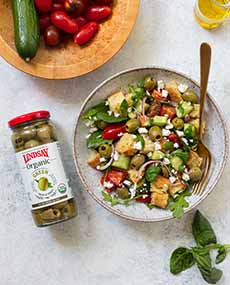
    [1] Peach panzanella as a side salad or salad course (photo © Good Eggs).

    Peach Panzanella
    [2] Add prosciutto and mozzarella, and/or grilled chicken or salmon, for a main (photo © Good Eggs).

    A Bowl of Fresh Peaches
    [3] Fragrant ripe peaches are a versatile ingredient at every meal (photo © The Lore | Unsplash).

    Prosciutto Serrano Ham Comparison
    [4] Prosciutto ham from Italy and Serrano ham from Spain. They are interchangeable in most recipes (photo: The Nibble).


    Updated June 2026

    August is National Peach Month, honoring the most popular stone fruit: the peach. (Other stone fruits, in the genus Prunus, include almonds, apricots, cherries, nectarines, peaches and the cross-bred apriums, plumcots and pluots.)

    So in addition to peach cake, cobbler, ice cream, pie, preserves, yogurt, and the rest, check out this peach panzanella recipe.

    > A brief history of peaches.

    > Peach panzanella recipe with prosciutto and mozzarella.

    > More panzanella recipes.

    Elsewhere on The Nibble:

    > The history of panzanella.

    > The history of bread.

    > The different types of bread: a photo glossary.
     
    > The year’s 20+ bread holidays.

    > The year’s 8+ peach holidays.

    > Peach trivia.

    > The difference between prosciutto and serrano ham.

    > The different types of ham: a photo glossary.
     
     
    A BRIEF HISTORY OF PEACHES

    The peach originated in China and has been cultivated at least since 1000 B.C.E. Peaches traveled west via the silk roads to Persia, earning them the botanical name Prunus persica. There, they were discovered by Alexander the Great, who mentions half a dozen types and brought them to Greece.

    By 322 B.C.E. Greece was growing peaches, and by 50 B.C.E. to 20 B.C.E., Romans grew them. They called them Persian apples, and sold them for the modern equivalent of $4.50.

    The Romans transported peach trees to other parts of their empire.

    Columbus brought peach trees to America on his second and third voyages. The Spaniards brought peaches to South America, the French introduced them to Louisiana, and the English took them to their New England colonies.

    To this day China remains the largest world producer of peaches, with Italy second. California produces more than 50% of the peaches in the United States (and grows 175 different varieties). And so many peaches are grown in Georgia that it became known as the Peach State.

    Over the next week or two, we’ll be presenting a menu of peachy recipes, starting with…
     
     
    RECIPE #1: PEACH PANZANELLA

    Panzanella, an Italian bread salad that uses up day-old bread, is one of our favorites, tailored to the bounty of each season. Panzanella can be sweet or savory. In the winter, with a paucity of fresh fruit, recipes tend to be savory (here’s a classic winter panzanella recipe).

    But when the season gives you so much fresh fruit, sweeter panzanellas call.

    Panzanella is one of those delicious foods invented by necessity: Poor people needed to get another meal from bread that had gone stale (the history of panzanella).

    In summer grilling season, juicy, caramelized peaches and smoky grilled bread unite in this summer panzanella. These recipes, for a salad course and a dinner salad, are from Good Eggs. They were inspired by Julia Sherman’s new book, Salad for President.

    No grill? Broil the peaches and bread cut-side up in the oven.

    You can substitute nectarines or plums—or make it a mixed grill!

    Ingredients For 4 Servings

  • 1 shallot
  • Loaf of sourdough bread
  • 1 pound ripe yellow peaches
  • Fresh basil leaves to taste, torn
  • Sherry vinegar (substitute red wine vinegar)
  • Extra virgin olive oil
  • Salt and freshly ground black pepper
  •  
    Additions For Dinner Salad (photo #2)

  • 1/4 pound prosciutto or serrano ham slices
  • 1/2 cup bocconcini or other bite-size mozzarella balls
  • Optional: fresh tomato wedges
  •  
    Preparation

    1. PREPARE a very hot charcoal fire or preheat a gas grill to medium. No grill? Use a grill pan in the oven)

    2. CHOP the shallot finely. Cut off two large slices of sourdough. Set both aside.

    3. MAKE the dressing: Whisk together 2 teaspoons vinegar, 1 tablespoon oil and the shallot in a small bowl. Set aside.

    4. HALVE the peaches and remove the pits. In a large bowl, toss the peach halves and optional ingredients with 1 tablespoon olive oil; season with a sprinkle of salt and freshly ground pepper. Drizzle another tablespoon of olive oil over both sides of the bread slices and sprinkle with salt and pepper.

    5. OIL the grill grate and let it heat up for a minute or two. Arrange the bread slices on the outer edges of the grill grate and the peaches, cut-side down, in the center. Set the peach bowl aside but don’t rinse it.

    6. GRILL the bread on each side for for 1 minute, or until lightly toasted. Grill the peaches until the bottoms are caramelized and lightly charred, about 3 minutes. Flip the peaches and cook for another 3 minutes. If using an oven, broil both the bread and the peaches cut side up.

    7. REMOVE the toasted bread from the grill, allow it to cool enough to handle, and tear it into bite-sized pieces (we prefer to cut it into large croutons). Cut each peach half in half again (or if the peaches are larger, cut them into into large chunks). Place them in the peach bowl along with the torn bread.

    8. DRIZZLE the dressing over the peaches and bread, and toss. Let the panzanella marinate for 5-10 minutes. Taste and adjust the salt and pepper, as desired.

    9. GARNISH with torn basil and serve.
     
     
    Panzanella With Burrata & Delicata Squash
    [5] Panzanella with burrata and delicata squash (photo © Good Eggs).
     
    MORE PANZANELLA RECIPES

  • Bagel Panzanella For Brunch
  • Basic Panzanella Salad (basil, cucumbers, onions, tomatoes)
  • Chicken Panzanella Salad
  • Panzanella & Fruit Salad
  • Summer Panzanella Salad
  • Winter Panzanella
  • Zucchini & Bell Pepper Panzanella
  •  
    Peaches At Farmers Market
    [6] The best peaches should be the ones at your farmers’ market (photo © Hannah Kaminsky | Bittersweet Blog).
     

    CHECK OUT WHAT’S HAPPENING ON OUR HOME PAGE, THENIBBLE.COM.


    Comments off

    TIP OF THE DAY: Ice Cream Toppings Beyond The Usual

    Most of us use particular condiments on foods out of habit. The convention differs among countries.

  • Americans might use steak sauce while Argentinians use chimichurri.
  • In the U.S., it’s maple syrup that goes on top of pancakes. In Eastern Europe and elsewhere it’s jam, in the U.K. it’s golden syrup, a.k.a. light treacle, a thick, amber-colored inverted sugar syrup that looks like honey, without honey’s distinctive flavor notes.
  •  
    Ice cream toppings around the world vary as well.

  • In the U.S., sweet sauces and whipped cream rule (photo #1).
  • In Japan, you might go for red bean sauce, mochi bits, gelatin and more (photo #2).
  •  
    On the last day of National Ice Cream Month (July), we went on an adventure by looking around the kitchen to see what we could put on ice cream, beyond our standard inventory of chocolate and caramel sauces.

    You can have the same adventure. Look beyond those and the other usual sauces (butterscotch, peanut butter, raspberry) or garnishes (candies, cookies, fruit, nuts), to what you may logically not think of.

    We invited some friends and a few quarts of vanilla and chocolate ice cream, to pair with our atypical ice cream toppings. We also found some “matching garnishes” and made a sundae event of it all.
     
    WHAT WE FOUND IN OUR KITCHEN

    BIRCH SYRUP, which has similar uses as maple syrup (more about it). Garnish: Corn Flakes.

    CHOPPED VEGETABLES, like raw corn kernels and sugar snap peas. We tried a mix of raw corn, popcorn and crunchy Inca corn kernels (like Corn Nuts), and had a heck of a corn sundae. These were the garnishes; we topped the ice cream with some golden syrup. If only we could have found some corn ice cream (recipe #1 and recipe #2).

    COCONUT SYRUP, a popular pancake syrup and sweetener in Hawaii. Toss on some flaked coconut.

    DATE SYRUP, called silan in Arabic, which refers to what we would call date honey, date molasses or date syrup. Garnishes: chopped dates and other dried fruits.

      Hot Fudge Sundae
    [1] Fudge, caramel, whipped cream and a cherry on top (photo courtesy Morton’s).

    Japanese Sundae

    [2] Red beans, marshmallows, gelatin, and more in Japan (photo courtesy Sumally).

     
    FLAVORED SALT, a few crunchy grains as garnish on top of the ice cream. We have a lot of these salts, from smoked salt to flavored salts (matcha, truffle, etc.). We’re glad to have another use for them (more about them). Especially nice with honey and maple syrup.

    GOLDEN SYRUP, the pancake syrup of choice in the U.K., also used on ice cream (more about it). Garnish: anything you want.

    HONEY: Plain honey is fine, but we loved using our flavored honeys (chile, cinnamon, lavender). Garnish: fresh fruit.

    LIGHT MOLASSES, a.k.a. sweet molasses, also used as pancake syrup or a sweetener, especially in the south and other areas that had no maple trees. Garnish: anything.

    MAPLE SYRUP: We used a walnut and raisin garnish. Trail mix works, too. And those crunchy Corn Flakes.

    OLIVE OIL: Mild or grassy olive oils (link) make a delightful drizzle. Top with some crunchy sea salt.

    PIE FILLING: No extra garnish is required, but we threw on some granola.

    SIMPLE SYRUP, the flavored syrups used at coffee shops to make your hazelnut (or other flavor) latte. Garnish: anything you like.

    SPICES: cayenne, chipotle powder, cinnamon, nutmeg, etc. For richer flavor, toast the spices in a hot dry pan until they release their aroma.
     
     
    Does this sound strange to you?

    We had such a good time, we’re going to do it again, with other flavors of ice cream.
      

    Comments off

    The Nibble Webzine Of Food Adventures


    © Copyright 2005-2026 Lifestyle Direct, Inc. All rights reserved. All images are copyrighted to their respective owners.