THE NIBBLE BLOG: Products, Recipes & Trends In Specialty Foods


Also visit our main website, TheNibble.com.

National Bagelfest Day & The History Of Bagels

Perhaps we should have saved this post, published a few months ago, for today, because…

July 26th is National Bagelfest Day, the perfect day for that article, which features delicious bagels with different savory and sweet spreads and toppings—including those off the beaten path.

So if you want a true bagelfest, check out the article. Today, we’ll make the record clear on the history of bagels.

Bagel lovers: In addition to National Bagelfest Day, National Bagel Day is January 15th. National Bagels & Lox Day is February 9th.

> A recipe for Sweet & Crunchy Cream Cheese Spread is below.

> Also below: more bagel holidays.
 
 
BAGEL HISTORY

One legend traces the history of the bagel to the shape of a stirrup, to commemorate the victory of Poland’s King Jan Sobieski over the Ottoman Turks in 1683’s Battle Of Vienna. This is not true.

It mirrors another legend of the creation of another popular bread that allegedly commemorates this battle: the croissant.

The story is that the croissant was shaped for the crescent in the Turkish flag; that is to say, to symbolically eat the Turks. Here’s the real history of the croissant.

What is it with these legends regarding bread and the Battle Of Vienna?

The bagel was actually invented earlier the 17th century in Kraków, Poland, as an alternative (some would say, improvement) on the bublik, a traditional Polish-Russian roll that’s also very close to the Turkish simit (photo #3), and which some historians call the ur-bagel.

It looks like a sibling of the bagel, but with a much bigger hole and a recipe to make it even denser and chewier than the bagel that emigrated to New York.

The bublik was originally designed for Lent, but in the 16th century began to become a staple of the Polish diet.

The bagel was an evolution, not a revolution. Other countries also had round, individual-serving breads with a hole in the middle (the hole was used for convenience in delivery (strung through with a string) and space-saving at stores and homes. They were also stacked on poles and hawked in the marketplace).

Examples include Greek koulouri (with sesame seeds), Finnish vesirinkeli, and ciambella in Puglia, Italy.

The first documentation of the bagel is in a 1610 list of sumptuary laws.

Many food historians believe that bagel originated from the German word beugal, now spelled bügel, which has numerous meanings, including stirrup and ring.

But why? Two explanations:

  • Traditional handmade bagels are not perfectly circular but slightly stirrup-shaped, a function of how the bagels are pressed together on the baking sheet.
  • Variants of the word beugal are used in Yiddish and Austrian German to describe a round loaf of bread.
  •  
     
    How Bagels Are Made

    Yeasted wheat dough is traditionally shaped by hand into a ring shape, around four inches in diameter. In the U.S. today, they are supersized. Measure the next bagel you buy!

    With true bagels, the rings are then boiled in water for about a minute. This sets the crust, resulting in the firm, shiny crust of a true bagel.

    The longer the boil, the more dense and chewy the interiors—along with the use of high-protein flour to make the dough.

    They then get pressed face down in the seeds or other toppings. These days, bagels are also made from other dough types such as bran, gluten-free, oat, pumpernickel, rye, and whole-grain.
     
     
    What Did Bagels Have To Do With Pregnancy?

    Some of the earliest references to bagels are in the context of gifts to women after labor. Why?

    Their shape is circular like the round challah eaten on the Jewish new year, Rosh Hashanah. A round challah (instead of the everyday oblong shape) signifies good luck: the hope that endless blessings (“goodness without end”) will arrive in the new year.

    Likewise, in 17th-century Krakow, the round bagel signified the circle of life and longevity for the child.

    Community records in Krakow also note that bagels could be bestowed on expectant mothers as well, and as gifts for midwives.
     
    Bagels Arrive In America

    Bagels came to the United States with Eastern European Jews, who began to immigrate to the United States in significant numbers after 1880.

    However, they didn’t eat them with cream cheese and lox, but with schmaltz (rendered chicken fat—here’s a recipe) and herring. Modern cream cheese wasn’t invented until 1872, in the U.S. (cream cheese history).

       
    National Bagelfest DayBagelfest
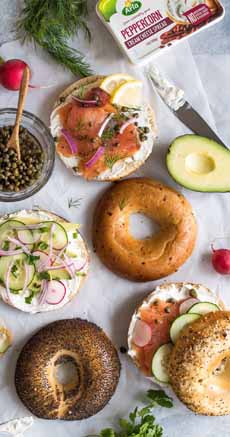
    [1] Make your own bagelfest! A luscious bagelfest (photo © Arla Cheese).

    Bagel Smoked Salmon
    [2] We love a sprinkling of capers Photo © Good Eggs).

    Simit Vs. Bagel
    [3] A comparison of bagel and simit, the latter considered the ur-bagel (photo by Elvira Kalviste | © THE NIBBLE).

    Colored Bagels In Fall Colors: Pumpkin, Orange & Black Swirl
    [4] In addition to green bagels for St. Patrick’s Day, some bakers make seasonal colors, like these for autumn: pumpkin bagels and red orange and black twisted colors (0photo © Rodnae Productions | Pexels).

     
    Lox wasn’t known by Eastern European Jews until Jewish immigrants met Scandinavian immigrants [source].

    Bagel bakeries thrived, and by the early 1900s in New York City, they were controlled by Bagel Bakers Local 338, which had contracts to supply bagel bakeries in and around the city for the workers who prepared all the bagels by hand.

    Bagel bakeries were soon found in major cities with large Jewish populations, in Canada as well as the U.S. They became a mainstream food in the last quarter of the 20th century, partly due to the efforts of the second generation at Lender’s Bakery in New Haven, Connecticut.

    The son of the founder, Murray Lender, pioneered automated production and distribution of pre-sliced frozen bagels in 1960.

    [NOTE: We don’t know what Lender’s Bagels were like before the frozen variety, but these bagels are nothing like New York bagels. The consistency was/is more like a white bread roll in a bagel shape. They are soft and doughy, and lack true bagel flavor. Unfortunately, this style became the template for many bagels produced in America, and what many Americans think of as bagels.]

    While early bagels were plain or poppy, they evolved in the 1960s to other popular flavors, like garlic, salt, and sesame. The cinnamon-raisin bagel appeared in the mid-1950s.

    Can’t decide? Have it all (mostly) on an everything bagel (here’s the history of the everything bagel, which debuted around 1980).

    Cream cheese rose to the occasion, appearing in flavors like pimento, olive, and smoked salmon.

    And bagels became not just breakfast bread, but sandwich bread for lunch. Not to mention that double-comfort food, the pizza bagel.

    By the turn of the 21st century, you could get a blueberry bagel, cheddar bagel, a jalapeño bagel…any bagel your heart desires. And just about any flavor of cream cheese, too.

    More recently, bagels headed into space with Canadian-born astronaut Gregory Chamitoff, who took a batch of bagels on his 2008 Space Shuttle mission to the International Space Station. What did he take? Eighteen sesame seed bagels. The record does not say if he brought cream cheese or lox.
    ________________

    *It is made in most of Central and Eastern Europe.


    Bagel With Walnut Raisin Spread
    [5] Raisin-walnut spread from Eat Wisconsin Cheese. The trade organization created a lighter version of a cream cheese, raisin and walnut spread by using half cottage cheese. But you can go full cream cheese.
      RECIPE: SWEET AND CRUNCHY CREAM CHEESE SPREAD

    If you like raisin bagels, or raisin and walnut cream cheese, here’s a spread to match from Eat Wisconsin Cheese.

    It’s made lighter by substituting cottage cheese for part of the cream cheese. Or, you can substitute cream cheese for the cottage cheese.

    Ingredients For 2-1/2 Cups

  • 1 cup small curd cottage cheese
  • 1 8-ounce package cream cheese, softened
  • 2 tablespoons honey
  • 1/4 cup walnuts, chopped
  • 1/2 cup raisins
  •  
    Preparation

    1. COMBINE all ingredients in a medium bowl, using a spoon or electric mixer. Blend well.

    2. COVER and chill 4 hours or overnight, for the flavors to meld. Serve with toasted bagels, toast or muffins.
     
     
    BAGEL HOLIDAYS

  • January 15th: National Bagel Day
  • February 9th: National Bagels & Lox Day
  • July 26th: National Bagelfest Day
  • December 11th: National Have A Bagel Day
  •  
     

    CHECK OUT WHAT’S HAPPENING ON OUR HOME PAGE, THENIBBLE.COM.


    Comments off

    TIP OF THE DAY: Ice Cream & Beer Pairings

    Don’t let National Ice Cream Month (July) pass without doing something special.

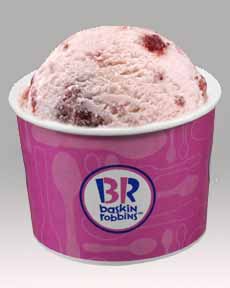
    A year ago, Baskin-Robbins sent us ice cream and beer pairings of their favorite flavors, We found the article in our drafts folder, which inspired today’s tip:

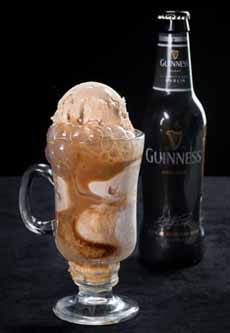
    Love beer? Love ice cream? Don’t hesitate to serve them together. Beer floats like the Guinness Float have been popular for several years. The recipe is simple:

    Add ice cream to the glass and top with beer.

    If you prefer hard cider to beer, this tip works for you, too; maybe even better, given the sweet succulence of some ciders.

    You can experiment with other types of beer floats, as well as open a beer to serve with a dish of ice cream, plain or à la mode.

    Beyond floats, have a dish of ice cream or a sundae. You could have a cone, but the idea of a cone in one hand and a beer in the other is too much of a balancing act for us. (Perhaps that’s where a beer drinking helmet comes in handy.)

    In fact, have a pairing party with some basic flavors (chocolate, coffee, vanilla). The pairings go far beyond lambic and fruit ale. How about:

  • Chocolate ice cream with kriek, a cherry-flavored Belgian ale, regular or chocolate stout.
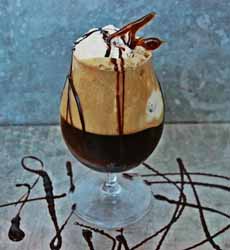
  • Coffee or mocha ice cream with stout, especially coffee stout and Imperial stout.
  • Vanilla ice cream with lambic, a raspberry-flavored ale, chocolate or coffee stout.
  • Spicy beers with spicy ice cream: cinnamon, pumpkin pie, etc.
  •  
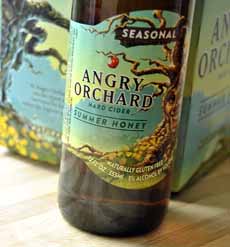
    The pairing concept works with sorbet, as well. We just polished off an Angry Orchard Summer Honey Cider with some Lactaid vanilla ice cream.

    We’ve previously covered beer-and-ice cream articles, such as:

  • Make Your Own Beer Ice Cream
  • Chocolate Stout Ice Cream & Beer Float Recipes
  • Peanut Butter Cake With Beer Foam
  • Spiced Beer & Apple Pie Float
  •  
    You can make those recipes, but why not strike out on your own to find the pairings you like best. You can pair beer with ice cream or sorbet. Just follow three simple rules.
     
     
    HOW TO PAIR BEER & ICE CREAM

    1. Start with basic flavors. Once you know what you like, you can go for the more complex.

    2. Avoid beers that are bitter, crisp or dry. Instead, choose those with some residual sweetness.

    3.Look for a beer with notes that match the ice cream. Different beers can have notes of chocolate, citrus, coffee, fruit, spice. For fall, e.g., there’s pumpkin ale to go with pumpkin spice ice cream.
     
     
    BASKIN-ROBBINS PAIRINGS

    These pairings were recommended by John Holl of All About Beer Magazine. with his comments in quotes. They’ll give you more ideas on how to pair.

  • Cherries Jubilee with Barleywine. “A barleywine coaxes out the rich cherry and rum flavor in this ice cream. Bittersweet and leather flavors emerge as well, begging for this combo to be enjoyed in dad’s favorite leather chair.”
  • Chocolate with Belgian Quad. “This beer is bursting with flavors that love chocolate. Two classics with great depth and rich sweetness that only get better with each lick and sip.”
  • Jamoca Almond Fudge with Blueberry Ale. “Brewers are taking the sweet, tangy, earthy blueberry and adding it to caramel-tinged ales, making it a perfect complement to this frozen coffee, nutty, chocolatey concoction. Lively fruit flavors pair wonderfully with the chocolate flavored ribbon.”
  • Mint Chocolate Chip with Coffee Porter or Stout. “The ale already has some cocoa and java flavors and it mixes nicely with the roast of the chocolate chips and the herbal, cool mint flavor of the ice cream.”
  • Peanut Butter N’ Chocolate with Doppelbock. “Nutty and creamy, with an assertive chocolate base, the ice cream brings out the best in this malt-forward dark brown lager.”
  • Pralines ’n Cream with a Pilsner or a Mango Ale. “The classic pilsner style, with sweet cereal-like malt takes the place of a cone when paired with this southern-style treat. Additionally, two of the most popular beer styles this summer are mango-flavored pale ales and India pale ales. The nuttiness and sweetness of the ice cream balance out some of the more assertive beer flavors, creating a delectable combination.”
  • Rocky Road With Guinness Foreign Extra Stout. “A candy lover’s dream! The stout has sweet chocolate, rich espresso, and generic red berry flavors that party hard with the almond, marshmallow, and deep chocolate of the ice cream. Rocky Road adds creaminess to the hearty beer and this combination makes for an excellent ice cream beer float.”
  • Vanilla with Peach Lambic. “Sweet and creamy vanilla gets a boost from the lambic, which is fermented with peaches and aged in barrels. Slightly spicy and effervescent, the fruity character of the ale will act like a sauce for the ice cream. This lambic style helps to recreate the classic peaches and cream combination.”
  • Very Berry Strawberry with Hefeweizen. “It’s the start of a fruit salad. Bright, vibrant strawberry mixes with the banana esters in the classic German Hefeweizen. The sweet berry will also help control the assertive spice bite of the clove flavor found in the beer and counter the acidity found in the lemon wedge often served as a garnish on the rim of the glass.”
  • Watermelon Splash Ice With Gose*. “Gose is brewed with wheat and salt and is predicted to be the beer of the summer, making it a perfect companion to the hot weather staple – watermelon. Pronounced “Gose-Uh,” look for variations that already include cucumber, prickly pear, or yes, even watermelon flavors.”
  •   Guinness Float
    [1] Beer floats combine two of summer’s favorite refreshers: beer and ice cream (photo © Silver Moon Desserts [now closed]).

    Coffee Stout Float
    [2] A coffee stout ice cream float. Here’s the recipe (photo © Beautiful Booze).

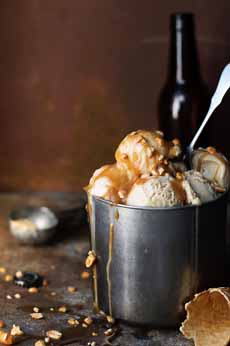
    Brown Ale Ice Cream Sundae
    [3] A vanilla ice cream sundae with salted caramel and honey peanuts, served with brown ale. Here’s the recipe (photo © Somewhere Over The Kitchen).

    Angry Orchard Summer Honey Cider
    [4] If you’re not a beer lover, try hard cider instead. Angry Orchard’s seasonal Summer Honey Cider is a good start (photo © Sanura Weathers).

    Baskin Robbins Strawberry Ice Cream
    [5] Strawberry ice cream with a Hefeweizen? Who knew? (photo © Baskin-Robbins).

     
    > CHECK OUT THE DIFFERENT TYPES OF BEER, a photo-glossary.
     
     
    ________________

    *Gose is an old, top-fermented German sour beer that originated in Goslar. An unfiltered wheat beer, cloudy gose beers have a spiciness from the addition of ground coriander seeds, a sharpness from the addition of salt, and a lemony tartness. Some are also flavored with syrups.\


    CHECK OUT WHAT’S HAPPENING ON OUR HOME PAGE, THENIBBLE.COM.


    Comments off

    HOLIDAY: Tequila Trivia For National Tequila Day

    Caballito & Margarita Glass
    [1] The two special tequila glasses: caballito and Margarita (photo © El Jimador).

    Watermelon Cocktail
    [2] A tequila-watermelon cocktail. The recipe is below (photo courtesy Milagro Tequila).
    Blue Agave Pinas

    [3] After harvesting, piñas are roasted in a stone oven (photo © Casa Noble Tequila).

    Pulque
    [4] Pulque: what the Aztecs drank before the conquistadors taught them how to distill (photo © Mexico News Network).


    July 24th is National Tequila Day. How about some tequila trivia?
     
     
    THE AGAVE PLANT

  • The Blue Weber agave plants used to make tequila are pollinated by bats. They flower only once.
  • While the agave plant looks like a cactus, it is a succulent in the lily family.
  • The leaves of agave are so sharp that they are used as cutting instruments.
  • A blue agave plant matures in 6-12 years and weighs 90 to 150 pounds. The piña itself (photo #3) weighs from 25 to 50 pounds.
  • The piña is the part of the plant used to make tequila, and gets its name because it looks like a pineapple (piña in Spanish). It grows underground. It looks like a pineapple, so is called a pia.
  • The person who harvests the piña is called a jimador (HEE-ma-dor), which derives from the verb gemir, to groan with effort.
  •  
     
    THE TEQUILA

  • The nectar of the piña is called pulque (PULL-kay, photo #4). The Aztecs fermented the sap from the leaves of the maguey agave. It was drunk by people of rank during religious ceremonies.
  • Pulque remained popular until the late 19th century. Its sales declined in favor of beer, which was brewed by European immigrants.
  • The conquistadors, who arrived in 1519, taught the Aztecs how to distill agave into a spirit, now known as tequila.
  • There are four legally authorized expressions (categories) of tequila: blanco, reposado, añejo and extra añejo. Laws dictate the minimum and maximum aging period for each. Here are details.
  • For marketing purposes, some premium producers have created “hybrid” tequilas with new names, e.g., barrel select reserve blanco; or have created extra-extra aged tequila marketed which may be called, e.g. 5 years aged tequila, or El Magnifico. These are names bestowed by the distillery, not by law.
  • The longer it ages, the more flavors it develops and the darker it gets. Blancos, which are clear, can be aged for a few weeks for complexity, but so briefly that they don’t take on color.
  • The worm in the bottle (which is the larva of a moth) is not placed into tequila bottles, but into some mezcal bottles. These are cheaper, “tourist souvenir” mezcals, not quality brands.
  •  
     
    DRINKING TEQUILA

  • The taste of tequila comes partially from its aging time in white oak barrels, but also from the volcanic soil of the Jalisco region, which imparts a spicy, earthy quality.
  • The traditional way to drink tequila is from a tall, narrow shot glass called a caballito (photo #1), which means little horse. Another name for the glass is tequilito, little tequila shots.
  • When drinking shots, the wedge of lemon or lime provided is to refresh the palate between drinks.
  • FLore has it that tequila shots cause fewer hangovers than cocktails with sugar, but this isn’t so. The alcohol hangover is caused by the dehydration effect from the alcohol itself.
  •  
     
    TEQUILA SALES

  • Tequila was first imported to the U.S. in 1873. It remained a niche product until Mexican restaurants began to open up outside of California and the Southwest, in the 1960s.
  • The United States is the largest tequila-consuming market (yes, even more than Mexico).
  • Almost half of the tequila is drunk by women (which may owe thanks to regular and frozen Margaritas).
  • The Margarita is the number one cocktail in the U.S., per The Spirits Business.
  •  
     
    OK, you’ve earned your drink. Happy National Tequila Day!

     
    RECIPE: TEQUILA-WATERMELON COCKTAIL

    If you are multiplying this recipe, consider pulsing the watermelon in a blender instead of muddling.

     
    Ingredients For 1 Drink

  • 2 ounces blanco/silver tequila
  • ½ ounce fresh lime juice
  • 4 one-inch cubes fresh watermelon or to taste
  • 1 teaspoon agave nectar
  • Garnish: 3 watermelon balls on a pick or notched cucumber slice on the rim
  •  
    Preparation

    1. MUDDLE the watermelon and agave in a mixing glass. Add the remaining ingredients and shake with ice.

    2. STRAIN into a martini glass and garnish as desired.
     
     
    MORE: TEQUILA COCKTAIL RECIPES, HISTORY &: MORE

  • Añejo Tequila With Dessert
  • Award-Winning Tamarind Margarita
  • Bandera Shots
  • Beyond Salt: Different Margarita Rimmers
  • Bloody Maria Cocktail Recipe
  • Caramel Apple Pie & Cherry Pie Cocktail Recipes
  • Cranberry Tequila Cocktail Recipe
  • Cucumber Tequila Recipe
  • Deconstructed Margarita
  • El Vocho Tequila Shooters
  • Flavored Tequila
  • Margarita History
  • Mercadito Coctail
  • More Tequila Cocktails
  • Non-Cocktail Ways To Use Tequila
  • Original, Frozen & Other Margarita Recipes
  • Passionfruit Tequila Cocktail Recipe
  • Pink Tequila Cocktai Recipes
  • September 16th: The Real Mexican Independence Day
  • Smokin’ Maria Recipe
  • Spicy Pineapple Cocktail
  • Spicy Tequila Cocktail Recipes
  • Spicy Watermelon Margarita
  • Sweet & Hot Tequila Cocktail
  • Tequila 101: The Five Expressions (Types) Of Tequila
  • Tequila & Cheese Tasting
  • Tequila Christmas Cocktail
  • Tequila Cupcakes
  • Tequila Hot Chocolate
  • Tequila Lemonade Recipe
  • Tequila Expressions
  • Tequila History
  • Tequila With Maple Bacon Rim Recipe
  • Watermelon Tequila Fizz
  •  
     

    CHECK OUT WHAT’S HAPPENING ON OUR HOME PAGE, THENIBBLE.COM.


    Comments off

    TIP OF THE DAY: 12+ More Uses For Trail Mix

    August 31st is National Trail Mix Day, but we’re jumping the gun with today’s tip.

    Trail mix is a popular grab-and-go snack. Leave out the chocolate chips (substitute toffee chips or M&Ms), and it’s a great hot-weather grab-and-go.

    It’s also fun to make your own creative blend of ingredients.

    12+ USES FOR EXTRA (LEFTOVER) TRAIL MIX

    Turn trail mix leftovers into:

  • Baking: Mix into brownies, cookies, loaf cake (carrot bread, zucchini bread), muffins (toppings or mixed into batter); make granola bars.
  • Beverages: Garnish whipped cream on hot chocolate, milkshakes, and smoothies; serve in ramekins with hot or cold drinks.
  • Breakfast Cereal: Top cold or hot cereal, overnight oats, pancakes, and waffles (garnish and/or batter ingredient).
  • Breakfast Dairy: Top yogurt or cottage cheese.
  • Candy: Mix into homemade chocolate bark.
  • Dessert: Garnish cupcakes, fruit salad, iced carrot cake, pudding, zucchini bread.
  • Ice cream: Top frozen yogurt, ice cream, sorbet.
  • Party favor: Set up a “trail mix bar” and let guests mix their own, to go.
  • Salad: Garnish green salads.
  • Salad: Mix into protein salads (egg, chicken, tuna).
  • Sandwich: Top a cream cheese, jelly sandwich or peanut butter sandwich; a cream cheese bagel; mild grilled cheese (e.g. Brie) or goat cheese sandwich.
  • Side: Mix into a grain salad (for a trail mix without candy).
  • Snack: Toss with popcorn (recipe below).
  •  
     
    RECIPE: SPICY TRAIL MIX POPCORN

    This recipe is adapted from Walnuts.org. Here are more recipes incorporating cheese, peanut butter and other ingredients.

    Ingredients

  • 2 large egg whites
  • 1 tablespoon Worcestershire sauce
  • 2 tablespoons sweet paprika
  • 1 1/2 teaspoons cayenne
  • 1 tablespoon ground cumin
  • 1 tablespoon curry powder
  • 1 to 2 teaspoons kosher salt (use the lesser amount if using lightly salted popcorn)
  • 1 teaspoon freshly ground black pepper
  • 2 cups trail mix
  • 9 cups freshly popped unsalted popcorn, see instructions below
  • 1 cup dried cherries, cranberries, golden raisins, or other colorful dried fruit
  •  
    Preparation

    1. PREHEAT the oven to 325°F. Line a large baking tray with parchment paper or no-stick aluminum foil; set aside.

    2. COMBINE the egg whites in a large bowl with the Worcestershire sauce, paprika, cayenne, cumin, curry, salt, and pepper. Whisk until very well combined.

    3. ADD the trail mix and toss well to coat thoroughly. Add the popcorn and toss until the popcorn is well-speckled with the granola mixture. You will still see much of the white popcorn, but that’s O.K.

    4. TRANSFER the mixture to the prepared baking tray; spread it over the entire sheet. Bake until the coating is dry and the popcorn is crisp, about 15 minutes. Allow to cool.

    5. ADD the raisins and mix well. You can store the popcorn in an airtight container at room temperature for up to three days.

      Trail Mix On Waffles
    [1] Top pancakes and waffles (photo courtesy Sierra Trading Post).

    Smoothie With Trail Mix
    [2] Top a smoothie. Here’s the recipe for this chocolate breakfast smoothie from Natural Comfort Kitchen.

    Yogurt With Trail Mix
    [3] Here’s the recipe from Natural Comfort Kitchen (with homemade yogurt).

    Popcorn Trail Mix
    [4]Is it trail mix popcorn, or popcorn with trail mix. Here’s the recipe from Delicious Meets Healthy.

     
    HOW TO MAKE YOUR OWN TRAIL MIX

    Mix and match:

  • Candy: carob chips, chocolate chips/chunks, crystallized ginger, mini marshmallows, M&M’s, Reese’s Pieces, toffee, yogurt clusters
  • Cereal: Cheerios, Chex, Corn Flakes, graham cracker cereal, Grape Nuts, mini shredded wheat, rolled oats
  • Dried fruits: apples, apricots, banana chips, blueberries, candied orange peel (gourmet!), coconut, dates, dried cherries, and cranberries (our favorites!), dried mango, figs, raisins
  • Exotica: crystallized ginger, Japanese rice crackers, jerky bits, sesame sticks, wasabi peas
  • Nuts almonds, cashews, pecans, pistachios, walnuts, or other favorite (chop large nuts into chunks)
  • Savory: freeze-dried edamame, peas or veggie chips; pretzels, mini crackers, roasted chickpeas, soybeans or soy nuts, wasabi peas
  • Seeds: chia, pepitas (pumpkin seeds), sunflower seeds
  •  
     
    THE HISTORY OF TRAIL MIX


    CHECK OUT WHAT’S HAPPENING ON OUR HOME PAGE, THENIBBLE.COM.


    Comments off

    Penuche Recipe, A Brown Sugar Confection Like Fudge

    Penuche
    [1] Penuche, an old-fashioned brown sugar treat. Here’s the recipe from Endlessly Inspired.
    Nut Free Penuche
    [2] Nut-free penuche. Here’s the recipe from Fearless Fresh.

    Chocolate Sea Salt Penuche
    [3] What could make it better? Some chocolate and sea salt. Here’s the recipe from Rook No.17.

    Piloncillo
    [4] Piloncillo, a cone of panocha. Here’s more about it from Sweet Potato Chronicles.


    July 22nd is National Penuche Day. Penuche (pen NOO chee) is often called brown-sugar fudge, but it’s actually a brother or sister.

    While it follows the same preparation method, what makes it different is the use of brown sugar rather instead of white, and plain milk instead of cream. (The other ingredients common to both are butter and vanilla).

    > The recipe for penuche is below.

    > Also below is the history of penuche.

    Penuche has a tannish color, a result of caramelization. Caramelization also engenders a more complex sugar flavor, with notes of butterscotch or caramel.

    You may encounter penuche with different spellings: panocha, penocha, penochi, panucci, pinuche and penuchi, among others.

    In the Southern United States, it is called creamy praline fudge, and brown sugar fudge candy.

  • Penuche is very similar to a Québec confection called sucre à la crème (cream sugar), a holiday season tradition.
  • A cousin is the southern praline, which is made by boiling brown sugar, butter, and cream and cooked to a soft-ball stage like penuche, but filled with pecans and spooned onto wax paper to form patties.
  • An ancestor is Scottish tablet.
  • An adaption is penuche frosting, a brown sugar-boiled icing flavor. It is popular with spice cakes and versions with prunes and other dried fruits (photo #5).
  •  
    For Both Penuche And Fudge

  • A fat-sugar solution is heated to the soft ball stage, 236°F.
  • The solution is set aside to cool to lukewarm, about 110°F.
  • Flavorings are added and the solution is beaten until thick. Mix-ins (nuts, M&Ms, etc.) are added.
  • The mixture is poured into a pan, allowed to cool until semi-hard and cut into bite-sized pieces.
  •  
    But using milk instead of cream gives penuche a lighter body.

    Over time, some cooks substituted evaporated milk or sweetened condensed milk in their preparation.

    Penuche Variations

    In recent years, a version with maple syrup has surfaced in New England. With the popularity of salted caramels, versions have appeared topped with a layer of chocolate fudge and sea salt (a great idea, by the way).
     
    Ready to make some penuche?
     
     
    RECIPE: CLASSIC PENUCHE

    Nuts add another flavor dimension and can be larger pieces or chopped to your desired consistency.

    You may note that some recipes add corn syrup to prevent crystallization. But if you’re planning to scarf these within a few days, it’s not an issue.

    Ingredients

  • 2 cups light brown sugar
  • 2/3 cup whole milk
  • 1 teaspoon vanilla extract
  • 1 tablespoon butter plus more to grease the pan
  • 1 cup chopped pecans (substitute walnuts)
  • Candy thermometer
  •  
    Preparation

    1. LIGHTLY BUTTER an 8×8-inch pan and set aside.

    2. COMBINE the sugar and milk in a heavy-bottomed saucepan and bring to a boil. Stirring constantly, let the temperature rise to the soft-ball stage, 236°F.

    3. REMOVE the pan from heat. Add butter but do not stir. Set aside to cool to lukewarm, 110°F.

    4. ADD the vanilla and beat until the mixture is smooth, thick, and creamy. Add the nuts and pour into the prepared pan. When set, cut into squares.

    Variation

    For comparison, here’s a recipe for penuche made with condensed milk.


    PENUCHE HISTORY

    While brown sugar-based fudge existed previously, penuche appears to have originated in New England. Brown sugar, light or dark, provides a hint of molasses that yields a spicier, richer flavor than regular white sugar.

    The difference between a lighter and darker tan color is light versus dark brown sugar. A dark brown sugar recipe has more of a molasses taste.

    While the origin of penuche isn’t known for certain, it looks like a descendant of a Scottish confection called tablet.

    We’ve pieced together some background.

  • Some sources claim the idea for penuche fudge originated in 1924, made by or for a Boston Bruins player named Mark Penuche. However, we could find no record of a Mark Penuche online [source].
  • Penuche is a Mexican Spanish word for raw sugar. According to MexGrocer.com, panela or penuche, raw brown sugar, can be purchased in panocha (chunks) or piloncillo (a tall cone shape—photo #4), and is “a delicious ingredient to prepare Mexican desserts.”
  • Another historical link is to the Scottish tablet, a fudge-like treat with a caramel flavor, made from boiling butter, condensed milk, and sugar. Boiled sweets are a Scotch tradition dating to the 1600s when sugar was first imported from the West Indies.
  • Scottish tablet was first mentioned in a household account book in the 18th century owned by Lady Grisell Baillie and its caramel buttery taste is still loved above all other confections in Scotland, to this day [source]. Here’s a recipe for Scottish tablet.
     
    Wherever the origin of penuche may lie, it became a New England favorite in the 1920s and subsequently migrated to fudge counters across the country.

    Now that you have the recipe, try some!
     
     
    FOOD TRIVIA: FUDGE

    Fudge was an accident, the result of an attempt to make caramels. And what a happy accident!

    > Here’s the history of fudge.

  •   Penuche Frosting
    [5] Brown sugar frosting, popular with spice cakes, is called penuche frosting. Here’s the recipe from Cafe Johnsonia.

    Scottish Tablet

    [6] Scottish tablet seems to be the closest relative to penuche. Here’s the recipe from London Eats.


    CHECK OUT WHAT’S HAPPENING ON OUR HOME PAGE, THENIBBLE.COM.


    Comments off

    The Nibble Webzine Of Food Adventures
    RSS
    Follow by Email


    © Copyright 2005-2026 Lifestyle Direct, Inc. All rights reserved. All images are copyrighted to their respective owners.