THE NIBBLE BLOG: Products, Recipes & Trends In Specialty Foods


Also visit our main website, TheNibble.com.

RECIPE: Homemade Potato Chips With Blue Cheese Sauce & Bacon


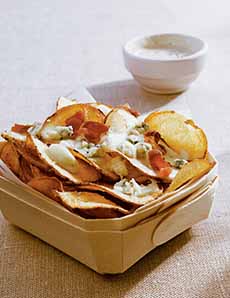
[1] Homemade potato chips with blue cheese sauce (photos #1 and #2 © Idaho Potato).

Idaho Russet Potatoes
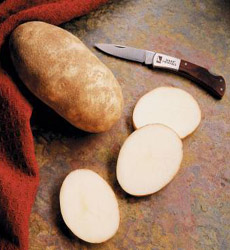
[2] Idaho russet potatoes.


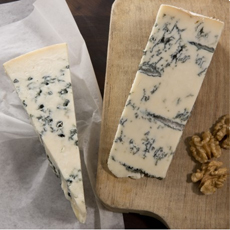
[3] Gorgonzola, one of the world’s favorite blue cheeses (photo © Murray’s Cheese).

Cooked Bacon Strips
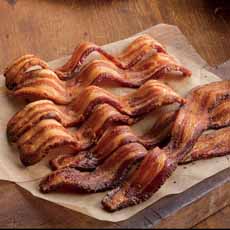
[4] Top the blue cheese sauce with crumbled bacon (photo © Edwards Virginia Smokehouse).


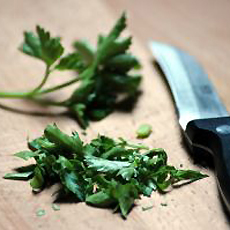
[5] The final garnish: fresh parsley (photo © Iva Villi | Free Images).


We love homemade potato chips.

We only make them for special occasions, because they’re so irresistible that we have no restraint.

For Father’s Day, we’re going fancy, with a sauce of blue cheese and bacon. You can pour the sauce over the chips, like nachos, or serve it on the side.

You may wish to make a double batch! If there are any leftovers, simply store plain potato chips in an airtight container.

The recipe was created by Chef Julie Reid, Former Vice President of Culinary Development for Ruby Tuesday’s in Maryville, Tennessee; and provided to us by Idaho Potato, a repository of great potato recipes.
 
 
RECIPE: HOMEMADE POTATO CHIPS WITH BLUE CHEESE DIP & BACON

We used a mandoline to slice the potatoes. Instead of buying crumbled blue cheese, we crumbled our own from good-quality gorgonzola.

Ingredients For 4 Appetizer Servings

  • 2 medium Idaho® russet potatoes, unpeeled, sliced 1/16 inch horizontally
  • Canola oil as needed for deep frying
  • 1/8 teaspoon sea salt
  • Sea salt, as needed
  • 8 ounces Blue Cheese Sauce (recipe follows)
  • 1/4 cup Gorgonzola cheese crumbles (you can crumble your own)
  • 1/4 cup cooked, crumbled applewood-smoked bacon
  • 1 teaspoon fresh chopped parsley
  •  
    For The Blue Cheese Sauce

  • 2 tablespoons canola oil
  • 2 tablespoons all-purpose flour
  • 1/8 teaspoon salt
  • White pepper (substitute black pepper*)
  • 1 cup whole milk
  • 5 tablespoons blue cheese crumbles
  •  
    Preparation

    1. MAKE the potato chips: Soak the potato slices in ice water for 30 minutes. Drain well and pat dry with paper towels.

    2. HEAT the oil to 350°F in a deep fryer. Fry the potatoe slices until golden brown and crisp, 2 to 3 minutes. Drain the potato chips on paper towels; lightly sprinkle with sea salt.

    3. COOL to room temperature, about 30 minutes. Once completely cooled, the chips may be stored, airtight, at room temperature for up to 2 days. But they will be best served immediately.

    4a. MAKE the blue cheese sauce. Combine the oil, flour, salt and pepper in a small saucepan. Cook over medium heat until the mixture is blonde in color, 1 to 2 minutes. Slowly whisk in the milk, stirring well to prevent lumps. Stir constantly until the mixture comes to boil, 1 to 2 minutes. Remove from the heat.

    4b. In a small bowl, use fork to mash the blue cheese crumbles into a paste. Whisk it into the sauce, stirring to combine. Reserve, covering to keep warm. (Or, the sauce may be made up to 2 days in advance in the fridge. Reheat over low heat, stirring, before serving. Do not microwave.)

    5. TO PLATE: Mound 1-1/2 ounces potato chips on individual plates. Ladle 2 ounces of warm blue cheese sauce over the chips. Top with 1 tablespoon each of Gorgonzola and bacon. Place on the bottom shelf of a melter or broiler to soften the cheese crumbles until they begin to bubble, being careful not to burn the chips.

    6. REMOVE from broiler, top with with 1/4 teaspoon parsley and Serve immediately. You can also make a single large portions as a shareable appetizer or party snack.

    ________________

    *White pepper is called for so that white sauces don’t have black pepper specks. We don’t use enough white pepper to justify having it (before it dries out), so we just use black pepper. We have no problem with the specks.


    Comments off

    TOP PICK OF THE WEEK: Whole Earth Stevia Leaf & Monk Fruit Sweetener

    We have been using noncaloric sweeteners for decades, starting with zero-calorie soda brands in middle school, then on cereal and other foods as packets of the sweetener became available.

    While we’ve tried every brand over the years, our reigning favorite was Splenda (sucralose), introduced to the U.S. in 1999.

    Not only did it have less of an aftertaste, but it was heat-stable for cooking and baking.

    We’ve tried other sugar substitutes, most recently including monk fruit and stevia leaf. We gave a thumbs down to both.

    While we recognize that the choice of sugar substitute is very specifically attuned to one’s palate (we have friends who still prefer Sweet ‘N Low saccharin), we came across a new blend that’s worth a try to those who aren’t perfectly happy with their sugar substitute.

    Splenda had started to taste more and more artificial to us in hot drinks—largely coffee and tea, but also hot cocoa.

    Did our palate change somehow? Did Splenda change the percentages of its ingredients? Is the main ingredient, sucralose, somehow different now?

    We don’t know; but for the past year we’ve been sweetening our tea with one packet of Splenda and one packet of sugar (16 calories, 2 g sugar) to provide the sweetness, while minimizing the aftertaste. The combination is O.K., but not perfect.

    So when we were offered a sample of Whole Earth Stevia Leaf & Monk Fruit Sweetener, zero calories, we accepted (photos #1 and #2).

    And we’re glad we did. While we didn’t like stevia and monk fruit individually, they work magic together.

    We prefer it in our our coffee and tea, and find it equally good on cereal and baked apples (our regular sweet treat). If you dip a finger into the powder to taste it straight, you’ll be pleasantly surprised.

    We haven’t made brownies or cake yet—largely because we have an unfortunate tendency to eat the whole thing. But people who have baked Whole Earth sweetener really like it.
     
     
    WHAT’S IN WHOLE EARTH STEVIA & MONK FRUIT SWEETENER

    Whole Earth Stevia Leaf & Monk Fruit Sweetener, which we’ll abbreviate to WESLMF, has a crystalline appearance, plus:

  • Zero sugar and zero calories
  • Gluten free
  • Low glycemic index
  • Non-GMO Project Verified
  • No preservatives
  • High digestive tolerance
  • Heat stable
  •  
    It’s certified kosher by OU.

    The ingredients are erythritol, stevia leaf extract, natural flavors* and monk fruit extract.

    The product is available in packets, in jars of loose product, as a liquid, in “sugar” cubes, and Baking Blend.

    The basic product works best in beverages, salad dressings, sauces and sprinkling. Each packet of WESLMF is equivalent in sweetness to 1.5 teaspoons of sugar.

    Baking Blend (photo #3) has non-caloric bulking agents that give WESLMF enough body to substitute for sugar in recipes, and properties that bake and brown like sugar†.
     
     
    The Ingredients

    All of the ingredients exist in nature.

  • Erythritol: Erythritol is a sugar alcohol (polyol) used as a sweetener in many reduced-calorie foods. The erythritol in WESLMF is obtained through the fermentation of glucose from non-GMO corn, using yeast. It is similar to the erythritol that occurs naturally in fruits like grapes, melons and pears. Erythritol has zero calories per gram.
  • Monk Fruit: Monk fruit, called luo han guo in its native China, is a herbaceous perennial vine of the gourd family (which includes pumpkin, squash, zucchini, etc.). The plant is cultivated in Southeast Asia for its fruit—small, round sub-tropical melons (photo #5). The extract from the melons is nearly 300 times sweeter than sugar. Monk fruit has long been used in China as a low-calorie sweetener, as well as in traditional Chinese medicine.
  • Stevia Leaf: The stevia plant, a member of the chrysanthemum family, is native to the mountains of South America. The Guarani people have been using its leaves (photo #4) for centuries to sweeten herbal teas like yerba maté. Today, stevia is grown beyond South America, including Asia (China, India, South Korea). The extract from the leaves is more than 200 times sweeter than sugar, with zero calories.
  •  
     
    > DISCOVER MORE AT WHOLEEARTHSWEETENER.COM.
     
     
    > CHECK OUT THE DIFFERENT SUGAR SUBSTITUTES.


    [1] We prefer the taste of Whole Earth Stevia Leaf & Monk Fruit in our coffee and tea (photos #1, #2, #3 and #6 © Whole Leaf Sweetener).


    [2] Whole Earth Sweetener is available in a format for every use.


    [3] Yep: made non-caloric Whole Earth Sweetener.


    [4] Stevia leaves and blossoms on the plant (photo by Ethel Aardvark | Wikipedia).


    [5] Monk fruit melons (photo © Monk Fruit Corp).


    [6] Our favorite easy treat: Baked apples. Core the apple, sprinkle WESLMF, cinnamon, and bake in a pan with 1″ water at 375°F, for 30 to 45 minutes, until the apples are tender, but not overcooked and mushy.

     
    ________________

    *Natural flavors are ingredients that come from nature, e.g. blueberry extract. The term “natural flavor” is defined by the U.S. Food & Drug Administration Code of Federal Regulations, 21 CFR 101.22(a)(3). In this Whole Earth sweetener, you will not taste any flavor in the product; only sweetness.

    †All powdered sugar substitutes contain bulking agents. That’s because the sweetening ingredients are so tiny (e.g., 300 times the sweetness of sugar), that there would be hardly anything to put in a packet.


    Comments off

    Mateus Rosé For National Rosé Day + Food Pairings


    [1] Today’s Mateus bottle (photo © Mateus | Sogrape).


    [2] The original Mateus bottle was shaped like a water flask. The design underwent numerous design updates over the years, culminating in the modern bottle above (photo © Deli Portugal).

    Different Rose Wine Colors
    [3] Because rosés can be made from any red wine grape, the resulting wines vary in color (photo © Good Eggs).


    [4] Rosé pairs with every food from grilled cheese to oysters and salmon caviar (photo © Petrossian).


    [5] Serve rosé with a charcuterie plate (photo © Murray’s Cheese).


    June 13th is National Rosé Day. June 10th is National Portugal Day. So we’re giving a shout-out to Mateuse Portuguese rosé.

    Rosé wine, created as a warm-weather drink (serve it chilled), has been enjoying a year-round renaissance.

    The U.S. is now the world’s third largest producer**, and a proliferation of good rosé in 375ml cans makes it easy to have a glass anytime, without opening a large bottle (we’re currently buying four-packs of Bonterra cans).

    Today, we’re highlighting the original rosé, created in Portugal in the middle of World War II (Portugal remained neutral in the war).

    The wine is Mateus, pronounced ma-TAY-oos in Portuguese, called ma-TOOS by Americans.

    It’s a must-try, very well priced at an SRP of $12.99 per 750 ml bottle (2019 vintage).

    Discover more at MateusRose.us. Here’s the store locator.
     

    WHAT IS ROSÉ WINE

    In the history of wine, rosé is a newcomer. Rosé was created in 1942, when the founder of Sogrape* envisioned a new type of wine: light, fruity and slightly pétillant (fizzy).

    He called it rosé for its rosy color, and gave it the brand name Mateus.

    The original Mateus bottle (photo #2) was inspired by the flasks worn by the soldiers during the World War I.

    Almost 80 later, Mateus is a global brand, present in more than 120 countries, with over a billion bottles sold to date.

    Its fans include Queen Elizabeth.
     
    Rosé Style

    The new style of wine became popular quickly, and other vintners began to make it.

    As the category grew, the style also became known as blush wine or pink wine (White Zinfandel, for example, a blush wine, is a rosé).

    Mateus and most other rosé wines are dry. But just like white and red wines, they can be vinified to be sweet as well. There is a rosé style for every palate and food pairing.

    Unlike grape varietals (such as Cabernet Sauvignon, Chardonnay, Pinot Noir, etc.), there is no rosé grape.

    Rather, a rosé wine can be made from any red wine grape†. Most rosés are dry wines made from red wine grapes.

    The pink color comes from limited skin contact with the red grape skins during vinification. Rosé’s color is actually an early hue of what would become red wine with longer skin contact.

    Here’s more about how rosé is made.
     
     
    MATEUS DRY ROSÉ 2019 VINTAGE

    Recently updated, the new Mateus Dry Rosé is made from Baga and Shiraz grapes, and vinified to be drier than the original, fruitier version.

    Inside the recently re-designed, stylish, gently curved bottle (photo #1) is a rosé with the lively flavors of red berry fruits, but more floral than fruity.

    The bouquet has alluring floral notes.

    It’s very slightly fizzy, fresh and well-balanced, dry but not bone-dry.

    The experience: a delight whether at poolside, patio, picnic, apéritif, lunch or dinner.

    Serve it chilled: The ideal temperature for rosé is between 46ºF and 50ºF.

    Note that rosé is a wine that is meant to be drunk when it is released. Don’t store it with intent to age it.
     
     
    ROSÉ WINE & FOOD PAIRINGS

    Rosé goes with just about any food, except for heavy meats (beef, lamb, venison, e.g.). Serve it with simple preparations (no heavy sauces, e.g.).

    Try it with:

  • Cheeses
  • Charcuterie plates (photo #5)
  • Crudités
  • Dips (including hummus)
  • Fish and seafood, including raw fish (crudo, sashimi)
  • Grilled vegetables
  • Pastas with light sauces
  • Poultry, hot and cold
  • Salads
  • Sandwiches (try it with grilled cheese or turkey)
  •  
     
    ROSÉ ARTICLES & RECIPES

    The Best Foods To Pair With Rosé
    Frosé: A Rosé Slushie For Cocktails & Dessert
    Have A Rosé Wine Tasting
    Rosé Sangria: Think Pink!

     
    ________________

    *Sogrape is a company that produces wine brands in Portugal, Spain, Argentina, Chile and New Zealand. The founder of Sopgrape was vintner Fernando van Zeller Guedes.

    †Red grape” skins can be black, purple or red, depending on the varietal. A rosé can also be made by blending red and white wines, although this is less common.

    **Today, the world’s largest producers of rosé wines are France, 30%; Spain, 21%; USA, 14%; Italy, 10%; South Africa, 3%; Germany, 2% [source].


    Comments off


    © Copyright 2005-2026 Lifestyle Direct, Inc. All rights reserved. All images are copyrighted to their respective owners.