THE NIBBLE BLOG: Products, Recipes & Trends In Specialty Foods


Also visit our main website, TheNibble.com.

A Donut / Doughnut Hole Trifle Recipe For National Donut Day

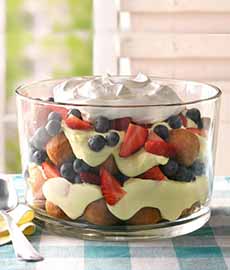
June 7th, National Donut Day, is an occasion to grab a donut, especially when chains like Dunkin’ are giving one free with the purchase of a beverage. But we have a better idea: a donut hole trifle recipe.

This easy recipe also counts as food fun. It delights children and adults alike.

Although the recipe specifies frozen whipped topping, we prefer the taste of real whipped cream.

Although we used frozen topping for the lemon pudding sauce (we didn’t have time to try making it with stabilized whipped cream), we made some for the topping.

Stabilized whipped cream added gelatin to regular whipped cream. The gelatin stiffens the whipped cream and keeps it from collapsing—for days!

You can also use whole milk instead of 2%. Thanks to Taste Of Home for the recipe.

> The history of donuts and donut holes.

> Who changed the spelling of doughnut to donut?

> Check out more delicious donut recipes below.
 
 
RECIPE: DONUT / DOUGHNUT HOLE TRIFLE

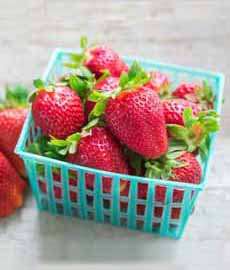
If you prefer other berries, you can substitute them for the strawberries and blueberries.
 
Ingredients

  • 2 cups cold 2% milk
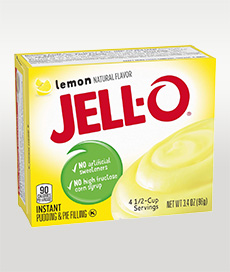
  • 1 package (3.4 ounces) instant lemon pudding mix
  • 1 carton (8 ounces) frozen whipped topping, thawed and divided
  • 16 to 32 plain doughnut holes
  • 3 cups fresh strawberries, halved
  • 2 cups fresh blueberries
  •  
    Preparation
     
    1. WHISK the milk and pudding mix for 2 minutes. Let it stand for 2 minutes or until soft-set. Fold in 2-1/2 cups of whipped topping; set aside.

    2. PLACE half the doughnut holes in a 3-quart trifle bowl. Spread half of the pudding mixture over the top.

    3. TOP the pudding with half the strawberries and blueberries. Repeat with another layer.

    4. TOP with the remaining whipped topping (or real whipped cream). Chill until serving.
     
     
    MORE DONUT RECIPES

  • Beautiful Donut Toppings
  • Cereal Donuts
  • Donut Ice Cream Sandwich Recipes
  • Filled Donut Holes
  • Key Lime Donuts
  • Salted Caramel Crescent Donuts
  • Sushi Donuts
  •  

    A Donut Hole Trifle with berries and lemon custard
    [1] Yummy food fun: a donut hole trifle with mixed berries and lemon pudding (photo © Taste Of Home).

    Jell-O Instant Lemon Pudding Package
    [2] The lemon cream is made with instant pudding (photo © Kraft Heinz).

    A Pint Of Fresh Strawberries
    [3] Use your favorite berries (photo © Good Eggs).

    Hot Chocolate & Donut
    [4] More donut fun: as a rim on top of hot chocolate (photo © Adrianna Calvo | Pexels).


    CHECK OUT WHAT’S HAPPENING ON OUR HOME PAGE, THENIBBLE.COM.


    Comments off

    Thai Glass Noodle Salad Recipe For National Salad Month

    A bowl of Thai Glass Noodle Salad
    [1] Thai glass noodle salad. The recipe is below (photo © Taste Of Home).

    Uncooked Glass Cellophane Noodles
    [2] Uncooked glass noodles (photo © Phuumy Noodles | Amazon).

    Cooked glass (cellophane) noodles in a strainer
    [3] Glass noodles turn translucent when cooked (photo © Dangmyeon |Wikipedia.

    Bottle of San-J tamari
    [4] Tamari, a gluten-free alternative to soy sauce. (photo © San-J).

    A Bottle Of Kikkoman Soy Sauce
    [5] Soy sauce. The difference between soy sauce is below.

    A dish of uncooked soybeans
    [6] Soybeans are the base of tamari and soy sauce (photo © House Foods).

    A bottle of NaGro brand ginger sesame dressing
    [7] If you don’t want to make ginger-sesame dressing from scratch, you may come across it at your grocer’s or on Amazon (photo © Canadian Grocer).

    A dish of glass noodles: cooked mung bean threads
    [8] A dish of glass noodles made with vegan chicken. Here’s the recipe (photo © Bittersweet Blog).

    Steak Salad With Cellophane Noodles
    [9] A glass noodle salad with mixed vegetables, topped with sliced steak and a garnish of plain glass noodles (photo © Valeriya | Pexels).


    May is National Salad Month. Take a step sideways from conventional green salads and pasta salads, and try this different approach: Thai Glass Noodle Salad.

    (O.K., glass noodles aren’t technically pasta—they’re not made from wheat.)

    The recipe is from Taste Of Home, where it’s one their Best-Loved Grand Prize Winning Recipes.

    While there are many glass noodle salad recipes, this one was created by Laura Wilhelm of West Hollywood, California.

    It’s a first course or side salad, but you can add poached or grilled shrimp or shredded chicken to create a main course; even leftover steak. We used leftover lamb kabobs and they fit right in.

    > What are glass noodles? Read all about them below.

    > The history of soy sauce and tamari is also below.

    > Plus, the difference between soy sauce and tamari.

    > Related recipe: Vietnamese Cabbage Slaw.

    > The history of pasta.

    > The different types of pasta: a photo glossary.
     
     
    RECIPE #1: THAI GLASS NOODLE SALAD

    Just about anyone will enjoy the fresh, bright flavors in this crunchy Thai-style salad, served at room temperature or chilled.

    Prep time is 30 minutes plus chill time if desired.
     
    Ingredients For 10 Servings

  • 6 ounces uncooked bean thread noodles
  • 3 cups coleslaw mix (shredded cabbage and carrot)
  • 2 cups chopped cucumber
  • 1 cup bean sprouts
  • 2/3 cup dry roasted peanuts or cashews, chopped
  • 1/4 cup fresh mint leaves, chopped
  • 1/4 cup fresh cilantro leaves, chopped
  • 3 green scallions, chopped
  • 1 red chile pepper, seeded and finely chopped
  • 3/4 cup sesame ginger salad dressing (recipe below)
  • 1/4 cup lime juice
  • 2 tablespoons minced fresh ginger root
  • Lime wedges
  •  
    Preparation

    1. COOK the noodles according to package directions; drain. Combine the noodles, coleslaw mix, cucumber, bean spouts, nuts, mint, cilantro, scallions and chile pepper.

    2. LET sit to allow flavors to blend. You can place in the fridge to chill at the same time. When ready to serve…

    3. ADD the dressing and toss to combine. Start by using a smaller amount of dressing; then add more as desired.
     
     
    RECIPE #2: SESAME GINGER DRESSING

    Ingredients

  • 2 tablespoons smooth tahini, ideally runny
  • 2 tablespoons toasted sesame oil
  • 2 tablespoons rice vinegar
  • 1 table tamari (substitute soy sauce*)
  • 1.5 teaspoons grated ginger
  • 1 teaspoon honey (or agave, maple syrup, non-caloric sweetener, or sugar)
  • 1-3 tables water
  •  
    Preparation

    1. WHISK together the tahini, oil, vinegar, tamari, ginger, and honey with 1 tablespoon water, until smooth.

    2. ADD additional water to desired consistency. Refrigerate until ready to use.
     
     
    THE HISTORY OF SOY SAUCE & TAMARI

    The ancestor of soy is a sauce called jan or jiang, made in ancient China. It was used for pickling raw materials in salt to preserve them.

    Jiang was a thick paste that was originally a blend of meat and a millet-based fermenting agent along with salt. This was placed in a jar, sealed, and allowed to ferment for at least 100 days. The meat dissolved, leaving behind a strong umami taste and a liquid condiment, jiang [source].

    About 2,000 years ago, Chinese jiang makers began to substitute soybeans for meat.

    This version of jiang is considered to be the ancestor soy sauce.

    It is not clear when that ancestor came to Japan, where it was called “hishio.”

    According to the Taiho Code*, hishio made from soybeans was to be made at the Hishio Institute, part of the cuisine division of the Imperial Household Agency.

    That hishio was a variant between soy sauce and miso paste, and was served on the dining tables at palace banquets.

    Eventually separate condiments were created, miso remaining a paste and soy sauce, or shoyu, a liquid.

    The next step: The making of miso paste was begun using the Kinzanji method that the Zen monk Kakushin brought back from China in 1254 (source).
     
     
    The Creation Of Tamari

    The story goes that as the Zen monk Kakushin was teaching the technique of miso-making method to the villagers of Kishu Yuasa, he noticed that the liquid that seeped out of hishio was very tasty.

    It became what is now known as “tamari soy sauce” [source].
     
     
    THE DIFFERENCE BETWEEN SOY SAUCE & TAMARI

  • Tamari has a richer flavor and taste less salty than soy sauce due to its longer fermentation process. It also has more soy protein.
  • This results in a deeper umami flavor for tamari.
  • Soy sauce tends to be saltier, with a sharper flavor and more pronounced bite.
  • Soy sauce is typically made from 50% wheat, 50% soybeans, plus salt and water. It contains gluten.
  • Tamari is typically made from 100% soybeans, water, salt, and sugar. It is usually gluten-free, but check the label.
  •  
     
    WHAT ARE GLASS NOODLES AKA CELLOPHANE NOODLES?

    Are glass noodles “pasta?” No. “Pasta” is defined as made from semolina.

    While American and Italian pastas are made from durum wheat (semolina is the ground wheat kernel of durum), pasta can be made from other flours.

    Some northern European countries use other wheats or potatoes. Polish pierogi, Italian gnocchi and German spaetzle, which are generally referred to as dumplings, are also considered forms of pasta.

    They all are descended from the original wheat pasta made in China.

    Asian noodles, also called threads, can be made of rice, soybean, wheat, or other flours. The “glass noodles” used in Thai dishes are made from mung bean starch, potato starch, sweet potato starch, tapioca, and others.

    The opaque white Chinese noodles are made from rice flour or wheat flour, and Japanese soba noodles are made from buckwheat flour.
     
     
    Cellophane Noodles AKA Glass Noodles

    Also known as bean threads, bean thread noodles, cellophane noodles, Chinese vermicelli, crystal noodles, or mung bean noodles, glass noodles become transparent when cooked. Harasume is the Japanese word.

    Originating in China more than a thousand years ago they are made from starch: batata starch, canna, cassava, mung bean starch (especially in China), potato starch, sweet potato or yam starch, tapioca, and others.

    Water and a stabilizer are also added.

    All these noodles are made without wheat, and thus gluten-free.

    Glass noodles absorb the flavors of other ingredients in the dish. They’re very versatile.

    Glass noodles spread to other parts of Asia…and out into the world.


    ________________
     
    *Tamari vs. Soy Sauce: Because it is fermented longer, tamari has a deeper flavor and is less salty and thicker than soy sauce. While you can swap one for the other. You can usually swap one for the other. Tamari is usually gluten-free, but double-check the label to be sure it doesn’t contain wheat.

    The Taihō Code, established 703 C.E., was the administrative and penal code of Japan (source).


    CHECK OUT WHAT’S HAPPENING ON OUR HOME PAGE, THENIBBLE.COM.


    Comments off

    The Easiest Grape Ice Pop Recipe For National Grape Popsicle Day

    There’s a food holiday for just about everything, and today is National Grape Popsicle Day. We have the easiest recipe for a grape ice pop.

    That’s right: Only the frozen treat sold by Unilever and trademarked Popsicle® should be referred to by the capitalized name. Everything else is a generic—however delicious—ice pop.
     
     
    > The history of the Popsicle®.

    > There are more delicious ice pop recipes below.

    > The different types of frozen desserts and treats.
     
     
    RECIPE: GRAPE ICE POPS

    Get out your ice pop molds (you can substitute small Dixie cups and wooden sticks).

     
    Ingredients

  • 32-ounce bottle grape juice (we prefer R.W. Knudsen Just Concord Grape Juice)
  • Optional: small grapes, purple or green, washed and patted dry
  •  
    Preparation

    1. FILL the ice pop molds with grape juice and place in the freezer.

    2. CHECK in an hour. If the juice is a slushy consistency, add as many grapes as you like to each pop. You can push them down with a chopstick to space them around the pops.
     
     
    MORE ICE POP RECIPES

  • Banana Split Ice Pops
  • Beer Ice Pops
  • Bloody Mary Ice Pops
  • Blueberry Ice Pops
  • Cherry Ice Pops
  • Ice Pop Cake
  • Pineapple Chipotle Ice Pops
  • Red, White & Blue Ice Pops
  • Strawberry Ice Pops With Rosé Wine
  • Tea Ice Pops
  • Tequila Watermelon Ice Pops
  •  

    A Grape Ice Pop
    [1] Make a grape ice pop with or without grape inclusions (photo © Saraphina’s Coastal Colours [alas, permanently closed).

    A bottle of Knudsen Grape Juice
    [2] Just fill ice pop molds with grape juice and freeze. Voilà: grape ice pops! (photo © Smucker’s | Nexus Capital Management).


    CHECK OUT WHAT’S HAPPENING ON OUR HOME PAGE, THENIBBLE.COM.


    Comments off


    © Copyright 2005-2026 Lifestyle Direct, Inc. All rights reserved. All images are copyrighted to their respective owners.