July 3rd is National Chocolate Wafer Day, but as with pralines, different products are called by the same name.
“Wafer” can refer to different types of cookies or to a type of chocolate melted down by chocolatiers to make other chocolate products.
Let’s take a “tour” of the wafer sub-category of cookies cookie category.
THE DIFFERENT TYPES OF WAFER COOKIES
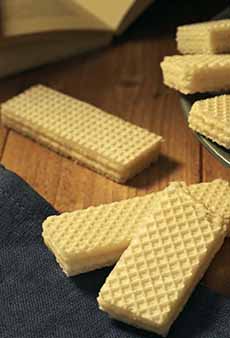
There are different types of wafers in the cookie world. All are flat: much thinner than a regular cookie, dry, crisp, and sweetened*.
Thin wafer cookies date to the 14th century, following the invention of waffle tongs/waffle irons in The Netherlands.
The earliest known English-language use of the term wafer (wafeltje in Dutch) appears in Middle English by 1377.
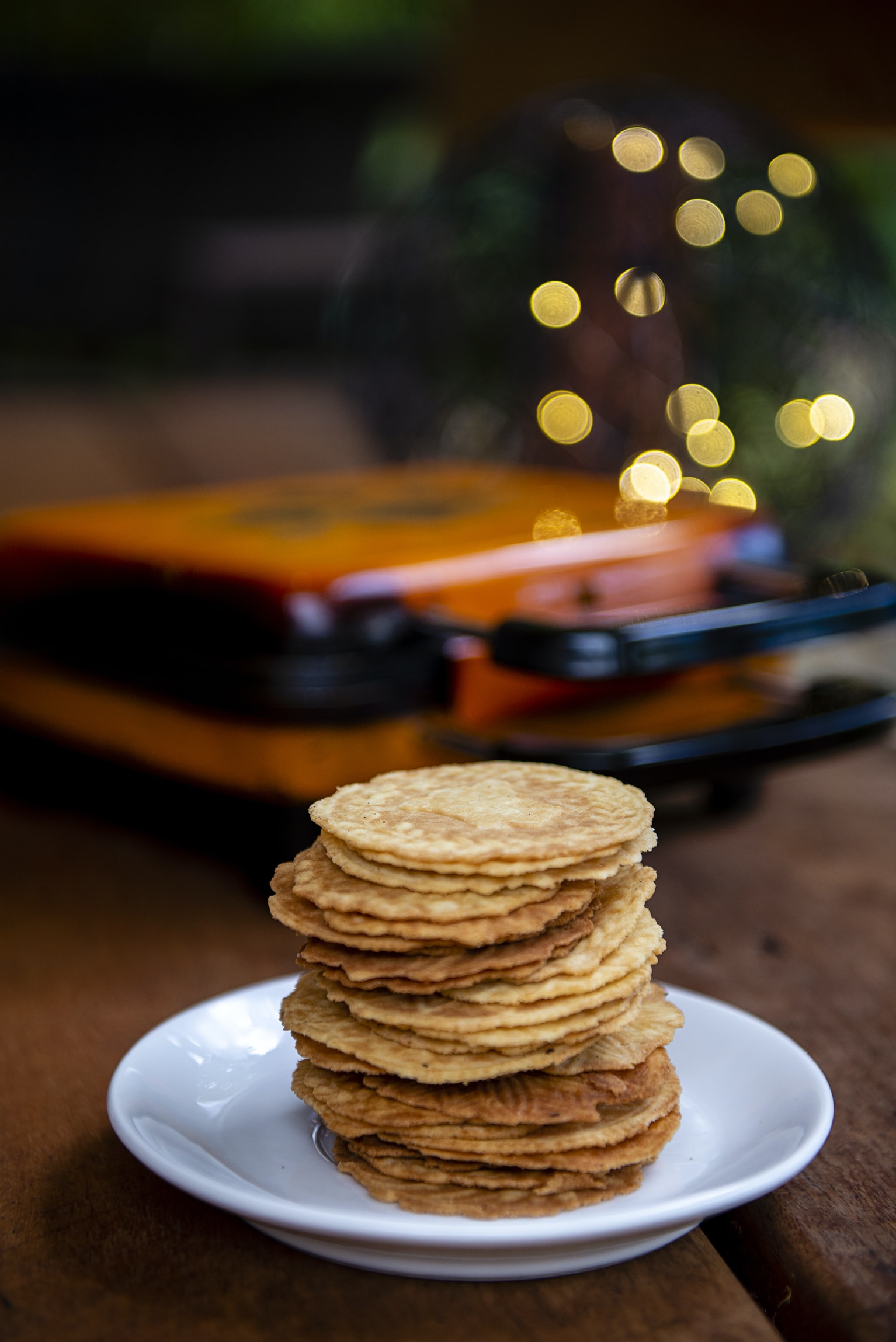
Moravian-Style Wafer Cookies (photo #1)
These are the thinnest cookies that can be made; the dough is rolled to an almost transparent thickness. The baked cookies are very fragile but delightful, for serving with ice cream or tea.
The cookies first appeared during the Christmas season centuries ago in the kingdom of Moravia a historical region located at the east side of what is now the Czech Republic (from the end of the 8th century to the end of World War I).
They are Moravia’s version of spice cookies (German Lebkuchen are a neighboring style. Here’s a recipe if you want to bake your own.
Thin wafer cookies existed in the early Renaissance, the 14th century [a href=”https://stores.renstore.com/food-and-drink/traditional-cookies-of-the-renaissance” rel=”noopener” target=”_blank”>source].
Moravian wafers likely originated in the 15th century, when exotic spices from around the world sailed into the ports of Europe.
Recipes for the cookies arrived America in the 18th century with Moravian émigrés, who founded the town of Salem (now part of Winston-Salem), North Carolina in 1766. From there, they moved to other communities of the Colonial American Moravian Church. In the U.S. they became known as Moravian wafers or cookies.
Made with basic cookie ingredients (flour, sugar, and butter) the originals were flavored with holiday spices such as cinnamon, cloves, and ginger.
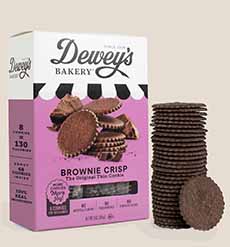
Today they are made in a variety of year-round flavors. Dewey’s Bakery, for example, makes more than 10 flavors, including Brownie Crisp to Coconut, Cranberry Orange, Ginger, Lemon, Lime, Peanut Butter, and Salted Caramel, among others.
Two or more thin, round Moravian wafers can be sandwiched with a filling—chocolate or lemon cream, caramel, etc.
Thin or sandwiched, they also can be dipped in chocolate.
Beyond Moravia, other countries made wafer-thin cookies. Check out the Italian pizzelles in photo #3.
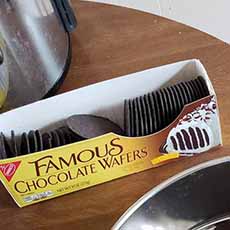
Nabisco Famous Chocolate Wafer Cookies (photos #2 and #4)
Starting in 1924, The National Biscuit Company (Nabisco) sold millions of boxes to home cooks who wanted to make an easy but impressive icebox cake dessert with their Nabisco Famous Chocolate Wafer Cookies.
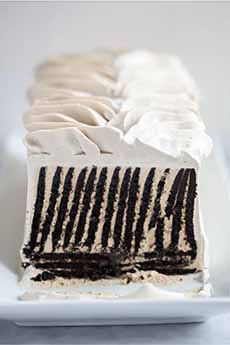
In 1929, they printed their classic recipe on the wafer box: Nabisco’s Chocolate Wafer Zebra Cake (photo #3).
The wafers are delicious on their own, and in our college, many evenings were spent topping them with whipped cream, caramel sauce, preserves, or fudge sauce.
> Icebox Cake Recipes
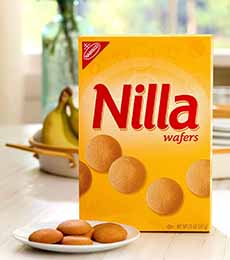
Nilla Wafer-Style Cookies (photo #5)
The recipe for vanilla wafers or sugar wafers was invented in the late 19th century by confectioner and inventor Gustav A. Mayer, born in Ulm, Germany in 1845.
An 1870 émigrée to Staten Island, he manufactured cookie and biscuit molds and equipment, and also made wafer cookies in the flat, thin style of Europe.
They were a hit, and he sold his recipe to Nabisco, which began producing them under the name Vanilla Wafers in 1898.
The beloved banana pudding recipe printed on the Vanilla Wafers box became a “hot” dessert in the 1940s (here’s the original recipe).
Nilla Trivia:
The name of the cookie was not changed to “Nilla Wafers” until 1967.
The wafers are commonly used to orally deliver compounds and medications to rats in testing, who are also big fans of the wafers [source].
Neapolitan-Style or Cream-Filled Wafer Cookies (photos #6 and #7)
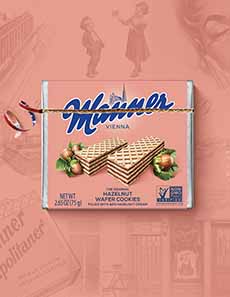
Also in 1898, a third style of wafer cookies was introduced by the Viennese confectionery company Manner.
Five thin finger cookies (1.9″ x .67″) filled with hazelnut-flavored chocolate cream, with a reed (cross-hatch) pattern on top, were stacked and called called Neapolitan-style because hazelnuts were grown in the area of Naples, Italy. The basic recipe has remained unchanged.
The style has been adopted by numerous other cookie producers and is made in flavors from chocolate to coconut to lemon to matcha.
Candy-Cookie Hybrid (photo #8)
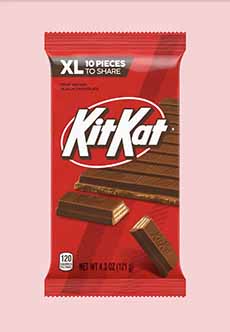
The original four-finger bar known today as Kit Kat was developed after a worker at Rowntree’s, a British confectionery company, placed a suggestion in a company suggestion box for a snack that “a man could take to work in his pack.”
The bar, initially called Rowntree’s Chocolate Crisp was launched in 1935, and renamed Kit Kat Chocolate Crisp in 1937 [source].
It’s a chocolate-covered wafer bar—thin like Neapolitan wafers—of four snappable “fingers” filled with chocolate. Rowntree’s licensed Kit Kat to the H. B. Reese Candy Company, a division of the Hershey Company, in 1970; the license exists to this day. Rowntree’s was acquired by Nestlé in 1988.
The standard bars consist of two or four pieces composed of three layers of wafer, separated and covered by an outer layer of chocolate. Each finger can be snapped from the bar separately.
In the U.S., Kit Kat flavors include milk chocolate, dark chocolate, white creme, mint + dark chocolate, birthday cake, lemon crisp and chocolate frosted donut; plus seasonal flavors (pink lemonade is the summer 2024 flavor).
You can find the Japanese Kit Kat flavors on Amazon, with national flavor favorites like wasabi and purple sweet potato.
The brand also tailors flavors to other countries worldwide. Bar None (made by Iconic Candy), Little Secrets Chocolates, and Nestlé Coffee Crisp Chocolate Bars also make Kit Kat-style bars.
CHOCOLATE WAFERS FOR FINE CHOCOLATES (photo #9)
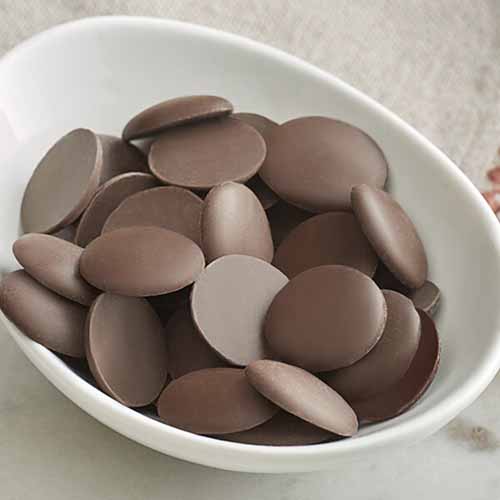
Chocolate wafers or discs are used by confectioners and pastry chefs to melt into other forms of chocolate.
Candy melts are imitation chocolate, popular with home cooks because of the variety of colors and flavors, and the lower expensive than the real thing.
Chocolate wafers or disks are related to couverture, large blocks of chocolate that are also melted down to make finished chocolates. Wafers enable home cooks and smaller chocolatiers to buy smaller amounts.

[9] Beyond cookies: Chocolate wafers or disks are melted down to create other chocolates and desserts (photo © Webstaurant Store).
MORE TO KNOW
> The history of cookies.
> The different types of cookies: a photo glossary.
> The 11 categories of cookies.
________________
*Except for Holy wafers, which are used in religious ceremonies, are almost tasteless, and are made with only wheat flour and water. Different cultures, from the U.K. (pink wafers) to Egypt (freskas), Italy (pizzelles) to Mexico and South America (obleas), have their own styles of wafer cookies. Eastern Europe and Italy celebrate Christmas Eve with Christmas wafers, cookies that depict religious scenes.
|