THE NIBBLE BLOG: Products, Recipes & Trends In Specialty Foods


Also visit our main website, TheNibble.com.

Hot New Condiment: Sweet and Spicy Drizzle Oil For Pizza & More

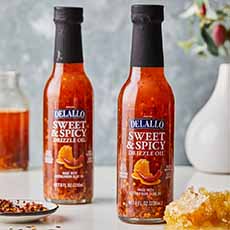
A bottle of DeLallo Sweet & Spicy EVOO for drizzling and more
[1] Sweet & Spicy Drizzle Oil, a handy new condiment (photos #1 and #3 © DeLallo).

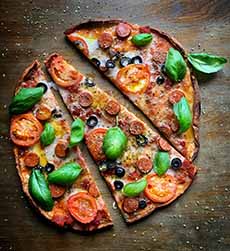
Pepperoni-olive-tomato-basil pizza with a drizzle of EEVO
[2] Just a drizzle adds an extra layer of flavor to any pizza (photo © Like Meat | Unsplash Photo).

Orzo Pasta Salad with Greek Salad Toppers
[3] Add sizzle to pasta, pasta salads and grains.


What’s sweet and hot and a new condiment for your table (or a nice hostess gift, treat for foodie friends, or a stocking stuffer)? DeLallo Sweet and Spicy Pizza Oil!

While it calls itself “pizza oil,” we call it “drizzle oil” or “finishing oil.” It’s the perfect way to add a burst of sweet heat to your favorite foods with just a drizzle:

  • Bread dippers (mix it with plain EVOO)
  • Bruschetta
  • Dips and spreads
  • Eggs
  • Fried chicken and wings
  • Goat cheese and other soft cheeses
  • Grilled meats and seafood
  • Marinades
  • Pasta
  • Pizza
  • Roasted veggies
  • Sandwiches (try on grilled cheese and veggie/cheese sandwiches)
  • Sautés (for maybe 1/5 of the OO)
  • Stir-fries
  • Vinaigrettes (just a bit)
  •  
    We’ve even stirred it into plain Greek yogurt. Delicious (also as a dip, spread, or baked potato topping).

    And if you’re willing, try it on vanilla or chocolate ice cream and pancakes or waffles.

    Made with extra virgin olive oil, chili peppers, garlic, and honey, this irresistibly bold condiment is ready to wake up all of your everyday dishes—not just pizza. Use it to dress, drip, marinate, sauté and sauce. Get creative!

    Sweet & Spicy Olive Oil is made in small batches from EVOO, garlic, red bell peppers, red chili flakes, honey powder, and cane sugar.

    It’s all natural (no artificial flavors or preservatives), non-GMO, gluten free, and certified kosher by KFH.
     
     
    GET YOUR SWEET & SPICY PIZZA OIL

    Wake up your dishes with no effort beyond drizzling!

    > Head to DeLallo Foods.
     
     
    CHECK OUT THESE PHOTO GLOSSARIES

    > The different culinary/cooking oils.

    > The different types of chile peppers.

    > Olive oil and olives.


    CHECK OUT WHAT’S HAPPENING ON OUR HOME PAGE, THENIBBLE.COM.


    Comments off

    Birthday Festivities & Recipes For National Pina Colada Day

    June 10th, yesterday, was National Pina Colada Day, and we may have had one too many to celebrate the 70th anniversary of our favorite sweet cocktail.

    One of the most iconic classic cocktails—and our favorite sweet cocktail—the Piña Colada turns 70.

    Bartender Monchito Marrero created the first Piña Colada in 1954 at The Caribe Hilton Hotel using Don Q, Puerto Rico’s #1 rum.

    Although other rum brands may try and take the credit of being in the OG, Don Q has a document signed by Señor Marrero confirming he used Don Q.

    What better way to celebrate this milestone, and toast to Señor Monchito and Don Q?

    So we invited friends for a National Piña Colada Day fiesta and made all three of the recipes below.

    > Snacks to serve: honey roasted mixed nuts, pineapple chunks, plain and toasted coconut chips, whole strawberries.
     
     
    > The history of the Piña Colada.

    > The history of rum.

    > The history of pineapple.
     
     
    RECIPE #1: KEEPIN’ IT COLADA

    This Piña Colada variation (photo #1) was created by award-winning mixologist Tiffanie Barriere of Atlanta, Georgia, who serves it in a carved-out pineapple shell (photo #1). If you prefer, serve it in a tall glass.

    Tiffanie, who you might recognize from Netflix’s “Drink Masters” and “High on the Hog” is eco-conscious like Don Q Rum, an environmental leader in the spirits industry. She says:

    “Whenever I can, I default to my no-waste Piña Colada, it looks beautiful and taste amazing.

    “But when it’s not an option, then I compost the lime, coconut shells, shavings and pineapple skins for home plants, soil and outside gardens.”

    Ingredients Per Drink

  • 1 ounce Don Q Coco Rum (photo #6)
  • 1 ounce Don Q Piña Rum (photo #7)
  • 3 ounce Homemade Coconut Cream (recipe follows)
  • ½ ounce fresh lime, cutting 1 wheel for an optional garnish
  • 3 pineapple chunks
  • Pinch of cinnamon/cinnamon stick for grating
  • 2 dashes Angostura with garnish
  •  
    Glass: Fresh pineapple shell (most pineapple fruit removed for enjoyment elsewhere).

    Preparation

    1. MUDDLE In a cocktail shaker, muddle the fresh pineapple. Add the lime, cream, rum and ice.

    2. SHAKE hard for 20 seconds. Pour the entire contents over clean ice into a hollowed pineapple. Grate fresh cinnamon on top and add 2 drops of Angostura.

    3. THREAD a straw through the lime wheel and serve.
     
     
    RECIPE #2: HOMEMADE COCONUT CREAM

    If you don’t have time to make it, buy a can (photo #5).

    Ingredients

  • 2 pounds shaved coconut chips
  • 1 ½ cup heavy cream
  • 1/8 cup white sugar
     
    Preparation

    1. COMBINE all ingredients in a small saucepan. Bring all to a boil. Take off the heat and let cool.

    2. STRAIN using cheesecloth and squeeze out the coconut cream into a glass container. Cover and store cold for up to 5 days.
     
     
    RECIPE #3: DON Q BIKINI COLADA

    A slimmed-down version (photo #2) that substitutes low-calorie coconut water (3 calories per tablespoon) for the coconut cream (34 calories per tablespoon).

    Ingredients Per Drink

  • 2 ounces Don Q Piña Rum
  • 2 ounces coconut water
  • ½ ounces lime juice
  • Optional garnish: 1 strawberry slice
  • Optional: one bar spoon Campari
  •  
    Preparation

    1. SHAKE the rum, coconut water, juice and ice, and train into a coupe glass.

    2. GARNISH with the strawberry slice. As an option, stir in the Campari.
     
     
    RECIPE #4: SKINNY PIÑA COLADA

    Don Q recommends coconut water from a coconut that’s been freshly cracked open. If you use a bottled brand, they recommend Harmless Harvest.

    Superfine sugar has 15 calories per level teaspoon.
     
    Ingredients Per Drink

  • 1½ ounces Don Q Cristal Rum (photo #4)
  • 2 ounces coconut water
  • 1 teaspoon superfine sugar*
  • 2 pineapple chunks
  •  
    Preparation

    1. Place all ingredients in a shaker with ice.

    2. SHAKE vigorously and double strain into a cocktail glass.
     
     
    MORE YUMMY PIÑA COLADA

  • Piña Colada Mousse
  • Piña Colada Pizza (Yes!)
  •  


    ________________
     
    *If you don’t have any superfine sugar, just pulse table sugar in a spice mill or food processor.


    Pina Colada served in a pineapple shell
    [1] Keeping It Colada, served in a pineapple shell (photos #1, #2, #3, #4, #6, and #7 © Don Q).

    Bikini Pina Colada with strawberry accents
    [2] You’ll look better in a bikini with this Bikini Colada, which cleverly cuts some calories.

    Skinny Colada, a Pina Colada variation with fewer calories
    [3] Cut even more calories with this Skinny Colada.

    Pina Colada With A Bottle Of Don Q Cristal Rum
    [4] Unlike most clear rums, Don Q uses a multiple distillation system to produce a cleaner, more refined, and more delicate flavor profile. Your drink will sip smoother (photo © Don Q).

    A can of 365 brand coconut cream
    [5] If you don’t want to make the coconut cream from scratch for Recipe #1, you can buy a can (photo © Whole Foods Market).

    A bottle of Don Q Coco, a coconut-flavored rum
    [6] Don Q Coco is rum with coconut flavor added.

    A bottle of Don Q Pina, pineapple flavored rum
    [7] A bottle of Don Q Piña, pineapple flavored rum.


    CHECK OUT WHAT’S HAPPENING ON OUR HOME PAGE, THENIBBLE.COM.


    Comments off

    Castelvetrano Olive Lovers: Here’s Castelvetrano Olive Oil (EVOO)

    A Bottle Of Castelvetrano Olive Oil
    [1] Castelvetrano EVOO in a handy squeeze bottle is great for drizzling. Buy it here (photos #1 and #4 © DeLallo).

    A can of Castelvetrano Olive Oil
    [2] The squeeze bottle option is more flexible than the classic can or bottle. But you might prefer this colorful can for gifting. Note that the can says “Valle del Belice,” where the olives are grown. In the U.S. the olive and oil are known as Castelvetrano (photo © Giadzy).

    A Bowl of Castelvetrano Olives
    [3] The bright green color of Castelvetrano olives from an olive bar. When they are packed and sterilized in jars, as opposed to loose in a tub at retail like the ones above, the deep green color fades to a conventional shade of green (photo © diBruno Bros.).

    A pan of sauteed Castelvetrano olives with cherry tomatoes and crusty bread
    [4] For a delicious snack, side or topping, sauté whole Castelvetrano olives with cherry tomatoes and garlic cloves, in Castelvetrano EVOO.

    A Dish Of Dipping Oil With Sourdough Bread
    [5] The flavors make a delicious bread dipper (photo © California Olive Ranch).

    Bruschetta With Chopped Tomato Topping
    [6] Enjoy the flavor on bruschetta and crostini [the difference] (photo © Vitalina Rybakova | iStock Photo).

    Two salad plates with Caesar salad
    [7] Great olive oil makes any salad taste better. Above, Caeser salad. Here’s the recipe (photo © Safe Eggs).


    Castelvetrano is a commune in the Valle del Belice, in western Sicily, where Castelvetrano olives are grown and traditionally salt-brined or pressed into olive oil.

    Valle del Belice is the home of the Castelvetrano cultivar*, and most of the world’s Castelvetrano olive trees are found in western Sicily.

    Western Sicily has one of the finest olive-growing climates in the Mediterranean, with hot days, cool evenings, and coastal breezes.

  • In Italy and the rest of the European Union, the extra-virgin olive oil is called Valle del Belìce. The table olive and the tree on which it grows is called Nocellara del Belice.
  • Both Valle del Belice olive oil and Nocellara del Belice table olives have a protected designation of origin (P.D.O.) status in the E.U.
  • These olives are marketed as Castelvetrano in the U.S. and elsewhere. Why the name change, we have not yet discovered.
  •  
     
    THE APPEAL OF CASTELVETRANO OLIVES & EVOO

    Over the past few years, these large, meaty, buttery/creamy, nutty, toothsome, and mild olives have become one of the most sought-after varieties. They are subtly briny and have a low salt content compared to other olives.

    In addition to pressing for olive oil, Castelvetrano’s great flavor and texture make it a very popular table olive. (In the trade, an olive variety that is delicious for both oil and table is known as a dual-purpose olive.)

    The mildness gives Castelvetrano great appeal to many Americans.

  • Many of us grew up with blander canned olives, used in salads, on pizza toppings, meat loaf, on a relish tray, etc.
  • Most imported olives and artisan California olives are pungent and briny, a high-impact taste compared to big supermarket olive brands like Del Monte, Goya, and Lindsay.
  •  
    The bright green color also contributes to the allure.

  • The Harvest. Like most green olives, Castelvetranos are harvested young, when they reach peak flavor and have bright a green color. The harvest usually takes place from late September through October.
  • Olive Oil. For EVOO, the olives go directly from the grove to the olive press and produce a richly-colored olive oil with a pale green cast.
  • Table Olives. The table olives leave the grove for a meticulous curing process: multiple rounds of processing in a fresh water and lye solution, over a span of two weeks.
  • This process serves two important purposes: It removes the olives’ natural bitter compounds and maintains their crispness and meaty texture.
  • It also contributes to the development of the signature buttery, mild olive flavor [source].
  •  
    > All about Castelvetrano olives.

    > The different types of olives and olive oil: a photo glossary.

    > An overview of extra virgin olive oil.

    > The history of olives.

    > The history of olive oil.

    > The different types of cooking oils.

    > Check out more great olive oil information below.
     
     
    ABOUT DELALLO CASTELVETRANO OLIVE OIL

    DeLallo’s Castelvetrano Extra Virgin Olive Oil is packaged in a convenient squeeze bottle, inspired by chefs.

    Made from 100% premium Castelvetranos, it captures the fresh olive flavor for which the variety is beloved.

    Fruity, grassy and pleasantly bitter with a bright peppery finish, EVOO is a terrific condiment for dressing, drizzling and finishing.

    Olive Oil 101: Note that when a specific variety of olive and country of origin is not specified on the label, an EVOO can be made with any type of olives—whether one variety or a blended of varieties, from any country or region.

    Extra virgin olive oil made with the first cold press of olives. Here’s more about it.

    > Get your DeLallo Castelvetrano Extra Virgin Olive Oil here.
     
     
    WAYS TO USE CASTELVETRANO OLIVE OIL

    Delicious as a salad oil and a finishing oil, this versatile EVOO is a superior everyday cooking oil perfect for sauteing, searing, pan-frying, roasting and even baking.

    The squeeze bottle makes it easy.

  • Baking. Use in recipes for homemade breads, cakes and cookies. Here’s how.
  • Bread. Use as a bread dipper, and on crostini, bruschetta, and sandwiches: Italian submarine sandwiches.
  • In fact, try it on any sandwich instead of butter.
  • Breakfast. Drizzle over plain or vanilla yogurt for flavor and heart-healthy benefits.
  • Cooking. Use an everyday cooking oil in sautés, pan-fries, and other recipes.
  • Dessert: Drizzle over ice cream and lemon sorbet.
  • Garnish. Drizzle in the center of hummus and soups.
  • Mains. Drizzle it on grilled/roasted meats, poultry, seafood, and vegetables.
  • Pasta. Use it as a sauce for pasta like Cacio e Pepe—just EVOO, Parmesan, and fresh-cracked pepper.
  • Or, make pesto (recipe).
  • Salad. Make your favorite vinaigrette or drizzle directly onto sliced tomatoes or a Caprese salad[4].
  •  
     
    MORE ABOUT OLIVE OIL

  • The Aromas & Flavors Of Olive Oil & The Olive Oil Tasting Wheel
  • Baking, Grilling & Cooking With Extra Virgin Olive Oil, Plus Recipes
  • Bake With Olive Oil Instead of Butter
  • Beware Of Fake Italian Olive Oil
  • Check your Extra Virgin Olive Oil I.Q.
  • The Different Flavors Of Olive Oil
  • Food Fun: An Olive Oil Martini Recipe
  • Extra Virgin Olive Oil: An Overview
  • Glossary Of Olive Oil Types & Terminology
  • Healthy Fats For Cooking & Eating
  • How To Taste Olive Oil (And Have A Tasting Party!)
  • Twenty Ways To Use Flavored Or Infused Olive Oils
  • Why You Should Replace Butter With Olive Oil
  •  
     
    OLIVE HOLIDAYS

  • National Olive Day is June 1st.
  • World Martini Day is June 15th.
  • Extra Virgin Olive Oil Day is September 30th.
  •  
    ________________
     
    *A variety is a naturally occurring genetic variation within a species. A cultivar is developed by breeders to possess desirable traits.


    CHECK OUT WHAT’S HAPPENING ON OUR HOME PAGE, THENIBBLE.COM.


    Comments off


    © Copyright 2005-2026 Lifestyle Direct, Inc. All rights reserved. All images are copyrighted to their respective owners.