|
February 8th is National Molasses Bar Day. How about whipping up a batch of chewy molasses bar cookies?
Before there were chocolate brownies, there were molasses bars. What exactly is molasses? See below for the types of molasses and the “>history of molasses.
This recipe, from Grandma’s Molasses, ups the chewiness and nutrition by adding nuts and dried dates.
Walnuts are popular, and pistachios and dates are a classic Middle East combination, but you can use any nut you favor.
Don’t like dates? Substitute chocolate chips.
For a special dessert tonight, top a bar with a scoop of vanilla ice cream.
Below:
> The recipe for Grandma’s date nut bars.
> What is molasses?
> What is fruit molasses?
> The history of molasses.
Elsewhere on The Nibble:
> The history of cookies.
> The 10 basic styles of cookies.
> The different varieties of of cookies: a photo glossary.
> The year’s 45 cookie holidays (brownies and other bars are cookies).
> The different types of sweeteners: a photo glossary.
RECIPE: GRANDMA’S DATE NUT MOLASSES BARS
Ingredients For 32 Bars
1 cup enriched flour, sifted
1/2 teaspoon salt
1/8 teaspoon baking soda
1 egg, beaten
1/2 cup sugar
1/2 cup molasses
1/4 cup shortening, melted
1/2 teaspoon vanilla
2/3 cup nuts, chopped
1 package/7 ounces pitted dates, finely chopped
Substitute: 1-1/4 cups chocolate chips
Preparation
1. PREHEAT the oven to 350°F.
2. SIFT together the flour, salt, and baking soda. Set aside.
3. COMBINE the egg, sugar, molasses, shortening, and vanilla. Stir in the flour mixture, nuts, and dates.
4. LINE a 9 x 9 x 2-inch pan with wax paper, greased and lightly floured. Pour in the batter and bake for 40 minutes or until done.
5. TURN out onto a cooling rack; remove the wax paper. When cool, cut into 32 bars. Store in an airtight container.
WHAT IS MOLASSES?
Molasses is a thick syrup produced as a by-product during the refining of sugar cane. Molasses is the residue that is left after the sugar crystals are extracted (i.e., molasses is produced when no more sugar may be economically crystallized by conventional means).
Molasses is predominantly sucrose, with some glucose and fructose. It is 65% as sweet as sugar. The better grades of molasses, such as New Orleans drip molasses and Barbados molasses, are unprocessed and contain more sucrose, making them lighter in color. They are used in cooking and confectionery and in the production of rum.
Light molasses comes from the first boiling of the cane. It is also called sweet molasses and is used as a pancake syrup or a sweetener.
Dark molasses comes from the second boiling. It is more flavorful and less sweet than light molasses, and is often used for gingerbread and spice cookies.
Treacle is the British term for dark molasses; light molasses is called golden syrup.
Blackstrap molasses, the lowest grade, comes from the third boiling; it is strong and bitter, and mainly used in mixed cattle feed and in the manufacture of industrial alcohol.
Sulfured molasses has had sulfur dioxide added as a preservative (or, the sulfur in the manufacturing process is retained in the molasses).
In addition to baking (baked beans, cakes, cookies, cornbread, doughnuts, gingerbread, mince pies, pumpkin pies, and the Pennsylvania Dutch shoofly pie), molasses is also used in:
Rye breads and other whole grain breads
Barbecue sauces
Beer styles such as stout and porter
Reconstitution of brown sugar by combining it with white sugar
In jerky processing
For yeast production
THE HISTORY OF MOLASSES
Molasses, a byproduct of refining sugar cane juice, has was in use in India by 500 B.C.E. [source].
The word molasses comes from the Portuguese melaço, which derived from the late Latin mellacium must (referring to grape must), based on the Latin mel, honey.
In the 17th century, it was used in trade for slaves brought from Africa to the Caribbean. When sugar cane plantations were established in the Caribbean, much of the molasses was sold to New England, where distillers turned it into rum.
On April 18, 1775, Paul Revere is said to have paused his famous ride in Medford, Massachusetts, at the house of Isaac Hall to warm himself with a slug or two of rum [source].
Before the Revolutionary War, it is estimated that colonists downed an average of four gallons of rum a year [source].
It warmed them in cold weather, and was safer than drinking water, which could come from tainted sources.
The other use for rum in the Colonies was baking: baked beans, cakes, cookies, cornbread, doughnuts, gingerbread, mince pies, pumpkin pies, and the Pennsylvania Dutch shoofly pie.
On the other side of the pond, in England, any candy made of molasses was called toffee, which later evolved into taffy. Molasses there is known as black treacle.
Colonial molasses makers were not competing successfully against the non-British colonies. The Molasses Act of 1733, an Act of the Parliament of Great Britain, imposed a tax of six pence per gallon on imports of molasses, rum, and sugar from non-British colonies.
The act was created largely at the insistence of large plantation owners in the British West Indies—not for the purpose of raising revenue, but to regulate trade by making British products cheaper than those from the French West Indies. This created a practical monopoly of the North American sugar market for the British West Indies sugarcane growers [source].
By the 1830s, a bride’s popularity was measured by the number of layers of molasses stack cake guests brought her [source].
The Most Popular Sweetener
Molasses remained the most popular sweetener through the 19th century. Used to sweeten drinks as well as confections, molasses was also used to flavor meat, especially pork and ham (the concept evolved into modern barbecue sauce).
In addition to rum, molasses was used to create industrial alcohol for ammunition during World War I. Molasses used to be the most popular sweetener in the U.S., but after World War I, it was replaced by refined sugar, as a cheaper alternative.
Another notable event in U.S. molasses history was the Great Molasses Flood, also known as the Boston Molasses Disaster, on January 15, 1919.
A 50-foot-tall steel vat of molasses, weighing approximately 13,000 short tons (12,000 tons), burst in Boston’s North End, sending a tidal wave of more than 2 million gallons of molasses into Boston’s North End.
The wave of molasses rushed through the streets at an estimated 35 mph, killing 21 people and injuring 150. It also resulted in $1 million in property damages ($16 million today). Clean-up took months, and for decades afterward, residents claimed that the area smelled of molasses on hot summer days [source].
Fortunately, there’s been no molasses excitement since then. Cooks continue to use molasses in much the same way it was used in Colonial times (article continues below).
|
|
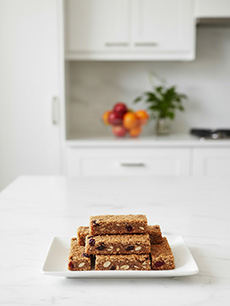
[1] Date, nut and molasses bars (Abacus Photo).
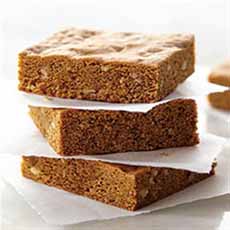
[2] This recipe makes a smoother bar, more like a brownie (photo © All Recipes).

[3] Grandma’s Molasses is the brand in our cupboard. Check out all the recipes you can make with molasses (photo © Grandma’s Molasses).
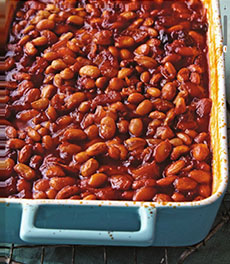
[4] Molasses is a must to flavor baked beans. Here’s a recipe (photo © Melissa’s).
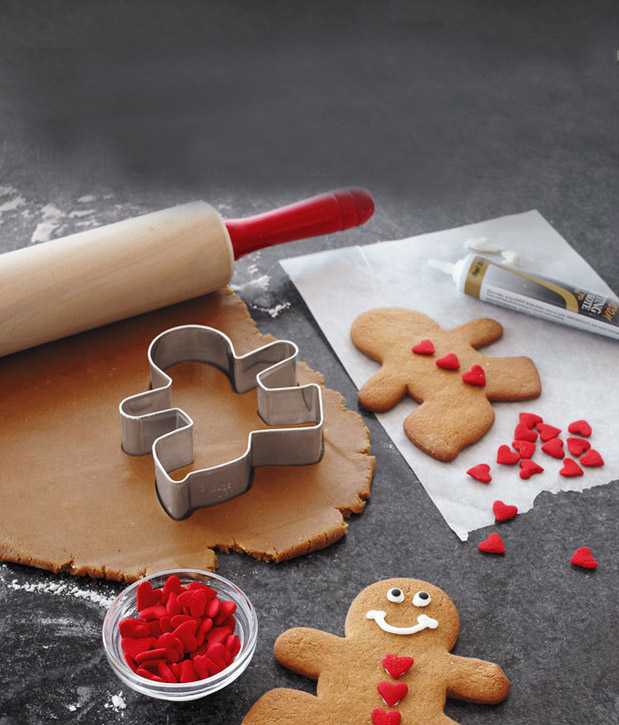
[5] Molasses is a key ingredient in gingerbread and gingersnaps (photo © Sur La Table).
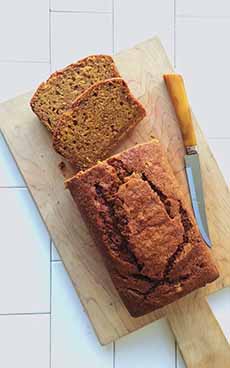
[5] Pumpkin and molasses are a natural combination, whether pumpkin pie, pumpkin bread, muffins, and more (photo © Good Eggs).
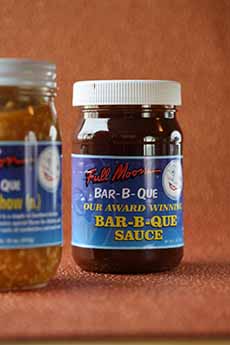
[6] American barbecue sauces invariably are sweetened with molasses (photo by Hannah Kaminsky | © The Nibble).

[7] Artisan rye breads use molasses (photo © Rising Above Bakery).
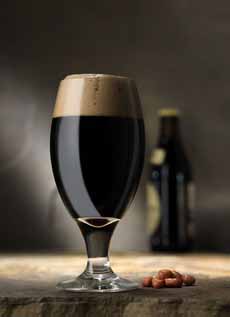
[8] Porter and stout, the darkest beers, are brewed with molasses (photo © American Craft Beer).
|
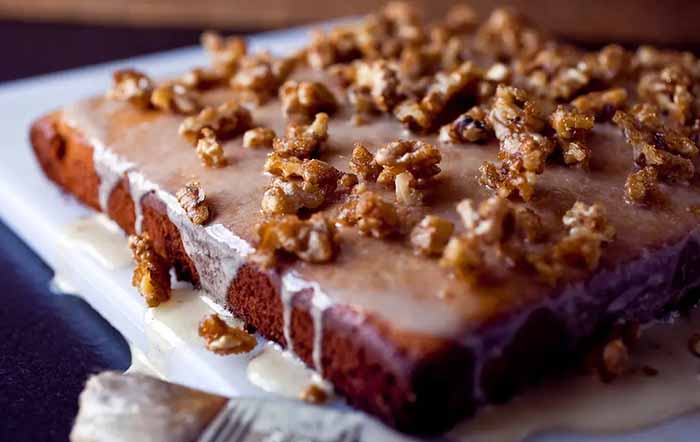
[9] A pomegranate molasses butter cake. Here’s the recipe (photo © Andrew Scrivani for the New York Times).
Fruit Molasses
Today, you may come across sweet fruit syrups called molasses (photo #9) that can be used in savory and sweet cooking. They typically have a concentrated sweet-sour flavor with a sophisticated, fruity twist.
These include:
Pomegranate molasses, also known as robb-e anâr and nar ekshisi, a Persian syrup consisting of concentrated pomegranate juice flavored with sugar and lemon juice. It is usually used in fish and meat dishes.
Grape molasses, known as petimezi, popular in Greece and pekmez in Turkey.
Cherry molasses, popular in Turkish cuisine. Here’s a recipe to make your own.
Sour plum molasses, a staple in Northern Iranian cooking. Here’s a recipe.
Uses For Fruit Molasses In Sweet Recipes
Breakfast: Drizzle over Greek yogurt, stir into oatmeal.
Dessert: Glaze cakes, drizzle over ice cream, swirl into the batter of cheesecakes and cookies.
Drinks: Mix into sparkling water for a refreshing soda or stir into cocktails.
It’s important to note that while it is syrupy, fruit molasses is not just a sweetener, but a highly acidic, tangy condiment that balances sugar. This makes it ideal for creating more complex, less sugary desserts.
Uses For Fruit Molasses In Savory Recipes
Consider the tangy, sweet-sour, slightly fruity profile similar to balsamic glaze or tamarind. It acts as a versatile, thick, and acidic ingredient perfect for marinades, glazes, dressings, and enhancing the depth of slow-cooked stews and roasted vegetables. Add conservatively amounts to start, as it can be is quite intense.
Condiments/Finishing Sauces: Drizzle directly over grilled fish, halloumi, or as a finishing touc h to creamy dips and grain bowls.
Dips and Spreads: Essential in Middle Eastern dips like muhammara (roasted red pepper dip) or added to hummus and babaghanoush.
Marinades and Glazes: For grilled chicken, lamb chops, beef, or duck. Consider pairing with allspice, sumac, garlic, and herbs.
Roasted Vegetables: Drizzle over Brussels sprouts, carrots, or squash for a caramelized, tangy finish.
Soups and Stews: A spoonful added to lentil soup or rich stews (like Fesenjan) cuts through the richness, providing a subtle, bright acidity.
Vinaigrettes: For green salads, tomato salads, and cucumber salads.
No matter what type of molasses appeals to you, make something with it that’s new for you. There’s no better reason than expanding your culinary horizons.
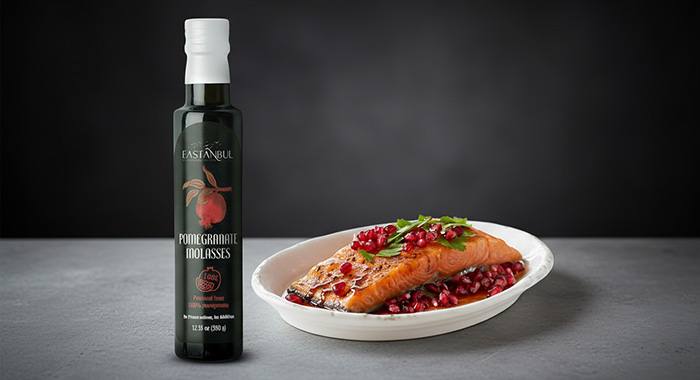 ] ]
[10] Date molasses and other fruit-based syrups called molasses are easy to find online. This pomegranate molasses is used to glaze chicken and fish. Here’s a glazed salmon recipe (photo © Eastanbul | Amazon).
CHECK OUT WHAT’S HAPPENING ON OUR HOME PAGE, THENIBBLE.COM.
|