THE NIBBLE BLOG: Products, Recipes & Trends In Specialty Foods


Also visit our main website, TheNibble.com.

TOP PICK OF THE WEEK: Cake Truffles & Other Sweets

Kim Crawford Cake Truffles
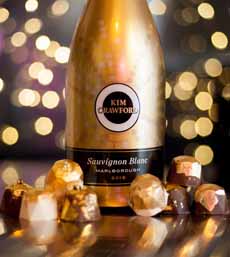
[1] The most glamorous cake truffles, from Kim Crawford and Mini Melanie Bakery. Both the wine bottles and truffles are limited edition for the holidays. (photo Kim Crawford).

Cookies & Cream Marshmallows
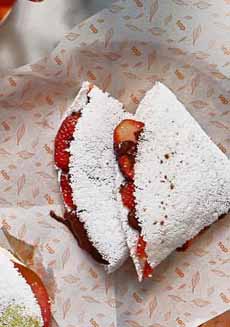
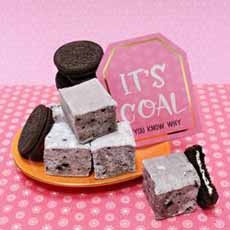
[2] Santa’s Coal marshmallows are a spin on cookies and cream (photos #2 and #3 XO Marshmallow).

Candy Cane Marshmallows
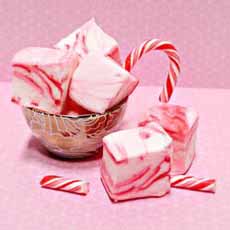
[3] Peppermint marshmallows are seasonal special. Imagine melting them in hot chocolate!

  Our Top Picks Of The Week are four sweet treats we’re personally giving as holiday gifts.

1. MINI MELANIE CAKE TRUFFLES

Cake truffles have been hot for the last five years, at least. But most of them don’t have the panache of these cake truffles from Mini Melanie bakery in Brooklyn.

The dark chocolate ganache in the center of the cake truffle is infused with Kim Crawford Wines’ Sauvignon Blanc. The truffles are then coated in dark, milk or white chocolate, topped with 24 karat gold leaf, and accented with mini gold sugar dragées.

For those who have never eaten gold before, it’s a novel experience, and a delicious one.

For an even more elaborate gift, pair a box of the Mini Melanie cake truffles with Kim Crawford’s limited edition 2017 Holiday Bottle (photo #1).

A dozen truffles in a beautiful box are $42. Get yours at MiniMelanie.com.

What Is Edible Gold?

Edible gold is 24 karat gold leaf: a beautiful yet flavorless, odorless and nontoxic form of gold. It’s pure gold leaf that’s been hammered into sheets as thin as possible, and used as a garnish for cocktails, desserts and other foods.

It’s the same gold leaf that is used in gilding art, picture frames, ceilings and cathedral domes.
 
 
2. XO MARSHMALLOWS

All you need is love…and marshmallows, say the marshmallow artisans at XO.

Handcrafted in small batches, they’re all natural, gluten free and egg free.

In addition to a delicious vanilla marshmallow, there’s a specialty flavor for everyone:

  • Alcohol-accented: Bourbon Marshmallows, Champagne Marshmallows
  • Fun flavors: Butterbeer Marshmallows, Nutella Marshmallows
  • Gourmet flavors: Green Tea Marshmallows, Kahlúa Coffee Marshmallows, Lavender Honey Marshmallows, Salted Caramel Marshmallows
  • Holiday flavors: Peppermint Marshmallows (photo #3), Santa’s Cookie Coal Marshmallows (cookies and cream—photo #2))
  •  
    A colorful box of 12 marshmallows is $7.95.

    We ate them from the box, but they can be served:

  • Atop hot chocolate
  • Instead of cookies
  • In any recipe calling for marshmallows
  •  
    If you’ve never had artisan marshmallows, you’re in for a real treat. Get yours at XOMarshmallow.com.

    The company also has gourmet S’mores kits, marshmallow cream and hot chocolate.


    3. MICHEL CLUIZEL iCLUIZEL 8.1

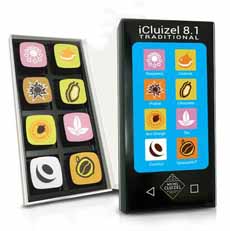
    Eat your mobile phone; or at least, a box that looks like a mobile phone with eight chocolate “apps” inside (photo #4).

    The apps are bonbons of 70% dark chocolate, with chocolate ganaches flavored with caramel, coconut, coffee, chocolate, praliné, nut-orange, raspberry and tea.

    The bonbons are dairy-free: no milk, butter or cream. iCluizel is $18, at Cluizel.us.

    Paris-based Michel Cluizel is one of the world’s greatest chocolate makers. Here’s our review of the brand.
     
     
    4. BEE HARMONY PREMIUM RAW HONEY

    The nice twist with these premium raw honeys is that they are gathered from different regions and localities of the U.S.

    Give a bottle of honey from California, Dakota, Florida, Georgia, Great Lakes, Hawaii, Midwest, New York or Texas.

    If you prefer to go regional, there are honeys gathered in the Northeast, Pacific Northwest and Southeast.

    If you want the classics, there are Berry Honey, Blueberry Honey, Clover Honey, Orange Blossom Honey and Wildflower Honey, all raw and American-sourced.

    Bee Harmony Honey is dedicated to using “Beesponsible” practices (a.k.a. responsible beekeeping) and encouraging consumers to join the “beevolution” by taking steps to help keep honeybees a healthy and thriving part of our world.

    This includes buying raw, ethically sourced honey. Ethically sourced means that the bees’ welfare is paramount.

    A 13-ounce jars range from $9.99 to $11.99 Get yours at BeeSponsible.com.

    What Is Raw Honey?

    Raw honey comes straight from the beehive: There’s no pasteurization or other processing, which remove nutrients.

      iCluizel 8.1 Chocolate Phone
    [4]. Eat your apps: There are eight chocolate bonbon “apps” inside this “phone” (photo Michel Cluizel).

    Bee Responsible California Honey
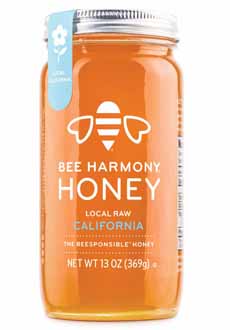
    [5] Don’t buy generic honey. The good stuff is varietal honey, from a specific locale (photo Beesponsible).

     
    It is a potent superfood, containing bee pollen—packed with protein and amino acids, considered to be one of nature’s most nourishing foods. Mass-marketed honey (“supermarket honey”) honey does not contain bee pollen.
      

    Comments off

    TIP OF THE DAY: How To Improve Tomato Flavor

    Christmas Caprese Salad
    [1] Deck the table with this colorful salad. The recipe is below (photo Bella Sun Luci | Facebook.

    Caprese Salad Wreath

    [2] Create a Caprese wreath on a platter. Here’s the recipe from the Daily Mail.

    Caprese Salad Wreath
    [3] This Caprese wreath uses the smallest mozzarella balls, called perlini (photo courtesy Country Living).


    Is there anything blander than out-of-season tomatoes? The good news is that you can improve tomato flavor. Or, don’t by out-of-season tomatoes in the first place.

    If you need bright red color in the off-season, use these alternatives:

  • Cherry or grape tomatoes
  • Pimento*
  • Sundried tomatoes, marinated in olive oil
  •  
     
    HOW TO MAKE BLAND TOMATOES TASTE BETTER

    If you truly must have slices of tomato, here are three tricks to make them better.

  • Marinate the tomato slices in vinaigrette. Use good olive oil and vinegar and immerse the tomato for 15 minutes or longer. Consider adding herbs (oregano, parsley, thyme) and a sprinkle of salt.
  • Marinate them in pineapple juice. Pineapple juice adds missing acidity and sweetness, but it requires a delicate hand so you don’t end up with pineapple-flavored tomato. Add the juice a tablespoon at a time and let it sink in; then taste.
  • Broil the slices. The heat will blister the skin and caramelize the sugars, creating a sweeter slice. Broil the tomatoes until the tops brown, then turn and brown the other side.
  •  
     
    HOW TO MAKE A TASTY CAPRESE SALAD

    With its red and green colors, Caprese salad is a natural during the holiday season.

    If the Caprese salad in photo #1 makes you want to dig right in, here’s the recipe.

    This recipe substitutes basil pesto and fresh parsley for the traditional fresh basil. We’re fine with pesto as an extra condiment, but if there isn’t fresh basil, it isn’t a Caprese. The mozzarella and tomatoes demand it!

    In other words, substitute the parsley in the photo with basil.
     
    Ingredients

  • Sliced tomatoes or whole pimento
  • Sliced mozzarella
  • Balsamic vinegar
  • Balsamic glaze†
  • EVOO
  • Julienne sundried tomatoes in olive oil (we use Bella Sun Luci or Mezzetta)
  • Pesto
  • Shredded basil (preferred) or parsley leaves
  • Kalamata or picholine olives
  •  
    Preparation

    1. PLACE the mozzarella slices atop the tomato slices and arrange them on the plate as desired. drizzle with oil and balsamic vinegar.

    2. DECORATE the plate with stripes of balsamic glaze and pesto.

    3. GARNISH with the julienned sundried tomatoes, shredded basil, and olives.

    ________________

    *Pimiento (pim-YEN-toe) is the Spanish word for a particular sweet chile pepper similar to a red bell pepper. It’s heart-shaped, about 3 to 4 inches long by 2 to 3 inches wide. In the U.S., it is largely spelled pimento. Here’s more about pimento.

    †Balsamic glaze is balsamic vinegar that has been reduced into a syrup. The benefit here is that it will hold a straight line; i.e., it isn’t runny like vinegar. You can buy it or make it. Here’s more about balsamic glaze.


    CHECK OUT WHAT’S HAPPENING ON OUR HOME PAGE, THENIBBLE.COM.


    Comments off

    TIP OF THE DAY: Muscadine Grapes

    What are those jumbo grapes you occasionally find in the market?

    They’re muscadine grapes, Vitis rotundifolia, a species native to the warm, humid climate of the southeastern and south-central United States.

    The vines are well adapted to their native warm and humid climate. The grape has been extensively cultivated since the 16th century.

    Today there are more than 300 muscadine cultivars grown in the U.S. When ripe, the different varieties are green, bronze, red or black.

    Today’s crops include common (natural) grapes and patented grapes, which are hybrids bred (and patented) to enhance qualities.

    Like other grapes, muscadines are a rich source of polyphenols, powerful antioxidants.

    Muscadines naturally have thicker skin, so the fruit was not popular as a table grape. Instead, the variety was, and is, typically used in making jelly, juice and wine.

    Modern breeding of patent grapes has made the skin readily palatable, and it is these grapes that have sprung up in food markets in the last few years.

    Food Trivia: Fans of older novels may have come across characters drinking scuppernong wine. It is a dry red table wine made from the bronze variety of muscadine. In the South, bronze muscadine grapes are called scuppernong, after the Scuppernong River in North Carolina, where they were originally bred. The other colors are called muscadine.
     
     
    WAYS TO USE MUSCADINE GRAPES

    You can use muscadines anywhere you use other grapes, although in situations requiring a fork, you may need to cut them in half to spear them.

  • Brandied grapes (marinated in brandy or other liqueur or spirit)
  • Cake and cupcake garnishes
  • Cheese plates
  • Frozen snacks
  • Fruit bowl
  • Garnishes, raw or roasted
  • Grape salad (recipe)
  • Hand fruit
  • Pickled grapes
  • Salads: green salads, fruit salads
  • Sides (roasted grapes)
  • Skewers
  •  
     
    COMMON AMERICAN GRAPES

    While immigrants brought their own varieties from Europe (known as Old World grapes), America had a ready supply of indigenous grapes.
     
    Concord Grapes

    Native to eastern North America, the wild vines of Vitis labrusca were first cultivated in the mid-19th century in Concord, Massachusetts, by crossbreeding them with the common European wine grape Vitis vinifera.

    Concord grapes have a sweet, candy-like flavor and a “foxy” aroma. They’re the flavor Americans think of as “grapey”.

    What’s “foxy?” The term refers to a distinctive note found in some wines: a sort of wild, musky, animal aroma. The grapes are often called “fox grapes.”

    The aroma is unusual, but not unpleasant. One wine writer commented that it reminds him of the scent of a fur coat.

    The quality is often found in American grape varieties like Concord or Catawba, and the aroma of the wine is usually accompanied by a grapey flavor.

    Concord grapes are known to most Americans as the grape used to make grape jelly and purple grape juice. They are the most common source of the grape flavoring in candies and sodas.

    Concord grapes are also used to make sweet wines. Their deep purple color makes them a popular choice for sacramental wines and Kosher wines.

      Muscadine Grapes
    [1] Perhaps the largest cultivated grape you’ll find (photo courtesy Sid Wainer).

    Muscadine Grapes
    [2] On the vine (photo courtesy Stark Bros).

    Roast Chicken Muscadine Grapes
    [3] Add them to the roasting pan with any protein (here’s the recipe from Steelehouse Kitchen).

    Frosted Muscadine Grapes
    [4] You can freeze the grapes as a snack, and/or frost them with sugar (here’s the recipe for sugar-frosted grapes; photo and more recipes from Spoongood.

     
    Another note of interest: The variety also has slip skins, meaning that the skin slides freely off the ripe grape when squeezed.
     
    Catawba Grapes

    Other cultivars of the species Vitis labrusca are used to make dry wines.

    Before the Concord grape became prominent, Catawba was the most planted grape in early 19th-century America. It was and is used to make white and rosé sparkling wines, as well as juice, jams and jellies.
     
    Isabella Grapes

    Isabella is another cultivar derived from Vitis labrusca. It is used as a table grape, and to make juice and wine.

    A dark grape originating in the southern United States, it has spread around the world.

    It is widely planted in South America, and is one of the most popular grapes in the former USSR, grown in Azerbaijan, Georgia and Moldova, used to make dry red wines.
     
     
    To learn more about native American grapes, just Google. Here are two articles for starters:

  • Different species
  • Different wines
  •   

    Comments off


    © Copyright 2005-2026 Lifestyle Direct, Inc. All rights reserved. All images are copyrighted to their respective owners.