THE NIBBLE BLOG: Products, Recipes & Trends In Specialty Foods


Also visit our main website, TheNibble.com.

TIP OF THE DAY: Mix Zucchini Ribbons With Pasta

When we were 10 years old, Mom planted zucchini in the backyard. We watched in awe as they multiplied faster than the brooms in the Sorcerer’s Apprentice scene from Fantasia.

It wasn’t a big plot—maybe 6’ x 8’—but it produced so much zucchini, we couldn’t eat half of it, and gave the rest away.

A pre-tip tip: Pick or buy zucchini on the smaller side. As they get bigger, they get more watery and bland.

We left a few on the vine until the end of the season. There’s a photo of us with our brother, holding up one that grew to three feet long and very wide in girth. Impressive, but not very tasty.

(According to Guinness World Records, the longest zucchini measured 7 ft 10.3 inches, harvested in October 2005 in a home garden in Brampton, Ontario, Canada.)

> The history of zucchini.

> The recipe is below, but first:
 
 
HOW VERSATILE IS ZUCCHINI?

That summer Mom made:

  • Zucchini crudités with dips.
  • Zucchini grilled, steamed, stewed, stir-fried, stuffed and baked.
  • Zucchini bread and muffins.
  • Zucchini casseroles and lasagna.
  • Zucchini pickles and salads.
  • Zucchini soup…and our very favorite childhood recipe:
  • Fried zucchini with a squeeze of lemon (and of course, ketchup).
  •  
    Much of the zucchini we gave away to our Nana was returned to our home as ratatouille, a delicious Provençal summer dish that also includes bell peppers, eggplant, garlic, onions and tomatoes.
     
    Here’s Nana’s recipe.

    It can be served hot or cold, or used as a topping for bruschetta or crostini.

    Serving it chilled or at room temperature, topped with Greek yogurt and a chiffonade of fresh basil, is a delicious first course with toasts or crackers, Or, use it to top salad fixings, and garnished with black olives.

       
    /home/content/p3pnexwpnas01_data02/07/2891007/html/wp content/uploads/zucchini noodles 230
    [1] Regular pasta ribbons mixed with zucchini ribbons, to create a fun dish that really cuts down on calories (photo © Vegetarian Everyday Cookbook).

    Summer Squash & Zucchini
    [2] Mixed summer squash and zucchini (photo © Good Eggs).


    CELEBRATE NATIONAL ZUCCHINI DAY

    August 8th, National Zucchini Day, is a good day for zucchini in any form. Last year, we made zucchini “pasta” with the Microplane Spiral Cutter, a gadget that peels whole zucchini into pasta-like strands (it does the same with cucumbers, carrots and other root vegetables). You can use a box grater, but for less than $15, this gadget makes it easy.

    Since then, we’ve been playing with other ways to use zucchini pasta, including swirling the uncooked ribbons into a bird’s nest shape, filled with deviled eggs, egg salad, scrambled eggs and, beyond the nest-and-eggs theme, with marinated cherry tomatoes and other salad ingredients.

    But today, we share this idea sent to us from Good Eggs [a supplier of the exceptional produce and specialty foods], excerpted from The Beetlebung Farm Cookbook: A Year of Cooking on Martha’s Vineyard.

    The recipe combines conventional ribbon pasta (long strands, like spaghetti and fettuccine) with zucchini ribbons, and makes the pasta dish more nutritious. Zucchini contains lots of vitamin C, plus B6, magnesium, iron, and calcium.

    But more important to most people, cooked zucchini has just 20 calories per cup, compared with 182 calories for pasta (174 calories for whole wheat pasta). Do the math—and use whole wheat pasta instead of refined white flour pasta for lots more fiber.
     
     
    RECIPE: REGULAR & ZUCCHINI PASTA WITH CRAB

    A trick for reducing the calories of pasta by half: mix them with zucchini noodles. The combination amps up the flavor and eye appeal.

    Crab adds a touch of elegance to this pasta dish, but you can use any seafood (clams, mussels, oysters, shrimp, etc.) or make a vegetarian version.

    Ingredients

  • ½ pound picked crabmeat
  • 1 jalapeno, seeded and minced
  • 3 tablespoons extra-virgin olive oil
  • ¼ cup loosely packed fresh mint leaves
  • 2 medium summer squash (yellow squash, zucchini or one of each)
  • 1 tablespoon red wine vinegar
  • ¼ teaspoon minced garlic
  • Kosher salt
  • Freshly ground black pepper
  • 12 ounces thick spaghetti or bucatini*
  • 1/3 cup loosely packed fresh basil leaves, cut in slivers
  • Juice of ½ lemon
  •  
    ________________

    *Barilla makes both of these round ribbon pasta shapes. However, since the zucchini ribbons are flat, we went with fettuccine, a flat ribbon pasta (linguine is a thinner version).


    /home/content/p3pnexwpnas01_data02/07/2891007/html/wp content/uploads/zucchini noodles macadamia pesto kaminsky 230
    Who’d have guessed it’s zucchini? Photo © Hannah Kaminsky | Bittersweet Blog. See our Pasta Glossary for the different pasta shapes.


    Preparation

    1. BRING a large pot of salted water to a boil.

    2. COMBINE in a small bowl the crab, jalapeño and 1 tablespoon of olive oil. Chop half of the mint and mix gently with the crab.

    3. PUT the remaining mint in a second bowl. Grate the squash using a large-hold grater, stopping short of the seedy cores. Add the squash to the mint along with vinegar, garlic, remaining olive oil, salt and pepper. Mix and set aside.

    4. COOK the pasta until al dente, about 7 minutes. Meanwhile, heat a large skillet over medium-high heat. Add the marinated crab, marinated squash and basil and heat through.

    5. DRAIN the pasta, reserving some pasta water. Add the pasta to the crab mixture along with some reserved pasta water (enough to loosen the sauce). Heat, tossing to mix well. Season with salt, pepper, and lemon juice.


    ZUCCHINI HISTORY

    A botanical fruit†, zucchini is treated as a vegetable, and used as a savory dish or accompaniment (with the exception of zucchini bread and muffins).

    All squash originated in Central and South America and was eaten for thousands of years before Europeans discovered it in the 16th century. It grew in different shapes, including round zucchini balls that you can grow from heirloom seeds.

    Christopher Columbus originally brought seeds to the Mediterranean region and Africa. However, the long, green zucchini that have become the standard was developed at the end of the 19th century near Milan, Italy.

    Zucchini, Cucurbita pepo, is a member of the cucumber and melon family, Cucurbitaceae. The word squash comes from the Narraganset language of the Native Americans of Rhode Island, who grew askutasquash, “a green thing eaten raw.” The Pilgrims had difficulty pronouncing the whole word and shortened it to squash. It was an important food crop for both peoples.

    The word zucchini comes from the Italian zucchino, meaning a small squash (zucca is the word for pumpkin).

    A word about squash blossoms: A long orange blossom grows on the end of each emerging zucchini. It is considered a delicacy, and can be stuffed and fried or pan-fried plain. Alas, this treat was not widely known in our youth, and Mom simply tossed them out.

     
    __________________

    †All squash are botanical fruits. Zucchini is the swollen ovary of the zucchini flower. Here’s the difference between fruits and vegetables.


    CHECK OUT WHAT’S HAPPENING ON OUR HOME PAGE, THENIBBLE.COM.


    Comments off

    TIP OF THE DAY: Pairing Ice Cream & Wine, Pairing Sorbet & Wine

    We’ve written extensively on pairing wine with desserts, from apple tart and chocolate cake to cheesecake and tiramisu. There’s a brief mention of two sweet wines that go with ice cream: Nigori saké, a sweet, milky style, and Pedro Ximénez* dessert sherry.

    But the problem with those limited ice cream and wine pairings is that ice cream comes in many flavors, and you wouldn’t pair the same wine with chocolate ice cream as with strawberry.

    So since then, we’ve devoted lots of time to pairing wines with ice cream. The recommendations are below, and also include pairings with sorbets.
     
     
    ICE CREAM & DESSERT WINE: A NEW CONCEPT

    How alien is the concept of wine and ice cream? So much so that we couldn’t find a photo of a dish of ice cream together with a glass of wine “for love or money,” as the expression goes. The closest we got was a bowl of rum raisin ice cream, over which Pedro Ximénez sherry had been poured as a sauce.

    It is widely thought that ice cream and wine just don’t mix. One reason given is that the butterfat from the cream dulls the palate, but foie gras is even fattier and sweet wines are splendid with it. The other reason is that the coldness of ice cream numbs the palate, and this can be true.

    However, if you wait at least 10 seconds to sip the wine, following a spoonful of ice cream, your palate can be “primed” for wine. Use sorbet instead of ice cream and avoid the butterfat issue altogether.
     
    The Tradition Of Sweet Wine For Dessert

    Sweet wines date to ancient times. The finest wines in Rome were sweet white wines. Bonus: The higher the sugar content, the more a wine can withstand aging, temperature shifts and transportation; so sweet wines held up better.

    Also, then as now, sweet wines pair with any course, depending on the particular dish. Today, wine connoisseurs pay big bucks to attend dinners where different vintages of Chateau d’Yquem, the priciest sweet wine (it’s a Sauternes from the Bordeaux region of France), is poured with every course.
     
    The Tradition Of Sweet Wine For Dessert

    For centuries at refined dining tables in Europe, dessert consisted of a glass of sweet wine, alone or with fresh fruit. A glass of Port with cheese is another time-honored tradition. Wherever a sweet wine is made, you can bet that it is enjoyed at the end of dinner.

    We respect that tradition: A glass of Sauternes with sweet summer apricots or peaches is divine; ditto with Port and Stilton or other blue cheese. Over time, we’ve switched our guest menus away from serving a substantial dessert after a big meal (including a cheese course), to a dish of sorbet and a glass of dessert wine.

    More recently, we’ve been inviting friends to an “ice cream social”† to try different wine and ice cream pairings. It’s a delightful occasion, and we highly recommend it. Consider it for adult birthday parties.
     
     
    HOW TO PAIR WINE WITH ICE CREAM & SORBET

    While we’ve paired specific sweet wines with specific ice cream flavors, below, you first need to seek out what your local wine stores stock. Explain the specific ice cream flavors you’d like to serve and see what they recommend from their inventory. You can bring them this list, to make the selection process easier.

    France’s vintners produce a wealth of sweet wines:

  • Banyuls, a fortified red wine (Roussillon, France)
  • Champagne Sec, the sweetest style of the sparkling white wine (Champagne, northeast France)
  • Bonnezeaux, white wine (Anjou, Loire Valley, France)
  • Maury, red wine (AOC‡, Roussillon, France)
  • Muscat de Rivesaltes, a fortified white wine (AOC, Roussillon)
  • Muscat-de-Beaumes-de-Venise, white wine (AOC†, Rhone Valley, southeast France; not to be confused with the dry red AC wines labeled Beaumes-de-Venise, formerly known as Côtes du Rhone Villages)
  • Sauternes, white wine (Bordeaux, southwest France)
  • Vin de Paille, white wine (Jura, France)
  •  
    Dessert wines from other countries include:

  • Amontillado Sherry, fortified red wine (Spain)
  • Brachetto d’Acqui or Lambrusco, slightly sparkling red wines (Italy)
  • Black Muscat, red wine (California and elsewhere)
  • Ice-Wine/Eiswein, red and white (Austria, Canada, Germany, New Zealand and elsewhere)
  •  

  • Late Harvest Wines (made the world over from Gewürztraminer, Riesling, Semillon, Viognier, Zinfandel and other red or white grapes)
  • Madiera, fortified red wine (Portugal)
  • Moscato d’Asti, sparkling white wine (Italy)
  • Moscatel de Setúbal, red wine (DOC, Portugal)
  • Muscat, red and white (grown in many locations in Europe, Australia, U.S. and elsewhere)
  • Nigori Saké, milky white and sweet [the name means cloudy] (Japan)
  • Pedro Ximénez Sherry [abbreviated PX], fortified white wine (Spain, Andalusia region)
  • Reciotto de Valpolicella, red wine, very raisiny (Amarone, Italy)
  • Ruby Port, fortified red wine (Portugal)
  • Sparkling Shiraz (Australia) or Lambrusco (Italy)
  • Sweet Madiera (Bual or Malmsey), fortified red wine (Portugal)
  • Tokaji (Tokay) 5 Puttonyos‡‡, white wine (Hungary)
  •  
     
    WINE & ICE CREAM PAIRINGS

  • Any flavor of ice cream matches with its corresponding liqueur (e.g. raspberry with raspberry liqueur) or complementary liqueur (e.g., chocolate ice cream with coffee liqueur, peach ice cream with raspberry liqueur)
  • Apricot ice cream, Bonnezeaux, Sauternes, Vin de Paille
  • Berry ice creams match with Champagne, Muscat, Nigori Saké
  • Butter pecan, maple walnut or other nutty ice cream with PX Sherry, Sweet Madiera
  •  


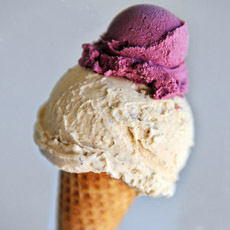
    [1] Ice cream made with Pinot Noir, which can be drunk alongside it. Here’s the recipe from Desserts With Benefits (photo © Desserts With Benefits).


    [2] Kitchen Repertoire adds an extra dimension to a classic dish of vanilla ice cream with Pedro Ximénez sweet sherry: black sea salt. Leave the chocolate syrup to the kids (photo © Kitchen Repertoire).

    /home/content/p3pnexwpnas01_data02/07/2891007/html/wp content/uploads/px sherry BodegaJoseDeLaCuesta 230
    [3] Pedro Ximénez also goes well with chocolate, be it chocolate ice cream, chocolate cake, chocolate mousse, or a fine chocolate bar (photo © Bodegas José De La Cuesta Pedro | Spain).


    Nigori saké is unfiltered, creating a cloudy, or milky, appearance. The style is brewed to be sweet and the texture is creamy. We love to pair it with dessert. Snow Maiden, in the photo, is one of the finest (photo © Kinjo Kitchen + Cocktails | Facebook).


    [5] Banyuls, a sweet red wine from France, is a perfect pairing with chocolate ice cream and other desserts (photo © M. Chapoutier).

  • Caramel or dulce de leche ice cream with PX Sherry or Sweet Madeira
  • Chocolate ice cream with Banyuls, Nigori Saké, PX Sherry; or Brachetto or Lambrusco with bittersweet chocolate ice cream
  • Chocolate chip ice cream should be matched to its base flavor: chocolate, coffee, mocha, raspberry, vanilla, etc.
  • Coconut ice cream with Late Harvest Semillon, Nigori Saké, Sauternes, Beerenauslese (or the pricier Trockenbeerenauslese)
  • Coffee or mocha ice cream with Amontillado Sherry, Nigori Saké, Madeira, Ruby Port
  • Floral ice cream—Earl Grey, jasmine, lavender, rose—with Ice Wine
  • Ginger or pumpkin ice cream with Sweet Madiera
  • Mint ice cream with Nigori Saké, Madiera or Late Harvest Zinfandel
  • Rum raisin ice cream with PX Sherry or Reciotto de Valpolicella
  • Stone fruit ice cream—apricot, cherry, mango, peach, plum—with Muscat-de-Beaumes-de-Venise
  • Vanilla ice cream with Nigori Saké, PX Sherry, Sauternes, Sweet Madiera, Vin de Paille (bonus: Scotch also works!)
  •  
     
    HOW TO SERVE WINE & ICE CREAM

  • Serve the wine in a glass.
  • Drizzle it over over the ice cream.
  • Soak dried or fresh fruit in the alcohol overnight and use it as an ice cream topping, along with a glass of the wine.
  •  
     
    WHAT ABOUT PAIRING WINE WITH SORBET?

    You can use the same wines and liqueurs as with the analogous ice cream flavors; or with a sweet sparkling white wine.

    For citrus sorbets (grapefruit, lemon, lime, orange—not represented in the ice cream list), pair with the sparkling wine or the matching liqueur.
     
    ________________

    *Pedro Ximénez, pronounced him-AY-nez and also spelled Jiménez and various other ways, is a white Spanish wine grape used to make fortified wines like sherry. It’s also the name of the sweet dessert sherry made from it. Pedro Ximénez is often abbreviated as PX. The identity of the original Pedro Ximénez and his relationship to the grape is lost to time.

    †Ice cream socials—parties where people came to eat ice cream— were popular events in the U,S. They date back to the 19th century before freezers, not to mention electric ice cream makers (i.e., they were a laborious undertaking, and thus a real treat). Some churches and communities still give them, but today it’s an easy party to throw at home. Here’s how to have an ice cream social.

    ‡AOC, an abbreviation for appellation d’origine contrôlée (AOC), “controlled designation of origin,” is an official designation that assures that a product was produced in the specified region according with specific ingredients, according to traditional techniques. The analogous word in Italian is denominazione di origine controllata abbreviated, DOC.

    ‡‡Puttonyos is the Hungarian word to denote the level of sugar in wine; the comparable word used in the U.S., France and other countries is brix.


    CHECK OUT WHAT’S HAPPENING ON OUR HOME PAGE, THENIBBLE.COM.


    Comments off

    TIP OF THE DAY: “Kaleidoscope” Summer Fruit Salad

    Our mom, who could supreme a citrus fruit fast enough to qualify for the Cooking Olympics, made a huge bowl of fresh fruit salad for us to snack on over summer weekends. It was a healthier alternative, but still had eye- and palate appeal for kids.

    Winter fruit salad colors were a mix of pink grapefruit, oranges and pineapple, green and red grapes. There were splashes of white from diced apples and pears.

    When summer arrived, with vividly colored fruits galore, Mom switched from the winter lineup to what she called “Kaleidoscope Fruit Salad,” after the device we played with as kids (if you’ve never seen one, here’s an online kaleidoscope).

    So today’s tip is: Make a Kaleidoscope Fruit Salad. Or if you prefer:

  • Make rainbow fruit kabobs, following the color of the rainbow, as in the photo below.
  • Serve a plate of bright-colored, sliced fruits with a bright colored dip (see the recipe for Blueberry Dip below).
  •  
    Or, turn the fruit salad into:

  • Breakfast, with yogurt or cottage cheese.
  •    

    /home/content/p3pnexwpnas01_data02/07/2891007/html/wp content/uploads/fruit salad mccormick close 230

    You can get much more colorful than this: Add blueberries and/or blackberries, for starters. Photo courtesy McCormick.

  • A luncheon salad or first course, placing the fruits on a bed of greens and topping them with crumbled cheese: blue, chèvre or feta.
  • Dessert, with a scoop of sorbet, flavored yogurt or cinnamon-accented sour cream. You can also marinate the fruit salad with a tablespoon or two of orange liqueur.
  •  
    You can do the same with a multicolored vegetable salad.


    /home/content/p3pnexwpnas01_data02/07/2891007/html/wp content/uploads/rainbow fruit kabobs dishmaps 230
    Make “rainbow” fruit kabobs. Photo courtesy Dishmaps.com.
     

    RECIPE: BLUEBERRY DIP FOR FRESH FRUIT

    This recipe, from the Highbush Blueberry Council, produces the most beautiful heliotrope-colored dip (a medium purple).

    Ingredients

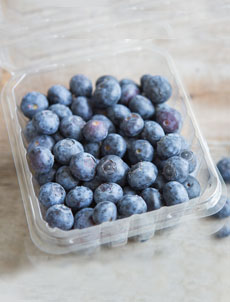
  • 3 cups fresh blueberries, divided
  • 1/3 cup light cream cheese
  • 2 tablespoons apricot preserves
  •  
    Preparation

    1. PLACE 2 cups of the blueberries, the cream cheese and the preserves in the container of a food processor or blender. Whirl until smooth.

    2. TRANSFER to a serving bowl; cover and refrigerate until serving.

     
    THE COLOR WHEEL OF SUMMER* FRUITS

  • Blue fruits: blueberries, Concord grapes
  • Brown fruits: dates, figs
  • Green fruits: apples, avocado, figs, grapes, gooseberries, honeydew, kiwi, plums
  • Orange fruits: apricot, cantaloupe/crenshaw melons, gooseberries, kumquats, mango, oranges, mandarins, papaya
  • Purple fruits: blackberries, figs, grapes
  • Red and pink fruits: apples, blood orange, cherries, currants (also called “champagne grapes”), dragonfruit, gooseberries, grapes, guava, plums, pomegranate arils,raspberries, strawberries, watermelon
  • Yellow fruits: apples, carambola/starfruit, cherries (Queen Anne, Rainier), figs, golden kiwi, golden raspberries, goosberries, jackfruit, lemon, nectarines, peaches, plums
  • White and beige fruits: apple, Asian pear, banana, cherimoya, coconut, lychee, pear, rambutan, white peaches
  •  
    Go forth and make edible kaleidoscopes and rainbows.
     
    *The “summer fruits” list also includes fruits that are available year-round. If a peel of a different color is left on the fruit, we’ve double-counted it in both color groups (e.g., green apples with white flesh).
      

    Comments off

    TIP OF THE DAY: Uses For Oyster Shells

    In this era of recycling consciousness, it’s important to re-use something at least one more time before it ends up in the trash. There are suggestions galore, from re-using plastic dry cleaning bags to wrap clothes for wrinkle-free traveling, to filling empty drink bottles with water for in-home or grab-and-go use.

    Even if something must ultimately end up in a landfill, it’s surprising how many different items destined for the garbage can be re-purposed at least once.

    We were feasting upon a mammoth plateau de mer* at a local bistro, wondering if we should ask to take the empty lobster and shrimp shells home to make stock. Then it struck us: If the larger scallop shells have long been used to serve Coquilles St. Jacques and other foods, we could find uses for the cast-off oyster shells. The solution was easy: Use them as replacements for appetizer spoons (also called amuse-bouche spoons or tasting spoons, and a popular way to serve at cocktail bites).

    You can wash and refill the oyster shells ad infinitum; you can use scores of them at parties; and if you collect too many, you can give sets to your friends.

    As we munched our way through the platter of seafood, we thought of the visual fun of using those half-shells to serve something other than oysters. Here’s our preliminary list, especially appropriate since today, August 5th, is National Oyster Day:

  • Fill with salmon, scallop or tuna tartare
  • Ceviche “shooters”
  •    
    tuna-tartare-oyster-shell-jamesbeard-230

    What would you serve in an oyster shell—besides oysters, of course?James Beard Foundation. This dish was created by chef Kyle Koenig of Topping Rose House in Bridgehampton, New York.

  • Add a fried oyster, topped with tartar sauce, horseradish cream or spicy mayo, garnished with chopped chives
  • Serve anything topped with tobiko, from a hard-boiled quail egg to grilled cauliflower florets
  • The natural: Oysters Rockefeller or “Scallops Rockefeller,” substituting scallops for the oysters
  • As a “spoon” for smoky whitefish salad, chopped herring salad or any salad
  • Use for non-seafood purposes, such as stuffed mushrooms (you can serve the mushrooms chopped instead of filling the caps)
  • Use for anything you would serve in an appetizer spoon (this is often a repurposed ceramic Chinese soup spoon)
  •  
    *French for “plate of seafood,” a plateau de mer, or plateau de fruits de mer, is a seafood appetizer that consists of raw mollusks (clam, oyster, periwinkle, scallop) and cooked shellfish (crab, lobster, prawn, shrimp). The seafood is served cold on a platter, on a bed of ice. At restaurants, depending on the size ordered, the platter can be two or three tiers high and plated in silver for a grand presentation.


    /home/content/p3pnexwpnas01_data02/07/2891007/html/wp content/uploads/tasting spoons 1 libbey 230
    Why purchase tasting spoons when you can repurpose oyster shells to do the same thing? These spoons are from Libbey.
      NON-CULINARY USES FOR OYSTER SHELLS

    We traveled the Web to see how others were using empty oyster shells. Here’s what we found:

  • Crafts. Turn the shells into craft projects.
  • Gardening. Crush and mix them into your garden soil. The shell is 95% calcium carbonate and provides a slow release of calcium that de-acidifies and helps balance soil pH, loosen clay and improve drainage. That’s good news for tomato and other vegetable gardens.
  • Gardening. Similarly, use crushed shells in container gardening; the coarse texture of the crushed shells promotes drainage. Sprinkle them in the bottom of planting holes for vegetables and bulbs. Be sure to use crushed shells, not commercial oyster shell flour, for an even release of calcium throughout the growing season.
  • Gardens. Save enough shells to create a garden path. Oyster shell paths are a recycling effort that originated in Colonial times: If you’ve been to Colonial Williamsburg, you’ve seen them. They’re a charming alternative to gravel, and can also be used as a cover material for patios, courtyards and driveways.
  • Aquaculture. If you live near salt water, or are headed there, toss the dried oyster shells back into the sea. Young oysters will attach themselves to the empty shells, helping to propagate more oysters. The person who contributed this dip dumps the shells near her dock to create a mini oyster reef. “It creates a habitat for crabs, for which we have crab-pots (YUM!).”
  •  
    If you have other ideas, let us know!


    Comments off

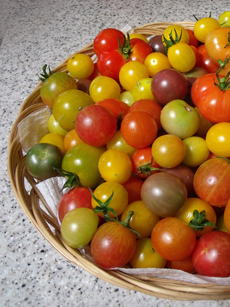
    TIP OF THE DAY: Ways To Use Fresh Summer Tomatoes

    Sometimes, the government bodies that approve food holidays are way out of whack. Fresh Tomato Day is April 6th. National Tomato Day is June 1st. October is National Tomato Month.

    In California and Florida, the two states that grow the most tomatoes, you can probably get a fresh tomato in April and most certainly in June. But people in the majority of the U.S. will have to make do with cherry tomatoes or less flavorful locals or imports until the peak summer tomatoes arrive.

    Everyone knows that the most lush, juicy, locally-grown, and freshly-picked tomatoes are available nationwide in August. So why promote tomatoes when the best ones are out of season?*

    Thus, for the first time, THE NIBBLE is declaring its own food holiday. For us, August is National Tomato Month!

    Whatever the time of day, there’s something delicious to be made with fresh tomatoes—even cocktails.

    There are lots of recipes that do well with canned tomatoes. Don’t waste pricey fresh tomatoes on them. Instead, go for uncooked or lightly cooked recipes, where the fresh tomato taste sings.

    Our summertime favorite is a simple combination of heirloom tomatoes, goat cheese, fresh basil, olive oil and balsamic vinegar (a Caprese salad with chèvre instead of mozzarella).

       
    tomato-crostini-gaeaoliveoil-230

    Tomato crostini, with both red and yellow tomatoes. The recipe is below. Photo courtesy Gaea Olive Oil.

     
    But this Saturday, we’re going the whole hog (whole tomato?) with tomatoes in every dish of every meal. We put together this recipe list, and will decide exactly what to make on the big day. We know that a tomato tart will be on the list.
     
     
    FRESH TOMATOES FOR BREAKFAST

  • Diced and marinated fresh tomato with plain yogurt and/or cottage cheese (add fresh dill or basil)
  • Frittata
  • Omelet with diced fresh tomato, herbs and green onions
  • Poached eggs on toast with sliced tomatoes, or on a thick slice of tomato instead of toast
  • Shakshouka, spicy poached and baked eggs (shakshouka recipe)
  •  
     
    FRESH TOMATOES FOR LUNCH

  • BLT, with a luscious T
  • Grilled cheese with a big slice of tomato and fresh basil (try grilled mozzarella, tomato and basil—a grilled Caprese; if you don’t like basil, try arugula)
  • Pasta salad with diced fresh tomatoes
  • Pizza (top the sauce and mozzarella with sliced tomato) or flatbread topping
  • Sliced egg and tomato sandwich
  • Sliced on a burger (try one slice above the burger and one below)
  • With assorted cheeses and baguette slices
  • Sandwich or salad with fried eggplant and tomato slices and provolone or other favorite cheese
  • Tomato sandwich: sliced tomatoes, arugula or watercress, sprouts, sweet onion and any other veggies you like with flavored mayonnaise or compound butter, on good bread (we also toss on some capers and fresh-cracked black pepper
  •  
     
    FRESH TOMATOES WITH SOUP & SALAD

  • Caprese salad or stack (stack the ingredients into a small tower)
  • Gazpacho or hot tomato soup
  • Multicolor heirloom tomato salad with vinaigrette (we pair wedges cut from larger tomatoes with halved cherry tomatoes for a nice visual)
  • Tomato, watermelon and feta salad with with basil mint
  • Tomato, watermelon and peach salad with crumbled cheese (basil or mint also welcome)
  •  


    /home/content/p3pnexwpnas01_data02/07/2891007/html/wp content/uploads/grilled tomatoes peaches wmmb 230
    Fresh tomatoes and peaches, grilled with cheese. Photo courtesy Eat Wisconsin Cheese.
      FRESH TOMATOES IN FIRST COURSES, SIDE DISHES
    & MORE

  • Broiled or roasted tomatoes with blue cheese, chèvre or feta
  • Tomato basil garlic butter (compound butter) for bread spread and cooking (it’s very freezable)
  • Fresh raw corn and tomato salad with herbs
  • Fried green tomatoes: they’re what to do with tomatoes that fail to ripen before the first frost
  • Marinated tomatoes and fresh herbs, as a side or as a first course in an avocado half
  • Panzanella, summer bread and tomato salad (panzanella recipe)
  • Salsa—see how much better it tastes with great tomatoes
  • Tomato crostini or bruschetta (recipe below)
  • Tomato juice, seasoned for drinking or spiced for Bloody Marys
  • Tomato-stuffed endive leaves
  • Tomato tart/tartlet or galette with tomato and cheese; tomato, onion, eggplant and other summer vegetables like zucchini; or Greek style with feta and black olives
  •  
     
    FRESH TOMATOES FOR DINNER & DESSERT

  • Diced tomato garnish on mac and cheese, rice or grains
  • Fresh (uncooked) tomato sauce for pasta (you can also cook fresh tomatoes into a sauce)
  • Pasta with diced heirloom tomatoes, goat cheese and fresh herbs
  • Dessert: strong cheeses with fresh tomatoes and crusty bread
  • Dessert: tomato ice cream or sorbet (tomato ice cream recipes)
  •  
     
     
    RECIPE: SUMMER BRUSCHETTA OR CROSTINI (PHOTO AT TOP OF PAGE)

    Bruschetta and crostini are popular hors d’oeuvres that are easy to make. They also can be served as a first course or a light meal, with salad and/or soup.

    The difference between them is the size of the slice, plus grilling versus toasting. Bruschetta is made from a loaf of bread that’s three or four inches in diameter; the bread is then grilled. Crostini are cut from a loaf about two inches in diameter and toasted rather than grilled.

    Can you toast a larger slice and grill a smaller one? Go for it!

    Ingredients

  • Baguette
  • Optional: fresh goat cheese
  • Heirloom tomatoes, yellow and red
  • Fresh basil
  • Extra virgin olive oil
  • Balsamic vinegar
  • Salt and fresh-ground pepper
  •  
    Preparation

    1. CUT the tomatoes into triangular pieces (see photo at top of page) and place them in a bowl. Chiffonade the basil leaves and add to the tomatoes. Season lightly with olive oil and balsamic vinegar, plus salt to taste.

    2. SPREAD the goat cheese on plain or lightly toasted baguette slices. If not using cheese, brush the slices lightly with olive oil. Top with the dressed tomatoes and basil. Finish with a grind of fresh pepper.
     
     
    ________________

    *The answer: This happens with quite a few fresh foods. Companies and trade associations are eager to get publicity for their products and don’t want to wait for an appropriate month. The government officials who approve the holiday, from local to federal, just rubber-stamp the petition. Sometimes, producers especially want publicity in the off-season when their products don’t sell well. That’s why June is National Turkey Month and February 6th is National Frozen Yogurt Day. These two are no big deal because you can get a good turkey or frozen yogurt anytime. But apricots are a summer fruit, so why is January 9th National Apricot Day? Why is February Berry Fresh Month—and so on, and so on? When we began THE NIBBLE in 2004, the concept was to match our content not just to American holidays (Christmas, St. Patrick’s Day, etc.) but to the hundreds of officially sanctioned daily/monthly food holidays. We also chose to promote food seasonally. But on an out-of-season holiday like National Apricot Day, all we can promote are apricot jam and apricot nectar!


    CHECK OUT WHAT’S HAPPENING ON OUR HOME PAGE, THENIBBLE.COM.


    Comments off

    The Nibble Webzine Of Food Adventures
    RSS
    Follow by Email


    © Copyright 2005-2025 Lifestyle Direct, Inc. All rights reserved. All images are copyrighted to their respective owners.