|

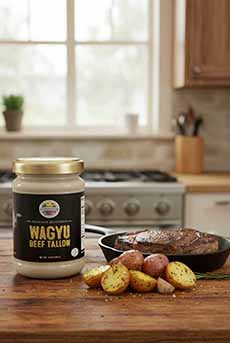
[1] The best-quality tallow made from grass-fed cows. This jar of Cornhusker tallow is available from from Fatworks Foods. They also sell duck fat, lard and leaf lard, which is the highest grade of lard.
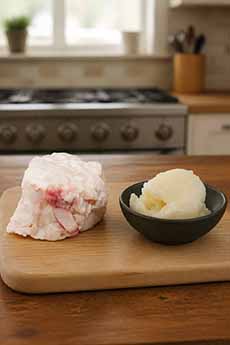
[2] Beef suet (at left) is simmered slowly into tallow. The color of both will vary based on grass- vs. grain-fed beef and other factors (photo © The Nibble).
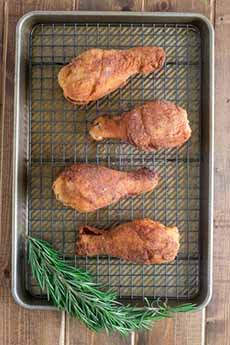
[3] Beef tallow fried chicken. Here’s the recipe (photo © Fatworks).
|
|
Updated July 2026
If you cook a lot, you may have tried recipes with chicken fat, coconut oil, duck fat, ghee and other fats that not on the list of traditional fats in American recipes (butter, lard, margarine, vegetable oils).
The popularity of the Paleo Diet has brought more animal fats to the table. The movement endorses minimally processed, unrefined fats and oils, including animal fats (The Nibble takes no position on the merit of any particular eating plan).
In the tradition of dairy- and beef-centric countries, the cooking fats were butter and beef tallow, plus lard from pigs. Beef tallow and lard are made from the rendered fat trimmed from the butchered carcass.
Along with pure lard, duck fat, goose fat and other animal fats, beef tallow is enjoying a resurgence within America’s food culture. The movement was first led by chefs seeking new punches of flavor, before Paleo and related diets emerged.
An organization called The Healthy Fats Coalition (HFC) has proclaimed July 13th the first annual National Beef Tallow Day, a celebration of beef tallow, rendered beef fat, as a cooking fat.
HFC is especially committed to raising awareness about the health benefits of natural animal fats like beef tallow. Their home page quotes family physician Dr. Cate Shanahan:
“Nature doesn’t make bad fats—factories do.”
For the record, many European recipes used duck fat, goose fat, lard, and tallow. Duck fat is a particular favorite of fine chefs making French fries.
[Editor’s note: If you have any questions about consuming tallow or other animal fat, don’t hesitate to contact your healthcare provider.]
Below:
> Beef tallow and French fries overview.
> Recipe: beef tallow French fries.
> More uses for beef tallow.
> Beef tallow vs. suet.
> Render your own beef tallow.
> The year’s 7 cooking fat holidays.
Elsewhere on The Nibble:
> The different cooking oils.
> The different types and cuts of beef: a photo glossary.
> The different types of potatoes: a photo glossary.
> The year’s 25+ beef holidays.
> The year’s 30 potato holidays.
OVERVIEW: BEEF TALLOW & FRENCH FRIES
July 13th is also National French Fry Day, and the message from HFC is clear: Fry those fries in beef tallow, duck fat or goose fat. All get very high marks from top chefs.
Browsing online, we found listserve comments that Outback Steakhouse makes beef tallow fries; and on the high end, Peter Luger in Brooklyn fries in beef tallow.
A 1985 article in The New York Times noted that eight of the country’s largest fast-food chains used beef tallow to fry their fries.
At that point, healthy fats like olive oil were beginning to get press. McDonald’s and others moved to vegetable oil beginning in 1990, when the press began to slam saturated fats as cardio-hostile. The word “hostile” might be better applied to fans who didn’t like the change.
|
Beef tallow creates exceptionally crisp, flavorful French fries with a high smoke point that makes it ideal for deep frying.
Special days to try this recipe:
July, the 2nd Friday: National French Fry Day
August 12: National Julienne Fries Day
December 2: National Fritters Day
Tallow Tips
You can buy rendered beef tallow (even at Target and Wal-mart) or render your own from beef suet (kidney fat). The simple instructions are below.
Beef tallow can be filtered and reused several times. Store it in a sealed container in the refrigerator once cooled.
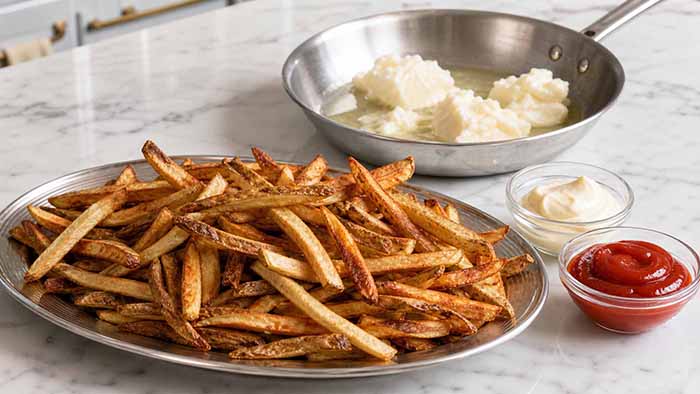
[4] French fries cooked in beef tallow (photo © The Nibble).
RECIPE: BEEF TALLOW FRENCH FRIES
This recipe uses the classic double-fry method to ensure the inside is fluffy while the outside is golden and crunchy.
You can also make the recipe with sweet potatoes.
Use a deep-fry thermometer to maintain consistent heat, as the temperature will drop when you add the potatoes to the fat.
Ingredients
2 pounds Russet potatoes (about 3-4 large potatoes)
2 pounds high-quality beef tallow
Fine sea salt or kosher salt to taste
Preparation
1. PEEL the potatoes if desired, then slice them into uniform sticks about 1/4 to 3/8-inch thick. Submerge the cut fries in a large bowl of cold water for at least 30 minutes (or up to 2 hours) to remove excess starch. This step is crucial for preventing the fries from sticking together and helping them get crisp.
2. DRAIN the potatoes and pat them completely dry with paper towels or a clean kitchen cloth. Moisture on the surface will cause the tallow to splatter and prevent crisping.
3. BLANCH the potatoes. Blanching is the first of the double frys. Heat the beef tallow in a heavy-bottomed pot or deep fryer to 325°F (163°C). Working in batches to avoid crowding, fry the potatoes for about 5 to 7 minutes. They should be soft and pale, not yet browned. Remove them with a slotted spoon or wire basket and let them drain on a wire rack or paper towels. Let them cool to room temperature.
4. CRISP the potatoes. Crisping is the second of the double fries. Increase the heat of the tallow to 375°F / 190°C. Fry the blanched potatoes a second time in batches for 2 to 4 minutes, or until they’re deeply golden brown and very crisp.
5. SEASON & SERVE. Immediately transfer the hot fries to a metal bowl and toss generously with salt while the fat is still wet on the surface so the salt adheres. Serve while hot.
15 MORE USES FOR BEEF TALLOW
Beef tallow adds rich, savory depth and excels at high-heat cooking.
Use tallow where you want browning, crispness, and savory beef-forward richness.
For delicate, sweet, or bright dishes, olive oil, butter, or neutral oils are a better fit.
 
Beyond French fries and other fried potatoes like potato hash*, try tallow when cooking:
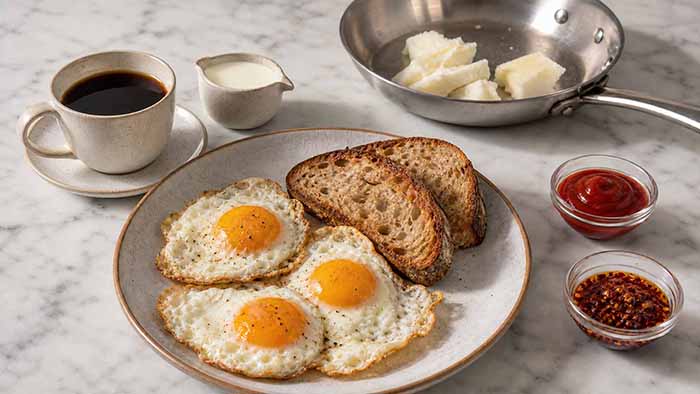
Eggs: Fry eggs or make a vegetable scramble in a small amount of tallow for a fuller, diner-style flavor.
Burgers, steaks, other grilled meats: Use a thin coating on the pan or griddle to promote browning—especially useful for leaner ground beef.
Cornbread: Grease a hot cast-iron skillet with tallow before adding batter for a deeply crisp crust.
Fried chicken or cutlets: Blend tallow with a neutral high-heat oil if needed; it gives the crust an old-fashioned, savory character.
Gravy and roux: Substitute it for butter or oil when making brown gravy, pan sauce, gumbo-style roux, or a savory pot-pie filling.
Meatballs and meatloaf: Sauté the aromatics in tallow first, or add a little melted tallow to very lean meat mixtures for moisture.
Pie crusts and biscuits: Replace part of the butter or shortening with tallow in savory pastries (hand pies, empanadas, turnovers and others), biscuits, or meat-pie crusts. It creates a flaky texture and works best with beefy fillings.
Pita and other flatbreads: Brush lightly with melted tallow, then warm or toast with za’atar, garlic, or herbs.
Refried beans: Cook onions and garlic in tallow, then mash beans into the fat for extra richness.
Rice or grains: Toast rice, couscous, or farro in a spoonful before adding liquid—great alongside beef, mushrooms, or roasted vegetables (try crispy tallow-roasted chickpeas).
Sautéed greens: Wilt kale, collards, cabbage, or spinach in tallow with garlic and a splash of vinegar or lemon.
Stovetop popcorn: Tallow makes exceptionally flavorful popcorn; season with salt, black pepper, smoked paprika, or grated Parmesan.
Soups: Some chefs add a bit of beef tallow to bone broth.
Yorkshire pudding / popovers: A classic use—preheat tallow in the muffin tins before adding batter for dramatic lift and crisp bases.
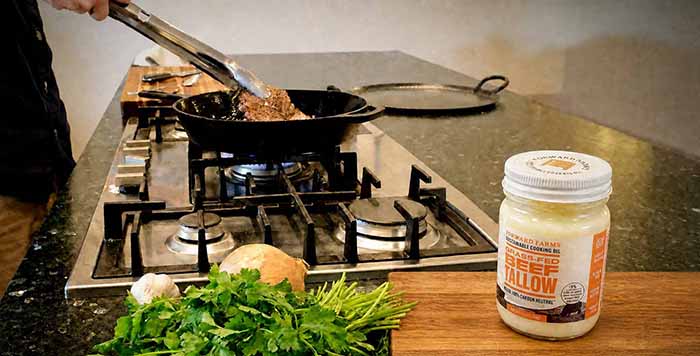
[6] Searing steak in beef tallow (photo © Forward Farms).
BEEF TALLOW VS. SUET
Fresh Beef Tallow
Beef tallow is rendered suet (see the next section and the comparison in photo #2 above). The best tallow is fresh from the farm, with absolutely nothing added—no preservatives, no hydrogenation (which produces trans fats).
After the animal is butchered, the fat is rendered into pure tallow. The rendering process slowly heats the beef fat in a large kettle. Any solids, like bits of meat, are removed, and the pure tallow is packaged.
At room temperature, tallow looks like lard, butter, or other dense animal fat. When heated, it has the appearance of oil.
It can be kept in the freezer (6-8 months), frozen (12 months), and even left at room temperature for several weeks.
Suet: Kidney Fat
You may have come across the word suet in older books. It is a special type of animal fat.
Not all beef tallow is created equal.
Suet is the hard white mass of fat surrounding the kidneys and loins of cattle, sheep, and other ruminants†. It has been used since ancient times in cooking and baking, and continues to be a staple in the puddings, pastry and mincemeat of the U.K.
Tallow is the rendered form of suet, used for frying, roasting, and even skincare products like soaps and balms.
Suet from cattle has the the cleanest and mildest taste of all the animal fat, and is what is sold by quality brands.
Diet, breed, age, and overall condition of the animal impact the quality of rendered tallow.
Fat from grassfed beef fat is the best; and wagyu suet, which comes from animals that are typically grain-finished, has its own charms**.
The quality of suet or tallow can vary widely depending on its source, and the diet of the animals can have a large impact on the nutrient density and purity of the product.
While beef and mutton suet are the most common in traditional cooking, other sources include:
While the term “suet” is technically reserved for the hard fat of ruminants, it is worth noting that the equivalent fat in pigs is called leaf lard. While leaf lard is physically similar—being the clean, white fat from around the kidneys—it has a lower melting point and a different chemical composition than true suet, making it softer and more prized for delicate pastry work.
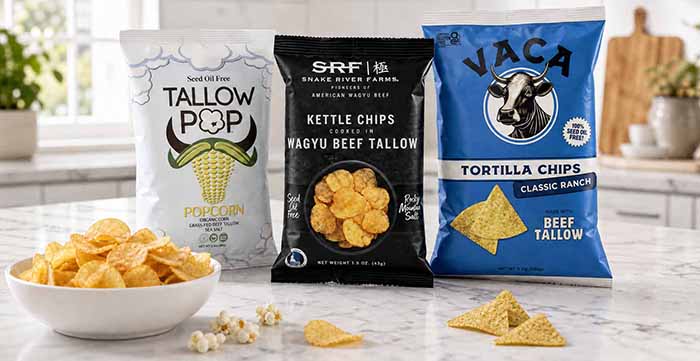
[7] Artisan snack brands have moved from frying to vegetable oil to beef tallow (photo © The Nibble).
RENDER YOUR OWN BEEF TALLOW
It’s very easy in a stock pot or slow cooker (here’s how). The biggest challenge is to get hold of the fat.
Before you start saving up your steak trimmings, note that the best-tasting tallow comes from the suet (kidney fat). Your butcher may sell it or even give it away.
Then, simmer the fat slowly until it melts (like Crisco!) and strain out the solids.
Rendered fat will keep for about 12 months in the freezer, 6-8 months in the fridge and several weeks at room temperature.
THE YEAR’S 7 COOKING FAT HOLIDAYS
March 21: National Healthy Fats† Day
June 10: National Schmaltz Day (rendered poultry fat, traditionally chicken or goose)
July 13: National Beef Tallow Day (rendered beef fat)
July 17: National Margarine Day (plant-oil-based)
September 30: National Extra Virgin Olive Oil Day / EVOO Day
November 17: National Butter Day (dairy fat)
December 8: National Lard Day (rendered pig fat)
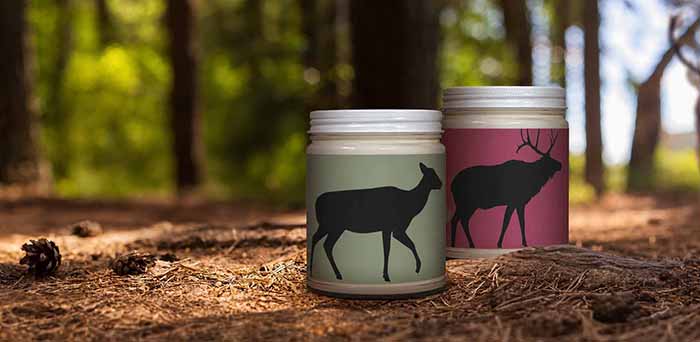
[8] Venison and elk tallow are just two of the tallows from Fatworks. They also sell bison tallow and lamb tallow in addition to beef tallow (photo © Fatworks).
________________
*Family-favorite crispy hash recipe: as a main with eggs or a side at any meal: diced potatoes, onions, peppers, and corned beef or sausage cooked in tallow or a combination of tallow and other fat.
**Grass-fed vs. Wagyu suet: Grass-fed cattle suet often yields tallow with a more pronounced beefy, grassy, or mineral-like flavor. Choose grass-fed tallow when you want a stronger, more distinctly beef-forward flavor, such as for roasting potatoes, searing steak, or savory pie crusts. Wagyu suet often renders into a softer, lower-melting tallow because Wagyu cattle are genetically predisposed to more monounsaturated fat, including oleic acid. Many people perceive it as especially rich, buttery, and smooth. Choose Wagyu tallow for a luxurious, mild, silky fat—excellent for potatoes, sautéing, or finishing vegetables.
†National Healthy Fats Day originally focused on duck fat, goose fat, lard, tallow, and similar traditional fats, it’s now often interpreted to include olive oil, avocado, nuts, seeds, and fatty fish.
††In addition to cow and sheep suet, buffalo and bison, both closely related to cattle, produce a suet that is almost identical in texture and culinary utility to beef suet. Goat suet, similar to sheep suet, is frequently used in traditional indigenous recipes as well as in Mediterranean and Middle Eastern cuisines. Venison suet was widely available in colonial America; and antelope suet in Africa and Asia.
Ironically, in the American folk tune “Home On The Range” refers to buffalo, deer, and antelope. There are no buffalo in North America; they are bison. There are no antelope either; the native pronghorn is incorrectly called an antelope. As for deer: We’ve got plenty of ‘em.
Pigs are not ruminants: They have a simple, single-chambered stomach, much like humans. Ruminants, on the other hand, have a complex four-chambered stomach that allows them to regurgitate and re-chew their food (cud).
The pig equivalent to suet is called leaf lard, the highest grade of pork fat, sourced specifically from the visceral fat around the pig’s kidneys and loin. It shares beef suet’s unique properties of being firm and with a high melting point and a neutral flavor and odor. Regular lard is rendered from the animal’s back fat or other fatty tissues. It has a firmer texture, a higher moisture content, and a slightly porky flavor, making it better suited for savory cooking, frying, and sautéing rather than delicate baking.
CHECK OUT WHAT’S HAPPENING ON OUR HOME PAGE, THENIBBLE.COM.
|