THE NIBBLE BLOG: Products, Recipes & Trends In Specialty Foods


Also visit our main website, TheNibble.com.

FOOD FUN: The World’s Largest French Fry?

For National French Fry Day, July 13th, treat yourself to the largest French fry we’ve ever seen.

Created at Michael Jordan’s The Steak House in New York City, you’ll need a fork and knife—unless you want to eat it caveman-style.

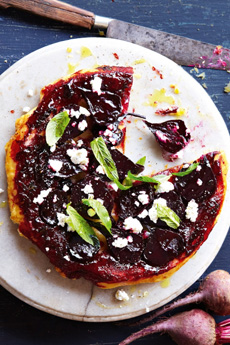
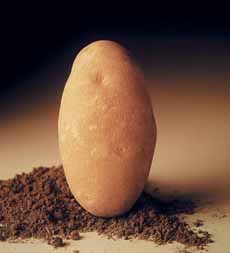
Each fry (photo #1) is the size of one whole Idaho russet potato (photo #2) and weighs 12-16 ounces.

Michael Jordan’s executive chef, Cenobio Canalizo, mastered the preparation of huge, crispy-yet-tender fries with a multi-step process.

Next time you’re near Grand Central Terminal in New York City, head over and try them out yourself. An order of 3 is $19.99.

And…you don’t have to sit down for the whole dinner. You can order the fries at the bar!

Want to make fries at home? Michael Jordan’s isn’t releasing the jumbo fry recipe.

But here are some creative French fry recipes from the Idaho Potato Commission.
 
AMERICA’S FAVORITE VEGETABLE

According to the Idaho Potato Commission, potatoes are America’s favorite vegetable*.

Now, we don’t want to rain on a great food holiday, but as food educators we have a point to make:

While potatoes are scientifically classified as a vegetable*, they are classified nutritionally as a starchy food.

This is because when eaten as part of a meal, potatoes are generally served in place of other starchy carbohydrates, such as bread, pasta or rice.

While starch is an important part of one’s diet, starchy foods don’t count in your 5 A Day servings of fruits and vegetables. Get a side of broccoli with those fries!
 
 
THE DIFFERENT TYPES OF FRIES
 
 
THE HISTORY OF FRENCH FRIES
 
 
THE DIFFERENT TYPES OF POTATOES

  Jumbo French Fry Michael Jordan
[1] Chef Cenobio Canalizo at Michael Jordan’s The Steakhouse, holding his French fry creation (photo courtesy Michael Jordan’s).

Russet Burbank Potato
[2] One potato = one fry (photo courtesy Idaho Potato Commission).

 
________________

*In the binomial nomenclatureregnum animale), the plant kingdom (regnum vegetabile), and the mineral kingdom (regnum lapideum).


Comments off

PRODUCTS FOR CAMPERS: This Week’s Favorites

Fairytale Brownies Morsels
[1] Fairytale’s Magic Morsels are “bites,” one-quarter the size of a standard brownie (photo courtesy Fairytale Brownies).

Honey Stinger Cracker Sandwich
[2] Tasty healthfulness: delicious by themselves, with a glass of milk or a cup of coffee (photo courtesy Kristin Hostetter | SNewsnet).

Smart Sweets Fruity
[3] Are low-sugar gummy bears guilt-free? Pretty much (photo courtesy Smart Sweets).

  When we were away at summer camp, we eagerly anticipated packages of treats from Nana.

You don’t have to be a camper, or even a kid, to enjoy receiving these melt-proof snacks. Our selection includes good-for-you and better-for-you. You can call brownies better-for-you when they’re one-fourth the normal size: “Just a bite.”
 
 
1. FAIRYTALE BROWNIES: MAGIC MORSELS

One-fourth the size of their standard brownies, Fairytale’s Magic Morsels are a great solution for brownie lovers of all ages (photo #1).

The portion-controlled brownies, made with fine Belgian chocolate, are a favorite with us. The flavors include Caramel, Chocolate Chip, Cream Cheese, Original, Raspberry Swirl and Walnut.

Keeping away from sugar? There are two sugar-free varieties: Original and Walnut.

What more do we need to say except:

Get yours at Brownies.com. If you have difficulty finding what you want on the website (there are so many choices, it can get confusing), just call: 800.324.7982.
 
 
2. HONEY STINGER: ORGANIC CRACKER N’ NUT BUTTER SNACK BARS

Honey Stinger is a brand established more than 60 years ago, for outdoors enthusiasts seeking nutrition that abetted performance.

The company created snacks using the original energy food, honey.

You don’t have to be a hiker or an athlete to enjoy their better-for-you treats. Couch potatoes like us are happy to nibble away.

We’ve previously enjoyed the company’s thin, crisp Organic Waffles snacks, available in regular and gluten-free and in a number of satisfying flavors (caramel, chocolate, lemon, etc.).

The new Organic Cracker N’ Nut Butter Snack Bars are just as tempting—maybe more so (photo #2).

The bars contain three nut butter options that deliver 5g of protein, mixed with organic honey and sandwiched between two multigrain crackers. The bars are covered in organic dark or milk chocolate.

All this tastiness has just 9g-12g of sugar, and are all natural—nothing artificial. They are USDA Certified Organic and certified kosher-dairy by OU. Varieties include:

  • Almond Butter & Dark Chocolate
  • Cashew Butter & Milk Chocolate
  • Peanut Butter & Milk Chocolate
  •  
    The bars are available at natural foods and nutrition stores, and at HoneyStinger.com in boxes of 12.

    We’ve been enjoying them with our morning coffee: so much more energy-enhancing than a bagel!
     
     
    3. SMART SWEETS: LOW-SUGAR GUMMY BEARS

    We love gummy bears, but not the sugar. We’ve tried the sugar-free versions, but if you eat more than five bears, the sugar alcohols do you in (if you’ve been there, you know what we mean).

    Enter Smart Sweets (photo #3), offering 1.8-ounce bags of fruity gummies with just 3g of sugar.

    Sweetened with stevia (no sugar alcohols, no artificial sweeteners), a bag also contains 28g of fiber from chicory root and tapioca.

    The reduction in sugar (85% less) makes the flavor different from conventional gummies, the latter of which burst forth with fruit and sweetness. But you get all the chewiness of the full-sugar varieties.

    There are two options: Fruity and Sour. The Sour variety is for those who can’t get enough sour. Oh, the pucker!

    The gummies are made in a dedicated gluten-, peanut-, tree-nut-, dairy-, soy- and casein-free facility.

    Get yours at SmartSweets.com.


    Comments off

    RECIPE: Walnut Spread, A Versatile Spread, Filling & Thickener

    An overly-enthusiastic purchase of a huge bag of walnut halves at a warehouse club led us to think:

    What on earth were we thinking? There are just so many walnut pies, salad garnishes, pasta sauces, cookies and brownies we can eat.

    But we hit the jackpot with what the California Walnut Board calls walnut “cream.” To avoid any relation to dairy, we call it walnut spread.

    It’s like hummus that tastes like nuts instead of chickpeas and tahini. It is also dairy-free, gluten-free and vegan.

    And like hummus, walnut spread has its own arsenal of nutrition, including heart-healthiness.

    Best for our jumbo bag of walnuts, you can turn it into a spread that can be used every day.

    The walnut spread has a rich, velvety texture and a lightly nutty flavor profile. You can use walnut spread in the same way as hummus:

  • A dip for crudités
  • A sandwich or turkey burger spread
  • A salad dressing (diluted with oil)
  • A sauce for chicken, fish, grains, vegetables
  • As a thickener for soups and sauces*, instead of dairy cream or roux
  • As a filling or frosting for cakes and sweet loaves
  •  
     
    RECIPE: WALNUT SPREAD

    This recipe (photo #1) is simply a 2:1 ratio of raw walnuts to water. Walnut pieces are less costly than walnut halves.

    The spread is flavorful and nutty. But like hummus, you can add more dimensions of flavor with everything from chiles to olives.

    Ingredients For 1-1/2 Cups

  • 1 cup walnuts
  • 1/2 cup water
  • Salt and pepper to taste
  • Optional add-ins: chiles, garlic, olives, sundried tomatoes or red bell pepper, etc.
  •  
    Preparation

    1. BLEND the optional add-ins first, in a food processor. Add the nuts, pulverize and slowly add in the water.

    2. TASTE and season as desired. It will keep in the fridge for several days.

    Here are more recipes to start you off:

  • African Squash Soup With Walnut Cream
  • Breakfast Quinoa With Walnut Cream & Blueberries
  • Profiteroles With Walnut Filling (also use as a cake filling or a frosting for carrot cake or zucchini bread)
  •  
    Here are lots of walnut recipes, from the California Walnut Board.

    And one of our favorites, candied walnuts (photo #4), are great for dessert garnishes, trail mix, snacking and more.
     
     
    THE HISTORY OF WALNUTS

      Walnut Spread
    [1] Walnut “cream,” dairy-free (photo courtesy California Walnut Board).

    Whole Walnuts
    [2] Whole walnuts. You can plant a tree and grow your own (photo courtesy Stark Bros.)

    Walnuts In Hulls On Tree
    [3] Walnuts grow inside green hulls like these (photo courtesy The Sleuth Journal).

    Candied Nuts Recipe
    [4] One of our favorite ways to enjoy walnuts: candied! Here’s the recipe (photo courtesy Babble).

     
    The wild walnut (Juglans regia) originated in central Asia, spreading in pre-historic times to western China, the Caucasus, Persia, and Europe. Archaeologists have found walnut remains in southern France dating to 17,000 thousand years (source).

    The cultivation of walnuts in ancient Persia dates to at least 7000 B.C.E., in the Neolithic period. There, they were reserved for royalty.

    The Romans called walnuts Juglans regia, “Jupiter’s royal acorn,” after the supreme god of the Roman pantheon.

    Neolithic peoples cultivated walnuts at least 7,000 years ago, but they were not widely cultivated in the Mediterranean until ancient Greek and Roman times. Walnuts were an item of trade, and amphorae filled with walnut residue have been salvaged in Roman ships that sank in the Mediterranean.

    Their significant nutrition made them an important part of the diet. By the first century C.E., Greek and Roman physicians extolled walnuts’ medicinal virtues.

    Walnuts were traded along the Silk Road between the Middle East and Asia.

    Walnut trees flourished throughout Europe during the Middle Ages, and from then until modern times, physicians described them for a variety of illnesses.

    When seafaring English merchants traded the product in ports around the world, the nuts became known as English walnuts, although England is not a grower of commercial walnut crops.
     
    Modern Walnuts

    But California is. The Golden State has become the source of the world’s best walnuts, first cultivated there by Franciscan fathers in the late 1700s.

    California walnuts are harvested in the fall, typically from mid-September to early November. They’re ready to harvest begins when the green hulls (photo #3) split.

    In modern farming, the nuts are removed from the tree using a mechanical shaker, a machine that grasps the trunk and shakes the whole tree. The nuts drop to the ground, are swept into rows (windrows) and gathered up with harvest machinery.

    The green hulls are then removed with a huller, exposing the familiar hard brown shell (photo #2). The shells are cleaned with wet scrubbers and dried in gas dryers.

    While some consumers buy the nuts in the shell, most are cracked, graded and packaged and sold sold to consumers as nutmeats (source).
    ________________

    *Think of great pairings, like mushroom soup with walnut thickener, or chicken with walnut sauce.


    Comments off


    © Copyright 2005-2026 Lifestyle Direct, Inc. All rights reserved. All images are copyrighted to their respective owners.