THE NIBBLE BLOG: Products, Recipes & Trends In Specialty Foods


Also visit our main website, TheNibble.com.

Cherry-Lime Shortbread Recipe, National Shortbread Day & All Cookie Holidays

Updated July 2026

January 6th is National Shortbread Day, celebrating Scotland’s great contribution to cookiedom*. The classic Scottish cookie (or biscuit, the term used for cookies in the U.K.) recipe is traditionally one part white sugar, two parts butter, three to four parts plain wheat flour, and a bit of salt—but no leavening†.

Over the centuries, the original buttery delight has also been:

  • Flavored: almond, chocolate (via cocoa powder or dipped in chocolate), citrus, herbs (lavender, rosemary), inclusions (baking chips, dried berries, seeds), spices (e.g. ground ginger‡), etc.
  • Other sweeteners: black treacle/golden syrup††, brown sugar, molasses.
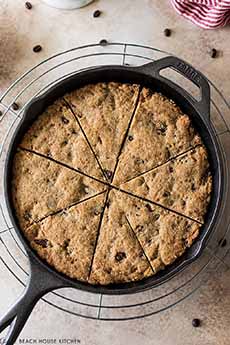
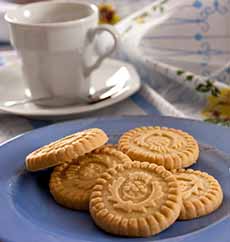
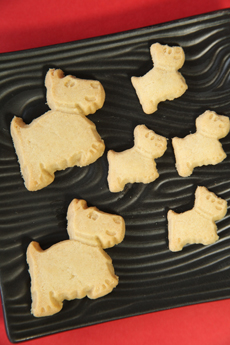
  • Shapes: originally made in a skillet and sliced into triangles (photo #5), there are now rounds (plain and embossed [photo #6]), fingers (photo #2), squares, rectangles, hearts, Christmas shapes (ornaments, snowflakes, snowmen, stars), farls (quadrant-shaped), sun rays (created by pinching the edges of a round), even animal shapes (photo #7).
  •  
    Below:

    > Cherry lime shortbread cookie recipe and variations.

    > More delicious shortbread cookie recipes.

    > The year’s 45 cookie holidays.

    Elsewhere on The Nibble:

    > The history of shortbread.

    > The history of cookies.

    > The 10 categories of cookies.

    > The differences between butter cookies, shortbread, and sugar cookies.

    > The different types of cookies: a photo glossary.
     
     
    RECIPE: CHERRY-LIME SHORTBREAD WITH DRIED CHERRIES

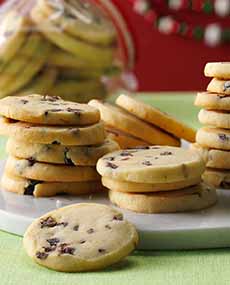
    These delightful shortbread cookies (photo #1) are not too sweet and and have a sweet/tart bite from the dried cherries. For a sweeter cookie you can substitute mini chocolate chips.

    Note that the best, freshest butter will give you the very best cookies. Do not substitute any other fat.

    Prep time is 25 minutes and bake time is 10 minutes.

    Ingredients For About 4-1/2 Dozen Cookies

  • 1 cup butter, softened
  • 3/4 cup confectioners’ sugar
  • 2-2.5 tablespoons grated lime zest
  • 2 teaspoons vanilla extract
  • 1/2 teaspoon almond extract
  • 2 cups all-purpose flour
  • 1/4 teaspoon baking powder
  • 1/8 teaspoon salt
  • 1 cup chopped dried cherries
  •  
    Variations

  • Blueberry-Lemon: Substitute dried blueberries for the cherries and lemon zest for the lime.
  • Coconut-Chocolate Chip: Substitute mini chocolate chips for the cherries and grated coconut for the lime.
  • Cranberry-Orange: Substitute dried cranberries for the cherries and orange zest for the lime.
  • Lavender-Lemon: Substitute culinary lavender for the cherries and lemon zest for the lime.
  •  
    Preparation

    1. CREAM the butter and confectioners’ sugar in a large bowl until blended. Beat in the lime zest and extracts. In another bowl…

    2. MIX the flour, baking powder, and salt. Gradually beat the dry mixture into the creamed mixture. Stir in the cherries.

    3. DIVIDE the dough in half; shape each half into a 7-inch-long roll. Wrap each roll in plastic and refrigerate overnight. Note that many recipes will say to refrigerate the dough for 3-4 hours or until firm. We have found a longer time yields easier slicing; or you can as easily freeze the dough for 1-2 hours until it is firm enough to slice.

    4. PREHEAT the oven to 350°F. Unwrap and cut dough crosswise into 1/4-inch slices with a very sharp, thin knife (there should be 28 quarter-inch slices per 7-inch log.

    5. PLACE the slices 2 inches apart on ungreased baking sheets. Bake 9-11 minutes or until the edges are golden brown. Remove from the sheets to wire racks to cool.
     
     
    MORE SHORTBREAD COOKIE RECIPES

  • Candied Lemon Shortbread
  • Classic Shortbread
  • Matcha Shortbread
  • Millionaire Shortbread Bars
  • Oatmeal Shortbread Cookies With Chocolate & Toffee
  • Orange-Scented Shortbread With Optional Chocolate Dip
  • Pecan Sandies
  • Salted Caramel Chocolate Shortbread
  • Smoked Almond Chocolate Shortbread
  •  
    Plus:

  • Savory Blue Cheese Shortbread
  •  
    > Jump to all the cookie holidays below. <

    ________________

    *Other Scottish cookies we love: Abernathy biscuits (with caraway seeds), oat cakes, oat and walnut biscuits.

    Leavening: Most cookies are made with leavening agents, such as baking soda or baking powder. Leavening agents cause the dough to expand and rise while baking, which affects the cookie’s texture and structure.

    The two most common leaveners are baking soda and baking powder. Baking soda (sodium bicarbonate) reacts with acidic ingredients (e.g. buttermilk, lemon juice, molasses, vinegar) to release carbon dioxide, which creates air bubbles and a denser cookie with craggy tops. Baking powder causes cookies to rise higher and have a cakier texture.

    ††Treacle and golden syrup, the difference: Ingredients in British baking, golden syrup is the lightest and mildest form of treacle. It has a more caramelized, buttery flavor and a golden color. “Treacle” is most often used to refer to a darker, richer, and slightly bitter syrup.

    While there is regular treacle, “black treacle” is the darkest variety of treacle, essentially considered the British equivalent of blackstrap molasses. It’s the most concentrated, intensely flavored type of treacle.

    Molasses is often compared to treacle. Both are by-products of sugar refining. There’s a slight difference based on processing: Treacle is sweeter, thinner, and slightly less bitter than molasses.

    Typically, molasses boils for much longer, resulting in a darker, thicker liquid with less sugar. “Black treacle” is most similar to molasses, but can still have slightly different flavor profile depending on the manufacturer and region.

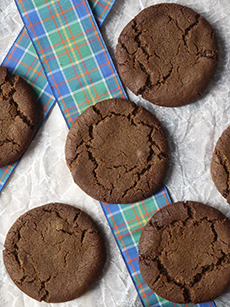
    Parlies, short for Parliament cakes, are a type of dark-hued shortbread biscuits that look like they might be flavored with cocoa, but intead they get their color from black treacle or molasses (photo #8). They’re seasoned with ground ginger and optional candied ginger, making them warm and spicy with an added hit of mild toffee flavor from the treacle.

    The history of Parlies: The flavored shortbread, sometimes spelled Parleys, was originally served with Scotch whisky. Today they’re most often served with tea. [Editor’s note: Here’s a recipe. Why not serve them with hot toddies or hot butted rum] [source].

    The story goes that in the 18th century, a Mrs. Flockhart, proprietor of a bakeshop located near the Scottish Parliament buildings in Potterow, Edinburgh, created the biscuits and supplied them to the politicians and staff working there.

    While her first name is lost to history, she is referred to as Luckie Flockhart, Luckie being a Scots term for a respected older woman, particularly one who ran a business. This suggests she was a well-regarded figure in her local community [source: Claude.ai, 2025-01-07].


    THE YEAR’S 45 COOKIE HOLIDAYS

    Note that brownies are cookies—bar cookies—and not cake.


    Lime Shortbread Cookies
    [1] Lime and cherry shortbread cookies. The recipe is below, as are flavor variations (photo © Taste Of Home).

    Shortbread Fingers
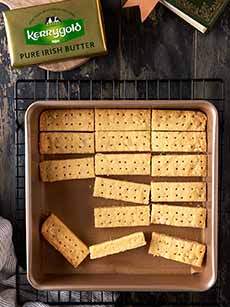
    [2] These rectangles are known as shortbread fingers. When we bake recipes like shortbread where the butter flavor is paramount, we use 83% butter, also called Euro style. It has a butterfat content of 83%, which is higher than regular butter—80% in the U.S. Check out the different types of butter (photo © Kerrygold USA).

    Zesting A Lime
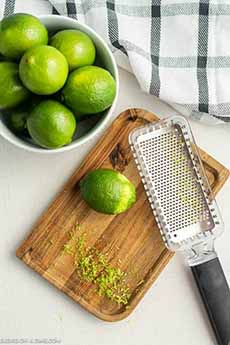
    [3] Need tips on how to zest a lime (or any citrus)? Head here (photo © Eating On A Dime).

    A Bowl Of Dried Cherries
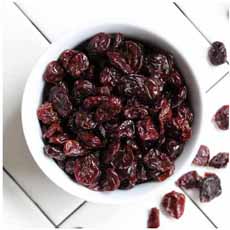
    [4] If you’d prefer flavor accents other than lime and cherry, check out some options.

    Espresso-Chocolate Skillet Shortbread
    [5] The original shortbread was cooked in a skillet over the fire and sliced into triangles. The shape is called “petticoat tails.” This espresso chocolate chunk shortbread can also be baked in a tart pan. Here’s the recipe (photo © The Beach House Kitchen).

    Round Shortbread Cookies
    [6] Elegantly embossed (photos #5 and #6 © Walker’s Shortbread).

    Scottie Dog Shortbread
    [7] Walker’s also honors Scotland’s iconic Scottie with these cookies.

    Ginger-Flavored Shortbread
    [8] Parlies (Parliament shortbread) are flavored with ginger and black treacle. Here’s the recipe (photo © London Eats | WordPress).


    JANUARY-JUNE JULY-DECEMBER
    January July
    January 6th: National Shortbread Day July 1st: National Gingersnap Day
    January 16th: National Fig Newton Day July 3rd: National Chocolate Wafer Day
    January 20th: National Granola Bar Day July 3rd: National Chocolate Macaroon Day
    January 22nd: National Blonde Brownie Day July 9th: National Sugar Cookie Day
    February July 20th: National Fortune Cookie Day
    February: National Bake For Family Fun Month August
    February 8th: National Molasses Bar Day August: Brownies at Brunch Month
    February 10th: Cream Cheese Brownie Day August 4th: National Chocolate Chip Cookie Day
    February, 3rd Weekend: Girl Scout Cookie Weekend August 10th: National S’mores Day
    March August 26th: National Bake It Yourself Day
    March, 1st Week: National Chocolate Chip Cookie Week September
    March 6th: National Oreo Cookie Day September 21st: National Pecan Cookie Day
    March 18th: National Lacy Oatmeal Cookie Day September 29th: National Biscotti Day
    March 25th: National Michelle Shafer Half-Moon Cookie Day October
    April October: National Bake And Decorate Month, National Cookie Month
    April 5th: National Raisin and Spice Bar Day October 1st: National Homemade Cookie Day
    April 9th: National Chinese Almond Cookie Day October 15th: National Lemon Bar Day
    April 30th: National Oatmeal Cookie Day November
    May November 15th: National Spicy Hermit Cookie Day
    May 9th: National Butterscotch Brownie Day November 21st: National Gingerbread Cookie Day
    May 15th: National Chocolate Chip Day December
    May 31st: National Macaroon Day December 1st: National Cookie Cutter Day
    June December, 1st Week: National Cookie Cutter Day
    June 10th: National Frosted Cookie Day December 4th: National Cookie Day
    June 12th: National Peanut Butter Cookie Day December 8th: National Brownie Day
    June 21st: National Cookie Dough Day December 16th: National Chocolate-Covered-Anything Day
    June 23rd: National Pecan Sandies Day December 22nd: National Cookie Exchange Day December 23rd: National Pfeffernuse Day


    CHECK OUT WHAT’S HAPPENING ON OUR HOME PAGE, THENIBBLE.COM.


    Comments off

    Spaghetti With Pistachio Pesto Recipe & Tomato Confit Recipe

    Bowl of Spaghetti With Pistachio Pesto
    [1] Our dinner for National Spaghetti Day was a big hit (photos #1 through #4 © Oleificio Zucchi).

    Pistachio Pesto Ingredients
    [2] The ingredients.

    Cherry Tomato Confit In A Serving Dish
    [3] Making the tomato confit.

    Bottle Of Zucchi Sicilia IGP Organic Olive Oil
    [4] Zucchi Sicilian IGP EVOO.

    A Bowl Of Pistachios Nuts
    [5] Shelled pistachio nuts (photo Columbus Craft Meats | Facebook).

    Grated Parmigiano Reggiano Cheese & Grater
    [6] Parmigiano reggiano cheese (photo © London Deposit | Panther Media).

    Fresh Basil Leaves In A Bowl
    [7] Fresh basil leaves (photo license CC0 Public Domain).

    Garlic Bulbs & Cloves
    [8] Garlic (photo Wesual Click | Public Domain).

    Lemons Ready To Make Lemon Juice
    [9] Juice a lemon (photo © Dominika Roseclay | Pexels).

    A jar of chopped pistachio nuts
    [10] We always have a jar of chopped pistachios on hand as a quick garnish on just about anything (photo © Gusto | Amazon).


    January 4th is National Spaghetti Day and we made this delicious Sicily-inspired pasta dish: Spaghetti With Pistachio Pesto & Tomato Confit.

    The ground pistachios create a creamy, nutty pesto, perfectly contrasted by the concentrated sweetness of homemade tomato confit (which replaces tomato sauce).

    It was a hit, and we’ll make it again next month: February 26th is National Pistachio Day.

    Thanks to Zucchi, a producer of fine extra virgin olive oils, for the recipe. We used their Sicilia IGP Extra Virgin Olive Oil in the recipe.

    > Here’s more about Zucchi olive oil.

    > What’s an IGP olive oil? See below.

    Made with 100% Sicilian olives, this extra virgin olive oil has an intense fruitiness and pungency. It boasts notes reminiscent of the island including oregano, wild fennel, and citrus.

    > A year of pasta holidays.

    > The different types of pasta: a photo glossary.

    > The history of pasta.

    > A year of pasta holidays.

    > The different types of pasta: a glossary.
     
     
    RECIPE #1: PASTA WITH PISTACHIO PESTO & TOMATO CONFIT

    The tomato confit is optional, but highly recommended to create an extra-special dish. The confit can be prepared ahead of time, as can the pistachio pesto.

    Or, you can substitute sundried tomatoes. The difference:

  • Tomato confit slow-cooks the tomatoes in olive oil.
  • Sun-dried tomatoes are dried in an oven, a dehydrator, or, the original Old World way, in the sunshine.
  •  
    Prep time is 30 minutes and cook time is 1 hour 40 minutes.

    > Here’s a video of the recipe.
     
    Ingredients For 4-6 Servings

    For The Pistachio Pesto

  • ½ cup shelled pistachios
  • ½ cup grated Parmigiano-Reggiano cheese, plus more for garnish
  • ½ cup basil leaves, packed
  • 1 clove garlic
  • ½ lemon, juiced
  • ¼ teaspoon salt or more to taste
  • 6 tablespoons Zucchi Sicilian IGP EVOO (or substitute)
  • Garnish: roughly chopped pistachios
  •  
    Ingredients For The Pasta

  • 2 cups cherry tomato confit (recipe #2 below)
  • 1 pound spaghetti
  • ½ cup pasta cooking water, reserved
  •  
    Preparation

    1. MAKE the tomato confit (recipe below). It can be made a week in advance and stored in the fridge.

    2. MAKE the pistachio pesto. Combine the pistachios, Parmigiano-Reggiano, basil, garlic, lemon juice, and salt in a food processor. Process until finely chopped. With the motor still running…

    3. DRIZZLE in EVOO and keep blending until the mixture is creamy. Set aside.

    4. COOK the spaghetti according to the package directions. Before draining the pasta, make sure to reserve about ½ cup of cooking liquid.

    5. GENTLY HEAT the tomato confit it is warmed through (if it has been refrigerated).

    6. COMBINE the cooked spaghetti, pistachio pesto, and ½ cup of reserved cooking liquid in a large bowl. Toss to make sure that the pesto covers the pasta evenly.

    7. SERVE the pasta topped with warm tomato confit, extra parmesan cheese, and chopped pistachios. Drizzle with a little bit of EVOO before serving.
     
     
    RECIPE #2: CHERRY TOMATO CONFIT

    Cherry tomatoes are slow-roasted with garlic, herbs, and a generous amount of olive oil, resulting in a condiment bursting with concentrated flavors.

    Tomato confit can be prepared ahead of time. Once cooled, spoon it into a jar or other tight-lidded container and store it in the fridge.

    Tomato confit is a lovely garnish or side for dishes beyond pasta: grilled or roasted meats and seafood, for example. You can also serve it with cheeses, and atop goat cheese crostini.

    Prep time is 5 minutes, and cook time is 1 hour 30 minutes.
     
    Ingredients

  • 2 pounds cherry tomatoes
  • ½ head garlic
  • 1 large sprig rosemary
  • 3 sprigs thyme
  • ¼ cup basil leaves
  • ½ teaspoon sea salt
  • 1 cup Zucchi Sicilian IGP EVOO or other EVOO
  •  
    Preparation

    1. PREHEAT the oven to 300°F. Place the tomatoes into a roasting pan, making sure that they fit snugly in one layer and are not piled up.

    2. ARRANGE the garlic, rosemary, thyme, and basil between the tomatoes. Season with salt and drizzle with EVOO, making sure that the tomatoes are at least half covered in oil.

    3. PLACE the roasting pan in the preheated oven and cook for 1½ hours.

    4. SERVE the tomato confit on top of the pasta.
     
     
    WHAT IS AN IGP OR PGI OLIVE OIL?

    When shopping for European food products, it’s common to see the acronym “IGP” or “PGI” on the label.

    IGP (Indicazione Geografica Protetta) or PGI in English (Protected Geographical Indication) is a special designation given by the EU to European food products that are closely linked to a geographical area.

    In order for a product to have the IGP designation, at least one of the stages of production, processing, or preparation must take place in the specified area.

    For example, a Sicilian IGP extra virgin olive oil is made from olives harvested only in Sicily. The olives are pressed, blended, and bottled in Sicily as well.

    Similarly, a Tuscan IGP extra virgin olive oil is made from olives harvested only in the region of Tuscany. The olives are pressed, blended, and bottled in Tuscany.

    Only under these conditions can the olive oil claim IGP status.

    There are also other technical and sensory requirements that an IGP-labeled olive oil must meet, including:

  • Acidity levels and aromatic properties appropriate for the region.
  • Specific packaging guidelines.
  •  
     
    What’s the purpose of IGP designation?

    The IGP label is used to protect the heritage of great food products, and to assure consumers that they’re getting the genuine item.

    It prevents producers from elsewhere from imitating a traditional product with one that falls short of the iconic original.

    It’s commonly applied to food products with a rich tradition such as wine, cheese, charcuterie, balsamic vinegar, olive oil, and even unique fruits and vegetables.

    For every product, there’s a quality control committee (a consorzio, or consortium) that thoroughly tests and reviews the product for its authenticity.

    A panel of experts thoroughly reviews and tests every batch of products applying for IGP status. It’s a rigorous process.
     
     
    How do you know if a product is IGP?

    It’s simple: Look for the seal somewhere on the product label. The IGP symbol is a blue and yellow starburst circle containing the words: Indicazione Geografica Protetta, Protected Geographical Indication, or whatever—see below [source].

    PGI Logo

    Note that obtaining certification is a somewhat costly and bureaucratic procedure. Some smaller estates may produce excellent olive oil yet not have the certification.

    More to note:

    Regardless of designation, olive oil should have a “best by” date. The fresher the olive oil, the better.

    By putting a “best by” date on a bottle, the producer asserts that that under proper storage conditions, the oil will good through that date.

    If there’s no date on the bottle, pass it by.


    CHECK OUT WHAT’S HAPPENING ON OUR HOME PAGE, THENIBBLE.COM.


    Comments off

    Flour & Olive Gourmet Cake Mixes: Elegant & Easy

    Olive oil cake is similar to any other cake, except for the fat. Olive oil is substituted for butter (or other fat) in the recipe. It’s important to use high-quality olive oil, as it will be a dominant flavor.

    We have long lamented a local bakery that closed after addicting us to its plain, simple, and oh-so-flavorful olive oil cakes. So when we came across Flour & Olive, an artisan company specializing in olive oil cake mixes, we were so happy we gave everyone a box for Christmas.

    —Karen Hochman
     
     
    FOUR DIFFERENT MIXES MAKE 70+ DIFFERENT CAKES

    The four olive oil cake mixes—Almond, Chocolate, Ginger, and Vanilla—are crafted from a custom blend of unbleached and whole wheat flours.

    The mixes are designed to be paired with extra virgin olive oil, a simple baking method and our interactive International Collection of over 70 recipes that transport your senses all over the world and include vegan and dairy free options.

    There are some 70 recipes. All can be served plain or iced. Just four examples for each cake mix:

  • Almond Cake Mix Variations: Almond with Dulce de Leche Cream, Almond Ricotta with Lemon Glaze, Coffee Spice with Espresso Cream, Danish Layer Cake with Vanilla Cream.
  • Chocolate Cake Mix Variation: German Marble with Chocolate Glaze, Gold Coast Chocolate with Whipped Chocolate Ganache, Mexican Hot Chocolate with Spicy Whipped Cream, Ukrainian Chocolate Cherry, Vietnamese Chocolate Espresso.
  • Ginger Cake Mix Variation: Carrot with Maple Cream Cheese Frosting, Chai Ginger with Lemon Glaze, German Lebkuchen with Chocolate Glaze, Jamaican Ginger with Caramel Sauce.
  • Vanilla Cake Mix Variation: Banana Chocolate Chip with Orange-Blossom Glaze, Dulce de Leche with Cinnamon Sugar, Pennsylvania Dutch Apple with Cinnamon Sugar, Pumpkin with Caramel Sauce.
  •  
    Several of the giftees, no doubt inspired by the charming packaging, quickly baked their cakes and fed back (pun intended) to us how happy they were.
     
     
    GET YOUR FLOUR & OLIVE CAKE MIXES

    > Head to FlourAndOlive.com.
     
     
    > The history of olive oil cake is below.

    > The history of cake.

    > The history of olive oil.

    > The different types of cake: a photo glossary.

    > The different types of olives and olive oil: a photo glossary.

    > Check your EVOO I.Q.

    > Cakes, gâteaux, tarts, and tortes: the difference.
     
     
    OLIVE OIL VS. BUTTER IN YOUR CAKE

    Olive oil has some distinct advantages over butter:

  • Heart Health: It’s high in monounsaturated fatty acids which can help lower “bad” LDL cholesterol while raising “good” HDL cholesterol.
  • It also contains antioxidants and anti-inflammatory compounds that may further protect against heart disease by reducing plaque buildup in arteries.
  • Dietary Needs: There’s no cholesterol, no lactose. It’s also vegan.
  • Baking: For those who like a moister cake and don’t care about rich butter flavor, an olive oil cake is significantly moister* and stays fresh longer.
  • Religious Beliefs: For certain Christian holy days that prohibit consumption of animal products, olive oil skirts the issue of butter in cooking and baking. The same is true for Jews who are kosher: Oils are pareve**.
  •  
    Some might try to add affordability to this list, since regular olive oil is less expensive than butter. However, olive oil cake demands to be made from extra virgin olive oil (EVOO). See the analysis in the footnote‡.


    THE HISTORY OF OLIVE OIL CAKE

    The history of olive oil cake is rooted in the Mediterranean, where olive trees have been cultivated for thousands of years.

    The wild olive tree (Olea oleaster), originated in an area of the eastern Mediterranean region that includes parts of modern-day Lebanon, Palestine/Israel, and Syria.

    The tree began to be cultivated around 6000-5500 B.C.E. in the Levant‡‡. The domesticated olive tree (Olea europaea) then spread westward across the Mediterranean, reaching Greece, Rome, and elsewhere through trade and cultural exchange.

    Olive oil was used for beauty, household, medicine, and religious rituals, as well as for cooking.

    The ancient Egyptians were the world’s first great bakers. Combine that with the fact that olives were cultivated in Egypt possibly as far back as the Early Dynastic Period (c. 3150-2686 B.C.E.).

    Hard archaeological evidence, such as olive pits and wood remains, dates back to at least the New Kingdom (c. 1550-1070 B.C.E.), if not earlier (source: Claude.ai 2025-01-04).

    We can assume that Egyptians used the oil for baking. But the first major bakers of olive oil cake appear to be the Greeks.

    By around 3000 B.C.E., olive oil had become so integral to Greek civilization that the olive branch turned into a symbol of peace. Cooks began to incorporating the oil into their cakes*, among other foods, giving birth to the olive oil cake.

    In addition to spreading olive cultivation to their colonies and trading networks across the Mediterranean, the Greeks made significant improvements in cultivation techniques and created new cultivars‡‡‡ through selective breeding.

    In the Christian era, in many Mediterranean countries including Greece and Italy, olive oil cake became a customary treat during the holiday season [source].

    In Italy’s Calabria region, for example, olive oil cakes called Pitta ‘mpigliata† or Pitta China, are traditional Christmas desserts: spiral-shaped pastries filled with nuts, dried fruit, and spices.
     
     
    Modern Olive Oil Cake

    Beyond the simple olive oil cake, many variations have evolved.

  • Liquids: Extra virgin olive oil is a given. Some recipes incorporate citrus juice (orange, lemon, blood orange); others use dairy (buttermilk, yogurt for tang and moisture, ricotta for a creamier texture).
  • Flours: While all-purpose flour is most common in recipes, almond flour or semolina can be used for texture and nutty flavor, or cornmeal for a more rustic, grainy texture.
  • Flavorings: Chocolate chunks, citrus zest (grapefruit, lemon, orange), fresh fruit (figs, pears), fresh herbs (basil, lavender, rosemary, sage, thyme), grape must or wine, nuts (ground almonds, pistachios), preserved lemons or other Mediterranean ingredients, and spices (cardamom, cinnamon, fennel seed).
  • Garnishes: candied citrus peel, fresh fruit compote, glaze (citrus, honey, or wine-based), mascarpone or whipped cream, powdered sugar, toasted nuts.
  •  
    Plus:

  • Format: bundts and mini bundts, cupcakes, financiers, layer cakes, loaves, ring molds, skillet cakes, Swiss roll style cakes using an olive oil sponge. Not to mention, bread pudding!
  •  


    Almond Cake
    [1] Flour & Olives almond cake mix is an award winner with numerous recipe options, including Almond Citrus, Coconut HHarissa, Persian Rose, Turmeric Spice, and other Middle Eastern-flavor cakes (photos #1 through #5 © Flour & Olive).

    Chocolate Cake With Chocolate Frosting
    [2] Chocolate cake mix can be turned into Chocolate Cherry, Italian Torta Nua with Nutella, Mascarpone Chocolate, Mexican Chocolate, and more yummy chocolate combinations.

    Ginger Bundt Cake
    [3] Ginger cake can be made into Carrot, Chai, Coffee Spice, Pumpkin, and numerous other cakes with hints of spice.

    Vanilla Naked Cake
    [4] Vanilla cake mix can be turned into Apple, Banana Chocolate Chip, Citrus, Honey, and Mascarpone Cake, among others.

    Box of Flour & Olive cake mix
    [5] Elegant packaging turns Flour & Olive mixes into lovely gifts.

    A bottle of McEvoy Ranch olive oil
    [6] California’s McEvoy Ranch pairs Flour & Olive cake mixes with their high-quality Certified Organic Extra Virgin Cooking Olive Oil. Here’s more about it (photo © McEvoy Ranch).

    Olive Oil In A Cruet
    [7] Whether you’re making an olive oil cake or using the oil as a bread dipper, use the best: the flavor is front and forward (photo © Roberta Sorge | Unsplash).

    Pitti mpigliata Italian Christmas pastry
    [8] Pitta ‘mpigliata†, a Calabrian Christmas pastry made with olive oil Here’s a recipe (photo © Cucina Grandinetti).

     
    ________________

    *Olive oil cakes are moister due to the oil’s superior ability to retain moisture. Butter contains water that evaporates during baking.

    **Olive oil is pareve, a term in Jewish dietary laws (kashrut/kosher) that refers to foods/ingredients that can be eaten with both meat and dairy products. Per Jewish law, meat products and dairy products cannot be consumed at the same meal (here’s why). In the case of baked goods made with oil instead of butter (a dairy product), the cake could be eaten at either a meat meal or a dairy meal. Otherwise, those who observe kashrut must wait six hours between consuming meat and dairy.

    Pitta ‘mpigliata meaning: In the Calabrese dialect, the word pitta is a variation on pizza, which is itself related to the Arab word pita, meaning pie or cake. Impigliata means entangled, as are the fruits and nuts entangled in the pastry. Pitta China is a stuffed pastry.

    Making butter: In addition to 16 ounces of butter from a quart of cream, you’ll also get two cups of buttermilk as a by-product. While the price of both commodities varies, as of this writing a pound of butter (four sticks) at Trader Joe’s was $3.99, or 25¢/ounce. A 33.8-ounce bottle of Italian olive oil was $10.99, or 33¢/ounce [source]. However, for baking an olive oil cake, you should use EVOO, not cooking oil. Trader Joe’s Premium Extra Virgin Olive Oil is $12.99, or 41¢/ounce. Factoid: It takes one quart of cream (32 ounces) to make one pound of butter (16 ounces).

    ‡‡The Levant is a large area in the Eastern Mediterranean region that comprises modern-day Israel, Jordan, Lebanon, Palestine, Syria, and a small part of southern Turkey.

    ‡‡‡A cultivar is a type of cultivated plant that growers have selected for desired traits. It retains those traits when propagated. Methods used to propagate cultivars include root and stem cuttings, grafting, and carefully controlled seed production, among others.


    CHECK OUT WHAT’S HAPPENING ON OUR HOME PAGE, THENIBBLE.COM.


    Comments off


    © Copyright 2005-2026 Lifestyle Direct, Inc. All rights reserved. All images are copyrighted to their respective owners.