THE NIBBLE BLOG: Products, Recipes & Trends In Specialty Foods


Also visit our main website, TheNibble.com.

Spaghetti With Pistachio Pesto Recipe & Tomato Confit Recipe

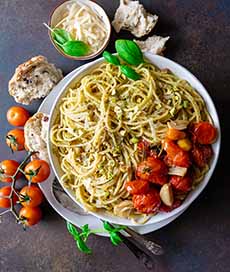
Bowl of Spaghetti With Pistachio Pesto
[1] Our dinner for National Spaghetti Day was a big hit (photos #1 through #4 © Oleificio Zucchi).

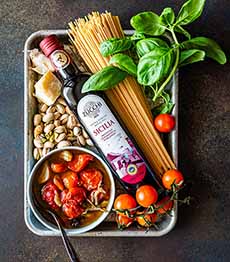
Pistachio Pesto Ingredients
[2] The ingredients.

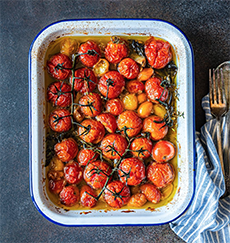
Cherry Tomato Confit In A Serving Dish
[3] Making the tomato confit.

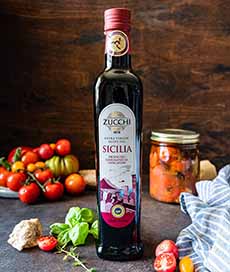
Bottle Of Zucchi Sicilia IGP Organic Olive Oil
[4] Zucchi Sicilian IGP EVOO.

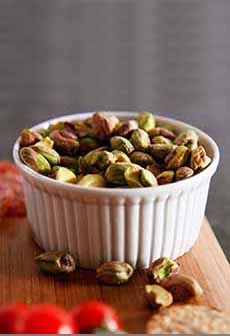
A Bowl Of Pistachios Nuts
[5] Shelled pistachio nuts (photo Columbus Craft Meats | Facebook).

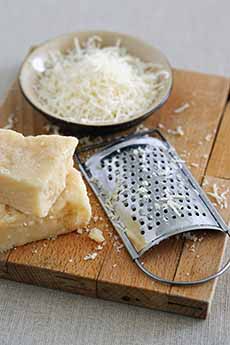
Grated Parmigiano Reggiano Cheese & Grater
[6] Parmigiano reggiano cheese (photo © London Deposit | Panther Media).

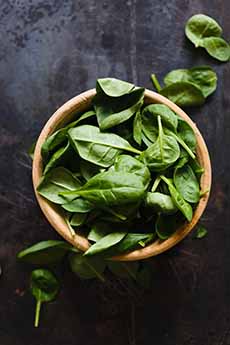
Fresh Basil Leaves In A Bowl
[7] Fresh basil leaves (photo license CC0 Public Domain).

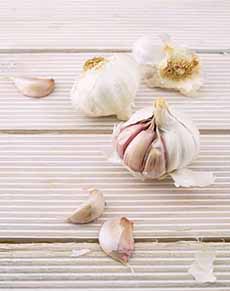
Garlic Bulbs & Cloves
[8] Garlic (photo Wesual Click | Public Domain).

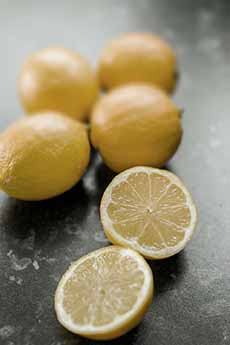
Lemons Ready To Make Lemon Juice
[9] Juice a lemon (photo © Dominika Roseclay | Pexels).

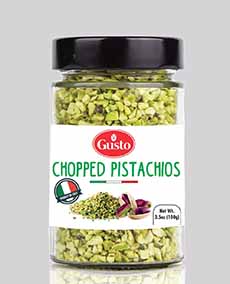
A jar of chopped pistachio nuts
[10] We always have a jar of chopped pistachios on hand as a quick garnish on just about anything (photo © Gusto | Amazon).


January 4th is National Spaghetti Day and we made this delicious Sicily-inspired pasta dish: Spaghetti With Pistachio Pesto & Tomato Confit.

The ground pistachios create a creamy, nutty pesto, perfectly contrasted by the concentrated sweetness of homemade tomato confit (which replaces tomato sauce).

It was a hit, and we’ll make it again next month: February 26th is National Pistachio Day.

Thanks to Zucchi, a producer of fine extra virgin olive oils, for the recipe. We used their Sicilia IGP Extra Virgin Olive Oil in the recipe.

> Here’s more about Zucchi olive oil.

> What’s an IGP olive oil? See below.

Made with 100% Sicilian olives, this extra virgin olive oil has an intense fruitiness and pungency. It boasts notes reminiscent of the island including oregano, wild fennel, and citrus.

> A year of pasta holidays.

> The different types of pasta: a photo glossary.

> The history of pasta.

> A year of pasta holidays.

> The different types of pasta: a glossary.
 
 
RECIPE #1: PASTA WITH PISTACHIO PESTO & TOMATO CONFIT

The tomato confit is optional, but highly recommended to create an extra-special dish. The confit can be prepared ahead of time, as can the pistachio pesto.

Or, you can substitute sundried tomatoes. The difference:

  • Tomato confit slow-cooks the tomatoes in olive oil.
  • Sun-dried tomatoes are dried in an oven, a dehydrator, or, the original Old World way, in the sunshine.
  •  
    Prep time is 30 minutes and cook time is 1 hour 40 minutes.

    > Here’s a video of the recipe.
     
    Ingredients For 4-6 Servings

    For The Pistachio Pesto

  • ½ cup shelled pistachios
  • ½ cup grated Parmigiano-Reggiano cheese, plus more for garnish
  • ½ cup basil leaves, packed
  • 1 clove garlic
  • ½ lemon, juiced
  • ¼ teaspoon salt or more to taste
  • 6 tablespoons Zucchi Sicilian IGP EVOO (or substitute)
  • Garnish: roughly chopped pistachios
  •  
    Ingredients For The Pasta

  • 2 cups cherry tomato confit (recipe #2 below)
  • 1 pound spaghetti
  • ½ cup pasta cooking water, reserved
  •  
    Preparation

    1. MAKE the tomato confit (recipe below). It can be made a week in advance and stored in the fridge.

    2. MAKE the pistachio pesto. Combine the pistachios, Parmigiano-Reggiano, basil, garlic, lemon juice, and salt in a food processor. Process until finely chopped. With the motor still running…

    3. DRIZZLE in EVOO and keep blending until the mixture is creamy. Set aside.

    4. COOK the spaghetti according to the package directions. Before draining the pasta, make sure to reserve about ½ cup of cooking liquid.

    5. GENTLY HEAT the tomato confit it is warmed through (if it has been refrigerated).

    6. COMBINE the cooked spaghetti, pistachio pesto, and ½ cup of reserved cooking liquid in a large bowl. Toss to make sure that the pesto covers the pasta evenly.

    7. SERVE the pasta topped with warm tomato confit, extra parmesan cheese, and chopped pistachios. Drizzle with a little bit of EVOO before serving.
     
     
    RECIPE #2: CHERRY TOMATO CONFIT

    Cherry tomatoes are slow-roasted with garlic, herbs, and a generous amount of olive oil, resulting in a condiment bursting with concentrated flavors.

    Tomato confit can be prepared ahead of time. Once cooled, spoon it into a jar or other tight-lidded container and store it in the fridge.

    Tomato confit is a lovely garnish or side for dishes beyond pasta: grilled or roasted meats and seafood, for example. You can also serve it with cheeses, and atop goat cheese crostini.

    Prep time is 5 minutes, and cook time is 1 hour 30 minutes.
     
    Ingredients

  • 2 pounds cherry tomatoes
  • ½ head garlic
  • 1 large sprig rosemary
  • 3 sprigs thyme
  • ¼ cup basil leaves
  • ½ teaspoon sea salt
  • 1 cup Zucchi Sicilian IGP EVOO or other EVOO
  •  
    Preparation

    1. PREHEAT the oven to 300°F. Place the tomatoes into a roasting pan, making sure that they fit snugly in one layer and are not piled up.

    2. ARRANGE the garlic, rosemary, thyme, and basil between the tomatoes. Season with salt and drizzle with EVOO, making sure that the tomatoes are at least half covered in oil.

    3. PLACE the roasting pan in the preheated oven and cook for 1½ hours.

    4. SERVE the tomato confit on top of the pasta.
     
     
    WHAT IS AN IGP OR PGI OLIVE OIL?

    When shopping for European food products, it’s common to see the acronym “IGP” or “PGI” on the label.

    IGP (Indicazione Geografica Protetta) or PGI in English (Protected Geographical Indication) is a special designation given by the EU to European food products that are closely linked to a geographical area.

    In order for a product to have the IGP designation, at least one of the stages of production, processing, or preparation must take place in the specified area.

    For example, a Sicilian IGP extra virgin olive oil is made from olives harvested only in Sicily. The olives are pressed, blended, and bottled in Sicily as well.

    Similarly, a Tuscan IGP extra virgin olive oil is made from olives harvested only in the region of Tuscany. The olives are pressed, blended, and bottled in Tuscany.

    Only under these conditions can the olive oil claim IGP status.

    There are also other technical and sensory requirements that an IGP-labeled olive oil must meet, including:

  • Acidity levels and aromatic properties appropriate for the region.
  • Specific packaging guidelines.
  •  
     
    What’s the purpose of IGP designation?

    The IGP label is used to protect the heritage of great food products, and to assure consumers that they’re getting the genuine item.

    It prevents producers from elsewhere from imitating a traditional product with one that falls short of the iconic original.

    It’s commonly applied to food products with a rich tradition such as wine, cheese, charcuterie, balsamic vinegar, olive oil, and even unique fruits and vegetables.

    For every product, there’s a quality control committee (a consorzio, or consortium) that thoroughly tests and reviews the product for its authenticity.

    A panel of experts thoroughly reviews and tests every batch of products applying for IGP status. It’s a rigorous process.
     
     
    How do you know if a product is IGP?

    It’s simple: Look for the seal somewhere on the product label. The IGP symbol is a blue and yellow starburst circle containing the words: Indicazione Geografica Protetta, Protected Geographical Indication, or whatever—see below [source].

    PGI Logo

    Note that obtaining certification is a somewhat costly and bureaucratic procedure. Some smaller estates may produce excellent olive oil yet not have the certification.

    More to note:

    Regardless of designation, olive oil should have a “best by” date. The fresher the olive oil, the better.

    By putting a “best by” date on a bottle, the producer asserts that that under proper storage conditions, the oil will good through that date.

    If there’s no date on the bottle, pass it by.


    CHECK OUT WHAT’S HAPPENING ON OUR HOME PAGE, THENIBBLE.COM.


    Comments off

    Flour & Olive Gourmet Cake Mixes: Elegant & Easy

    Olive oil cake is similar to any other cake, except for the fat. Olive oil is substituted for butter (or other fat) in the recipe. It’s important to use high-quality olive oil, as it will be a dominant flavor.

    We have long lamented a local bakery that closed after addicting us to its plain, simple, and oh-so-flavorful olive oil cakes. So when we came across Flour & Olive, an artisan company specializing in olive oil cake mixes, we were so happy we gave everyone a box for Christmas.

    —Karen Hochman
     
     
    FOUR DIFFERENT MIXES MAKE 70+ DIFFERENT CAKES

    The four olive oil cake mixes—Almond, Chocolate, Ginger, and Vanilla—are crafted from a custom blend of unbleached and whole wheat flours.

    The mixes are designed to be paired with extra virgin olive oil, a simple baking method and our interactive International Collection of over 70 recipes that transport your senses all over the world and include vegan and dairy free options.

    There are some 70 recipes. All can be served plain or iced. Just four examples for each cake mix:

  • Almond Cake Mix Variations: Almond with Dulce de Leche Cream, Almond Ricotta with Lemon Glaze, Coffee Spice with Espresso Cream, Danish Layer Cake with Vanilla Cream.
  • Chocolate Cake Mix Variation: German Marble with Chocolate Glaze, Gold Coast Chocolate with Whipped Chocolate Ganache, Mexican Hot Chocolate with Spicy Whipped Cream, Ukrainian Chocolate Cherry, Vietnamese Chocolate Espresso.
  • Ginger Cake Mix Variation: Carrot with Maple Cream Cheese Frosting, Chai Ginger with Lemon Glaze, German Lebkuchen with Chocolate Glaze, Jamaican Ginger with Caramel Sauce.
  • Vanilla Cake Mix Variation: Banana Chocolate Chip with Orange-Blossom Glaze, Dulce de Leche with Cinnamon Sugar, Pennsylvania Dutch Apple with Cinnamon Sugar, Pumpkin with Caramel Sauce.
  •  
    Several of the giftees, no doubt inspired by the charming packaging, quickly baked their cakes and fed back (pun intended) to us how happy they were.
     
     
    GET YOUR FLOUR & OLIVE CAKE MIXES

    > Head to FlourAndOlive.com.
     
     
    > The history of olive oil cake is below.

    > The history of cake.

    > The history of olive oil.

    > The different types of cake: a photo glossary.

    > The different types of olives and olive oil: a photo glossary.

    > Check your EVOO I.Q.

    > Cakes, gâteaux, tarts, and tortes: the difference.
     
     
    OLIVE OIL VS. BUTTER IN YOUR CAKE

    Olive oil has some distinct advantages over butter:

  • Heart Health: It’s high in monounsaturated fatty acids which can help lower “bad” LDL cholesterol while raising “good” HDL cholesterol.
  • It also contains antioxidants and anti-inflammatory compounds that may further protect against heart disease by reducing plaque buildup in arteries.
  • Dietary Needs: There’s no cholesterol, no lactose. It’s also vegan.
  • Baking: For those who like a moister cake and don’t care about rich butter flavor, an olive oil cake is significantly moister* and stays fresh longer.
  • Religious Beliefs: For certain Christian holy days that prohibit consumption of animal products, olive oil skirts the issue of butter in cooking and baking. The same is true for Jews who are kosher: Oils are pareve**.
  •  
    Some might try to add affordability to this list, since regular olive oil is less expensive than butter. However, olive oil cake demands to be made from extra virgin olive oil (EVOO). See the analysis in the footnote‡.


    THE HISTORY OF OLIVE OIL CAKE

    The history of olive oil cake is rooted in the Mediterranean, where olive trees have been cultivated for thousands of years.

    The wild olive tree (Olea oleaster), originated in an area of the eastern Mediterranean region that includes parts of modern-day Lebanon, Palestine/Israel, and Syria.

    The tree began to be cultivated around 6000-5500 B.C.E. in the Levant‡‡. The domesticated olive tree (Olea europaea) then spread westward across the Mediterranean, reaching Greece, Rome, and elsewhere through trade and cultural exchange.

    Olive oil was used for beauty, household, medicine, and religious rituals, as well as for cooking.

    The ancient Egyptians were the world’s first great bakers. Combine that with the fact that olives were cultivated in Egypt possibly as far back as the Early Dynastic Period (c. 3150-2686 B.C.E.).

    Hard archaeological evidence, such as olive pits and wood remains, dates back to at least the New Kingdom (c. 1550-1070 B.C.E.), if not earlier (source: Claude.ai 2025-01-04).

    We can assume that Egyptians used the oil for baking. But the first major bakers of olive oil cake appear to be the Greeks.

    By around 3000 B.C.E., olive oil had become so integral to Greek civilization that the olive branch turned into a symbol of peace. Cooks began to incorporating the oil into their cakes*, among other foods, giving birth to the olive oil cake.

    In addition to spreading olive cultivation to their colonies and trading networks across the Mediterranean, the Greeks made significant improvements in cultivation techniques and created new cultivars‡‡‡ through selective breeding.

    In the Christian era, in many Mediterranean countries including Greece and Italy, olive oil cake became a customary treat during the holiday season [source].

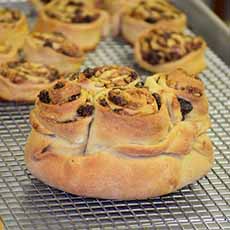
    In Italy’s Calabria region, for example, olive oil cakes called Pitta ‘mpigliata† or Pitta China, are traditional Christmas desserts: spiral-shaped pastries filled with nuts, dried fruit, and spices.
     
     
    Modern Olive Oil Cake

    Beyond the simple olive oil cake, many variations have evolved.

  • Liquids: Extra virgin olive oil is a given. Some recipes incorporate citrus juice (orange, lemon, blood orange); others use dairy (buttermilk, yogurt for tang and moisture, ricotta for a creamier texture).
  • Flours: While all-purpose flour is most common in recipes, almond flour or semolina can be used for texture and nutty flavor, or cornmeal for a more rustic, grainy texture.
  • Flavorings: Chocolate chunks, citrus zest (grapefruit, lemon, orange), fresh fruit (figs, pears), fresh herbs (basil, lavender, rosemary, sage, thyme), grape must or wine, nuts (ground almonds, pistachios), preserved lemons or other Mediterranean ingredients, and spices (cardamom, cinnamon, fennel seed).
  • Garnishes: candied citrus peel, fresh fruit compote, glaze (citrus, honey, or wine-based), mascarpone or whipped cream, powdered sugar, toasted nuts.
  •  
    Plus:

  • Format: bundts and mini bundts, cupcakes, financiers, layer cakes, loaves, ring molds, skillet cakes, Swiss roll style cakes using an olive oil sponge. Not to mention, bread pudding!
  •  


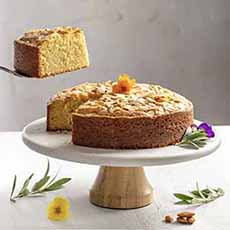
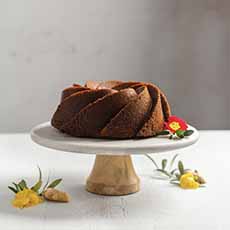
    Almond Cake
    [1] Flour & Olives almond cake mix is an award winner with numerous recipe options, including Almond Citrus, Coconut HHarissa, Persian Rose, Turmeric Spice, and other Middle Eastern-flavor cakes (photos #1 through #5 © Flour & Olive).

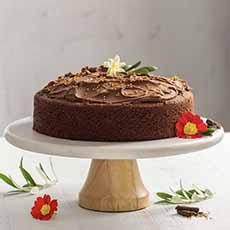
    Chocolate Cake With Chocolate Frosting
    [2] Chocolate cake mix can be turned into Chocolate Cherry, Italian Torta Nua with Nutella, Mascarpone Chocolate, Mexican Chocolate, and more yummy chocolate combinations.

    Ginger Bundt Cake
    [3] Ginger cake can be made into Carrot, Chai, Coffee Spice, Pumpkin, and numerous other cakes with hints of spice.

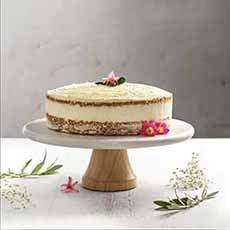
    Vanilla Naked Cake
    [4] Vanilla cake mix can be turned into Apple, Banana Chocolate Chip, Citrus, Honey, and Mascarpone Cake, among others.

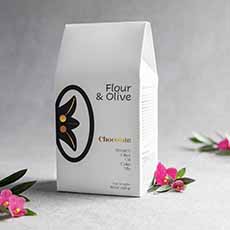
    Box of Flour & Olive cake mix
    [5] Elegant packaging turns Flour & Olive mixes into lovely gifts.

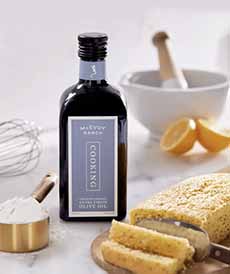
    A bottle of McEvoy Ranch olive oil
    [6] California’s McEvoy Ranch pairs Flour & Olive cake mixes with their high-quality Certified Organic Extra Virgin Cooking Olive Oil. Here’s more about it (photo © McEvoy Ranch).

    Olive Oil In A Cruet
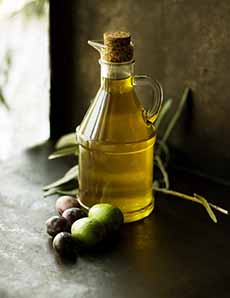
    [7] Whether you’re making an olive oil cake or using the oil as a bread dipper, use the best: the flavor is front and forward (photo © Roberta Sorge | Unsplash).

    Pitti mpigliata Italian Christmas pastry
    [8] Pitta ‘mpigliata†, a Calabrian Christmas pastry made with olive oil Here’s a recipe (photo © Cucina Grandinetti).

     
    ________________

    *Olive oil cakes are moister due to the oil’s superior ability to retain moisture. Butter contains water that evaporates during baking.

    **Olive oil is pareve, a term in Jewish dietary laws (kashrut/kosher) that refers to foods/ingredients that can be eaten with both meat and dairy products. Per Jewish law, meat products and dairy products cannot be consumed at the same meal (here’s why). In the case of baked goods made with oil instead of butter (a dairy product), the cake could be eaten at either a meat meal or a dairy meal. Otherwise, those who observe kashrut must wait six hours between consuming meat and dairy.

    †Pitta ‘mpigliata meaning: In the Calabrese dialect, the word pitta is a variation on pizza, which is itself related to the Arab word pita, meaning pie or cake. Impigliata means entangled, as are the fruits and nuts entangled in the pastry. Pitta China is a stuffed pastry.

    ‡Making butter: In addition to 16 ounces of butter from a quart of cream, you’ll also get two cups of buttermilk as a by-product. While the price of both commodities varies, as of this writing a pound of butter (four sticks) at Trader Joe’s was $3.99, or 25¢/ounce. A 33.8-ounce bottle of Italian olive oil was $10.99, or 33¢/ounce [source]. However, for baking an olive oil cake, you should use EVOO, not cooking oil. Trader Joe’s Premium Extra Virgin Olive Oil is $12.99, or 41¢/ounce. Factoid: It takes one quart of cream (32 ounces) to make one pound of butter (16 ounces).

    ‡‡The Levant is a large area in the Eastern Mediterranean region that comprises modern-day Israel, Jordan, Lebanon, Palestine, Syria, and a small part of southern Turkey.

    ‡‡‡A cultivar is a type of cultivated plant that growers have selected for desired traits. It retains those traits when propagated. Methods used to propagate cultivars include root and stem cuttings, grafting, and carefully controlled seed production, among others.


    CHECK OUT WHAT’S HAPPENING ON OUR HOME PAGE, THENIBBLE.COM.


    Comments off

    Chocolate Orange Marmalade Cake For New Year’s Eve & Beyond

    Chocolate Cake With Marmalade Filling
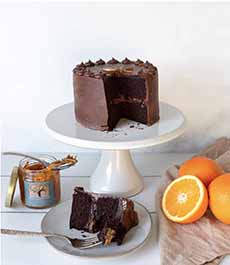
    [1] Ticking down to the New Year: a delicious blackout cake with orange marmalade filling (photos #1, #2, #3 © Frog Hollow Farm).

    Chocolate Cake With Marmalade Filling
    [2] We like to add a dab of garnish—with something creamy but not sweet (see photos #4 and #5).

    Frog Hollow Orange Marmalade
    [3] Frog Hollow’s orange marmalade is made from navel orange, not the bitter Seville oranges that are traditionally used. Why? See the history of marmalade, below.

    Vermont Creamery Mascarpone Container
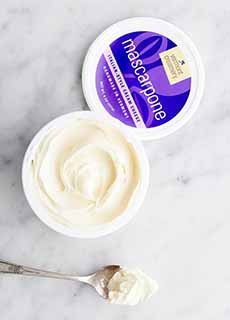
    [4] You can add a dab of mascarpone (the fresh cheese used in tiramisu) to the plate (photo © Vermont Creamery).

    A Bowl Of Whipped Cream
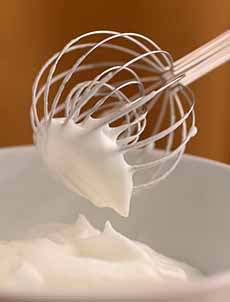
    [5] Or, whip some cream with only a tad-to-no sugar and instead add grated orange peel or 2 tablespoons per cup of heavy cream (photo © Kuhn Rikon).

    French 75 Cocktail Recipe
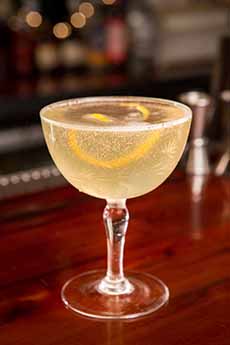
    [6] Pair this cake with a sparkling French 75. Here’s the recipe See other beverage pairings below (photo © Tanqueray).

    A classic Mimosa cocktail made with Frexinet Cava
    [7] A Mimosa is another great pairing. Here’s the recipe and also a recipe for a Mimosa-Aperol Spritz mash-up (photo Vxla | Wikipedia Commons).

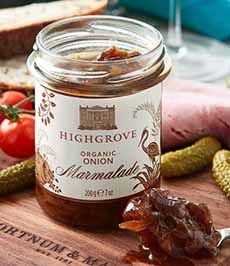
    A Jar Of Onion Marmalade
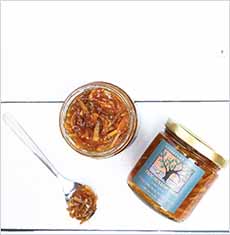
    [8] A jar of onion marmalade, superb with sharp cheeses and sausages, per the producer. You can purchase it here (photo © Fortnum & Mason).

    Yellow Tomato Marmalade
    [9] Heirloom tomato marmalade made with yellow tomatoes. You can purchase it here (photo © Sweet Jacquelina).

    Beet Marmalade & Goat Cheese Recipe
    [10] Beet marmalade tops goat cheese on an artisan cracker. Here’s the recipe (photo © Hannah Kaminsky | Bittersweet Blog).


    Look closely and this Chocolate Orange Marmalade Cake can stand in for the clock, counting down to midnight. So as fans of Frog Hollow Farm, we ordered one to usher in the new year.

    From Chef Becky of Frog Hollow Farm (one of our favorite purveyors of California organic fruit), this rich, velvety Chocolate Orange Marmalade Cake marries quality dark chocolate and sweet navel oranges.

    The cake itself is Blackout Cake, a moist dark chocolate layer cake. This recipe adds coffee to enhance the flavor of the chocolate and separates the layers with Frog Hollow Farm’s popular Organic Navel Orange Marmalade.

    The cake is frosted with chocolate ganache, made with 66% dark organic Guittard chocolate. If you love the combination of chocolate and orange (we do—it’s a match made in heaven), this cake is a dream.

    —Karen Hochman
     
     
    GET YOUR CHOCOLATE MARMALADE CAKE

    > Head to FrogHollowFarm.com.

    The cake is available year-round, waiting for your next special occasion.

    For an optional garnish, try barely sweetened whipped cream with splash of orange liqueur or grated orange peel, or mascarpone.
     
     
    > The different types of cake: a photo glossary.

    > The history of cake.

    > The history of marmalade follows.

    > Beverage pairings for this cake are also below.

    > Cake and wine pairings for other cakes.

    > More cake and wine pairings.
     
     
    THE HISTORY OF MARMALADE

    Marmalade is a member of the sweet spread family that also includes chutney, conserve, curd, jam, jelly, preserves, and related items (check out the differences here).

    Marmalade differs from the other spreads in that it not only includes chunks of fruit, but also strips of the fruit’s rinds.

    The name comes from the Portuguese word marmelo, which is the word for quince. That’s because the original marmalade was made with quince.

    In fact, quince marmalade was made as far back as the 14th century in Portugal and Spain. But because quinces are bitter and required a lot of expensive sugar to sweeten, oranges and other fruits took over center stage—although the name marmelo stuck.

    You can still find the occasional jar of quince marmalade if you search online—although quince jam and jelly are far more available.
     
     
    Marmalade Travels To Britain

    When citrus fruits from warm climates became more available in the 17th century, they entered Britain’s repertoire of fruit spreads. A Scottish recipe for orange marmalade appears in “Mrs McLintoch’s Receipts (sic)” of 1736 [source].

    In the 1760s, Scotsman John Keiller opened a confectionery shop selling biscuits, cakes, jams, jellies, and sweets on Seagate, a street in Dundee. Here begins the commercial rise of Britain’s orange marmalade.

    In 1762 he married Janet Matheson and she ran the shop producing many of the goods herself—in addition to bearing eight children [source].

    In 1797, it seems, John Keiller was on the docks of Dundee Harbor where a ship from Seville had taken shelter from a storm with a cargo of oranges.

    At the time Seville oranges were used medicinally—the peel was thought to aid digestion. But the variety was too bitter to consume as fresh fruit, and the lot proved to be a hard sell. Keiller purchased them for a bargain price [source].

    Janet thought it would be worth trying to make marmalade. Putting her own spin on it, she added thin strips of orange peel (called chips). She sold her innovation as chip marmalade (subsequently also called peel marmalade and shred marmalade).

    She also changed the consistency of her marmalade, from a solid form (think membrillo) to a tender consistency, enabling it to be spread on toast. Thus Dundee marmalade* was born.

    It developed a considerable following, so the Keillers opened a factory to produce their marmalade. With clever marketing touting that the chips of skin assisted with digestion—and thus Keiller’s was healthier than other breakfast spreads—Keiller’s Marmalade sales took offe.

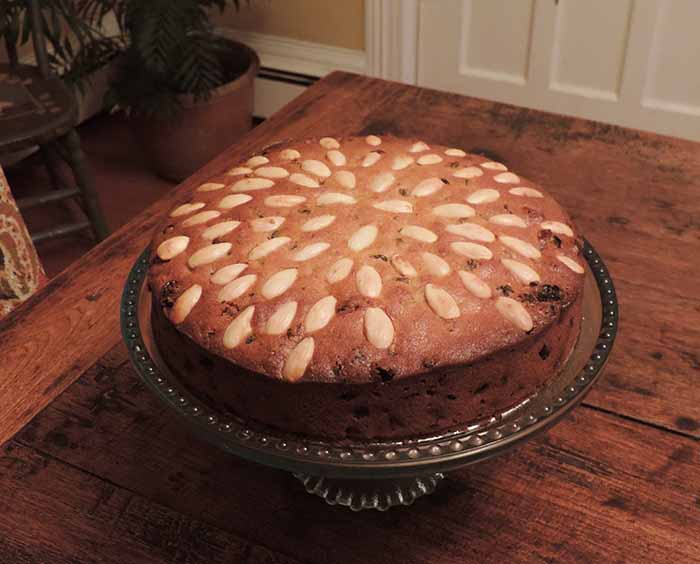
    Janet Keiller also used her marmalade to create Dundee Cake†, a type of fruitcake (photo #11, below).

    By the end of the 1800s, Keiller’s Marmalade was being shipped throughout the British Empire. Keiller’s Dundee Orange Marmalade was one of the first brands to be formally registered in the U.K., in 1876. Here’s more about the history of Keiller’s Marmalade.

    It became one of the most popular toast spreads in the country: a cultural icon and part of British culinary heritage.

    Here’s more Keiller history from the BBC.
     
     
    Modern Marmalade

    While marmalade is traditionally made from citrus fruits—bergamot, blood orange, navel, and Seville orange; grapefruit; kumquat; lemons and Meyer lemons; and mandarins. It also can be:

  • Made from other fruits, such as apples, pears, or quince.
  • Made from a combination of citrus fruits, or a mixture of citrus (e.g. orange-grapefruit, grapefruit honey, lemon-lime, orange-ginger) and non-citrus fruits.
  • Made from other fruits, herbs, and spices, such as ginger, lavender, peach, raspberry, rhubarb, and strawberry.
  • Modern artisans have been adding spirits. For example, Willow & Greene of County Antrim, Northern Ireland, has won numerous awards for Bushmills Single Malt Whiskey Luxury Marmalade, Dark & Stormy, Seville & Cointreau, and Seville & Aperol, in addition to non-spirited flavors.
  •  
    Check out the winners of the annual The Dalemain World Marmalade Awards if you want to see the best.


    Savory Marmalade

  • Savory marmalade is most often made with a base of onion (photo #8)or tomato‡ (photo #9), but also with artichoke, beet (photo #10), bell pepper, and carrot, among others.
  • It can be made seasoned with just about any flavor: balsamic vinegar, chili peppers, garlic, ginger, herbs (basil, thyme, rosemary, sage, etc.), horseradish, spices (cardamom, caraway, paprika, saffron) etc.
  • While you can purchase bacon jam, you can also add bacon to a savory marmalade.
  •  
     
    Uses For Savory Marmalade

  • Breakfast spread for biscuits and toast, garnish for pancakes and porridge (who says toppings need to be sweet?), a condiment with eggs.
  • Condiment on cheese plates; with chicken, fish, pork chops.
  • Dip, mixed into Greek yogurt.
  • Glaze or condiment for grilled or roasted meats and poultry.
  • Garnish for grains and vegetables, deviled eggs, and much more.
  • Spread for sandwiches (including burgers, grilled cheese, ham, poultry, roast beef), canapés, crackers, crostini. You can also blend it into mayonnaise.
  • Sauces—deglaze a pan or enrich other sauces.
  •  
     
    BEVERAGE PAIRINGS WITH CHOCOLATE-ORANGE CAKE

  • Non-Alcohol: Coffee, milk, orange-flavored mocktail (try a “Bellini” with orange juice and club soda), tea.
  • Cocktails: Aperol Spritz, Negroni, Whiskey Sour.
  • Cocktails With Orange Juice: French 75 (photo #6), Mimosa (photo #7), Screwdriver, Tequila Sunrise.
  • Liqueurs: chocolate, cream, orange liqueur.
  • Dessert Wines: dessert or fortified such as Madeira, Muscat (especially Orange Muscat), Port, Riesling.
  • Red Wines: Cabernet Franc, Dolcetto, Merlot, Pinot Noir.
  • Sparkling Wines: Brachetto D’Acqui, Champagne Demi-Sec or Doux, Moscato.
  •  
    Guaranteed: a delicious end to a festive evening.


    Dundee Cake, A Fruitcake
    [11] Dundee Cake (photo by R. Gloucester, license CC BY-SA 4.0).

     
    ________________
     
    *Dundee orange marmalade is a recipe made from Seville oranges, lemon juice, and orange juice. The particular recipe originated in Dundee, Scotland.

    †Dundee cake is a traditional Scottish fruitcake made with currants, Dundee marmalade, ground almonds, lemon zest and orange zest, raisins, nutmeg, sultanas (golden raisins), and typical cake ingredients such as baking powder, butter, eggs, flour, milk, and sugar. Some recipes add the more familiar candieds fruit, such as candied citrus peel and glacé cherries. The cake is topped with concentric circles of blanched almonds (photo #11). Dundee Cake was purportedly a favorite of Queen Elizabeth II who enjoyed it with her tea, and Winston Churchill.

    ‡Tomato is actually a fruit, and can easily be made into a sweet marmalade. However, savory spices and herbs can turn it into a savory marmalade—a delicious condiment as well as a spread.


    CHECK OUT WHAT’S HAPPENING ON OUR HOME PAGE, THENIBBLE.COM.


    Comments off


    © Copyright 2005-2026 Lifestyle Direct, Inc. All rights reserved. All images are copyrighted to their respective owners.