THE NIBBLE BLOG: Products, Recipes & Trends In Specialty Foods


Also visit our main website, TheNibble.com.

TIP OF THE DAY: Aged Coffee & Nespresso Limited Edition Selection Vintage 2014

Conventional coffee advice tells you to buy the freshest roasted beans, and grind them as you need to make coffee. Don’t buy more than you need for the week: Fresh is everything.

But now, there’s aged coffee, a growing trend.

Aged coffee is not analogous to old, stale, flat coffee. It comprises specially selected beans, that are aged using techniques that bring out the best aged qualities.

While the marketing message compares aged coffee to aged balsamic vinegar, whiskey, wine, etc., that’s an apples-to-oranges comparison. Still, aged coffee isn’t exactly new. The first coffee drunk by Europeans was aged.

THE HISTORY OF AGED COFFEE

Venetian traders first brought coffee to Europe in 1615, but it wasn’t a “quick trip” from Venice.

At the time, all imported coffee beans came from the port of Mocha, in what is now Yemen. It traveled south by ship around the Cape of Good Hope, then all the way up the west coast of Africa, continuing northward to England.

By the time the coffee arrived, exposure to salt air over time significantly changed the taste of the coffee. When coffee was subsequently grown in Indonesia, the voyage was even longer.

Europeans came to prefer the flavor over “fresh” coffee. In fact, when the Suez Canal opened in 1869, greatly shortening the voyage, Europeans still preferred the aged coffee to the fresher beans.

And so it came to be that some coffee was intentionally aged for six months or longer in large, open-sided warehouses in shipping ports—plenty of salty ocean air to transform the beans.

Over time, preferences changed. Fresh coffee beans became the preferred type of coffee in Europe, the U.S. and elsewhere.

However, everything old is new again, and aged coffee has become the old new style to try.

Here’s more history of coffee.

AGED COFFEE HAS BEEN IN THE U.S. FOR A WHILE

Starbucks has been aging coffee for certain single-origin coffees and for signature blends, such as Anniversary Blend and Christmas Blend.

At Peet’s, you can find Aged Sumatra Coffee.

Boutique producers also have introduced customers to the joys of aged coffee.

Ceremony Coffee in Annapolis has a Barrel Aged Coffee Series.

Water Avenue Coffee in Portland, Oregon sells Oak Barrel Aged Sumatra Coffee and Pinot Noir Barrel Aged El Salvador Coffee.

So is aged coffee a connoisseur product, or a marketing throwback to the past?

It is definitely the former! Everyone who savors a full-bodied cup of coffee black should try it. Why black? Well…add too much milk and sugar and you won’t taste the marvelous nuances.

What To Know About Aged Coffee

   
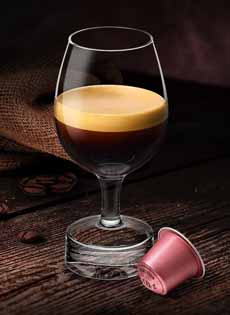
Nespresso Aged Coffee 2014

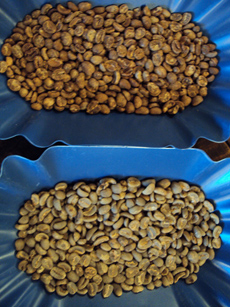
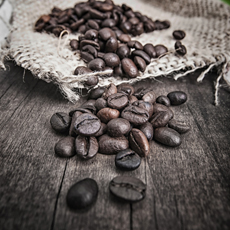
Sumatra Coffee Beans

Espresso Beans

[1] A glass of Nespresso aged coffee from the 2014 vintage (photo courtesy Nespresso). [2] Sumatra coffee beans: aged (top) versus unaged (photo courtesy Starbucks Melody). [3] Roasted and ready to grind (photo © Nebojsa Rozgic).

  • Only certain types of green (unroasted) coffee bean varieties age well; but there’s no single formula. Indonesian beans that are full-bodied and low in acidity, particularly Sumatra and Sulawesi beans that are semi-dry processed, can develop a spicy, complex flavor as they age.
  • On the other hand, some bright, acidic wet-processed Latin American coffees (which mellow as they age).
  • The beans must be aged under the right circumstances, including humidity, or their oils will evaporate, taking with them much of the aroma and flavor. Depending on the bean and the terroir, the aging technique can vary.
  • As with wine, each vintage has its own characteristics, and must be aged accordingly to create a unique, complex taste profile.
  • Unlike with some wines and whiskeys, ongoing aging does not improve the coffee: It simply loses more of its flavor.
  •  

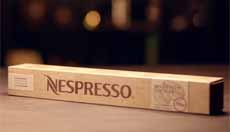
    Nespresso Aged Coffee 2014

    Nespresso Aged Coffee 2014
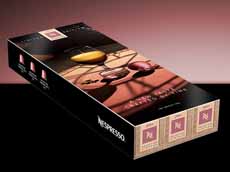
    [4] and [5] Nespresso Limited Edition Selection Vintage 2014 contains three sleeves.


    HOW TO CREATE AGED COFFEE

    Beans with the promise to age well are carefully aged under conditions that are best for the particular type of bean and vintage. As with many agricultural products, the “terroir” of the bean—the type of land, climate, seasonal weather and other environmental factors—produces different flavors and aromas in the finished product.

    After harvesting, the beans are bagged in burlap and regularly rotated to distribute moisture and prevent mold and rot. Some roasters prefer to age the beans in wine or whiskey barrels to impart still more flavors and aromas to the finished beans.

    The beans are usually aged at their origin, often at a higher altitude, where the temperature and humidity are more stable.

    Aging time ranges from six months to three years. Samples are roasted and brewed several times a year during the aging process and when the desired flavors have been achieved, are roasted after they are finished aging.

    A dark roast is best, as it evens out the flavor and accentuates the body of the coffee. Sometimes they are blended with other aged beans.

    However, some connoisseurs prefer a light roast on single-origin aged coffees, which better emphasizes the single-origin qualities.

     
    As more people embrace aged coffee, no doubt, there will be options to everyone’s taste.

    INTRODUCING NESPRESSO’S FIRST AGED COFFEE:
    THE LIMITED EDITION SELECTION VINTAGE 2014

    For the first time, super-premium coffee brand Nespresso now offers coffee lovers the chance to taste aged coffee.

    After years of development and expertise, Nespresso experts selected Arabica beans from the highlands of Colombia, which promised to age well. These beans, from the 2014 harvest, were then stored under controlled conditions for two years.

    They were then ready to roast. The experts selected a sophisticated split roasting technique: One part of the beans was roasted lighter to protect the elegant aromas specific to these beans; the other part was roasted darker to reveal the maturity of the taste and enhance the richness of the texture.

    The result: a cup of espresso that is rich in body, mellow in flavor and velvety-smooth in texture. An elegant woodiness is layered with fruity notes.

    The goal—to create a new sensory experience for coffee aficionados—has been achieved! The aged coffee is a real treat—and a great gift idea.

    Don’t let this limited edition slip through your fingers. Get yours now, in either original or Vertuo capsules.

    Then, we can both look forward to the next aged vintage!
     
     
    HOW MANY COFFEE REGIONS CAN YOU NAME?

    More than 40 countries around the world grow coffee.

    How many can you name? (The answer.)
      

    Comments off

    RECIPE: Valentine Brownies

    Want to bring something fun to work or school for Valentine’s Day?

    These strawberry brownies from Kevin Lynch of Closet Cooking can be made for any occasion.

    But we especially like the heart-shaped effect of halved strawberries for “love” occasions: Mother’s, Father’s, Valentine’s, anniversaries, etc.

    You can adapt the idea to your favorite brownie, or use his. We tweaked his a bit, using 2/3 cup sugar instead of 3/4 cup, since the chocolate topping is so rich; and used white chocolate for the top for color and flavor variation.

    For a step-by-step photos and substitutions for gluten-free, vegan, etc., see the original article.

    There are more Valentine dessert recipes below.
     
     
    RECIPE: STRAWBERRY HEART BROWNIES

    These chocolate-covered, strawberry-topped fudgy brownies are sure to please.

    Prep Time: 10 minutes. Cook Time: 20 minutes. Cool Time: 30 minutes. Total Time: 1 hour.

    Ingredients For 9 Servings

  • 1/2 cup (1 stick) butter
  • 8 ounces semisweet chocolate, coarsely chopped
  • 2/3 cup granulated sugar
  • 2 large eggs, lightly beaten
  • 1 teaspoon vanilla extract
  • 1/2 cup all-purpose flour
  • 1 tablespoon baking powder
  • 1/4 teaspoon salt
  • 1 pound strawberries, sliced (look for smaller strawberries to maximize the heart effect)
  • 8 ounces semi-sweet chocolate, coarsely chopped (substitute white chocolate if you prefer)
  •  
    Preparation

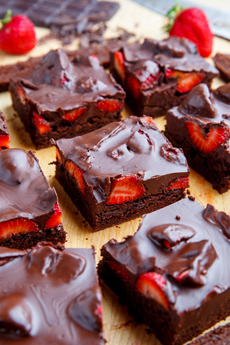
      Chocolate-Strawberry Brownies
    [1] The strawberry “hearts” make these brownies easy to love (photo © Closet Cooking).

    Fresh Strawberries
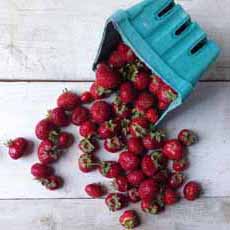
    [2] Use smaller strawberries for more of a heart shape (photo © Quinciple).

     
    1. GREASE an 8-inch-square baking pan. Optionally, line it with foil or parchment, overhanging to make lift-up and clean-up easier. Preheat the oven to 350°F.

    2. COMBINE the chocolate and butter in a saucepan over medium heat; melt, stirring frequently. Remove from the heat and let cool.

    3. MIX the sugar into the eggs. In another bowl, sift the flour, baking powder, and salt together. Blend the melted chocolate into the egg mixture, followed by the flour mixture.

    4. POUR the batter into the prepared baking pan and bake about 20 to 25 minutes, until a toothpick inserted into the center comes out clean. Remove from the oven.

    5. SPRINKLE the strawberries on top of the brownies. Melt the chocolate over medium-low heat on the stove or in a microwave. Pour it over the strawberries and let cool until the chocolate is set, 30-60 minutes.
     
     
    MORE VALENTINE DESSERT RECIPES

  • Chocolate Pudding With Strawberry Rose
  • Coeur À La Crème
  • Easy Chocolate Pudding Pie
  • Frozen Raspberry Soufflés
  • Red Velvet Raspberry Truffles
  • Strawberry-Brownie-Marshmallow Skewers
  • Valentine Cheese Plate
  • Valentine Jell-O Shots
  •  
     

    CHECK OUT WHAT’S HAPPENING ON OUR HOME PAGE, THENIBBLE.COM.


    Comments off

    TIP OF THE DAY: Ice Cubes For Valentine’s Day…And More Uses For The Ice Cube Tray

    Valentine Ice Cubes
    [1] Red and pink layered ice cubes (photos #1 and #2 © Ocean Spray).

    Valentine Ice Cubes
    [2] Art in a glass.

    Heart Ice Cubes
    [3] Add some pomegranate ice cubes (here’s how from Kelly Elko).

    Flower Ice Cubes
    [4] Flower ice cubes: small flowers make a big impression (here’s how from Martha Stewart).

    Pesto Ice Cubes
    [5] More ways to use an ice cube tray: save pesto (photo courtesy P&G Every Day) or…

    Frozen Lemon Juice
    [6] lemon juice (photo courtesy Food Network).

    Metal Ice Cube Tray
    [7] The old-fashioned metal ice cube tray with a removable divider (photo © West Elm).

    Popping Out Ice Cubes
    [8] Silicone trays make it easy to pop out the cubes (photo © Ikea).


    These days, many people enjoy refrigerator-freezers with built-in ice makers.

    But here’s a reason to hold on to those old-fashioned ice cube trays. In addition to party ice cubes, you can also use them to make granita—and much more, as you’ll see on the list below.

    Because we’re days away from Valentine’s celebrations, how about some special ice? You can’t get these from a mechanical ice-cube maker!
     
     
    RECIPE: LAYERED VALENTINE ICE CUBES

    Ingredients Per Ice Cube Tray

  • 1 ice cube tray
  • 1 cup fresh blueberries, rinsed (substitute frozen blueberries)
  • 1/3 cup Ocean Spray Blueberry Juice Cocktail
  • 1/2 cup Ocean Spray White Cranberry Juice Drink
  • 1/2 cup Ocean Spray Cranberry Juice Cocktail
  •  
    Preparation

    1. PLACE 4 blueberries in each of 16 ice cube cups. Add about 1 teaspoon blueberry flavored juice. Freeze for at least 1 hour or until solid.

    2. ADD 1/2 tablespoon white cranberry drink to each cup, atop the frozen blueberry layer. Freeze for 1 hour or until solid.

    3. TOP with 1/2 tablespoon cranberry beverage. Freeze for at least 1 hour or until solid.
     
     
    OTHER VALENTINE ICE CUBES

    Don’t have time or desire to layer ice cubes? These are much easier:

  • Aril ice cubes (photo #3): just water, pomegranate arils, and a heart-shaped ice cube tray.
  • Berry ice cubes (photo #4): make them with water or pomegranate juice, in regular or heart-shaped trays.
  • Flower ice cubes (photo #5): Add small flowers to water. If you’re using them in drinks, be sure the flowers are organic (otherwise they have pesticides).
  • Plain red or pink hearts: Add red fruit juice or pink lemonade to conventional ice cube trays.
  •  
     
    MORE USES FOR ICE CUBE TRAYS

    Certain foods are easier to pop out if you have silicone ice cube trays; others work better with a lever pull in an old-fashioned metal tray.

    Once whatever you’re making is frozen, you can transfer the cubes to a freezer bag for storage. Here are some ideas to try.

    Drinks

  • Chill beverages without diluting them. Make ice cubes with leftover coffee, tea, coconut milk, juice, etc. (freeze tomato juice for Bloody Marys).
  • Similarly, smoothies! Freeze fruits and vegetables to pop into the blender.
  • Make pretty ice cubes. Add berries, fruits, citrus peel, etc.
  • Deconstruct cocktails. For example, for a Piña Colada, try adding frozen pineapple juice and coconut cream cubes to a glass of rum.
  • Jell-O shots!
  •  
    Desserts & Snacks

  • Make dessert bites. An ice cube tray is great for making miniature desserts, from fancy (chocolate-covered cherries) to casual (mini Rice Krispies Treats).
  • On-a-stick. From frozen cheesecake to juice pops and yogurt pops, you can make something different on a stick every week.
  • Make your own Chunkys & PB cups: Melt your chocolate of choice, blend in nuts, seeds, raisins, or other dried fruits; and set in the fridge. For peanut butter cups, layer melted chocolate and peanut butter and refrigerate until set.
  • Make chocolate squares. Fill the compartments partially, so you end up with bite-size chocolate tiles. Add whatever you like to flavor: spices, coconut, etc.
  •  
    Cooking

    For the first two: Once your cubes are frozen, pop them from the tray into a resealable freezer bag. For precise measures, determine in advance what the tray compartments hold.

  • Freeze extras and leftovers: From lemon juice and stock/broth to wine and bacon fat, you’ll have the perfect size to pop [frozen] into soups, stews, and sauces.
  • Freeze herbs. Hard herbs like oregano, sage, thyme, and rosemary defrost better than soft herbs like dill and basil. Pack the ice cube trays with 3/4 herbs and 1/4 olive oil. Toss a cube directly into the pan to season eggs, sauces, etc.
  • Freeze garlic and ginger. First, purée them before adding them to the compartments. This also works with pesto (as is—no additional work required).
  • Freeze buttermilk. Buttermilk is pricey, and a recipe often requires just a quarter or half a cup. Freeze the leftover buttermilk; you’ll need it again soon.
  • Make sushi. It’s hard for amateurs to hand-form nigiri rice beds. Fill the compartments with seasoned rice, pop them out, and lay the fish or other toppings onto them.
  •  
    More Uses

    There are household uses, from homemade detergent cubes to sprouting seedlings. Just look online!
     
     
    HISTORY OF THE ICE CUBE TRAY

    Before the advent of the ice cube tray, ice for drinks and similar purposes was chipped from large blocks with an ice pick.

    An American physician, John Gorrie, built a refrigerator in 1844 to make ice to cool the air for his yellow fever patients. The refrigerator produced ice, which he hung from the ceiling in basins to cool the hot air.

    Some historians believed that Dr. Gorrie also invented the first ice cube tray in its current form. He is known to have given his patients iced drinks to cool them down.

  • The Domestic Electric Refrigerator, produced in 1914 by Fred Wolf, contained a simple ice cube tray.
  • By the 1920s and 1930s ice cube trays were commonplace in refrigerators.
  • The first flexible ice tray was launched in 1933, invented by Guy Tinkham. Silicone was still decades ahead; Tinkham’s tray stainless steel, with points that would eject the ice cubes.
  • The first rubber ice cube tray was launched by Lloyd Groff Copeman, also in 1933. Five years earlier, he had noticed that slush and ice flaked off his rubber boots, and set about designing different types of rubber trays.
  •  
     
    WHAT ABOUT CLOUDY ICE CUBES?

    You may have noted that commercially-made ice cubes are completely clear, while homemade cubes from the fridge are cloudy in the center.

     
    Cloudy ice cubes result when the water is high in dissolved solids. Commercial ice-makers use purified water, with cooling elements on the bottom. The cooling process allows any bubbles to be washed away from the top as the cubes grow larger.


    CHECK OUT WHAT’S HAPPENING ON OUR HOME PAGE, THENIBBLE.COM.


    Comments off

    RECIPE: Strawberry Rose Mojito

    Strawberry Rose Mojito Recipe
    [1] This Mojito is enhanced with strawberry-rose syrup for a special occasion (photo © Nielsen-Massey).

    Fresh Mint
    [2] Every Mojito requires lots of fresh mint (photo © Indian Home Cooking).


    Mojito fans: Nielsen-Massey has tailored the classic recipe for Valentine’s Day, using their vanilla extract and rosewater.

    If your Valentine plans are already set, put this on the calendar for Mother’s Day.
     
     
    RECIPE: STRAWBERRY-ROSE MOJITO
     
    Ingredients For The Strawberry-Rose Syrup (Yield: 1 Cup)

    Not all flavored cocktail syrups are simple syrup (equal parts sugar and water). Here’s a syrup made This recipe from Nielsen-Massey makes enough syrup for four Strawberry-Rose Mojitos.

  • 8-9 large strawberries, stemmed, rinsed and sliced
  • 1 teaspoon pure vanilla extract*
  • 1/8 teaspoon rosewater
  • 1/4 cup sugar
  •  
    Ingredients For The Mojito (Per Drink)

  • 15-20 fresh mint leaves
  • 2-1/2 ounces Strawberry-Rose Syrup
  • 2-1/2 ounces white rum
  • 1 ounce fresh lime juice
  • Ice
  • Club soda
  • 1 lime wedge
  • Garnish: whole strawberry
  •  
    Preparation

    1. MAKE the syrup. Add the ingredients to a small food processor and pulse until smooth; set aside.

    2. MUDDLE the mint leaves in a tall glass. Add the syrup, rum, lime juice and lots of ice.

    3. TOP with club soda and a freshly squeezed lime wedge; stir.

    4. NOTCH the strawberry, place it on the rim of the glass and serve.


    FOR A PITCHER (4 DRINKS)

    Ingredients

  • Same syrup recipe as above
  • 40-45 fresh mint leaves
  • 1 cup white rum
  • 1/2 cup lime juice
  • 1 liter club soda
  • Ice
  • 1 lime wedge
  • Garnish: 4 whole strawberries
  •  
    Preparation

    1. ADD the syrup, lime juice and mint leaves to a pitcher and muddle together.

    2. ADD the rum, club soda and ice; stir to combine.
     
     
    MOJITO HISTORY

    The mojito (mo-HEE-toe) is a quintessential Cuban cocktail. The name derives from the African voodoo term mojo, to cast a small spell.

    According to Bacardi Rum, the drink can be traced to 1586, when Sir Francis Drake and his pirates unsuccessfully attempted to sack Havana for its gold.

    His associate, Richard Drake (a distant relative), was said to have invented a Mojito-like cocktail known as El Draque (Drake’s pirate nickname) that was made with aguardiente, a crude forerunner of rum; plus sugar, lime and mint.

    Around the mid-1800s, when the Bacardi Company was established, rum was substituted and the cocktail became known as a Mojito. Here’s the original Mojito recipe.

    ________________

    *Nielsen Massey uses its Tahitian vanilla extra. Here are the different types of vanilla.
      

    Comments off

    TIP OF THE DAY: Affordable Rose Bubbly For Valentine’s Day

    Check the price of Champagne. Even the lowest-level brands are

    Now look at our three recommendations for rose sparkling wine (once called “pink Champagne):

    The first is $13.99; the latter are in the $18.99 range. Why is this a bargain?

    These are sweeter styles, perfect to enjoy as an aperitif, with chocolates or desserts, and even at breakfast. Some of our favorite pairings:

  • French toast with strawberries and cassis syrup
  • Bread pudding with chocolate chunks (or chocolate bread pudding)
  • Strawberries in balsamic vinegar
  • Chocolate cake, candy pie, pudding
  •  
    Perpetual crowd pleasers, these wines should be served chilled (as with all bubblies).
     
     
    MARTINI: SPARKLING ROSÉ

    Martini Sparkling Rosé (photo #1—the brand was formerly called Martini & Rossi) is an Italian sparkler made from a blend of brachetto, malvasia, and moscato bianco grapes from Northern Italy.

    The nose is delightful, a blend strawberry, rose, and tropical fruit aromas.

    The wine is medium-dry, and the palate is slightly sweet with ripe berry and peach flavors. The alcohol level is 9.5%.

    This wine also pairs well with seafood, cold meats, and creamy cheeses (although we love it with fresh goat cheese, too).

    And of course, serve it with fruit—especially with stone fruits like apricots and peaches, or a stone fruit salad with a dab of crème fraîche or mascarpone.

    You can serve it with light lunches and take it on picnics.
     
     
    BANFI: ROSA REGALE BRACHETTO D’ACQUI

    This delightfully spritzy, full-bodied sparkling wine (photo #2) is cranberry-red in color. The aroma (bouquet, nose) has hints of raspberries and strawberries plus rose petals. What could be more perfect for Valentine’s Day?

    On the palate, you’ll taste fresh raspberries. The crisp acidity enables it to pair with the richest desserts, and the elegance makes it a good date for a plate of fine cheeses.

    It also pairs well with seafood and spicy fare.

    Rosa Regale Brachetto d’Acqui gets its name because it’s 100% brachetto, a red wine grape; and the grapes are grown in a vineyard located outside the town of Acqui in the Piedmont region of Italy.

    It has the lowest alcohol of the three, at 7.3%: You can drink more without losing the passion.

    Speaking of which, Brachetto has a legend: that both Julius Caesar and Marc Antony sent Brachetto wine as gifts to Cleopatra. Some suggest that Cleopatra fell in love with Caesar over her first sip of Brachetto (the still wine, since sparkling wine had not yet been invented).

      Sparkling Rose
    [1] Martini Sparkling Rosé, pretty in pink.

    Banfi Rosa Regale Sparkling Red Wine
    [2] Rosa Regale Brachetto d’Acqui, the color of red roses.

    Santa Margherita Sparkling Rose Wine
    [3] Santa Margherita Sparkling Rosé, another fine pink-hued sparkler. All three bubblies are from northern Italy.

     
    In turn, the queen had her lovers drink the wine to unleash their passion. Hence, Rosa Regale, which means royal passion.

    You can shop around for the best price. In our area, we can find a 750ml bottle for around $18.99. But don’t worry about spending a few dollars more: It’s worth it.
     
     
    SANTA MARGHERITA SPARKLING ROSÉ

    This Prosecco (photo #3) is from the Santa Margherita Winery in Trentino-Alto Adige, a hilly area in the province of Treviso, bordering Switzerland and Austria to the north.

    It’s a blend of glera (the process grape), chardonnay, and malbec, which provides some of the pink hues.

    The aroma is floral, with what wine insiders call white fruits, plus delicate hints of red berry fruits (strawberries, raspberries).

    The flavor is delicate but vibrant, remaining on the palate (a.k.a. long finish). The alcohol level is 12%.

    For food pairings beyond sweets, look to Italian appetizers, seafood dishes, spicy foods, and the exotic seasonings of Asian cuisines.

    You may find it for $18.99, but we had no complaints about paying $21.99 for our bottle.
     
     
    NOTE: These wines are meant to be drunk fresh.

    Don’t lay them down, and don’t look for older vintages. Drink ‘em if you got ‘em.


    CHECK OUT WHAT’S HAPPENING ON OUR HOME PAGE, THENIBBLE.COM.


    Comments off

    The Nibble Webzine Of Food Adventures
    RSS
    Follow by Email


    © Copyright 2005-2026 Lifestyle Direct, Inc. All rights reserved. All images are copyrighted to their respective owners.