|
One of our favorite snacks and colorful ingredients is bell peppers, also called sweet peppers.
Bell peppers are easy to find year-round, available in green, red, yellow and orange (and at some markets, lavender, purple and white), making it easy to add color to your plate (raw, they also add crunch).
But they don’t add many calories. A one-cup serving has 30 calories per cup. As a bonus, it includes more than 200% of your vitamin C needs and 2.1 grams of fiber.
Trivia: Peppers are fruits. Here’s why.
While the bell pepper is a member of the Capsicum species like the hot chili peppers, it is the only variety that doesn’t produce any capsaicin, which is the compound that provides the heat in chili peppers.
COLORFUL VARIETIES
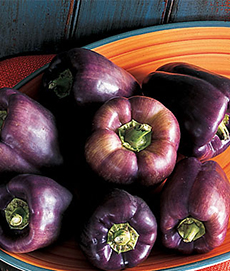
Orange, purple (photo #7), red and yellow peppers are actually riper and sweeter versions of green peppers. They also pack more beta carotene and vitamin E.
The flavors differ too: green is the most vegetal, red is the sweetest, and the others are in-between.
You may come across some specialty varieties, especially at farmers markets:
The Enjoya red-and-yellow-streaked bell pepper (photo #8) is a mutation discovered in a nursery greenhouse in The Netherlands in 2013.
The Brown Holland (a.k.a. chocolate) and white bell peppers are also heirloom varieties from The Netherlands. They may have been mutations as well.
There are also mini sweet peppers: snack-sized and easily portable.
WAYS TO USE BELL PEPPERS
Here are 25 ways to use bell peppers. If a recipe calls for only one color, be adventurous and try a second color as well—or every color.
Appetizers: From garnishes on crostini to appetizer (e.g. pepper chunk, small mozzarella balls and cubes of ham) to dips.
Chicken, Egg, Pasta & Tuna Salads: A small dice adds color and crunch.
Chili: Peppers are a complement to beans in vegetarian chili, and they work with beef chili, too.
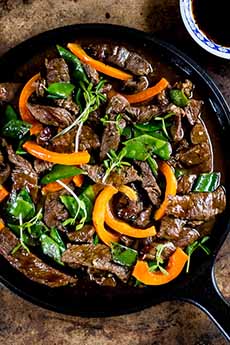
Chinese & Indian Food: Bell peppers are a staple in these two popular international cuisines (photo #1).
Condiments: Try sweet-and-hot red pepper jelly and relish. Try try this recipe with cheese and crackers, or on a hot dog, burger or sandwich.
Cornbread & Muffins: Bell peppers substitute for jalapeños in this cornbread recipe. How about baking some red bell pepper bread?
Crudités: Red, yellow and orange bells perk up a white, beige and green vegetable platter.
Dips & Spreads: Here’s a recipe for Grilled Red Pepper Dip and a Red Bell Pepper Tapenade. Make dip containers: even off the bottom of a raw pepper, and use it to hold dips or spreads.
Eggs: Fill an omelette or a strata, top a scramble, or enjoy a side of sautéed bell peppers with any egg preparation. You can bake eggs in halved bell peppers (photo #2—here’s the recipe).
Fajitas & Fajita Bowls: Top steak, or a steak and lettuce bowl, with grilled bell peppers and onions (and any other veggies of choice).
Gazpacho: Use instead of, or in addition to, tomatoes.
Grains & Grain Bowls: Add a raw bell dice or strips for color, fiber and flavor.
Green & Non-Green Salads: Check out this prize-winning Bell Pepper And Cherry Tomato Salad With Mozzarella Pearls.
Grilled Or Roasted Vegetable Medley: Here’s how to make foil-grilled peppers. How about grilled potatoes, peppers and onions?
Ground Beef: Try this Mexican-style Beef Pepper Skillet With Jack Cheese.
Pickled Peppers: Go Peter Piper and picked a peck (or less) of peppers. Add slices of pepper to a jar with this brine. They’ll be ready to eat in an hour, and keep up to two months.
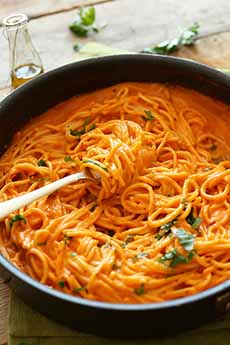
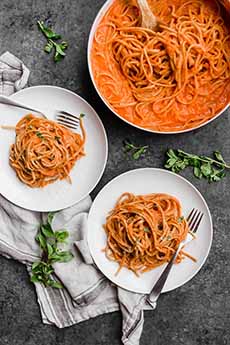
Pizza & Pasta: Dice any color bell pepper and toss it onto a pizza before baking, into pasta sauce as it cooks (photo #3), or of course, as part of Pasta Primavera.
Polenta: For a main dish, try this polenta recipe with sliced sausages and bell peppers. We also like this recipe for Polenta With Ratatouille.
Purée: Use red bell pepper in dips, including hummus and yogurt dips.
Ratatouille: A hearty summer dish from the Provence region of France, this delicious veggie dish combines bell peppers, eggplant, tomatoes and zucchini, gently simmered with garlic and olive oil. Here’s a side dish recipe, and another recipe with breakfast eggs. How about Potato Salad With Ratatouille?
Salsa: Substitute bell peppers when tomatoes are out of season.
Sandwiches & Wraps: Raw or cooked, pair bell peppers with goat cheese, grilled cheese, Philly Cheesesteak and of course, a sausage and peppers hero. Check out these Bell Pepper & Cheese Triangles on croissant dough.
Sauces: You can find many recipes for creamy bell pepper sauce, made without dairy. Here’s one that uses a base of chicken broth and another with a base almonds. Use them on eggs, grilled foods, pasta, pizza and anything that needs a sauce.
Sautés: Combine bell peppers, mushrooms and onions for a simply delicious side or topping that goes with just about any savory dish.
Skewers: For vegetable skewers or with a protein, nothing’s more colorful than “traffic light” peppers (red, yellow and green).
Slaws: Add a small dice into the shredded cabbage, fennel or jicama.
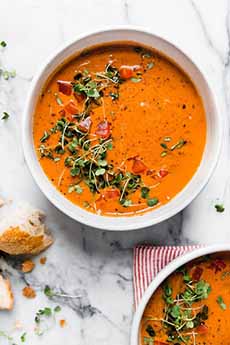
Soups: Roasted or steam the peppers and purée. Add to a stock or dairy base and season to taste (remove any charred skin before blending). Check out this Stuffed Pepper Soup: all the ingredients of stuffed peppers in a bowl of soup. Or, combine bell peppers with cauliflower or potatoes for a mixed vegetable soup. This Creamy Roast Pepper Soup (photo #6) is a stunner.
Stews: This tasty Slow Cooked Stuffed Pepper Stew turns all the ingredients of stuffed peppers into a stew format (photo #5).
Stir Fries: Toss a sliced bell peppers in the wok whenever you stir-fry. Try this recipe from The Clever Carrot (photo #1).
Stuffed Peppers: Make your own mixture of beans, brown rice, vegetables, and seasoning, then stuff the peppers, top with grated cheese and bake. Ground beef and rice is the classic, but trendy combinations include quinoa and kale. Anything works, from sausage stuffed peppers with blue cheese or feta, of ghdxd Deconstructed Stuffed Peppers: meatballs with rice, with strips of bell pepper. Here’s the recipe for these “unstuffed peppers.”
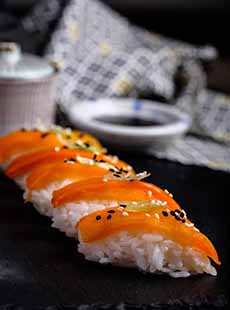
Vegetable Sushi: In addition to adding bell pepper to a sushi roll with fish or other vegetables, you can make this vegan bell pepper sushi—which looks like tuna—in this recipe (photo #4).
BELL PEPPER HISTORY
All peppers, sweet and hot, have their origins in Mexico, Central America, and northern South America.
Hot peppers have been cultivated for more than 9,000 years, with the earliest cultivation in Central and South America. The earliest fossil traces so far are from southwestern Ecuador, where dating to about 6,100 years ago (the different types of hot peppers).
In plant taxonomy, bell peppers are Capsicum annuum, one of the five species of the Capsicum genus. The others are for hot chile peppers (here they are).
All capsicums are members of the Nightshade Family, Solanaceae, which also includes potatoes, tomatoes and eggplant.
Why Peppers, Not Chiles?
The actual name of all hot peppers should be chile, not pepper. The word used in the Nahuatl (Aztec) language is chīlli. The variants chilli and chile entered English through Spanish in the mid-1600s.
So why do we call these fruits “peppers?” When Columbus and his crew first tasted them, the spicy taste resembled that of the black pepper that had been imported to Europe from India since Roman times.
Someone compared the heat to peppercorns, and “peppers” they became.
Pepper seeds were brought back to Spain in 1493 and then spread through Europe and Asia.
The term “bell pepper” dates at least as far back as the late 1699 where the pirate and ship’s surgeon Lionel Wafer wrote about them in his book, A New Voyage and Description of the Isthmus of America. He commented that “the Bell is esteemed most proper for pickling.”
The modern, mild bell pepper cultivar, was developed in the 1920s, in Szeged, Hungary [source and source].
Check out all the varieties you can grow at home.
|