THE NIBBLE BLOG: Products, Recipes & Trends In Specialty Foods


Also visit our main website, TheNibble.com.

Yusheng Recipe -Raw Fish Salad- Chinese Lunar New Year Food

January 25th, 2020 begins the Lunar New Year (a.k.a. Chinese New Year, but it’s celebrated in many other Asian countries). It lasts for 15 days.

The recipe for yusheng is below. But first:

We were chatting the other day that it’s the Year Of The Rat, an animal which does not evoke pleasant thoughts.

So we looked it up. It turns out that the Chinese word shǔ​ may refer to a rat, mouse, or other muroid. It’s all in the translation.

What’s a muroid?

It turns out that Muroidea are a superfamily of rodents. It includes including gerbils, hamsters, mice, rats, voles and many other relatives.

Here’s more about them.

And here’s more about the Year Of The Rat.

If you’re not happy about living in—or being born in—the Year Of The Rat, pick something that isn’t threatening: a cute gerbil or hamster, for example.
 
 
FOOD FOR THE LUNAR NEW YEAR

Whatever your muroid of choice, we’d like to introduce you to a special dish made for the Lunar New Year: yusheng.

The dish is considered a symbol of abundance, prosperity and vigor (here’s more about it).

While it has other names depending on dialect, yusheng translates to “Prosperity Toss,” a Cantonese-style raw fish salad. Sushi lovers, pay attention!

  • Facai yusheng means “prosperity raw fish salad.”
  • Xinnian yusheng means “Chinese New Year raw fish salad.”
  • Yusheng is Mandarin; Yee-sang is the Cantonese equivalent.
     
    The dish usually consists of strips of raw fish, mixed with shredded vegetables and a variety of sauces and condiments. You can create a vegan version with vegan salmon.

    Here’s the significance of each of the ingredients in Asian culture.

    While some versions simply toss all the ingredients together, in the manner of coleslaw. Some cooks build a tower in colored layers, alternating the different vegetables. As people serve themselves, the tower will collapse into a mix of colored strands.

    Some of today’s cooks create culinary art, as you can see in the photos.

    It can be anything from a dazzling array of artistry to what looks like a festive sashimi platter to plates with some shredded vegetables molded into pandas and teddy bears (a way to get children to eat their vegetables?).

    Some artists mold the vegetables into the zodiac animal, as in the [cute] rat in photo #3.
     
     
    RECIPE: HOW TO MAKE YUSHENG AT HOME

    So use your vegetable shredder to shred any fruits or veggies that add to the display of colors and flavors.

  • SECTION a red pomelo, grapefruit or oranges, as shown in photo #1, or fruit of choice.
  • ADD spices of choice. Cinnamon powder, pepper and other spices like Chinese Five Spice usher in wealth and prosperity.
  • GARNISH with whatever you like: chopped cashews or peanuts, cilantro, slices of the green part of a scallion, even hot chiles.
  • DRIZZLE oil over your creation if you like. We prefer to provide a dressing on the side: a mixture of rice wine vinegar and olive oil. If you have dark sesame oil, add just a touch to taste: It’s potent.
  • PLACE whatever condiments you have on the table: hoisin sauce, soy sauce, red chile flakes, etc.
  • SERVE with Asian rice crackers, preferably the small squares or a party mix.

  •  
    THE HISTORY OF YUSHENG


    [1] Yusheng: sashimi grade salmon and shredded vegetables. The dish includes pink pomelo (substitute red grapefruit) plus shredded carrot, cucumber, daikon, pickled ginger and yam Here’s the recipe from Evi Abeler | Food & Wine (photo © Evi Abeler).


    [2] This version includes different slices of fish: Condiments include plum sauce and toasted-sesame oil, plus Chinese five-spice. Crackers, nuts and seeds are added for crunch (photo © Open Rice).


    [3] The Year Of The Rat, commemorated in yusheng. See more clever ideas at Elle Magazine | Singapore (photo © Elle).

    A jar of McCormick Chinese Five Spice Powder
    [4] Chinese Five Spice can be used in all types of cuisines (photo © McCormick)

     
    While versions of yusheng are thought to have existed in China, the contemporary version was created in the 1960s in the Chinese community of Malaysia. It became a Chinese New Year favorite in Malaysia, Indonesia and Singapore.

    Some say the Singaporean version was invented by a Malaysian named Loke Ching Fatt in Seremban, Malaysia in the 1940s;

    Today, restaurants serve a deluxe version, qicai yusheng, seven-colored raw fish salad. You might mistake it for a deluxe sashimi platter, with several different types of fish.

    The current thought is that seven-colored raw fish salad was to created in the 1960s by chefs Lau Yoke Pui, Tham Yui Kai, Sin Leong and Hooi Kok Wai, together known as the Four Heavenly Kings on the Singapore restaurant scene [source].

    Here are more yusheng traditions.

    Nian nian you yu (abundance through the years).


    CHECK OUT WHAT’S HAPPENING ON OUR HOME PAGE, THENIBBLE.COM.


    Comments off

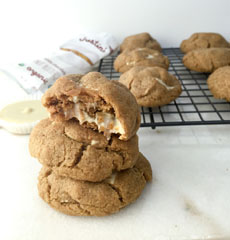
    RECIPES: White Chocolate Peanut Butter Cookies

    Peanut Butter Cup Cookies
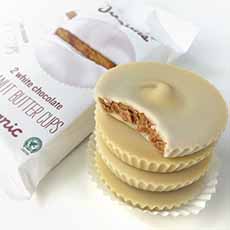
    [1] Double PB yum: peanut butter cookies with chopped white peanut butter cups (both photos © Justin’s).


    [2] Justin’s White Chocolate Peanut Butter Cups (a personal favorite of ours).


    January 24th was National Peanut Butter Day. We baked these cookies late in the day—in just enough time to have a couple of warm cookies with a glass of milk at bedtime, and to wake up to cookies for brunch.

    This recipe iw from Justin’s, producer of organic, non-GMO nut butters, peanut butter cups and other PB snacks.
     
     
    RECIPE: WHITE CHOCOLATE PEANUT BUTTER COOKIES

    Ingredients

  • 1/3 cup coconut oil, softened (consistency of butter, not melted)
  • 2 tablespoons Justin’s Classic Peanut Butter (or substitute)
  • 1/2 cup granulated sugar
  • 1/2 cup brown sugar, packed
  • 1 egg
  • 2 teaspoons vanilla extract
  • 1 3/4 cup all-purpose flour
  • 1 teaspoon baking soda
  • 1/2 teaspoon salt
  • 3/4 cup chopped Justin’s White Chocolate Peanut Butter Cups (or substitute)
  •  
    Preparation

    1. CREAM together with an electric stand or hand mixer the coconut oil, peanut butter, egg, sugars and vanilla. Blend at a medium speed until light and fluffy.

    2. MIX the flour, baking soda and salt until just combined. Fold in the peanut butter cups.

    3. FORM the dough, using small scoop, into 15-20 balls about the size of a golf ball. Place on a plate and press down slightly. Cover and refrigerate the dough for at least 2 hours.

     
    4. PREHEAT the oven to 350°F. Line a baking sheet with parchment paper. Place the dough 2 inches apart on the baking sheet. Bake for 9 to 10 minutes (the cookies should appear slightly undercooked). Allow the cookies to cool on the baking sheet for 5 to 10 minutes.
     
     
    PEANUT BUTTER IN HISTORY

    The History Of Peanut Butter

    The History Of Peanut Butter Cups

    The History Of Peanut Butter & Jelly Sandwiches


    Comments off

    RECIPE: Gourmet Onion Dip, With Caramelized Onions

    Fine food lovers: The days of mixing sour cream with Lipton Onion Soup mix are behind you.

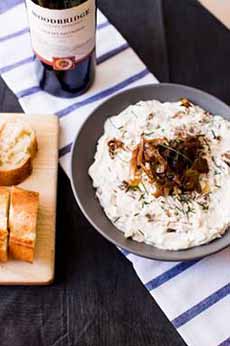
    Herewith, a better recipe for Game Day or any party. It uses caramelized onions, crème fraîche and fromage blanc, making it more “French” than a dip made with onion soup mix.

    The recipe comes to us from Bellwether Farms. Located on 35 acres in Sonoma County, the dairy is dedicated to sustainable agricultural practices, ethical animal husbandry and crafting the highest quality dairy products possible.

    Bellwether Farms crafts a family of aged and fresh sheep and cow milk cheeses and sheep milk yogurt using time-honored traditions and whole milk sourced from their flock and six family dairy farms. Discover more at BellwetherFarms.com.
     
     
    RECIPE: CLASSIC FRENCH ONION DIP WITH CRÈME FRAÎCHE AND FROMAGE BLANC

    Ingredients

  • 2 medium onions, finely chopped
  • 3 tablespoons canola or vegetable oil
  • 5 ounces Bellwether Farms crème fraîche or substitute
  • ¾ cup Bellwether Farms fromage blanc or substitute
  • 2 teaspoons white wine vinegar
  • 1 bunch fresh chives, snipped or finely chopped
  • 2 tablespoons chopped fresh thyme
  • Salt and freshly ground black pepper
  • For serving: crudités and/or chips or pretzels
  •  
    Preparation

    1. HEAT the oil and add the chopped onion to a medium sauté pan. Lower the heat and cook slowly until the onion softens and becomes caramelized, about 30-40 minutes. Don’t rush this step and the onions will be sweet and not bitter. Remove from heat and allow to cool completely.

    2. MIX together in a bowl the cooled onions and remaining ingredients. Season to taste with salt and pepper.

    TIP: Make extra caramelized onions as a garnish for the dip. While you’re at it, make a whole bunch extra for a week’s cooking: with eggs, burgers, sandwiches, meat, fish, potatoes, etc. Onions may look large but they cook down to what looks like very little, so don’t hesitate to use a lot.


    [1] Caramelized onion dip with crème fraîche and fromage blanc (photo © Bellwether Farms).


    [2] Make extra caramelized onions as a garnish (photo © Robert Mondavi Winery).


    ONION DIP HISTORY: IS FRENCH ONION DIP REALLY FRENCH?

    The classic French Onion Dip recipe was created in 1954 in Los Angeles by a French chef whose name has been lost to history.

    It dip was not known in France, but the seasoning used was modeled after the flavors of the classic French dish, Soupe à l’Oignon, made with beef stock and heavily caramelized onions.

    The chef combined sour cream and an instant dehydrated onion soup mix, that would quickly become a real crowd pleaser. Printed in a local newspaper, the recipe spread quickly.

    The following year, The Lipton Company promoted the recipe on Arthur Godfrey’s Talent Scouts a popular television show.

    Initially, the recipe was known as Lipton California Dip, shortly contracted to California Dip. The name French Onion Dip began to be used in the 1960s.

    A Lipton advertising campaign promoted it on television and in supermarkets, and the recipe was added to the Lipton Instant Onion Soup package in 1958.

    An enduring favorite, there are now many ready-to-eat versions, such as Ruffles French Onion Dip and Frito-Lay French Onion Dip. Commercially prepared products include thickeners, stabilizer and preservatives.

    Beyond chips and crudités, fans use it as a spread or topping onburgers, sandwiches and tacos [source].


    Comments off


    © Copyright 2005-2026 Lifestyle Direct, Inc. All rights reserved. All images are copyrighted to their respective owners.