THE NIBBLE BLOG: Products, Recipes & Trends In Specialty Foods


Also visit our main website, TheNibble.com.

TIP OF THE DAY: Goat Cheese Pairings For Bastille Day

Goat Cheese Pairing
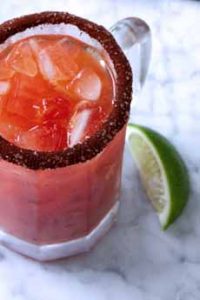
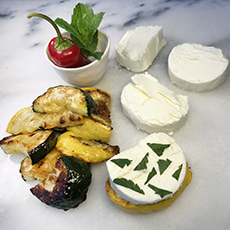
[1] Fresh Goat Cheese Log With Roasted Zucchini, Mint and Thai Chili (photos 1-3 © Goat Cheeses Of France).

Goat Cheese Pairing
[2] Valençay Pyramid With Balsamic-Marinated Watermelon.

Goat Cheese Pairing
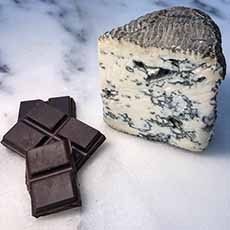
[3] Chevre Bleu d’Argetal With Dark Chocolate.

Crottin de Chavignol
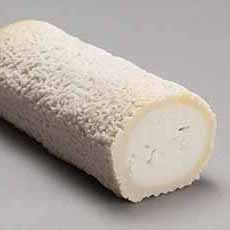
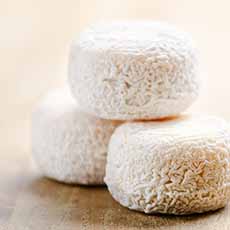
[4] Crottin de Chavignol, the best-selling French chevre (photo © Marmiton).


While U.S. cheesemakers produce terrific goat cheeses, the mother of goat’s milk cheeses is France, where goat cheese is called chèvre (SHEV).

France produces a large number of goat’s milk cheeses, especially in the Loire Valley and Poitou, where goats are said to have been brought by the Moors in the 8th century.

If you’re a goat cheese fan, some chèvres with which you may be familiar are Bucheron, Chabis, Chabichou du Poitou, Crottin de Chavignol (the most-produced A.O.C.* goat cheese AOC, photo #4), Montrachet, Pélardon, Pouligny Saint-Pierre, Pyramide, Rocamadour, Sainte-Maure de Touraine and Valençay [source].

We couldn’t find how many goat cheeses are made in France, but there many. To make it easy to select a few for Bastille Day celebrations, we offer three cheese pairings below.

France is the world’s #1 producer of goat’s milk cheeses. Some 3,000 artisan producers and about 60 large dairies craft more than 265 million pounds of goat cheese each year.

That’s a lot of cheese!

Collectively, French farmers manage the third largest goat herd in Europe, with 1,381,000 goats (with more arriving each spring).

That’s a lot of goats!

The secret to delicious French goat cheese is quality. This is where tradition plays a crucial role: French goat cheese has been developed and refined over centuries, so the cheesemakers know how to bring out the best in the goats’ milk and curds.

Discover more, including many recipes, at Goat Cheeses Of France.
 
 
WAYS TO SERVE GOAT CHEESE

We are never short of uses, from:

  • Breakfast: bagels, omelets, toast
  • Lunch: goat cheese and grilled vegetable sandwich, goat cheese pizza
  • Snack: goat cheese and crackers (we especially like BelVita Breakfast Biscuits, or McVittie’s digestive biscuits†)
  • Dinner: goat cheese on pasta‡ (or mac and cheese), goat cheese and arugula first course or goat cheese Caprese
  • Dessert: a cheese and fruit plate, or this goat cheese ice cream
  • Wine: with red, white or dessert wine
  •  
    Styles of goat cheese vary from:

  • Fresh and tangy, like a log of chevre.
  • Creamy and mellow, like an ash-covered Valençay pyramid.
  • Dense and nutty, like a round of aged Bucherondin.
  •  
    We love a dish of spaghetti dotted with fresh goat cheese and freshly-cracked black pepper†. While France doesn’t make a hard goat grating cheese, you can top it with parmesan or goat Gouda from Holland.
     
     
    GOAT CHEESE PAIRINGS

    These pairings are from Tia Keenan, a fromager, food stylist and the author of “Chèvre,” the first book dedicated to goat cheese.

     
    Tia recommends these cheese pairings, with wine pairings provided by The Nibble’s wine editor, Kris Prasad:

  • Fresh Goat Cheese Log With Roasted Zucchini, Mint and Thai Chili (photo #1). The bright acidity of a fresh goat cheese log plays against the earthiness of roasted zucchini. The flavors are highlighted by the fresh mint and bracing Thai chili, the heat of which is cooled by the butterfat in the cheese.
  • Wine Pairings: muscat from Alsace, any chenin-based wine, Costières de Nîmes from the Southern Rhone.
  • Valençay Pyramid With Balsamic-Marinated Watermelon (photo #2). Sweet, bright and full of deep, ripe flavors, the juicy watermelon contrasts with the fluffy paste of Valençay.
  • Wine Pairings: Tavel rosé, rosé Marsannay.
  • Fun Fact about the shape of the Valençay Pyramid: Napoleon returned to France in 1801 following a failed campaign in Egypt, and was presented this cheese in the traditional pyramid shape (with a pointed top). He became angry and sliced the top off with his sword, leaving the flat top we see today (source).
  • Chevre Bleu d’Argetal With Dark Chocolate (photo #3). The fruit flavors of dark chocolate mimic the mellow, fruity tones of blue cheese.
  • Wine Pairings: late harvest riesling from Alsace, muscat Beaume de Venise, rasteau fortified wine (not dry), Monbazillac sauternes (off vintage).
  •  
    While these pairings are great for Bastille Day, you can, of course, enjoy them any day of the year.

    ________________

    *A.O.C or AOC, Appellation d’Origine Contrôlée. Controlled designation of origin in English, the A.O.C. mark guarantees, among other things, that the cheese (or other food) with this certification originates from a specific region of France, and has been produced in a traditional way. There are 35 types of cheeses carrying the A.O.C. mark, which guarantees that: (1) The cheese was produced within a specific geographical area, from milk from specific herds of animals in the same area and partly matured there. (2) The cheese was made using strictly defined methods that have been handed-down over several centuries. (3) The characteristics of the cheese that have been precisely defined—its size, type of rind, texture and minimum fat content—are adhered to strictly. (4) The producers submit themselves to review by a public control commission, which guarantees the authenticity and quality of the products. D.O. and D.O.P. are similar certifications from Italy and Spain.

    †McVitie’s Digestive Biscuits, imported from the U.K., are slightly sweet. They’re one of the most popular biscuits worldwide, great with a cup of tea, too. You can find them at specialty food stores and at Amazon.

    ‡Use cubes of Selles sur Cher or dollops of a fresh log, along with fresh lemon zest, pine nuts and plenty of fresh herbs.


    Comments off

    Chambord Cocktail Recipes & The History Of Chambord

    Chambord, a black raspberry liqueur from the Loire Valley of France, is a super-premium black raspberry liqueur known for its unique flavor and versatility in cocktails. Make one or more of them to celebrate Bastille Day.

    > The recipes are below.

    > The history of raspberries.

    > Also below, the history of Chambord liqueur.
     
     
    BASTILLE DAY HISTORY

    July 14th (“le quatorze juillet”) is Bastille Day in France, officially called the Fête Nationale (“National Celebration”).

    If you missed that lesson in European History class, it commemorates the storming of the Bastille prison in Paris on July 14, 1789. It was a rallying point and symbolic act of rebellion in the French Revolution, which toppled the French monarchy (then ruled by Louis XVI, married to Marie Antoinette) and established the French Republic.

    The Bastille was a fortress used as a prison for political prisoners who had challenged the King Louis XVI and Queen Marie Antoinette over taxation, food shortages, and other socioeconomic issues.

    The royals had overtaxed the people to pay for their lavish lifestyles, and turned a deaf ear to their problems. You may recall that in answer to a warning that the starving people had no bread, Marie-Antoinette is alleged to have said, “Then let them eat cake.”

    With cries of “Liberté, égalité, fraternité,” the citizens faced down the Gardes Françaises at the prison.

    The rebellion resulted in two immediate legislative changes: the medieval system of feudalism was abolished, and the Declaration of the Rights of Man and of the Citizen was passed.

    The festivities are the equivalent of America’s July 4th/Independence Day celebration. Several cities in the U.S. celebrate Bastille Day, too. (Is it the fraternité another reason to party?)

    However: Don’t wish any French person “Happy Bastille Day.” That’s an Anglo-American term only used in the U.S. and the U.K., and not universally familiar in France.

    Instead, say “Bonne Fête Nationale!” (bun fet nah see oh NALL).
     
     
    RECIPES: DRINKS TO CELEBRATE BASTILLE DAY

    There are many ways to celebrate Bastille Day on July 14th. In our bailiwick, that means foods, wines and cocktails.

    In the beverages department, Champagne is the de facto choice*, although many popular cocktails were invented in France, including the French 75, the Kir and the Kir Royale, the Mimosa and the Sidecar.

    This year, we’re toasting with three different Chambord cocktails. Chambord is a raspberry liqueur brand, fashioned after a late-17th-century recipe from France’s Loire Valley.

    The black raspberry flavor is rich and alluring, with layers of red raspberry fruit and a subtle note of vanilla.

    You can:

  • Sip it straight on the rocks.
  • Sprinkle it over sorbet or cheesecake.
  • Use it to flavor shaved/crushed ice.
  • Make cocktails.
  • Add it to chocolate/fudge sauce.
  •  
    In the winter, we use it to make a sauce for roast duck.
     
     
    CHAMBORD COCKTAIL RECIPES

    RECIPE #1: CHAMBORD ROYALE
     
    Ingredients Per Drink

  • ¼ ounce Chambord Liqueur
  • Champagne
  • Garnish: fresh raspberry
  •  

    Chambord Royale
    [1] Chambord Royale cocktail (photos 1-3 © Brown-Forman Corporation)

    Chambord Spritz
    [2] The Chambord Spritz.

    Chambord Bottle
    [3] Going to a Bastille Day party? Bring Chambord as a gift.

    Champagne Bottle
    [4] Celebratory Champagne can be drunk straight, in a Chambord Royale (recipe below) or a Kir Royale (photo © Zsuzsanna kilian | iStock Photo).

     
    Preparation

    POUR the Chambord into a flute glass. Top with Champagne. Garnish with a raspberry.
     
     
    RECIPE #2: CHAMBORD SPRITZ

    Ingredients Per Drink

  • 1½ ounces Chambord Liqueur
  • 4 ounces dry white wine
  • Soda water
  •  
    Preparation

    FILL a large wine glass with ice. Add the Chambord, white wine and soda. Stir lightly and serve.
     
     
    RECIPE #3: CHAMBORD VODKA LEMONADE

    Ingredients Per Drink

  • 1 ounce Chambord Liqueur
  • 1 ounce vodka
  • Lemonade
  • Garnish: lime wedge
  •  
    Preparation

    FILL a tall glass with ice. Add the Chambord, vodka and lemonade. Garnish with the lime wedge.
     
    Chateau de Chambord
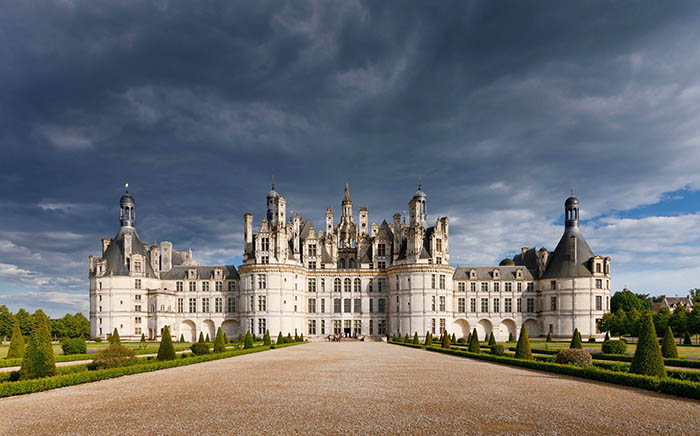
    [5] The beautiful Château de Chambord in the Loire Valley of France. It inspired the Chambord liqueur (photo © Château de Chambord | Facebook).
     
     
    THE HISTORY OF CHAMBORD

    Chambord, created in the 1980s, was inspired by the story of a luxurious raspberry liqueur produced at Château de Chambord in the Loire Valley of France. The occasion was a visit by King Louis XIV (1638-1715) in the late 17th century.

    The liqueur was sweetened with sugar‡ and honey and flavored with exotic spices—a luxury only the nobility could afford.

    Fruit liqueurs trace back to 13th-century where they were often made by monks, who earned income through brewing and distilling, among other agricultural pursuits†.

    Liqueurs were commonly made by macerating soft fruits such as cherries, gooseberries, strawberries, and raspberries in alcohol, to which distillates of spices or herbs and sugar were added.

    Raspberry liqueurs increased in popularity during the latter half of the 17th century (the time of King Louis XIV), when it was common for the nobility to enjoy liqueurs and Cognac at the end of their fine meals.

    Beyond France, historical records indicate that raspberries were used in alcoholic beverages in Scotland as early as the 18th century, often in homemade cordials and infusions. In fact, given that cordial-making was widespread in homes, by the 17th century raspberries had a fairly broad spread across Europe, and sugar was more affordable, we can imagine many people enjoying a glass.
     
    The Chambord Brand

    Chambord was launched in 1982, created by Norton “Sky” Cooper at his family’s cordial distillery, Charles Jacquin et Cie. Established in 1884, it’s America’s oldest cordial producer.

    The multinational spirits firm, Brown-Forman Corporation, acquired the Chambord brand in 2006. While there are many other raspberry liqueurs on the market (including fine Scottish brands), marketing has made Chambord the best-known.

    Thus, Chambord is a modern revival and commercialization of a much older European tradition of raspberry-based cordials and liqueurs (the difference).

    And it’s delicious! You can enjoy a small snifter instead of (or with) dessert.
     
    ________________

    *There are less expensive French sparkling wines called crémant (cray MONT). Ask your salesperson for recommendations.

    †In monasteries of the Middle Ages, monks were devoted to the study of botany and alchemy, and diffused many distilled spirits with medicinal herbs. They established extensive gardens, including herb gardens, kitchen gardens, and orchards, to cultivate plants for various purposes. You may remember from high school biology that an Augustinian monk, Gregor Mendel, is the father of modern genetics. His groundbreaking work with pea plants laid the foundation for understanding how traits are inherited.

    ‡Sugar was introduced to Europe by Arab expansion from the Middle East into the Mediterranean, reaching Sicily around the 9th century and Spain by the 10th century. The Crusaders further facilitated the introduction of sugar to Northern Europe in the 11th century. It was very costly.


    Comments off

    TOP PICK OF THE WEEK: Stuffed Puffs Chocolate-Filled Marshmallows

    Stuffed Puffs
    [1] A bag of Stuffed Puffs, marshmallows with real chocolate centers, is tons of fun (all photos © Stuffed Puffs).

    Stuffed Puffs
    [2] Melt a graham cracker sandwich—s’mores—or enjoy Stuffed Puffs “open face.”

    Stuffed Puffs
    [3] Top a slice of pound cake with toasted Stuffed Puffs and berries.

    Stuffed Puffs
    [4] Here’s what a toasted Stuffed Puffs marshmallow looks like up close.


    We don’t know who invented S’mores, but the Girl Scouts certainly popularized them. The first published recipe is in their 1927 handbook.

    (Here’s the history of s’mores.)

    S’mores around the campfire has been a yummy tradition: a stick, a fire, two toasted marshmallows, a square of chocolate and two graham crackers turn into a delicious chocolate marshmallow sandwich.

    While there have been numerous creative uses of s’mores (see our recipe list), as well as flavored marshmallows and chocolate-covered marshmallows, there’s now a true innovation:

    This summer, Stuffed Puffs, marshmallows filled with chocolate, debuted at WalMart.

    Stuffed Puffs were created by Michael Tierney (who also created the Mikey’s line of paleo baked goods).

    What seems like an obvious idea, he says, was actually born around a campfire. It’s a simple idea, but very hard to execute—which is why it hasn’t been done before.

    It took Tierney seven years to work out the details. Now that chocolate-filled marshmallows are a reality, S’mores lovers no longer have to juggle marshmallows, chocolate bars and graham crackers over heat—be it campfire, fireplace, grill or gas stove.

    It also solves the problem that the marshmallow does not get hot enough to melt the chocolate. With the chocolate inside the marshmallow, Stuffed Puffs has ingeniously solved the problem:

    The chocolate melts while the marshmallow toasts. It’s fail-safe.

    NATIONAL S’MORES DAY IS AUGUST 10TH. Plan ahead!
     
     
    BEYOND S’MORES

    While Tierney created Stuffed Puffs specifically for S’mores, we also enjoy them for snacking, right out of the bag.

    We’ve also used them for:

  • Dessert garnishes
  • Dessert skewers, with cake cubes and fruit
  • Hot chocolate
  • Snack plates, with cookies, peanut butter cups and other favorites
  • Sundaes
  • Toasted on skewers (skip the graham crackers)
  •  
    For Summer 2019, you can find Stuffed Puffs at WalMart.

    In the fall, they will be available at stores nationwide.

    Different flavors and coatings are in the works. We can’t wait!

    For more information visit StuffedPuffs.com.
     
     
    THE HISTORY OF MARSHMALLOWS

    Marshmallows take their name from the marsh mallow plant (Althea officinalis)—a large herb that grows in marshes.

    The root of the plant produces a sticky, white, almost jelly-like (or sap-like) substance called mucilage. (Sound familiar? Mucilage is also a term used for glue, because it’s sticky like the sap.)

    Mallow was an edible vegetable in Roman cuisine. A a dish of marsh mallow was one of their delicacies [source].

    The Egyptians may have used it as early as 2000 B.C.E., combining it with honey to make a candy.

    The Greeks (and later, the Arabs and Indians), used marsh mallow for medicinal purposes, often as an ingredient in preparations to quiet coughs.

    Today, we have better cough remedies: Bring on the candy!

    Here’s more history of marshmallows.


    Comments off

    COCKTAIL RECIPE: Blueberry Frosé For National Blueberry Month

    For the past several summers, the frosé—a frozen rosé cocktail (or wine slush, if you prefer) has been served as a winetail (wine cocktail) or an after-dinner drink (liquid dessert).

    Here’s our first set of frosé recipes, from two summers ago.

    This recipe (photo #1), from the U.S. Highbush Blueberry Council, adds blueberries that turn a frosé into a thick, toothsome slushie.

    The Blueberry Frosé is a high-antioxidant cocktail (now there’s an excuse!).

    Blueberries have one of the highest antioxidant levels of all fruits and vegetables. Their chief antioxidants are family of polyphenols called flavonoids.

    Among the many benefits attributed to flavonoids are reduced risk of asthma, cancer, heart disease and stroke. They may play a special role in protecting the brain. Here’s more about flavonoids.

    Check our Antioxidant Glossarys, and these details on the specific benefit of blueberries.

    If the antioxidants don’t convince you, make a Blueberry Frosé to celebrate National Blueberry Month: July.
     
     
    RECIPE: BLUEBERRY FROSÉ FROZEN COCKTAIL

    Ingredients For 4 Servings

  • 1 750 ml bottle (25 ounces) rosé wine
  • 2-1/3 cups frozen blueberries, divided
  • 1/3 cup granulated sugar
  • 1/4 cup fresh lemon juice (1 lemon)
  • 1/4 cup fresh basil leaves, divided
  • Optional garnish: fresh blueberries on a pick
  •  
    For virgin drinks, substitute lemon sparkling water for the wine.

    Preparation

    1. POUR the wine into ice cube trays; freeze for 6 to 8 hours until almost frozen solid. (Wine will not freeze completely because of the alcohol content. The higher the A.B.V. or proof of an alcohol beverage*, the less solid it will freeze.)

    2. PULSE in a blender until smooth: the wine ice cubes, 2 cups of the frozen blueberries, the sugar, lemon juice and 2 tablespoons of basil leaves.


    Blueberry Basil Frose
    [1] Blueberry frosé, a frozen drink or blueberries and rose wine (photo © U.S. Highbush Blueberry Council).

    Bosman Rose Wine
    [2] Bosman Family Vineyards, a Fair Trade Certified winery in South Africa. The salmon-colored wine is made in the dry Provence style, and has notes of strawberry and peach.

     
    3. DIVIDE among 4 glasses. Garnish with remaining blueberries and basil leaves. While the frozen blueberries are a nice garnish, we like fresh blueberries on a pick even more.
     
     
    THE TWO TYPES OF BLUEBERRIES

  • Highbush blueberries (Vaccinium corymbosum) grow on tall bushes; some cultivars reach a height of 6 to 8 feet. The berries are larger and more abundant than lowbush blueberries, although their flavor may be somewhat less intense and sweet.
  • Lowbush blueberries (Vaccinium angustifolium), also referred to as wild blueberries, grow in Maine and the colder regions of eastern North America. The shrubs grow no taller than two feet and may be smaller, depending on soil and climate, and produce small, exceptionally sweet bluish-black berries. If you want to plant a bush or two, these are hardy plants that do well in all soils, even poor, rocky types, providing the drainage is good.
  •  
     
    CHECK OUT THE HISTORY OF BLUEBERRIES

    Plus, more blueberry recipes.
     
     
    ABOUT BOSMAN FAMILY WINERY

    We made our Blueberry Frosé with a bottle of Bosman Generation 8 Rosé, from South Africa.

    The first Bosman emigrated to South Africa eight generations ago, in 1798. He grew grapes on his land to make wines for his own consumption.

    The practice continued through six generations until the seventh decided to join the South African wine renaissance and make wine for sale. Hence: Bosman Family Vineyards.

    There’s a ninth generation, far too young to help with production. You can see the generations here, and guess how long it will take the youngsters to join the family business.

    If you’d like to “visit” the vineyard, head to BosmanWines.com.

    ________________

    *A.B.V., alcohol-by-volume, the number of milliliters of ethanol expressed as a percentage. Here’s more about it. Another way to specify the amount of alcohol is the alcohol proof, which in the U.S. is twice the alcohol-by-volume A.B.V. Systems of expressing proof can vary in other countries.


    Comments off

    FOOD FUN: Let Me Out! Says The Crayfish

    Seafood Soup
    [1] Ready for his close-up: Our crustacean friend is holding a piece of lime, to be squeezed into the soup at the HM Grand Central Hotel in Phnom Penh, Cambodia (photo courtesy Pexels).

    Shrimp Soup With Crayfish
    [2] You can serve a larger bowl or a smaller bowl. We recommend a larger service plate under the bowlm so the crayfish tail can be pulled apart and eaten.


    Pièce de résistance, a French term, originally referred to the principal dish of a grand meal, or a dessert, created to be a showpiece.

    While the term literally translates as “piece of resistance,” the reference is to the most important or remarkable feature.

    You don’t have to work too hard to create a pièce de résistance.

    Here, a simple bowl of seafood soup is turned into a memorable dish by the simple addition of a crayfish*.

    The crayfish looks like he’s ready to start a conversation (e.g., “Let me out of here!).

    His tail is a tasty addition to the other seafood in the soup, and his claws are utilitarian: They hold a piece of lime to squeeze into the soup.

    The take-away: Keep your eye out for a “piece of resistance” element for whatever you’re serving.

    The book Play With Your Food is just one tome with lots of ideas.
     
     
    THE HISTORY OF SOUP
     
     
    TYPES OF SOUP
     
     
    ________________

    *A crayfish is also known as a crawdad, crawfish, freshwater lobster, mountain lobster, mudbug, or yabbie. It is a freshwater crustacean resembling a small lobster to which it is related.


    Comments off

    The Nibble Webzine Of Food Adventures
    RSS
    Follow by Email


    © Copyright 2005-2026 Lifestyle Direct, Inc. All rights reserved. All images are copyrighted to their respective owners.