|
The American food supply is quite safe. But every now and then, bacteria and viruses cause dangerous outbreaks, most often tied to produce.
According to an estimate from the CDC, produce causes nearly half of all foodborne illnesses. Dairy and eggs cause 20%, meat and poultry cause 22%, and fish and shellfish 6% [source].
Where do the contaminants come from? E. coli, for example, a bacterium found in the intestines of cattle and other animals (including humans), also turns up in leafy greens via manure fertilizer and contaminated human hands.
If ingested, E. coli can cause nausea, vomiting, diarrhea, and in the case of vulnerable groups, worse.
Hepatitis A virus and norovirus have caused outbreaks in soft berries that are harvested by hand, because unwashed humans can cross-contaminate them.
That includes the hands of store staff and customers who touch the fruits and vegetables.
(And that’s why we should wash our hands thoroughly after using the restroom.)
CONSUMER CONCERNS
A few years back, when there was a rash of outbreaks of food poisoning linked to fresh produce, a new category of cleanser was born: produce wash.
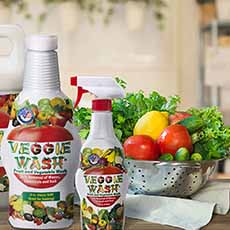
People rushed to buy the spray bottles and gallon refills (photo #2).
The stories faded from the headlines. But now that fresh produce season is upon us, do you need to revisit the issue and buy a bottle?
And even if you don’t use a special wash, how should you wash fruits and vegetables?
This week, The New York Times consulted experts to answered these questions. Their take:
You don’t need special produce washes (much less bleach or detergents).
In fact, they can actually have a negative impact if you consume any residual cleanser.
Plus, they aren’t any more effective than running water.
Washing won’t completely decontaminate a piece of produce, but generally removes 90% to 99% of microorganisms.
Ingesting fewer microbes makes it less likely you’ll get sick.
Here’s an abridged version of their findings. Read the full article here.
HOW TO WASH FRUITS & VEGETABLES
These tips apply whether you’re eating the produce raw or cooking it. Cooking will kill off most harmful bacteria, but why take chances?
Wash it. To minimize the risk of food poisoning, you really do need to wash produce before eating it, although no special produce wash is required. Just rinse it thoroughly.
Beyond dirt. As well as removing dirt, rinsing removes any microbial contaminants and some of the surface pesticides that may be present.
Use cold water. Hot water is no more effective than cold water in terms of food safety.
Wash your hands. Wash your hands before handling the item to remove any of your own contaminants. Then rinse the foods under running tap water for 5 to 10 seconds, being sure to run the water over the full surface of the item.
Wash individual leaves. With greens such as romaine lettuce and celery, break off and rinse individual leaves, then dry them. With especially sandy produce such as leeks and spinach, we submerge the item in a bowl of water before rinsing.
Wash organic produce. Organic produce should be washed the same way.
Wash the skin. Similarly, wash the produce regardless of whether you’re going to eat the skin or peel it. Rinse before peeling or cutting.
Use a vegetable brush. Use a clean brush to gently scrub firm surfaces of items like melons and cucumbers will help to remove any debris.
Pre-washed. There’s no need to rewash greens or other items that say “pre-washed” on the package. In fact, washing them could raise the risk of cross-contamination with other foods you may be preparing, such as raw meat.
Frozen produce. There’s no need to wash frozen produce.
Separate cutting boards. When washing any foods, avoid cross-contamination with meat and poultry by using separate cutting boards and keeping work surfaces clean.
MORE SAFETY TIPS
Here are safety tips from the FDA:
Check before buying. Choose produce that is not bruised or damaged. When buying pre-cut, bagged or packaged produce, choose only that which is refrigerated or surrounded by ice.
Bag carefully. Bag fresh fruits and vegetables separately from raw meat, poultry, and seafood when packing them to take home from the market.
Wash cutting boards, dishes, utensils, and countertops with soap and hot water between preparing raw meat, poultry, and seafood and preparing produce that will not be cooked.
Separate cutting boards. Use one cutting board for fresh produce and a separate one for raw meat, poultry, and seafood.
Use non-porous cutting boards. Clean them in the dishwasher. Save the wood cutting boards for bread.
WHAT’S IN SEASON
Final tip: Eat plenty of delicious summer fruits and vegetables.
Here’s a list of those that are especially fresh and plentiful in the summer:
Summer Fruits
Summer Vegetables
|
|

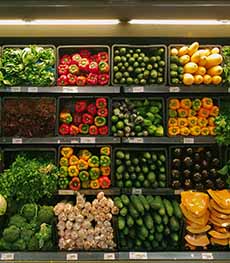
[1] After you buy it, you have to wash it (photo © NRD | Unsplash).
[2] Don’t spend money on special washes. Water is just as effective (photo © Veggie Wash).
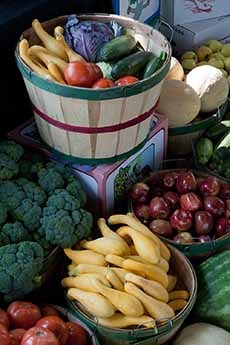
[3] Organic produce needs to be washed, just like conventional produce (photo © Mark Stebnicki | Pexels).
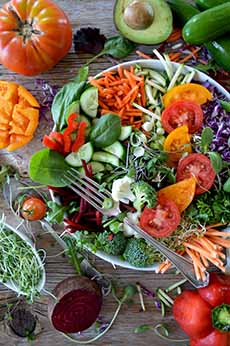
[4] Eat raw vegetables with security after you’ve washed them (photo © Nadine Primeau | Unsplash).
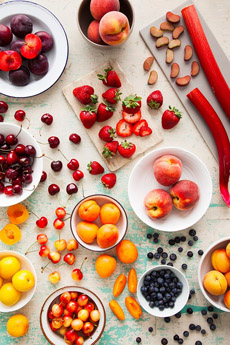
[5] Wash fruits thoroughly, rising every surface (photo © Good Eggs).
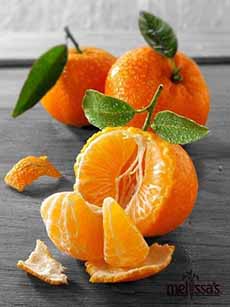
[6] Even fruits such as oranges and mandarins, that will be peeled, need to be thoroughly rinsed. That does for grapefruits too, and lemons and limes that will just be squeezed (photo © Good Eggs).
|