THE NIBBLE BLOG: Products, Recipes & Trends In Specialty Foods


Also visit our main website, TheNibble.com.

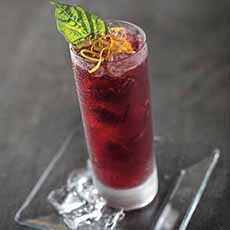
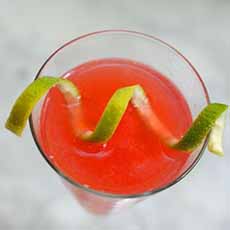
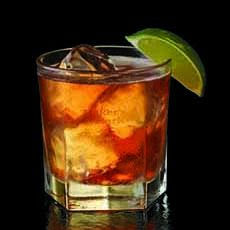
TIP OF THE DAY: Citrus Cocktail Garnishes (Lemon, Lime, Orange)

What do you do when your cocktail arrives with a bit of citrus peel?

It can be lemon, lime or orange peel, depending on the drink.

Do you:

  • Ignore or discard it?
  • Rub it around the rim of the glass?
  • Eat it?
  •  
    It’s a good idea to rub the rim, as is done with a cup of espresso. It leaves an invisible coat of the citrus oil, which will add flavor to the drink with every sip you take.

    We love the flavor of the essential oils in the peel (close to zero calories).

    We also admit to eating the peel. It’s a habit we picked up in college, when draining our drink to the last drop. With a limited budget, when no liquor was left we stretched the drink by working on the ice cubes and the peel.
     
     
    HOW TO CUT PEEL FOR A GARNISH

    Different bartenders take different approaches:

  • Curl: a long, slender strip is peeled with a channel knife and then twisted into a curl/spiral (photo #3).
  • Strip: A wide oblong is cut from the citrus and dropped into the drink. Sometimes, the mixologist cuts designs into the strip with a channel cutter.
  • Twist: The classic piece of peel, an oblong typically given a quick twist and tossed onto the top of the drink (photo #1).
  • Wedge: A garnish that cuts a wedge from the entire lemon, served with drinks and foods. It’s to squeeze into the drink/over the food, for some fresh lemon flavor. It can be dropped into the drink or sit on the rim (photo #5).
  • Wheel: A wheel is a circle cut vertically through the lemon. It has both the flesh and the rind with the peel. It can be notched to sit on the rim (photo #4) or tossed atop the drink.
  • Zest: Use a 5-hole zester for long, slender strips—not grated zest but a slender julienne (photo #2).
  •  
    And now, the rim strip.

    What’s a rim strip? It’s name we gave to the orange peel in photo #1.

    We saw it for the first time last week, when we reviewed Mr. Black Espresso Liqueur.

    Instead of cutting a strip of peel for a twist and tossing it into the drink, some clever mixologist cut a slit on the bottom of the strip so the peel could sit on the rim.

    We haven’t seen this trick before, and we love it. It’s so much more elegant—and fun—than the classic twist.

    Depending on your perspective, it can look like a quarter-moon, a hammock or a Chinese sampan.

    Try it with your next peel garnish.
     
     
    THE BENEFITS OF CITRUS PEEL

    Most people use only the juice and flesh of the lemon, and throw away the peel.

    We suggest that before you juice the lemon, zest it. Save the zest for everyday cooking, for perking up marinades, salads, salad dressings, sauces, sorbet and vegetables to flavoring a glass of water.

    If we have no immediate use for the zest, we use it to flavor ice cubes (fill the ice cube tray, then add some zest to each section.

    Here are the health benefits of the peel:

  • High in fiber and antioxidants, including vitamin C and D-limonene, the essential oil in the peel. It has been shown to possess anti-inflammatory, antioxidant, anti-stress, and possibly disease-preventing properties.
  • It has small amounts of calcium, potassium and magnesium.
  • A piece of peel has negligible calories.
  •  
    Here are more reasons to eat the peel.

    To your health!


    [1] Look closely at this Black Negroni: A slit enables the peel to sit on the glass rim (photo © Mr. Black).


    [2] Lemon zest and a basil leaf garnish this Blackberry Bramble (photo © Sugar Cane Raw Bar & Grill | Miami | Las Vegas | Brooklyn).


    [3] A Cosmopolitan with a lime curl (photo © Heathman Restaurant & Bar | Portland, Oregon).


    [4] A Margarita with a lime wheel (photo © Tequila Avion).


    [5] Old Fashioned with a lime wedge (photo © Maker’s Mark).


    Comments off

    STOCKING STUFFER: Zoku Jumbo Ice Cube Molds


    [1] Zoku’s Iceberg ice cubes (both photos © Zoku).


    [2] The classic jumbo sphere ice cube.


    If you’re planning to gift a bottle of spirits, how about snazzy jumbo ice cube molds from Zoku?

    They create cubes that melt so slowly, they won’t dilute the drink.

    Jumbo ice cubes have been around for a while in cube and sphere shapes.

    But Zoku has a couple of new shapes to consider.

    The Zoku Iceberg Mold (photo #2) looks more like a brilliant-cut diamond.

    Other Zoku ice cube shapes include:

  • Geometric
  • Classic Cube
  • Classic Sphere
  •  
    These ice cubes are not just for cocktails: They also shine in mineral water and soft drinks.

    Note that each mold makes one cube at a time, so plan ahead to make the number that you need.

    They’re $14.99 each at ZokuHome.com.


    Comments off

    GIFT: Smoking Gun – Smoke Gun – Smoke Infuser For Food & Drinks

    The term “smoking gun” is a reference to an object or fact that serves as conclusive evidence of a crime or similar act.

    But there’s no crime in purchasing a smoking gun—a.k.a. smoke gun—for cold-smoke cooking.

    Creative cooks will love this kitchen gadget. We purchased one after paying $20 a pop for smoking cocktails at one of our favorite restaurants.

    When we realized how easy it was to recreate a smoked cocktail at home, we purchased a smoke gun: this Homia Smoking Gun Wood Smoke Infuser Kit on Amazon, which included all the accessories and wood chips so we could immediately get to work.

    You can buy a smoke gun for as little as $20, but you also need wood chips.

    We’ll share a smoked cocktail recipe below, but first, all the things you can do with a smoke gun.

    The smoke not only excites the nose, but it adds a delightful depth of flavor.
     
     
    WHAT TO DO WITH A SMOKE GUN (A.K.A. SMOKE INFUSER OR SMOKING GUN)

    While a smoke gun is a great addition to the kitchen, first note that a smoke gun doesn’t smoke food in the manner of a backyard smoker, over many hours of cooking.

    It is cold-smoking, not hot-smoking: It gives a 30-second infusion of smoke flavor to cooked food or a drink, or to ingredients you’ll use to make a recipe.

    Like a kitchen torch (and of a similar size), a smoke gun is a small tool that delivers big flavor. You add wood chips or other flavor agent (there’s a list below), and the gun converts the chips, cinnamon, herbs, etc. to smoke.

    The gun blows the smoke into your food or drink, infusing it with smoke flavor.

    Far from being exotic, it is easy to use with your everyday foods. You can:

  • Smoke cocktails or straight spirits. How about a smoky Bloody Mary or Margarita?
  • Smoke and freeze water into ice cubes for extra smoke.
  • Smoke coarse sea salt and dried spices.
  • Smoke butter and condiments: mayonnaise, oil, pesto, vinaigrettes.
  • Smoke ingredients to make smoked ice cream, pasta and more.
  •  
    And of course, you can add smoke to cooked meats and fish. See the video on this page, showing all the different things you can smoke.
     

    FLAVORS TO INFUSE

    Depending on what you’re infusing:

  • Cinnamon sticks: Provides a lighter smoke flavor with subtle sweetness.
  • Citrus peels: Use as a garnish to deliver some smoky flavor.
  • Herbs and spices: Experiment with your favorites, including tea leaves and saffron.
  • Oak chips: These accentuate the charred wood notes from barrel aging.
  • Pecan chips: These provide a nutty flavor.
  • Other wood chips: Experiment with whatever you like: apple, hickory, maple, mesquite, orange, etc.
  • Rosemary sprigs: herbaceous flavor.
  • Vanilla beans: light, sweet smoke.

  •  
    COCKTAIL RECIPE: SMOKING ROSEMARY FIZZ

    When the smoking cocktail is brought to the table (photo #1) and the waiter (or you) removes the dome that’s keeping the smoke inside (photo #2), the whole table gets to enjoy the aroma.

    To make it at home, you need a glass dome (or wide-mouth vase, to hold in the smoke), a smoke gun, a smoking agent (e.g. wood chips), and ideally, a jumbo ice cube (it works better than regular cubes).

    Instead of a dome, you can use the hose of the smoke gun to blow smoke directly into the cocktail. This is also how you infuse smoke onto cooked food.

    Ingredients Per Cocktail

  • 2 ounces Makers Mark bourbon (or substitute)
  • 2 ounces grapefruit juice
  • 1 ounce rosemary simple syrup (recipe below)
  • 2 dashes orange bitters
  • Ice
  • Garnish: rosemary sprig
  •  

    Smoking Cocktail
    [1] Smoke infusing the cocktail under the dome (photo © Wall Street Grill).

    Smoking Cocktail
    [2] The big reveal at the table (photo © Wall Street Grill).

    Infusing Food With Smoke
    [3] Infusing chicken breasts with smoke, using a $20 Chefhut infuser (photo © Chefhut).

    Infusing Ribs With Smoke
    [4] Spraying smoke atop ribs with the hose of the Breville smoke gun (photo © Breville).

    Smoked Cocktail
    [5] A smoked Manhattan cocktail at Ocean Prime (photo © Ocean Prime).

     
    For The Rosemary Simple Syrup

    You can also use this syrup in iced tea, hot tea or lemonade, on fruit salad, as pound cake glaze and sorbet topping, and of course, to flavor sophisticated snow-cones.

  • 1 cup water
  • 1 cup sugar
  • 4 fresh rosemary sprigs
  •  
    Simple Syrup Preparation

    1. MAKE the simple syrup. Combine the water and sugar in a small saucepan. Bring to a boil over medium-high, whisking occasionally until the sugar dissolves. Then simmer for a few more minutes until liquid is completely clear. Remove the saucepan from the heat.

    2. ADD the rosemary and let it infuse in the simple syrup for 30 to 60 minutes, until the mixture is thick and syrupy.

    3. REMOVE the rosemary from the pan and pour the syrup into a glass jar. Refrigerate, tightly capped. It will keep for at two weeks (twice as long for unflavored simple syrup).
     
    Cocktail Preparation

    1. SHAKE all the ingredients with ice and strain into a rocks glass with a jumbo ice cube. Garnish with rosemary.

    2. SMOKE with hickory wood with a smoke gun under a glass dome.

    3. BRING to the table still covered. Remove the dome in front of the guest (or yourself) so everyone can enjoy the aroma.
     
     
    VIDEOS

    Here are videos specific to cocktails.

  • Dome: Smoking with a dome.
  • Decanter: You can use a decanter instead of a dome, but it doesn’t allow for a rising-smoke presentation (see this video).
  •  


    Comments off

    GIFT: Jeff’s Famous Jerky, Bacon, Beef Or Turkey

    Jeff's Famous Bacon Jerky
    [1] Oh so delicious: Jeff’s Famous Maple Brown Sugar Jerky (all photos © Jeff’s Famous Jerky).

    Jeff's Famous Maple Bacon Jerky
    [2] Prefer hot to sweet? Try Jeff’s Famous Sriracha Black Pepper Jerky.


    [3] Jeff’s Famous Beef Jerky.


    [4] For chile heads: Jeff’s Famous Carolina Reaper Jerky.


    [5] Jeff’s Famous Cranberry Jalapeño Jerky.


    [6] Jeff’s Famous Black Pepper. Jerky


    America’s consumption of meat snacks has increased by 18% over the past five years, according to recent data from The NPD Group, a market research company.

    And America wants more of this high protein, low-fat, grab-and-go snack that’s naturally gluten-free*.

    We’ve had Top Pick jerkys before, but they are few and far between. Even small-batch artisan brands can be too tough for us, and/or leave remnants of gristle.

    Not so with Jeff’s Famous Jerky. Each variety we tried was melt-in-your-mouth tender, with exquisite flavor. When you can say jerky has exquisite flavor, you know you’ve hit the motherlode.

    Jeff’s Famous Jerky, of Mission Viejo, California deserves to be famous, especially for its eye-opening bacon jerky. Bacon or beef, the meats are marinated in deep, layered marinades.

    The beef jerky has lower sodium than most brands, with no added MSG or nitrates. The bacon jerky has less sodium than pan-fried bacon.

    The only caveat with jerky in general is that it’s high in sodium (don’t buy it for anyone on a salt-restricted diet).

    But it’s almost fat free, and it’s solid protein: One ounce has about 23% of one’s daily value of protein.

    We don’t like hard, overly chewy jerky. Jeff’s Famous Jerky is so tender and tasty, you can bring it to the dinner table and pair it with fine foods.

  • We really enjoy it “surf-and-turf”-style: with oysters on the half shell, and with ceviche or pan-fried scallops.
  • You can lay it across or at the side of a protein, crumble it on top as a garnish, or mix it into other dishes like vegetables and pasta.
  • With pasta, consider Spaghetti Carbonara (which has bacon in the recipe), Fettuccine Alfredo (bacon is a delicious addition to the cream sauce), or pasta simply tossed with olive oil, bacon jerky and shaved Parmesan cheese.
  • With beer or a hearty red wine, it’s a go-to snack.
  •  
     
    JEFF’S FAMOUS JERKY VARIETIES

    Jeff’s makes a variety of delicious, tender jerky varieties. You can buy individual packages or a build-your-own box.

    The flavors are variously spicy, sweet, hot, and combinations thereof. More importantly, they are clean, clear and natural, beautifully layered to imbue the meat with complex flavors.

    All are hormone-free, without added MSG or preservatives, made from American meats.

    Bacon Jerky Varieties

  • Maple Brown Sugar
  • Sriracha Black Pepper
  •  
    Beef Jerky Varieties

  • Black Pepper Sea Salt
  • Cranberry Jalapeño
  • Habanero Heatwave
  • Jalapeno Carne Asada
  • Jamaican Jerk
  • Korean Barbecue
  • Old Fashioned Original
  • Pacific Red Hot
  • Sriracha Ghost Pepper
  • Sweet & Smokin’ BBQ
  • Sweet Teriyaki

  •  
    Turkey Jerky Varieties

  • Thai Satay Turkey Jerky
  •  
     
    GET YOURS NOW!

    Single-flavor packages are $6.99 at JeffsFamousJerky.com. The beef packages contain 3 ounces of jerky; the bacon packages have 2 ounces.

    Build-your-own variety packs offer a 20% savings; and there are gift boxes with personalized notes.

    DISCOVER MORE AT JEFFSFAMOUSJERKY.COM

     
    JERKY HISTORY

    The word jerky comes from the Quechua language of the Incas, who called their dried meat “charqui.” But they were hardly the first people to make it.

    Neither were Homo sapiens, we can deduce. Homo erectus emerged 1.5 million years ago, and evidence found five years ago in a South African cave suggests Homo erectus that built campfires.

    The remains of animal bones and plant ash could be dated to a million years ago. [source]

    By the time Homo sapiens emerged, 195,000 years ago, man had been enjoying barbecue, and by extension jerky, for some time.


    Drying food is one of the first three food preservation techniques, along with salting and, in northern climes, packing with snow in ice caves or cellars.

    Meat dried over a smoky fire is protected from egg-laying insects and multiplying bacteria (they need moisture to live). Cutting it into thin strips makes it easier to chew.
    All the fat is trimmed from the meat because fat doesn’t dry. The dried meat could (and can) then be stored for long periods of time without refrigeration.

    While the prehistoric method of drying the meat was used by other ancient peoples, it was not known in Europe.

    The first visitors to the New World found Native Americans making jerky† from the meat of any animal they hunted (that which wasn’t consumed immediately).

    In addition to helping early colonists stave off starvation, later pioneers who headed west quickly learned to make jerky. It was easy to transport, and was an important, high-protein addition to their diet.

    The meat for jerky could be anything from buffalo to whale. Today jerky can be found in proteins as common as turkey, tuna and salmon, to exotics such as alligator and ostrich.

    Today’s jerky eaters have the luxury of enjoying it as a snack rather than a necessity. We also have the pleasure of using tender cuts of meat marinated in a variety of spices, salt and/or sugar—seasonings that were not available to most ancients jerky-makers.

    Modern jerky is dried in low-heat smokers, as opposed to the ancient technique of hanging strips of meat racks to dry in the hot sun. (The campfire could hold only so much.)

    If your only experience with jerky has been dry and tasteless jerky, you deserve some of the good stuff.
    ________________

    *Some brands or flavors within brands may use soy sauce or other glutinous ingredient in the marinade.

    †The pemmican you may have read about in tales of early America was dried meat mixed with dried berries and rendered animal fat. It was invented by Native Americans and used extensively by immigrants in the fur trade. Many years later, it served as a high-calorie food for Arctic and Antarctic explorers such as Robert Falcon Scott and Roald Amundsen.


    Comments off

    TOP PICK OF THE WEEK: Mr. Black Cold Brew Espresso Liqueur, The Best Coffee Liqueur

    When we first tasted Mr. Black at a trade show, it was magnificent—but only available in Australia, where it was created.

    Wholesale buyers liked it too, because now it’s widely available in the U.S.

    If you drink other coffee liqueurs, you’ve got to try Mr. Black.

    If you know a coffee drinker who’d enjoy sipping a rich, intense, coffee liqueur, treat them to a bottle of Mr. Black.
     
     
    WHAT IS MR. BLACK COLD BREW LIQUEUR?

    Mr. Black is a cold brew espresso liqueur, and in our experience, one of the best coffee liqueurs you can buy.

    Each bottle is handmade at the company’s coffee roastery and distillery just north of Sydney, Australia (photo #2).

    Mr. Black was developed to appeal to serious coffee aficionados. It emphasizes the purity of coffee flavor using a blend of beans from the best growing regions.

  • Ethiopian Djimmah is a specialty coffee with a light-medium roast bringing chocolate, toffee and fruit flavors to the blend.
  • Papua New Guinea beans add zesty citrus notes.
  • Brazilian Arabica, roasted two ways, brings, fresh cold brew notes.
  •  
    Next, the beans are roasted, ground and brewed.

  • The beans are ground with ceramic burrs.
  • The different ground beans are cold-brewed separately, into concentrate.
  • They are then blended to achieve a the best range of flavor and balance.
  • Brewing artisans fine-tune the water composition, temperature and time for each batch.
  •  
    The difference between something good and something great comes down to the details, says the company, and they are correct.
     
     
    HOW TO ENJOY MR. BLACK ESPRESSO LIQUEUR

  • Straight up or on the rocks.
  • Made into cocktails (see the recipes), including a great Espresso Martini.
  • Added to hot or iced coffee, cappuccino or espresso.
  • Mixed into mousse or whipped cream.
  • Over ice cream or cheesecake.
  • In milkshakes or floats.
  • In a glass of hot milk or hot chocolate.
  • Mixed into chocolate sauce.
  •  
    Discover more own the company website.

    You can find Mr. Black at stores nationwide and online. Here’s a store locator for both retail and e-tail.

     
    THE HISTORY OF LIQUEUR

    A liqueur (lih-KUR) is an alcoholic drink composed of distilled spirits and additional flavorings that can include bark, flowers, fruits, herbs, roots and spices.


    [1] Our favorite liqueur, rich and complex for serious coffee drinkers (photo © Mr. Black).


    [2] Make the best Espresso Martini.


    [3] Filling the bottles at the distillery (photos © Mr. Black).

     
    And sugar! Often served with, or after, dessert, liqueurs are typically heavily sweetened.

    Liqueurs are historical descendants of herbal medicines. These alcoholic medicines were made in Italy as early as the 13th century, often prepared by monks (for example, Chartreuse).

    The French word liqueur is derived from the Latin liquifacere, which means “to dissolve.”

    October 16th is National Liqueur Day.
     
     
    EAU DE VIE, CORDIAL, LIQUEUR & SCHNAPS: THE DIFFERENCE

    Liqueur has numerous “relatives.” Here’s are their differences.

  • Schnaps/schnapps, a generic German word for liquor or any alcoholic beverage, is more specific in English, where it refers to clear brandies distilled from fermented fruits. The English added a second “p,” spelling the word as schnapps. True Schnaps has no sugar added, but products sold in the U.S. as schnapps may indeed be sweetened. As one expert commented, “German Schnaps is to American schnapps as German beer is to American Budweiser.”
  • Eau de vie is the French term for Schnaps. American-made brands labeled eau de vie (“water of life”) are often heavily sweetened, and have added glycerine for thickening.
  • Liqueur is an already distilled alcohol made from grain which has already been fermented, into which fruits are steeped. It is sweeter and more syrupy than a European eau de vie or schnapps.
  • Cordial, in the U.S., almost always refers to a syrupy, sweet alcoholic beverage, a synonym for liqueur. In the U.K., it refers to a non-alcoholic, sweet, syrupy drink or the syrup used to make such a drink. Rose’s Lime Cordial, a British brand, is called Rose’s Lime Juice in the U.S. so Americans don’t think it’s alcoholic.
  •   

    Comments off

    The Nibble Webzine Of Food Adventures
    RSS
    Follow by Email


    © Copyright 2005-2026 Lifestyle Direct, Inc. All rights reserved. All images are copyrighted to their respective owners.