THE NIBBLE BLOG: Products, Recipes & Trends In Specialty Foods


Also visit our main website, TheNibble.com.

GIFT: Madame Paulette Stain Removal Kit


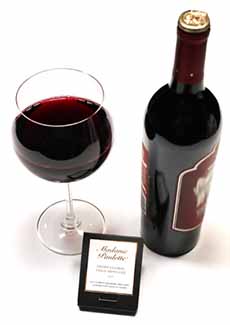
[1] Red wine stains: Out! (Photos © Madame Paulette).


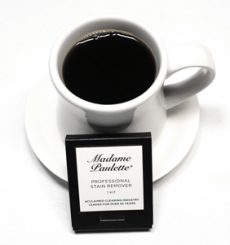
[2] Coffee stains: Out! (Plus a dozen or more other stain types: all out!)


[3] There are five single-use kits in each order.


If you have friends like us, here’s a welcome holiday gift.

Who are “friends like us?” We are the less-coordinated people who are always dropping and spilling food and drink on ourselves, when we eat.

We are the friends who are chagrined when, despite our best efforts, see the food end up on our clothing instead of the napkin.

The friends who wish for a solution.

We have three solutions:

  • Dress Tiez, a grown-up bib that we can’t live without.
  • Wine Away, a spray that works on more than wine: blood, coffee, fruit juice, ink, red medicine stains, sauces, even pet accidents.
  • Madame Paulette Professional Stain Removal Kit.
  •  
    Here’s an article on removing stains when you have no special aids.
     
     
    WHO IS MADAME PAULETTE?

    Madame Paulette is America’s finest dry cleaner, specializing in custom couture and other precious garments.

    Companies such as Bergdorf Goodman, Carolina Herrera, Hermes, and Vera Wang; and individual clients such as including Anna Wintour, Barbara Walters, Kelly Ripa and Sting, all depend on Madame Paulette for superb care of their garments.

    The company also does restoration work, counting among its projects Coco Chanel creations from the 1930s, Joe DiMaggio’s original baseball jersey and Princess Diana’s gowns.
     
     
    NOW, A KIT FOR HOME USE

    You, too, can benefit from the expertise of Madame Paulette.

    The company offers the Madame Paulette Professional Stain Removal Kit, easily portable in a pocket or purse (photo #3).

    It uses Madame Paulette’s patented process and proprietary formulas to remove stains.

    Different stain removal packets treat different stains. Each packet contains a wipe with the specific stain removal formula, an absorbent cloth to place under the stain, and a rinsing cloth to remove the solution.

    When the solution dries, you’ll never know a stain was there.

    You can remove:

  • Earth-based stains: chocolate, coffee, cola, juice, ketchup, liquor, soy sauce, tea.
  • Oil-based stains: gravy, grease, mayonnaise, salad dressing.
  • Protein-based stains: eggs, milk.
  •  
    The kit also works on other stains, such as blood, ink, makeup and perspiration; and it works on the most delicate fabrics.

    You can see videos here.

     
    The products are non-carcinogenic, non-hazardous, solvent-free, water-based, readily biodegradable and environmentally friendly.

    Here’s more information. Get yours at StainKit.com, for $29.99.


    Comments off

    PRODUCT & GIFT: Difference Coffee, Nespresso-Compatible Capsules

    Here’s a luxurious gift for yourself or for a coffee-loving friend or family member.

    Difference Coffee is a premier delivery program that sells the finest-coffee capsules in the world. The capsules are compatible with Nespresso machines.

    The company was created after the entrepreneurial founder bought a Nespresso machine.

    After tasting all the different Nespresso capsules, he wanted something more. He felt that, good as Nespresso coffee might be, there was something better to be had.

    He decided to pursue small artisan growers, those with the terroir and attention to their crops that larger enterprises, that were not pursued by companies the size of Nespresso.

    In fact, the total crop size of some of these artisan coffees is just 50 pounds a year!

    Understandably, these are not inexpensive capsules. They are rare coffees you will not find anywhere else.

    Different lots are priced according to the auction price of the coffee. You may pay two or three times the price of a Nespresso capsule.

    But that can still be less than what you would pay for an [not-as-good] espresso at a café or restaurant.

    In fact, the capsules are used in some of the world’s finest restaurants, including 30 with Michelin stars. It has been selected by the most revered chefs, including Sat Bains, Alain Passard, Anne-Sophie Pic and Guy Savoy.

    And keep in mind: You don’t need to use Difference Coffee for your four cups a day. Enjoy it on weekends, on special occasions, or at the start of a day when you feel like treating yourself.
     
     
    ABOUT SPECIALTY COFFEE

    Specialty coffee accounts for only about 1% of the world’s best coffees.

    The coffees are graded according to a 100-point system created by the Specialty Coffee Association.

    Difference Coffee is committing to sourcing the top 1% of that 1%. That’s some pretty rare coffee!

    How does a coffee seller get hold of it? Simply outbid everyone else at the wholesale auctions where the coffee beans are sold.

    That makes Difference Coffee the highest-paying coffee company in the world, to farmers in the Third World. That delivers the finest coffee to the customer.

    The coffee farmers benefit too, often getting paid hundreds of times more than what the average farm would earn for coffee.

    While the process begins with sourcing the best beans, the next step is to roast it better than most companies can.

    Difference Coffee works with Master Roaster Jonny England, one of only four fully-licensed Coffee Quality Graders in the world and also head judge for the World Barista Championship and World Brewers Cup.

    The last leg of the journey is delivering fresher coffee to customers. Lots of beans are roasted every month, placed into capsules and promptly shipped out.
     
     
    JOIN THE CLUB

    There are a variety of selections, depending on what has been acquired at auction. Currently available are:

  • Cup Of Excellence Rwanda
  • Guatemala Swiss Water Decaf
  • Hawaii Kona Champion
  • Jamaica Blue Mountain
  • Panama Geisha
  • Wild Kopi Luwak
  •  
    Check the website for the descriptions of each.

    Then, get ready to join the Club!


    [1] Difference Coffee is top drawer, including the elegant presentation (all photos © Difference Coffee).


    [2] Available coffees vary, based on the finest beans available at auction.


    [3] Each delivery is beautifully packaged, including a vellum descriptions of the beans.


    [4] Difference Coffee is even more elegant when sipped from a golden cup, which members receive.


    Comments off

    STOCKING STUFFER: Southern Straws Cheese Straws


    [1] Original: cheesy with a kick of cayenne (all photos © Southern Straws).


    [2] Don’t want any heat? Go for Mild.


    [3] Like lots of heat? Spicy is for you.


    [4] Want a nice gift? Go for the Holiday Box.


    Cheese straws are a delectable cocktail snack: cheese crackers raised to their most sophisticated form.

    They pair perfectly with wine, beer, cocktails and spirits on-the-rocks. Warning: Like potato chips, you can’t stop eating them.

     
    CHEESE STRAWS HISTORY

    No one can pinpoint the exact origin of cheese straws, but they are credited as a Southern invention.

    As the likely tale goes, an inspired cook mixed leftover biscuit dough with some cheese, forming it into long narrow strips that were baked along with the biscuits.

    But instead of being served at meals with the biscuits, they were enjoyed as snacks.

    Their popularity spread: You can find cheese straws in recipe books, beginning in the 1800s.

    The most basic recipe is an easy cheese dough made from flour, grated cheese, a teaspoon of salt and baking powder, cut with a pastry wheel into long, narrow strips (“straws”).

    In more recent times, with better cutting apparatuses, they are also made in squares or shorter sticks; and called cheese straws, cheese sticks or cheese crisps.

    Cheese straws are usually served at cocktail parties or instead of crackers or bread with soups or salads.

    While early recipes are non-specific, simply stating, “cheese,” flavorful Cheddar has become the cheese of choice.

    Some producers also make varieties with Parmesan, Romano, Swiss and other cheese varieties.
     
     
    SOUTHERN STRAWS CHEESE STRAWS

    Southern Straws is a mother-and-son bakery in Georgia, making cheese straw squares with a recipe that is generations-old.

    Rather than the old-fashioned long straws, Southern Straws are cut into bite-size square wafer that enable people to just have a bit (or, in our case, empty the whole bowl).

    They are made in three flavors:

  • Original, The most popular flavor, a traditional recipe that has a nice kick of cayenne spice at the end.
  • Mild omits the cayenne. It’s perfect for people who don’t want heat, including serious wine drinkers who don’t want cayenne to interfere with the flavors of the wine.
  • Spicy, on the other hand, ramps up the cayenne. It pairs nicely with beer, Bloody Marys or Martinis.
  •  
     
    GIFTS IN EVERY SIZE

    Nicely packaged, there’s a size for every occasion:

  • The three-ounce box is an ideal stocking stuffer or party favor.
  • The six-ounce box contains two three-ounce bags, for freshness.
  • The Holiday Box is filled with three three-ounce bags: You pick the flavors and specify what to say on the gift card
  •  
    Cheese straws are a food gift for everyone: to be enjoyed as a personal snack or served to guests.

    Cocktails, anyone? Bring the cheese straws!


    Comments off

    STOCKING STUFFER: Wine Foil Cutter & Refrigerator Magnet

    Cork Pops, manufacturer of wine accessories, has come up with another great product for wine lovers.

    The latest collection is an improvement on conventional magnetic foil cutters.

    What makes them better than the wine bottle foil cutter you already have?

    First, the cutting blades are so much better than most versions we’ve tried.

    They are quite sharp and work very well (the rest of the device is made from hard plastic).

    Just place the cutter over the lip of the bottle: With 2 turns the foil cap is easily removed and you’re ready to remove the cork.

    Second, it’s a refrigerator magnet! There’s no need to rummage through a drawer looking for your foil cutter: It’s right on the fridge.

    There are six fun designs: Fish (in photo), Flip Flops, Frog, Grapes, Hot Lips and Palm Trees.

    And at $6, they’re an affordable stocking stuffer, party favor, or add-on to a wine gift.
     
     
    Get yours at Corkpops.com.
     
     
    —Kris Prasad


    [1] A wine foil-cutter and refrigerator magnet from Corkpops, one of six designs (photo © Corkpops).


    Comments off

    Sangria With Port, The History Of Port & Types Of Port


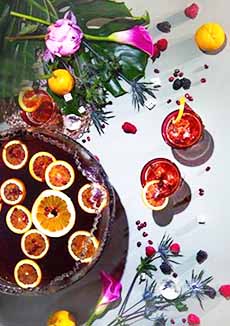
    [1] Make a holiday sangria using Ruby Port. The recipe is below (all photos © Sandeman).

    Sangria With Ruby Port
    [2] You can serve sangria from a punch bowl as a Christmas punch, but the easiest way is to pour from a pitcher.


    [3] Sandeman Founders Reserve, a ruby port, can be used in numerous cocktails, many on the Sandeman website. Here, a Ruby Sling (recipe).


    [4] Sandeman Founders Reserve, a Ruby Port. You can drink it and cook with it.


    Seven Christmases past, we made a Christmas Sangria with Sandeman Port. It included cinnamon schnapps and clementine soda, and was a big hit.

    Here’s the recipe for Sandeman Sangria #1. It has been the official warm-up drink of our Christmas festivities.

    But wait: There’s a new Christmas Sangria from Sandeman, and it’s a much simpler recipe.

    Sandeman makes several expressions of Port: the classic ruby, tawny and white Ports; aged tawny; reserve wines; and vintage wines (see the different types of port below.

    The well-known icon, called Don [Mr.] Sandeman, features a man dressed in a Portuguese student’s cape and a wide Spanish-style hat (photo #4).

    International Port Wine Day is January 26th. Raise your glass!

    > Below: The history of Port.

    > Below: The different types of Port.
     
     
    RECIPE: SANDEMAN SANGRIA #2

    Ingredients Per Cocktail

  • 1.5 oz Sandeman Porto Founder’s Reserve
  • 1 oz of homemade sour mix (equal parts fresh lime juice and simple syrup)
  • .5 oz of orange juice
  • .5 oz of grenadine (homemade grenadine recipe)
  • Garnish: orange wedge
  •  
    Preparation

    1. FILL a tulip glass (or other wine glass) with ice. Add the ingredients and stir well with a bar spoon.

    2. GARNISH and serve.
     
     
    WHAT IS PORT?

    Port is a Portuguese fortified wine, a red wine made from a variety of Portuguese grapes*then blended with distilled grape spirits.

    It is made in the Douro Valley in the northern provinces of Portugal. Only wine here can legally be called Port.

    (Wine Trivia: The Douro region is the third-oldest protected wine region in the world, after the Chianti region of Italy, established in 1716, and the Tokaj-Hegyalja region in Hungary established in 1730.

    It’s Port in English, Porto in Portuguese, and is sometimes written as Oporto, after Porto, the largest city in the region and the second-largest city in Portugal (Oporto means “the Porto”).

    Porto, located along the Douro River estuary in northern Portugal, was an outpost of the Roman Empire. Port wine has been produced since then.

    It is typically a sweet, red wine, often served as a dessert wine, though it also comes in dry, semi-dry, and white varieties

    Port is made in several expressions: Crusted, Colheita, Late Bottled Vintage (LBV), Ruby, Single Quinta, Tawny, Vintage, Vintage Character, and White. Here’s an explanation of each type of Port.

    See more detail on these types of Ports below.
     

    THE HISTORY OF PORT

    Grapes have been grown in Portugal since antiquity; ancient writings show that the inhabitants of northern Portugal were already drinking wine 2,000 ago.

    The Romans arrived in Portugal in the second century B.C.E. and remained for the next five hundred years. They grew grapes and made wine on the banks of the Douro River, where Port is produced today.

    After the establishment of the Kingdom of Portugal in 1143, wine from the Douro Valley become an important export. But it was a different wine.

    By the second half of the 15th century, a significant amount of Portuguese wine was being exported to England.

    The first wines known as Port were exported in the latter 17th century, following the Anglo-Portuguese commercial treaty of 1654. English wine merchants settled in Portugal to oversee the trade.

    The fortified wine we know today was first created to preserve the wine during the long journey from the Douro Valley to England. It began to be fortified with the addition of brandy prior to bottling the aged red wine.

    Today, the process of fortifying Port is different: The wine is fortified during fermentation and not after aging.


    THE EXPRESSIONS (TYPES) OF PORT

    Expressions is an industry name for the different styles, types, or varieties produced by a particular house [brand].

    Colheita Port: A single-vintage tawny port is aged for at least seven years. The vintage year is on the bottle, instead of a category of age (10 years, 20 years, etc.). It differs from Vintage Port, which spends only about 18 months in barrels after vinification and will continue to mature in the bottle. A Colheita may have spent 20 or more years in wooden barrels before being bottled and sold. White Colheitas have also been produced.

    Crusted Port: Usually a blend of several vintages to achieve specific characteristics, Crusted Port is bottled unfiltered and sealed with a traditional cork. Like Vintage Port, it needs to be decanted before drinking.

    Garrafeira Port: Unusual and rare, vintage-dated Garrafeira is maturation for three to six years in wood to oxidize it, with further maturation in large glass demijohns, for at least eight years in glass.

    Late Bottled Vintage (LBV) Port: Originally a wine that was destined for bottling as a vintage port, LBV was left in the barrel for longer than had been planned, due to lack of demand. Over time it evolved into two distinct styles of wine, both of them bottled between four and six years after the vintage. However, one style is fined and filtered before bottling, while the other is not.

  • Filtered LBVs are ready to drink without decanting. They are usually sold in a stoppered bottle that can be easily resealed.
  • Unfiltered LBVs are mostly bottled with conventional corks and need to be decanted, then consumed within a few days.
  •  
    Ruby Port: The least expensive and most extensively produced type of Port. After fermentation, it is stored in concrete or stainless steel tanks to prevent oxidative aging and preserve its bright red color and full-bodied fruitiness. It does not generally improve with age, although premium rubies are aged in wood from four to six years.

    Reserve Port: This is reserve Ruby Port, a premium ruby approved by the tasting panel of the IVDP, the industry association.

    Rosé Port: A new expression, first released in 2008 by Poças and by Croft, part of the Taylor Fladgate Partnership. It is technically a Ruby Port but is fermented in a manner similar to rosé wine. It receives limited exposure to the grape skins, thus creating the rosé color.

    Single Quinta Vintage Port: These Vintage Ports originate from a single estate, unlike most Vintage Ports which can be sourced from a number of quintas. These are only produced in certain years when the regular Vintage Port of the house is not declared.

    Tawny Port: These red grape wines are aged in wooden barrels exposing them to gradual oxidation and evaporation. They thus mellow to a golden-brown color, and the exposure to oxygen imparts nutty flavors to the wine. They can be sweet or medium-dry; they are typically served as a dessert wine but can be served with the main course as well.

    Vintage Port: Made entirely from the grapes of a declared vintage year, Vintage is by far the most renowned type of Port, the “top of the line.” But from a volume and revenue standpoint, Vintage Port accounts for only about 2%f overall port production. As with Champagne, not every year has grapes ripe enough and balanced enough to declare a vintage. The finest vintages can continue to gain complexity for many decades after botting; some 19th-century bottles are still in perfect condition for consumption.

    White Port: Made from white grapes (Malvasia Fina, Donzelinho, Gouveio, Codega, and Rabigato, the white port can be made in a wide variety of styles, from dry to very sweet. Young White Ports make an excellent base for a cocktail; sweet White Port and tonic water is a common drink in the Porto region. Aged whites are best served chilled on their own.
     
    ________________

    *The six most widely used grapes for red Port wine are Touriga Franca, Tinta Roriz, Tinta Barroca, Touriga Nacional, Tinta Cão and Tinta Amarela. Here are the other grapes that can be used.


    CHECK OUT WHAT’S HAPPENING ON OUR HOME PAGE, THENIBBLE.COM.


    Comments off

    The Nibble Webzine Of Food Adventures
    RSS
    Follow by Email


    © Copyright 2005-2026 Lifestyle Direct, Inc. All rights reserved. All images are copyrighted to their respective owners.